
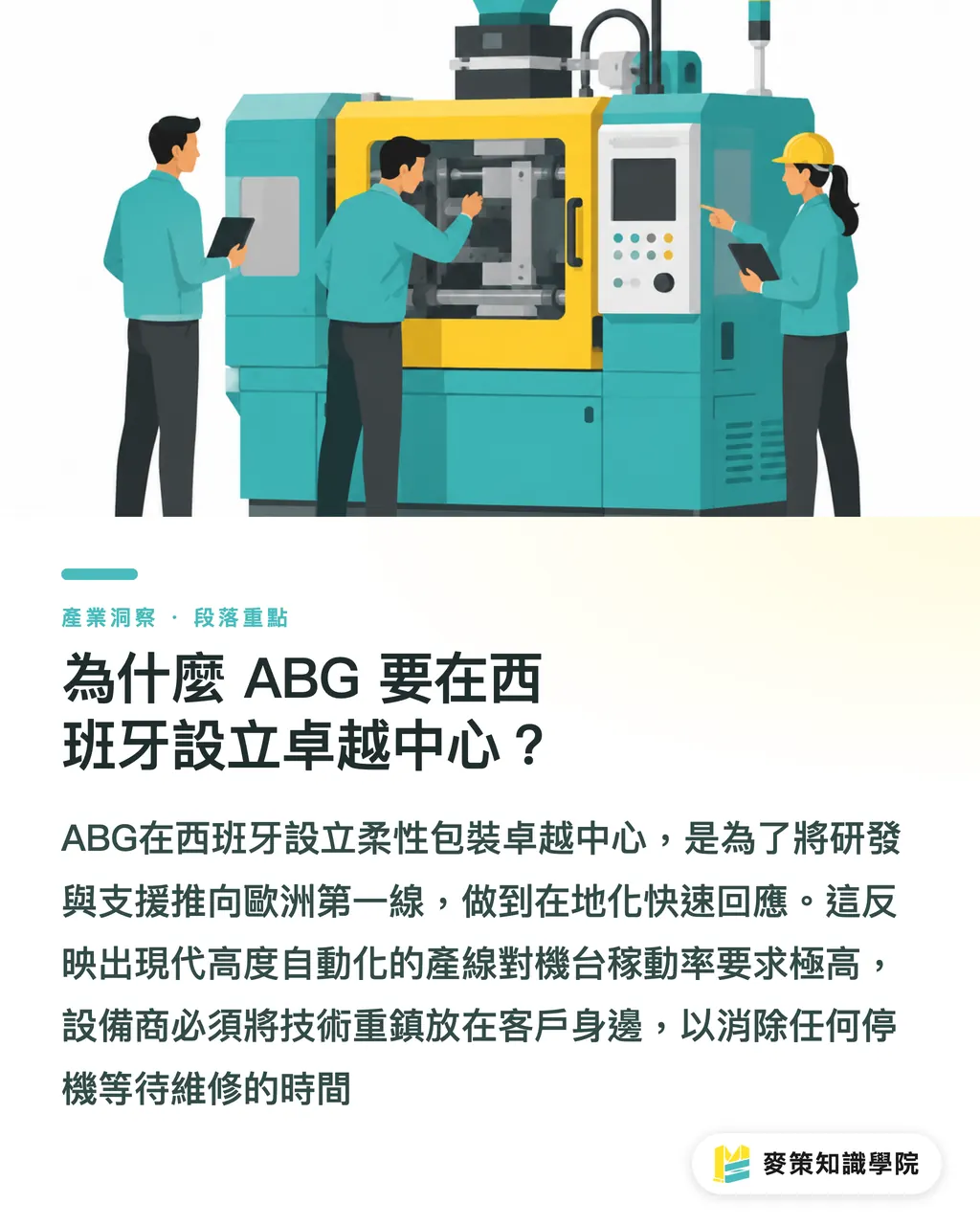
Why Did ABG Establish a Center of Excellence in Spain?
ABG (the UK-based label finishing and print converting equipment manufacturer) upgraded its Enprom Solutions into a flexible packaging Center of Excellence, pushing R&D and support for automated equipment directly to the European market's front line. Since ABG and Kocher+Beck (the German die-cutting tooling giant) acquired the company in 2019, they've kept a tight focus on no-downtime equipment, sleeve solutions, and automated production line technology
Putting technical resources closest to the customer is the most practical shift I've seen from equipment makers over the past few years. Buying European machines used to mean dreading parts stuck in customs and engineers who couldn't fit you into their schedule. Now, a model like ePac (the US digital flexible packaging specialist that expanded to 22 micro-sites in a decade) demands extremely high machine uptime. Equipment makers have no choice but to deliver localized, fast-response support. This is exactly the same logic behind Colorman Ireland's recent adoption of the Bobst (Swiss packaging equipment manufacturer) fully automated ExpertFold 80 folding carton line. Automation brings high throughput, but the production line has no tolerance for downtime waiting on repairs
What Is Raw Material Consolidation? What Does Shell's Acquisition of ARC Tell Us?
Shell (the multinational energy and petrochemical giant) completing its acquisition of ARC Resources signals that upstream petrochemical and packaging raw material resources are accelerating toward concentration in fewer large players. When suppliers lock in pricing power through consolidation, downstream packaging plants and brand clients immediately feel the pressure of single-source raw materials
Over the past month or two, I've clearly felt customers' anxiety about supply disruptions. International Paper spinning off Global Cellulose, MM Board & Paper buying the RDM Arnsberg board mill, these moves all reflect the reality of the supply side reshuffling. This isn't just about not being able to source materials. ESG compliance and packaging carbon footprint traceability are getting harder too. When your upstream options shrink, your negotiating leverage shrinks with them. That's a hard reality
What Should Taiwan's Mid-Sized Printers and Brands Do?
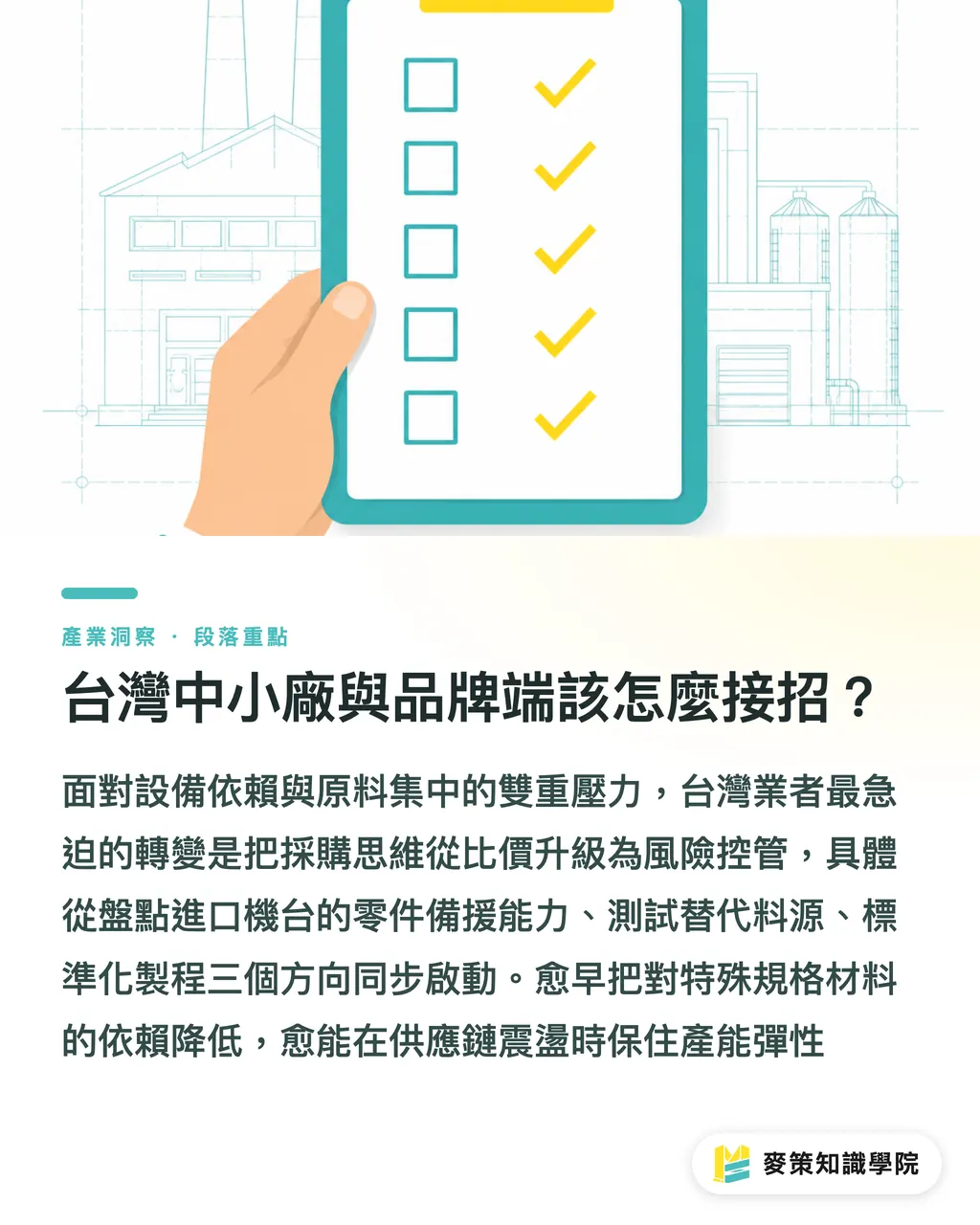
Caught between equipment localization and raw material consolidation, Taiwan's industry must shift its procurement mindset from pure price comparison to risk management and capacity backup
I'd recommend brands and plants kick off this three-step review right now:
1. Audit your imported equipment maintenance dependency: list every European and American machine in your facility and require distributors to provide a concrete Asia-region parts backup plan
2. Build a secondary supplier test list: for the key flexible packaging materials controlled by the major players, start testing alternatives from independent suppliers. Prioritize materials with sustainability certifications
3. Lock in standardized processes: take a page from overseas micro-factory models and use highly standardized processes to reduce dependence on specialty materials. If you hit a bottleneck in production planning for specialty packaging, MINDS' hands-on experience in mid-to-high-end fully customized commercial printing is a good place to start
Key Takeaways
・Equipment maker value is shifting. Localized, fast maintenance support now matters more than raw hardware performance
・The upstream consolidation wave will directly squeeze the negotiating room and material options available to downstream packaging plants and brands
・Starting alternative packaging material testing and qualification early is the only real answer to future supply chain disruption and sustainability traceability risk
Going Further
These two deals reflect an industry assembling a new order. The agility and speed Taiwan's players are used to need a more solid supply chain foundation underneath them. Next step: brands should add 'packaging material supply stability' to next year's sustainability KPIs, and printers should write equipment makers' local service commitments into procurement contracts in plain language. That's enough
Further Reading
FAQ
- What does an equipment maker establishing a Center of Excellence actually mean for Taiwan's printing plants?
- It means the manufacturer is concentrating resources in specific regions. If Taiwan falls outside that zone's direct reach, buying this type of equipment means you need to push your distributor's maintenance capacity requirements even higher, or you'll be looking at serious downtime costs
- Why does an upstream deal like Shell acquiring ARC affect a brand's sustainability efforts?
- Consolidation among major players shrinks packaging material options in the market. When brands need to switch to low-carbon or sustainable packaging, oligopoly conditions push the cost and barriers of custom R&D way up, and that delays meeting decarbonization targets
- When should we start looking for alternative packaging materials?
- Now. New flexible packaging materials need to go through full onboarding tests, seal tests, and shelf-life validation. That process typically takes six months or more. You can't scramble to start when the shortage is already here
Related articles

The Print × AI weekly
The print and AI know-how designers, brands and enterprises can use before they commit — one email, every week
MINDS Free Tools
AI background removal, a LINE sticker maker, spine & imposition calculators — all free, right in your browser, no upload.
MINDS Group
Need actual printing or gifting services?
From premium printing to online ordering and festive gifts — the MINDS Group sister brands take it from here.