
What does Bertelsmann's 1.5 million-book capacity mean?
Bertelsmann, a German media, services, and education group, plans to produce 1.5 million print-on-demand books a year. The line is scheduled to start in April 2027, with about 1 million books projected for its first year. The initial run will be paperbacks with black-and-white interiors and color covers
Capacity is a ceiling
A projection isn't the same as books shipped
Print-on-Demand means printing small batches to order. It reduces the need to stock large quantities in advance and lets low-selling titles stay in print. This plan is about small-batch reprints. It doesn't mean every copy will have its own customized content
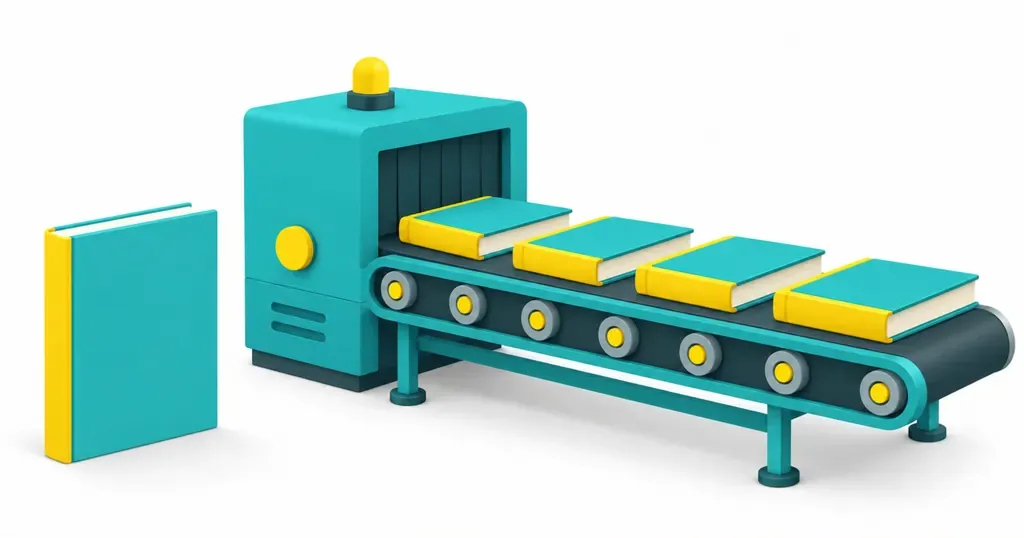
How will this print-on-demand line work?
The line brings digital printing, production scheduling, and distribution together in one service. Different Bertelsmann companies will handle different parts of the work. Publishers can choose direct shipping or have books sent to a warehouse first
・Campaign specializes in direct response marketing and digital printing. The equipment will be installed at its site in Gütersloh
・GGP Media is a book printer and will organize production
・VVA is a book distributor and will handle circulation once books leave the production line
The plan is being developed with Penguin Random House Verlagsgruppe, Bertelsmann's German-language publishing group, and is expected to be available to other publishers too. A few months after launch, the line is also scheduled to add paperbacks with flaps
Why are long-tail titles a good fit for print-on-demand?
Long-tail titles are a good fit because sales of any one title may be modest, yet occasional orders can keep coming years after publication. Backlist refers to existing titles that continue to sell after the initial buzz around a new release fades. Publishers want readers to keep finding these books, but it's hard to justify printing a large stock of every title upfront
Bertelsmann lists lower inventory, less overprinting, and continued availability as goals for the service. It also expects shorter production and delivery times. When I look at the cost math, less stock in the warehouse doesn't make every cost disappear. Order intake, finding the right version, changeovers, binding, and split shipments all count. Short runs can print fast, but a messy workflow still causes delays
What should print shops in Taiwan assess first?
Print shops in Taiwan should first check whether orders and production steps can be repeated reliably, then decide whether to buy digital equipment or work with another printer. Bertelsmann's first phase covers paperbacks with black-and-white interiors and color covers. Paperbacks with flaps are planned for a later expansion. Keeping the product specs focused makes it easier to stabilize the schedule
・List the titles that still need reprints, and make sure cover and interior file versions are easy to identify
・Clarify who handles paper, binding, proofs, packaging, and shipping so every order doesn't need a fresh round of questions
・Include changeovers, finishing, warehousing, and delivery in the quote, then check the numbers against actual quotes
Review the titles first, then talk equipment. That gives you a more reliable basis for an investment decision than working backward from annual capacity
How can brand customers start with a test run?
Brand customers can start with a small print run of product manuals or corporate books that have stable specs and need to stay available over time. First decide on the finished format, reprint process, and delivery options. Bertelsmann's service lets publishers choose direct shipping or warehousing first. Buyers should also agree upfront on who handles shipping
Design teams should label cover and interior versions separately, then lock the files after proof approval. If a brand needs mid- to high-end, fully customized commercial printing, it can prepare the specs and likely reprint scenarios, then ask MINDS whether it's a good fit

Key takeaways
・The 1.5 million figure is planned capacity. About 1 million books are projected for the first year. Neither figure represents books already shipped
・Print-on-demand means small-batch reprints made to order. It doesn't mean every copy needs different content
・Printing long-tail titles can reduce inventory, but it also adds work managing versions, orders, binding, and delivery
・Print shops should review their titles and production steps before investing in equipment or finding a partner line
A further thought
I'd put the first SaaS or AI investment into order and file management. Give every title, version, approved file, paper stock, binding method, and shipping option a dedicated field, then use automated checks to flag missing files or mismatched versions. Designers can confirm the content and proofs. AI can catch gaps in the workflow. The print shop still needs to check the finished product and color. That's more practical than starting by trying to print more copies per hour
Further reading
FAQ
- When is Bertelsmann's print-on-demand line expected to start?
- Bertelsmann plans to start the line, with annual capacity for 1.5 million books, in April 2027. It projects about 1 million books in the first year
- Does print-on-demand mean every book can have customized content?
- The plan describes small-batch printing and reprints made to order. The available information doesn't say that each copy will have different content
- What books will Bertelsmann's line print at first?
- The first phase is planned for paperbacks with black-and-white interiors and color covers. Paperbacks with flaps are expected to be added a few months after launch
- Should small and midsize print shops in Taiwan buy a digital press first?
- First review which titles will still need reprints over time, check file versions, and calculate finishing and delivery costs. Then decide whether the equipment investment makes sense
Related articles
The Print × AI weekly
The print and AI know-how designers, brands and enterprises can use before they commit — one email, every week
MINDS Free Tools
Spine width and imposition calculators — skip the manual math, free in your browser.
MINDS Group
Need actual printing or gifting services?
From premium printing to online ordering and festive gifts — the MINDS Group sister brands take it from here.