
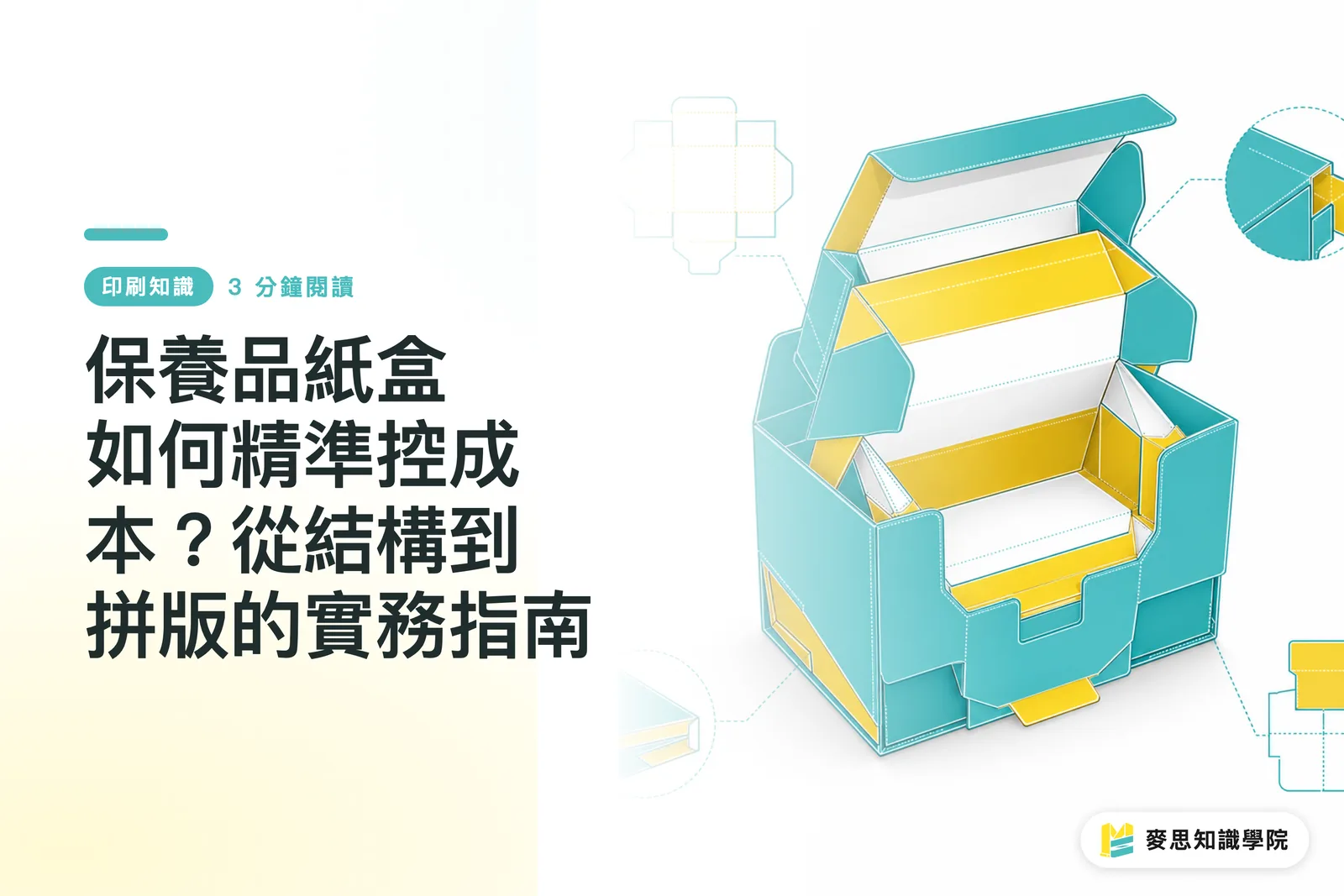
Controlling Cosmetic Box Costs: Why You Can't Just Cut Surface Finishes
When clients ask me for a quote, their first sentence is often, 'Our budget is tight, so let me drop the foil stamping.'
That's actually a huge misconception
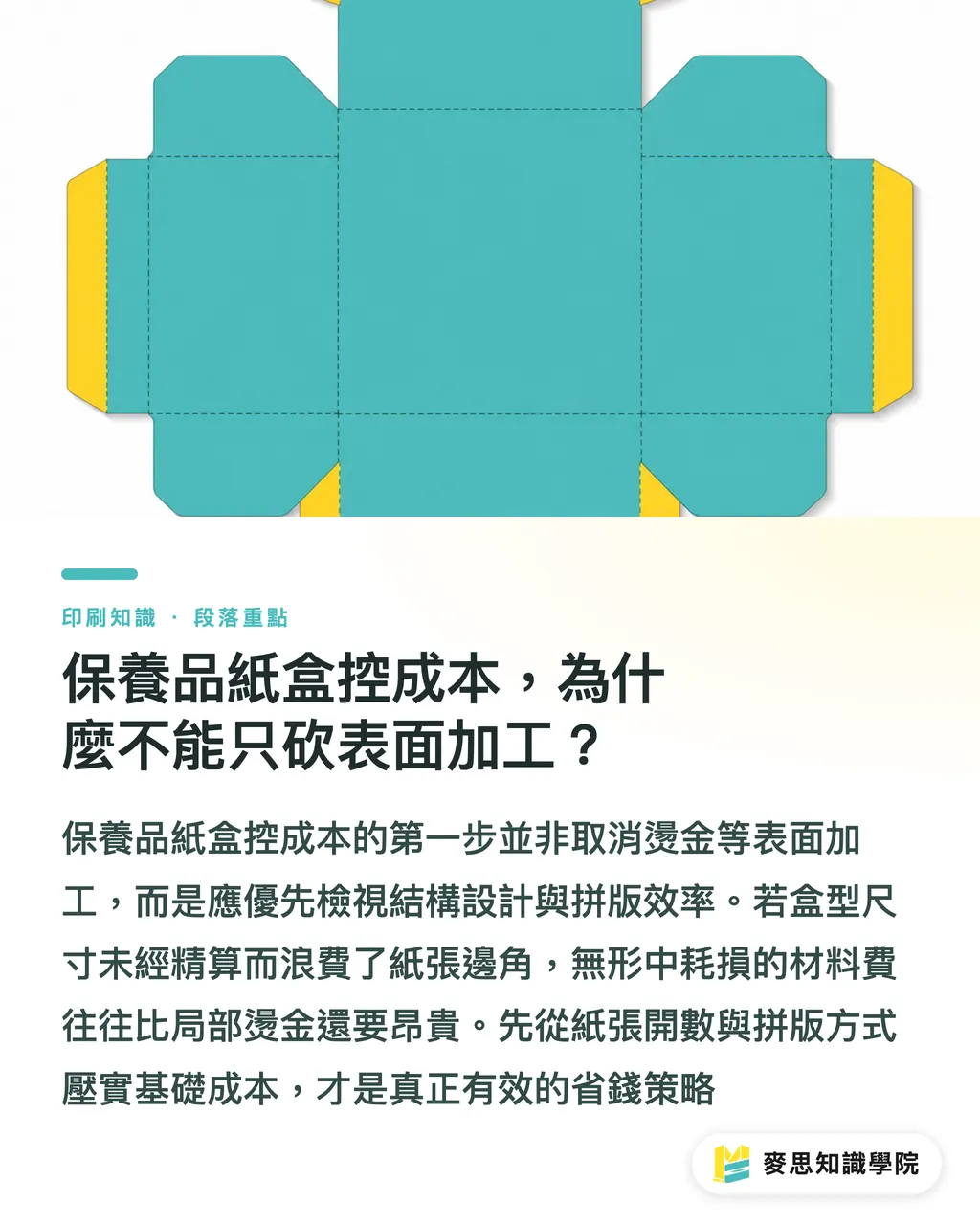
When controlling skincare box costs, step one is never slashing surface finishes. It's looking back at structural design and imposition efficiency
I often share a cardinal rule of packaging development with clients: first define purpose and weight, then pick materials and structure, and only then handle layout
If your box dimensions happen to waste paper edges, or if imposition fails to maximize plate area, the paper and plate fees wasted silently are often costlier than stamping a small foil accent
When MINDS (MS, mid-to-high-end fully custom commercial printing) reviews artwork for clients, we always nail down paper sheet cuts and imposition methods first to keep base material costs down. That's the real starting move for saving money
Starting Out as an SMB? How to Plan Shared Box Dimensions Across Multiple SKUs
Early-stage brands usually launch multiple items like facial cleansers, toners, and serums
If you create custom box dimensions for every single item, die-cutting and press setup fees alone will eat up most of your profits
In practice, the smartest move is 'shared outer box size, fine-tuned inner inserts'
You can set toner and lotion to use the same large outer box, using different-sized paper inserts or foam inside to secure the bottles
This saves money on multiple die molds, and on store shelves, a row of uniform-height boxes makes a much stronger visual impact
For series development projects like this, feel free to talk directly with the Mai Strategy Knowledge Academy consulting team. We can help you plan early on which items can share dimensions, so you won't get halfway in only to realize tooling costs went over budget
What Pitfalls Must You Check Before Sampling?
I've seen far too many designers create stunning artwork, only for the physical sample to reveal that the glass skincare bottle doesn't fit inside at all
To prevent disasters, I strongly suggest using the 'MINDS Three-Gate Press Check': inspect structure first, check print quality second, and check the folded front presentation last
During gate one, structure verification, make sure to factor in the maximum manufacturing tolerance of your containers
Glass bottles in particular expand during firing, so leave at least 2 to 3 mm of extra room in the box's inner dimensions
Also, skincare outer packaging must comply with health ministry labeling regulations. Font sizes and ingredient table placements must line up on the flat dieline, staying clear of crease lines and glue flaps
Let's clarify a key term here: a Flip-top Carton refers to a box structure where the lid is connected to the body and opens like a book. Extremely common in cosmetics and tissue boxes, it offers the dual benefits of dust protection and easy access
Paper Stiffness vs. Shipping Protection: How to Choose Materials for the Best Value?
Harder isn't always better for boxes. Overly thick paper is not only expensive, but its fold lines crack easily
For a standard 30ml serum box, 300g to 350g C1S paperboard or white cardstock is more than enough
If you handle exports or e-commerce shipping, instead of blindly thickening the box paper, move that budget toward proper outer cushioning with a Corrugated Carton
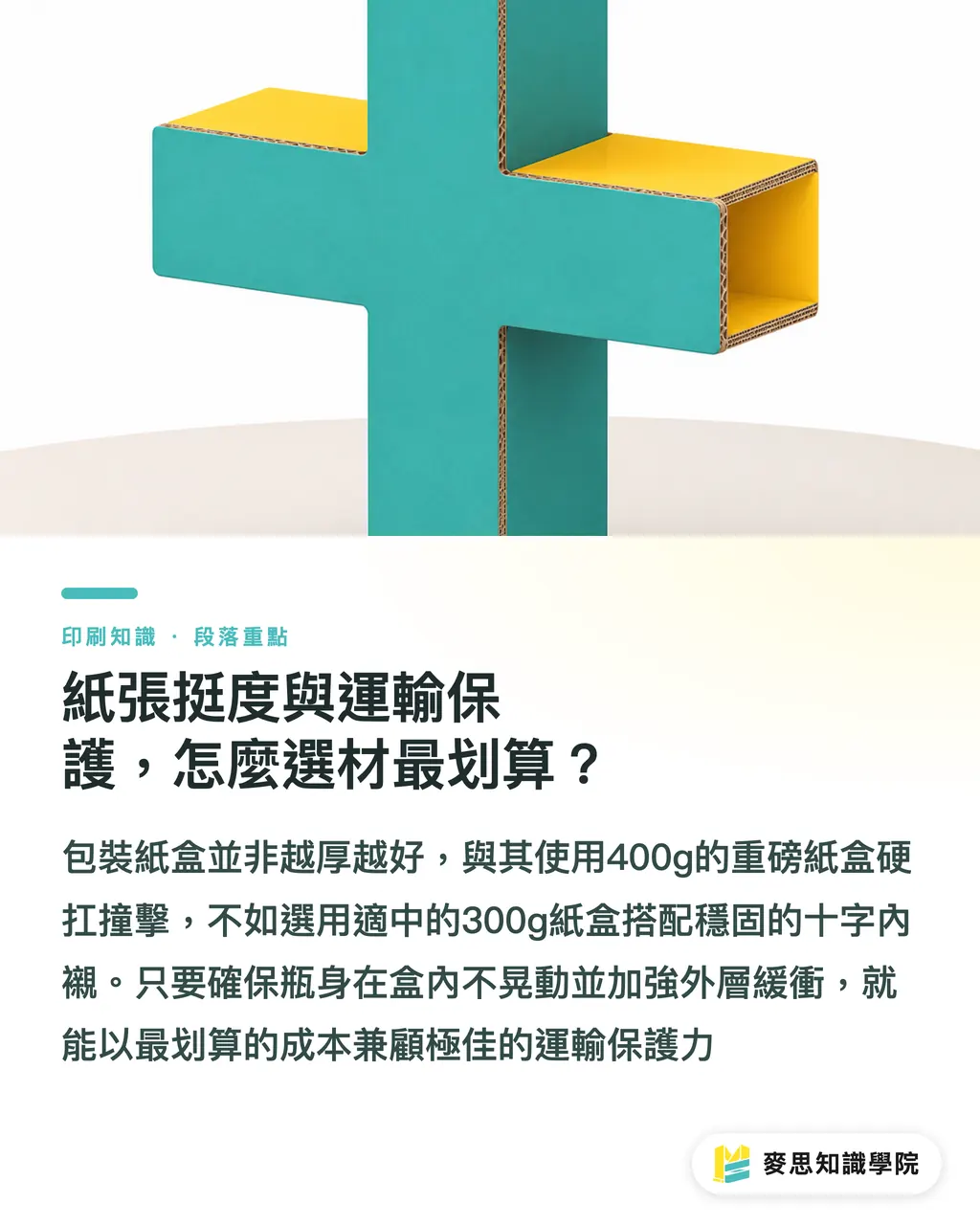
In our production line experience, using a 300g box with a structurally sound cross-shaped insert works far better than forcing a heavyweight 400g box to survive drop tests
As long as the bottle doesn't wobble inside the box, transit breakage drops sharply. That's the real solution balancing protection and cost
Key Takeaways
・Cost control centers on imposition efficiency and paper sheet cuts. Don't rush to drop surface finishes that build brand value
・Share outer box dimensions across product lines using inner inserts, saving significantly on die molds and base printing setup fees
・Always account for glass container firing tolerances, leaving extra inner box space to avoid items not fitting
・Protection depends on securing inserts, not just increasing paper thickness. Excessively thick stock leads to cracked fold lines
Further Considerations
The skincare packaging process shows that great design must be grounded in manufacturing know-how
Designers and print shops shouldn't be in an adversarial contracting relationship. Instead, bring print consultants in during the sketching phase to inspect the structure together
If future SaaS tools can automatically calculate optimal imposition based on bottle sizes and paper sheet cuts, manual trial-and-error costs will drop dramatically. That's a key digital transformation opportunity worth investing in for the packaging industry
FAQ
- On a tight budget for skincare boxes, where should you cut costs first?
- Focus first on whether box dimensions waste paper edges and if your product line can share outer boxes. This works far better than canceling foil stamping right away
- If the bottle is chosen, can the designer just measure it themselves to determine box dimensions?
- It's best to supply physical containers to the printer for measurement. Glass in particular has manufacturing tolerances, and measuring yourself easily misses thickness variations, leaving items unable to fit
- What is the MINDS (MS) Three-Gate Press Check?
- It's a pre-submission self-check process: first confirm structural viability, next check print colors and half-tone dots, and finally fold into 3D to ensure the visual layout hasn't shifted
Related articles

The Print × AI weekly
The print and AI know-how designers, brands and enterprises can use before they commit — one email, every week
MINDS Free Tools
Spine width and imposition calculators — skip the manual math, free in your browser.
MINDS Group
Need actual printing or gifting services?
From premium printing to online ordering and festive gifts — the MINDS Group sister brands take it from here.