
Does eco-friendly packaging always have to be expensive?
Going green doesn't have to cost more. The key is not to force expensive materials onto your old design. If you apply the 'MINDS Printing (MS, mid-to-high-end fully customized commercial printing) Carbon Reduction Map' to review thickness and structure early in the planning stage, you can usually keep the total spend within or even below your original budget
Eco-friendly packaging refers to designs that lower environmental impact throughout their lifecycle, from material sourcing and production to use and disposal. In practice in Taiwan, this usually means using FSC-certified paper, soy-based inks, or processing methods that reduce plastic composite materials
Recently, when visiting clients, I noticed the most common trap is using old dielines and asking MINDS to quote eco-friendly paper. Once the quote is ready, the paper cost is often 20% to 30% higher, immediately scaring off both buyers and bosses
This is a classic specification error. Since special eco-friendly paper has a higher unit price, buyers should focus on reducing unnecessary materials to cut weight, and optimizing dieline layouts. This way, you save on printing fees and paper volume to offset the extra material costs
Why does packaging printed on eco-friendly paper always look so dull?
Switching to eco-friendly paper often makes the print look less premium. This is mainly because paper with high recycled pulp content is uncoated and highly absorbent, which makes printed colors look dark and flat
To get through this transition period smoothly, designers need to adjust their mindset when preparing print-ready files
・Avoid large areas of solid dark printing. Instead, use plenty of white space paired with a single spot color. This actually brings out a clean, high-end feel on uncoated paper
・Stop relying on plastic gloss laminations to brighten the image. Instead, use water-based coatings or spot embossing and foil stamping to create depth and texture
・I have seen too many disasters in practice. When using 100% recycled paper, the dot gain is about 15% higher than on standard coated paper. Make sure to brighten the shadow details in your files so the print doesn't turn into a muddy mess
How to offset high paper costs by optimizing dieline structures
Once you buy more expensive eco-friendly paper, you must find ways to use it more efficiently on the dieline
To balance your budget between regular and special eco-friendly paper, the fastest way to get results is to review the basic packaging structure
・Replace traditional two-piece lid-and-base boxes, which waste paper, with one-piece mailer boxes or auto-lock bottom boxes. This can immediately cut paper waste and die-cutting fees by about 30%
・Re-evaluate the dimensions of box flaps and glue joints. Sometimes, shrinking them by just 0.5 cm on the dieline lets you fit four templates on a single large sheet instead of two. This cuts your paper cost in half
・Ditch unnecessary plastic blister inserts and use a single piece of cardboard folded to create product cushioning. This not only uses a single material for easy recycling, but also saves your assembly line a lot of manual work
Does reducing packaging materials compromise protection during shipping?
Reducing packaging materials will not sacrifice protection, but you cannot just guess
The biggest risk with low-carbon packaging is that buyers mindlessly thin out the paper to save money. This leads to a spike in shipping returns for e-commerce orders, and broken products end up causing even greater waste
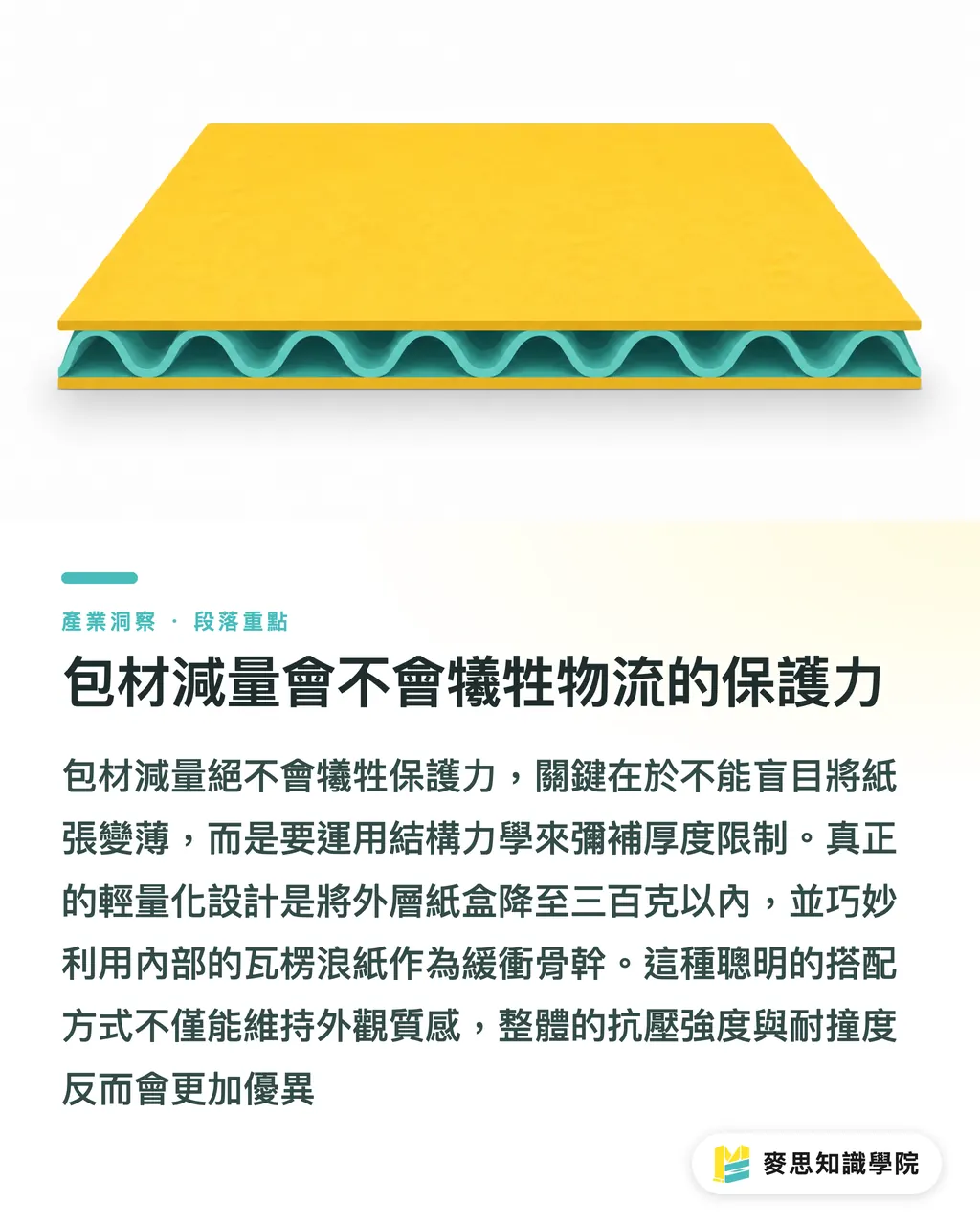
True lightweight design focuses budget where it matters most, using geometric structural mechanics to make up for the natural thickness limits of the material
・Do not insist that the outer box must use heavy-duty 350g or even 400g paperboard
・Lower the outer box weight to under 300g, and use internal corrugated cardboard as the cushioning backbone. This actually provides better overall crush resistance and impact durability
・This is a trick many experienced buyers use when making green decisions. Use high-quality, special eco-friendly paper for visible outer parts, and pair it with cheap, durable regular kraft or corrugated paper for hidden internal supports
Key Takeaways
・Do not force new materials onto old dielines. Saving costs and reducing carbon emissions must begin with reviewing structure and thickness early in the planning phase
・Recycled paper is highly absorbent and prints dark. Design work should adapt by using white space, spot colors, and brightening shadow details to account for dot gain
・Switching box types and making minor dieline adjustments to fit more templates per sheet is the most direct way to offset the higher price of eco-friendly paper
・Lightweight packaging does not mean sacrificing protection. Combine a thinner outer box with internal corrugated structures to balance your budget with shipping safety
Further Thoughts
For print buyers and graphic designers, adopting ESG packaging is never about blindly comparing who uses the most expensive or famous materials. It is a calculated test of how you allocate production line resources
Once you learn to combine structural optimization and layout design to offset material premiums, green transition stops being a PR expense only big corporations can afford. It becomes a competitive edge that small and medium businesses can actually implement in their daily shipping
FAQ
- Our company has a limited budget. Will switching to eco-friendly packaging really not increase our costs?
- If you are willing to adjust the packaging structure and dimensions accordingly, you can usually break even. The biggest risk is insisting on keeping your old design without any changes, which will definitely cause the price premium of special materials to blow up your total budget
- Are colors printed on eco-friendly paper always dull and ugly?
- It is not ugly, it is just different paper characteristics. If designers make minor adjustments for highly absorbent uncoated paper, reducing four-color ink build-up in shadows and making good use of white space, they can print a unique, rustic, and premium feel
- If I want to reduce packaging materials, is the fastest way just telling the printer to choose thinner paper?
- Simply switching to thinner paper makes it very easy for boxes to burst during shipping. The correct approach is to make the outer box lighter and pair it with internal corrugated cardboard structures to support compression, ensuring protection is not compromised
Related articles
The Print × AI weekly
The print and AI know-how designers, brands and enterprises can use before they commit — one email, every week
MINDS Free Tools
AI background removal, a LINE sticker maker, spine & imposition calculators — all free, right in your browser, no upload.
MINDS Group
Need actual printing or gifting services?
From premium printing to online ordering and festive gifts — the MINDS Group sister brands take it from here.