
Why Do Your Printed Boxes Always Look Dull and Muddy?
For e-commerce shipping packaging to be drop-proof and look stunning, the key lies in understanding the ink absorption properties of corrugated cardboard. That is why at MINDS, when processing these files, our very first step is always to confirm whether you will use screen printing or flexography
From what we've seen on the production line over the years, many clients bring in beautifully designed print-ready files only to complain that the colors look dull once printed on corrugated board
Offset printing uses coated papers where the ink stays neatly on the surface
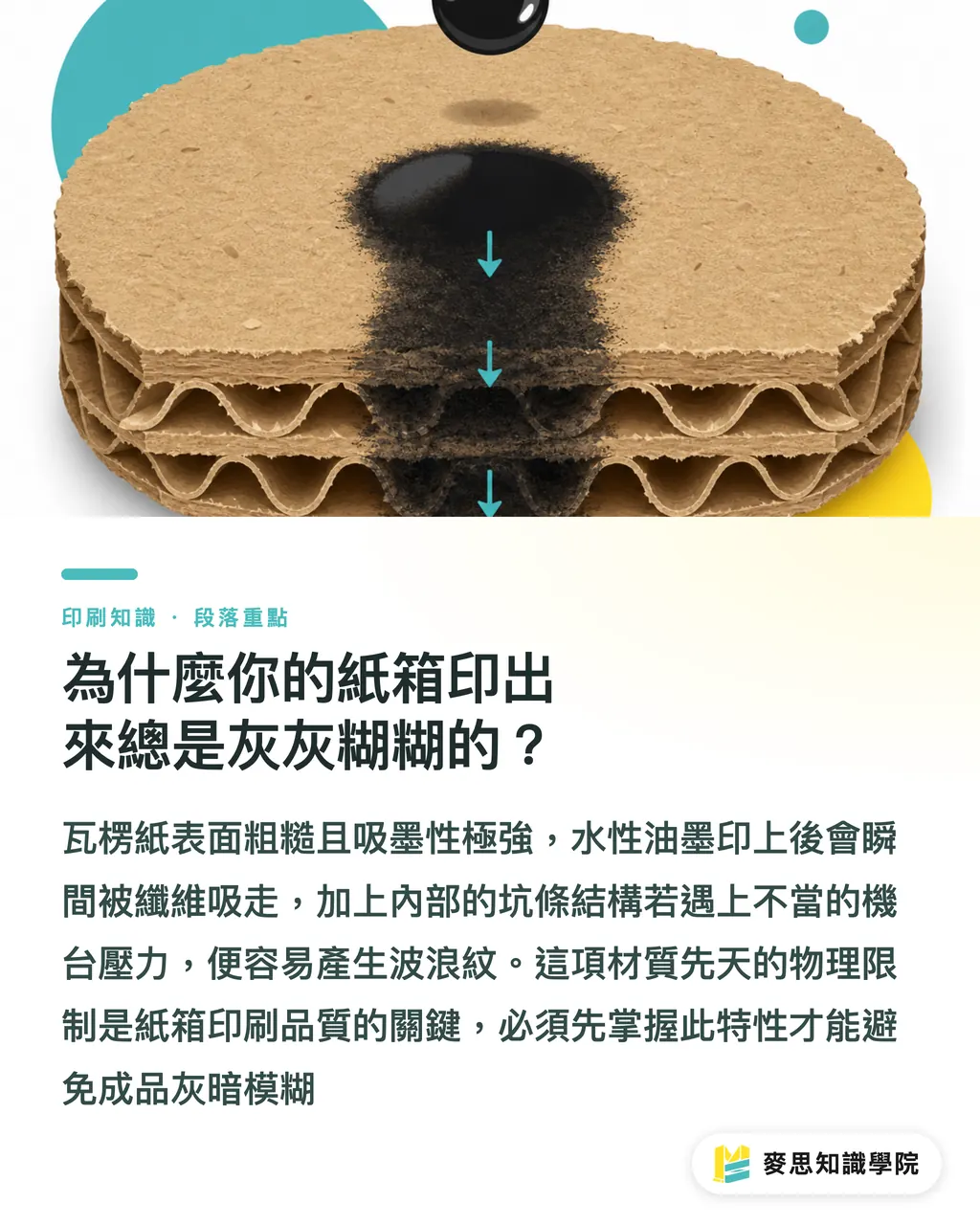
However, corrugated cardboard has a rough surface and is highly absorbent. The moment water-based ink is applied, it is immediately sucked in by the fibers. Combined with the internal flute structure, any incorrect machine pressure will print wave-like washboard patterns
This is an inherent physical limitation of the material. If you don't understand this, it won't matter how beautifully you edit your images
Screen or Flexo? How Should Small and Medium E-commerce Brands Choose?
To solve color reproduction issues on corrugated paper, you must first understand the business logic and physical characteristics of these two processes
・Flexographic Printing: Relies on water-based ink printed directly onto the cardboard. It is fast and has a low unit cost, making it ideal for high-volume standard shipping boxes. The downside is that the ink penetrates the material, resulting in lower color saturation
・Screen Printing: Uses a thick ink layer (such as plastisol ink) to layer pigments on the paper surface, directly masking the base color. It is suitable for dark cardstock or premium packaging demanding ultimate saturation
For startup or high-volume small-and-medium brands, I usually recommend ordering flexo boxes directly from MINDS to get the most bang for your buck
However, if you are selling high-ticket items and need saturated brand colors to elevate the unboxing experience, you'll need screen printing's thick ink layer to win the day
How to Prepare Corrugated Artwork Without Running Into Disasters?
Designers must shift their mindset when preparing files. In practice, I use the 'MINDS (MS, fully customized mid-to-high-end commercial printing) Three-Gate Checklist' to inspect: material flatness, ink adhesion, and registration accuracy
For corrugated boxes, you must clear the printing minefields yourself before sending files to print
・Avoid small knockout (reversed-out) text: Corrugated fibers cause ink to bleed. Knockout text smaller than 12pt or extremely fine lines will almost certainly smudge into a blur, so please make your fonts larger and bolder
・Be cautious with large solid color blocks: Flexo printing on large solid areas tends to reveal the underlying flute patterns. If you must have them, screen printing is recommended to ensure even color and opacity
・Use base color two-color overprinting: We suggest using the brown of kraft paper or the base color of white-topped boxes directly as a design element, printing only a dark main visual. This saves money and is virtually foolproof
Why Can't Protective Packaging Just Rely on Thicker Cardboard?
When high defect rates cause return rates to skyrocket, many people's instinct is to switch to thicker cardboard. In practice, however, incorrect structure and dieline calculations are the real culprits
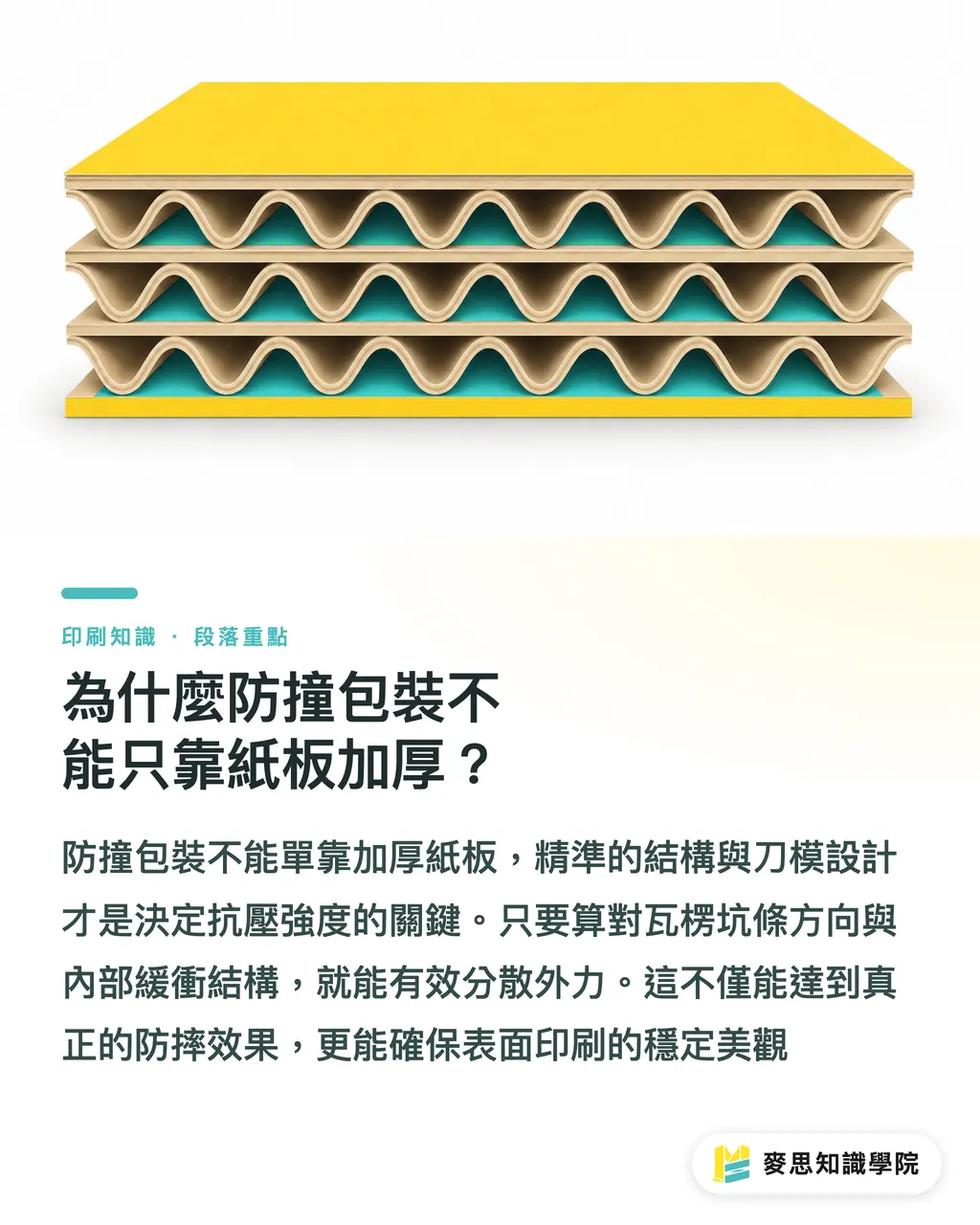
The orientation of the corrugated flutes directly determines the box's compressive strength, while the internal cushioning structures and interlocking designs distribute external forces
When your packaging structure is calculated precisely, the pressure control during surface printing will also remain stable
This prevents the cardboard from being too soft and getting pressed with uneven printing marks on the press
From drop resistance and compression strength to the final print quality, this is an interconnected production reality
Key Takeaways
・Corrugated board has high ink absorption and an uneven surface. Never prepare artwork for it with a coated paper mindset
・Flexography is suitable for high-volume, simply designed standard boxes, whereas screen printing relies on a thick ink layer to deliver a premium feel
・Avoiding small knockout text and extremely fine lines while using the box's base color for two-color designs is the smart way to go
Further Thoughts
Many brands spend heavily on visual design only to stumble at the box printing stage. The problem usually lies in the information gap between the design side and the manufacturing side
AI-assisted design is highly popular now, allowing rapid image generation and layout. However, understanding the physical properties of ink and the limits of paper is what determines whether the final product becomes a return disaster
Before sending your next job to print, feel the piece of cardboard you plan to print on. Think carefully about its ink absorption and flute orientation, and your design will be much more practical
FAQ
- Can detailed gradient patterns be printed on corrugated boxes?
- Highly discouraged. The surface of corrugated board is rough, and printing gradients via flexography easily leads to banding or dot gain. If you truly need high-resolution graphics, we recommend using folding cartons with offset printing laminated to corrugated flutes instead
- Why does the black I printed look greyish on corrugated cardboard?
- Because the water-based ink used in flexography is absorbed by the rough corrugated fibers. If you need an extremely saturated, deep black, you must switch to screen printing to cover it with a thick ink layer
- Do I have to spend a fortune on screen printing to create premium e-commerce packaging?
- No, you don't. You can choose white-topped corrugated boxes paired with single-color dark flexo ink. By using generous white space and clean, bold typography, you can easily achieve a minimalist, premium feel at a low cost
Related articles


The Print × AI weekly
The print and AI know-how designers, brands and enterprises can use before they commit — one email, every week
MINDS Free Tools
Spine width and imposition calculators — skip the manual math, free in your browser.
MINDS Group
Need actual printing or gifting services?
From premium printing to online ordering and festive gifts — the MINDS Group sister brands take it from here.