
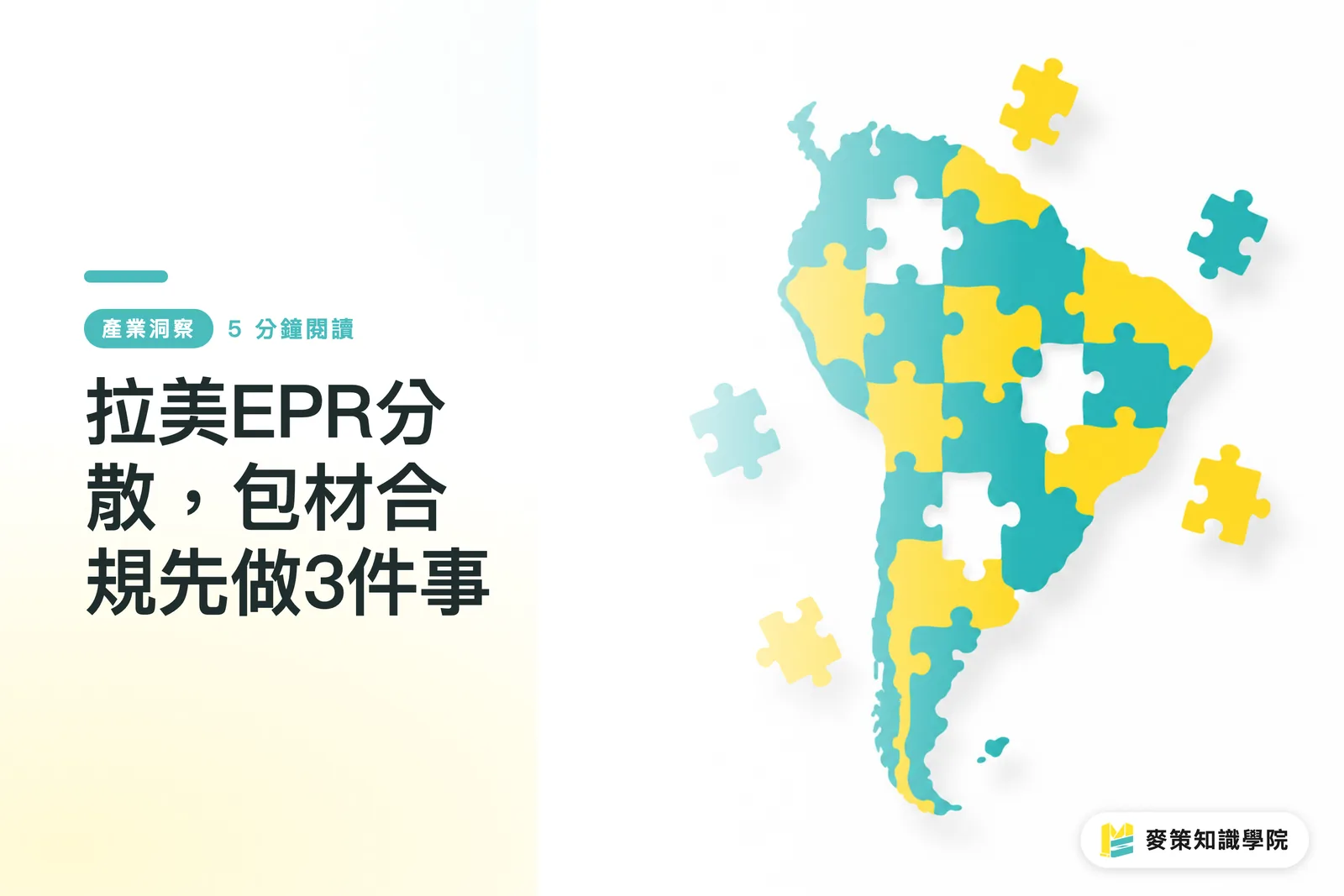
Why is EPR in Latin America hard to standardize?
EPR in Latin America cannot be handled with a single set of rules because each country arranges producer responsibility, recycling targets and enforcement mechanisms differently. Extended Producer Responsibility (EPR) extends the post‑market collection, sorting and treatment duties of packaging to producers, brands and upstream supply‑chain partners
Start by splitting the market; the article Latin America EPR: Regulatory Momentum Meets Fragmented Implementation lists 11 markets with existing laws or schemes, including Brazil, Chile, Colombia, Costa Rica, Dominican Republic, Ecuador, Mexico, Paraguay, Peru, Uruguay and Venezuela, but their maturity levels differ
From my long‑term view of production lines and client sites, errors often come from copying a packaging approach from one country straight to the next. The recycling label becomes a superficial issue. When reporting duties, material limits and recycling destinations don't align, procurement struggles to factor the risk into pricing and lead times

How should brands view regulatory fragmentation in Latin America?
Brands should treat EPR as a market‑specific packaging specification system: first verify the local regime, then decide which materials and designs can be shared. Chile passed an EPR law in 2016 and saw obligations start in 2023; Colombia uses Resolution 1407 to enforce mandatory recycling targets, and Uruguay was the earliest Latin American country to adopt packaging‑specific EPR
・Mexico: Since 2002 there has been a voluntary industry‑wide scheme focused on PET bottles; the General Law on Circular Economy (LGEC) was published in January 2026, and EPR duties will be added gradually
・Brazil: Uses reverse logistics and shared product responsibility, with producers, distributors and packaging makers sharing costs, while recycling is handed to waste picker cooperatives
Why must packaging design be changed before shipment?
Packaging design must be revised before shipment because EPR ultimately lands on sorting, recycling and traceability, and paperwork cannot handle packaging that is hard to dismantle, separate or process consistently. Interviews reveal that Latin America lacks high‑capacity material recovery facilities and food‑grade recycling plants, incoming material quality is unstable, and the recycling chain also depends on how waste pickers are incorporated
I first look at reduction and mono‑material. Mono‑material means the main structure is made of a single material type, reducing one step of disassembly during sorting and downstream recycling. Coveris launched a mono‑material shrink film, and CITO switched its CITO TAPE to a recyclable package; both cases embed recycling criteria into the material structure and supply decisions
This changes the design brief: beyond colour, size and shelf impact, you must list substrate, ink, adhesive, film and seal components. If the brand involves MINDS during the proof stage to verify the material list, cost, performance and compliance tensions surface before mass production

What are the first three steps for small‑and‑medium brands?
SMBs should start with three steps: segment the market, dissect the packaging, and keep evidence. This order turns regulatory uncertainty into design and procurement tasks that can be handled before finalizing the design
・1. Segment the market: separate export countries, note regulatory status and responsible parties. Tackle markets with existing schemes such as Chile and Colombia first, then review Mexico's gradual LGEC duties in 2026 and Brazil's reverse‑logistics collaborations
・2. Dissect the packaging: create a Bill of Materials (BOM) that records substrate, layer count, ink, adhesive, film, seal components and recycling assumptions for each item. Reduce weight where possible, and if mono‑material is viable, conduct performance validation first
・3. Keep evidence: place the design files, supplier material declarations, proof versions, reporting responsibilities and recycling plans in a single traceable record, and have the brand, design, procurement and printing partners verify it before quoting and mass production
I call this sequence the "Mai Strategy Print‑to‑Ship Three‑Gate Process": market responsibility, material structure, evidence documents. When cross‑border packaging needs to be broken down into deliverable specs, the Mai Strategy Knowledge Academy consulting team can help brands translate regulatory issues into design briefs, procurement lists and pre‑print checks, so compliance work happens before final approval

Key Takeaways
・There is no single pass for Latin American EPR; break down responsibilities by country before discussing shared packaging
・The less mature the recycling system, the more the material structure must be addressed during design
・Mono‑material and reduction are the most communicable cross‑market approaches, but still need to match local rules and recycling conditions
・Compliance evidence must travel with the design files; you cannot wait until after mass production to add paperwork
Further Thoughts
For printing production, include the packaging BOM, supplier declarations and proof versions in the pre‑quote work package. For designers, insert reduction, mono‑material and recycling assumptions into the brief. When introducing AI, let tools handle rule matching, BOM gap alerts and version organization, but keep regulatory responsibility with humans. For SaaS, create traceable fields for market, material, responsible party and evidence; pilot one product line and an export market first, then scale to other SKUs once it works
Further Reading
FAQ
- What is EPR?
- Extended Producer Responsibility (EPR) extends the post‑market collection, sorting, treatment and some traceability duties of packaging to brands and upstream supply‑chain partners, so packaging design impacts compliance costs and market entry
- Which Latin American countries should be prepared first?
- Chile, Colombia and Uruguay already have operational packaging EPR schemes; Mexico's LGEC was announced in January 2026, and Brazil uses reverse logistics with shared product responsibility. Brands should inventory each export country separately
- Is a mono‑material package automatically compliant everywhere?
- No. Mono‑material is a design approach that eases sorting and recycling, but it does not automatically grant local compliance; you still need to check market rules, recycling facilities and reporting obligations
- How can SMBs start without a dedicated legal team?
- First create a market list, a BOM and material declarations, and have the brand, design, procurement and printing partners verify them before quoting and mass production. Then use consultants or tools to fill gaps in cross‑border rule compilation
Related articles
The Print × AI weekly
The print and AI know-how designers, brands and enterprises can use before they commit — one email, every week
MINDS Free Tools
AI background removal, a LINE sticker maker, spine & imposition calculators — all free, right in your browser, no upload.
MINDS Group
Need actual printing or gifting services?
From premium printing to online ordering and festive gifts — the MINDS Group sister brands take it from here.