

Overview
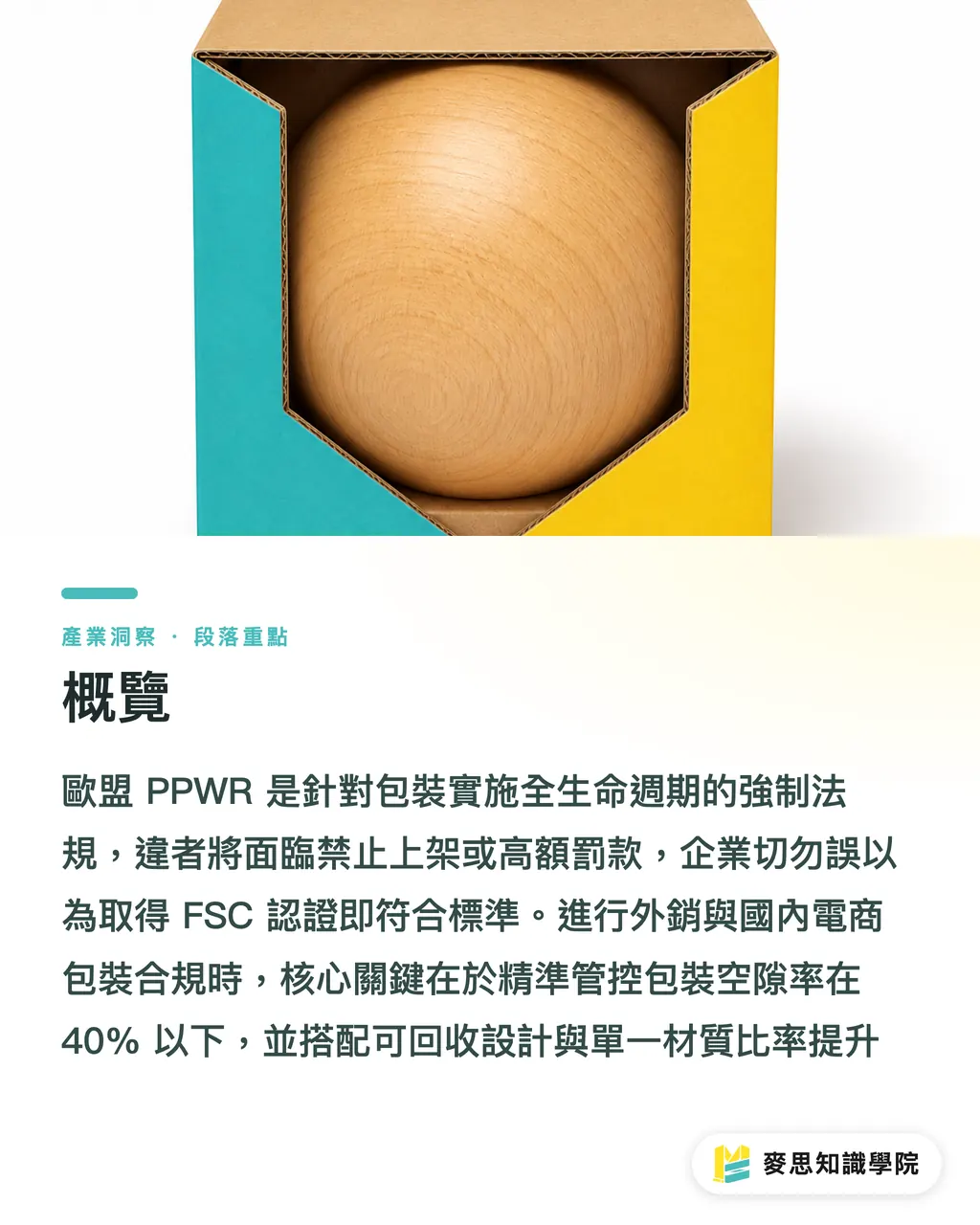
When companies ensure packaging compliance for EU exports and domestic e-commerce, the key lies in strictly controlling the packaging void ratio below 40%, increasing the proportion of mono-materials, and preparing supplier Declaration of Conformity documents. Based on experience helping hundreds of exporters optimize packaging, the team at MINDS found that many businesses mistakenly assume obtaining FSC certification alone guarantees environmental compliance
The EU Packaging and Packaging Waste Regulation (PPWR) is a mandatory law covering the entire packaging life cycle. It requires packaging to meet Design for Recycling (DfR) standards, stay under the 40% maximum void ratio, and include mandatory post-consumer recycled plastic content. Non-compliant products face ban from shelves or heavy fines
Why Can FSC-Certified Paper Boxes Still Be Detained by EU Customs?
In recent months working directly with export clients, the confusion I hear most often is why FSC paper boxes get held up at customs
The answer is simple
FSC only proves that the wood source comes from a sustainably managed forest. It does not mean the packaging structure meets EU PPWR standards for recycling and waste reduction
Many Taiwanese exporters cover box surfaces with gloss film, use non-dismantlable EVA foam inserts, or print with traditional inks containing heavy metals. Recycling centers in the EU classify these designs as composite waste
If the internal void ratio of the box exceeds the legally mandated 40% limit, customs officers have full authority to reject the shipment or impose environmental penalties
What Are EU PPWR and Taiwan E-Commerce Reduction Rules Really Auditing?
Whether exporting to the EU or shipping for domestic e-commerce, environmental audits have shifted from passive recycling to mandatory front-end design reviews
EU PPWR explicitly mandates that starting in 2030, packaging void ratios must not exceed 40%, and packaging must use mono-material designs built for high recyclability
Domestic Ministry of Environment rules for online shopping packaging reduction focus similarly on shipping box void ratios, sealing tape usage, and banning PVC materials
When sourcing packaging materials, companies must track three main audit metrics: transit packaging void ratio, ease of mono-material separation, and concentration limits for hazardous substances such as PFAS and heavy metals
Don't panic just yet
By applying reduction logic during the initial structural design and tooling stage, subsequent compliance costs drop by more than half
Three Compliance Checks: Practical Audits for Transit Volume, Mono-Materials, and Hazardous Substances
Cutting packaging carbon footprint cannot rely on guesswork. It requires precise structural calculations and physical property testing
Packaging void ratio is calculated as (Total Packaging Volume - Content Volume) ÷ Total Packaging Volume × 100%. If the contents include multiple items, use the combined total volume. Reducing unnecessary padding and extra outer boxes is step one to passing audit
Mono-material means the entire package uses a single base material, such as pure paper or pure PE. If film coatings or handles made of different materials are included, they must be designed so consumers can separate them easily without tools
For hazardous substance audits, request full-scope test reports from SGS or TUV from suppliers regularly. Focus on verifying that fluorides (PFAS) and heavy metal residues fall well below statutory limits
How to Perform Self-Audits with the MINDS (MS) 3-Step Pre-press Audit
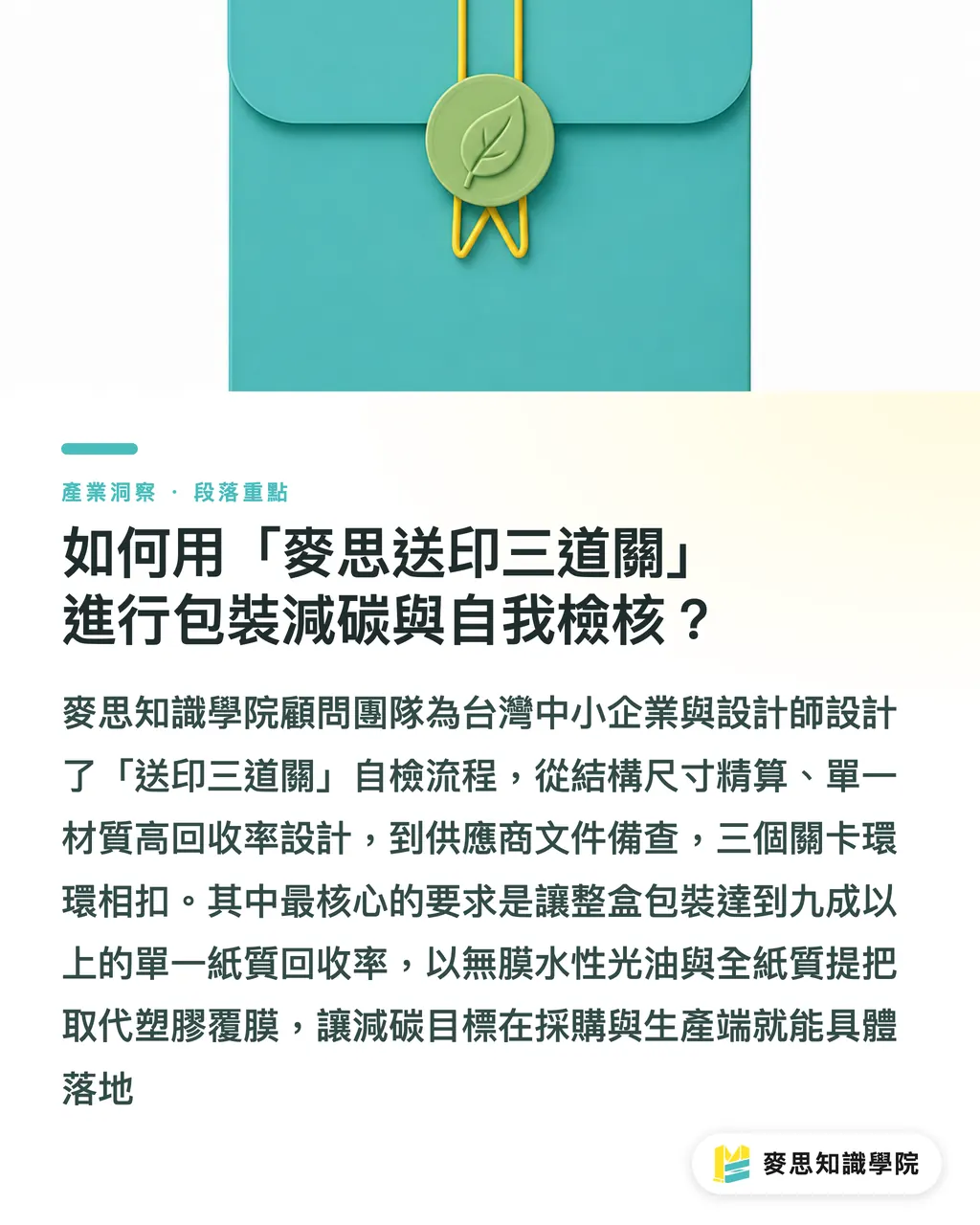
To tackle the pain points of Taiwanese SMEs and designers during packaging transformation, the Mai Strategy Knowledge Academy Consulting Team put together a standardized audit workflow
Corporate buyers and structural designers can perform quick self-checks using the MINDS (MS, mid-to-high-end custom commercial printing) 3-Step Pre-press Audit:
・① Step 1: Precise Volume and Structure: Calculate finished packaging void ratios to ensure they stay below 40%. Replace plastic foam inserts with single-piece folding paper boxes to directly cut transit packaging volume
・② Step 2: High Mono-Material Separation: Use film-free water-based varnish instead of OPP plastic lamination. Switch handle and sealing structures to all-paper designs, ensuring the box achieves over 90% single-paper recyclability
・③ Step 3: Complete Documentation and Testing: Build a complete Declaration of Conformity (DoC) file archive, including paper FSC certificates, non-toxic ink declarations, and hazardous substance test reports to clear customs without friction
Key Takeaways
・EU PPWR and domestic e-commerce regulations mandate a packaging void ratio below 40%. Excessive packaging risks customs rejection and fines
・Mono-material design forms the core of recycling compliance. Replace plastic film coatings and multi-material inserts with water-based varnish and all-paper structures
・Obtaining FSC certification does not equal meeting carbon reduction standards. Procurement teams must request full Declaration of Conformity (DoC) paperwork and hazardous substance test reports
・Using the MINDS (MS) 3-Step Pre-press Audit enables early volume calculations and structural optimization during product development, significantly cutting export compliance costs
Further Reflection
Print manufacturers and packaging designers should turn regulatory constraints into opportunities for structural innovation. Future packaging competitiveness lies not in surface decoration, but in material purity and ease of disassembly
Designers should adopt automated void ratio estimation tools before finalizing artwork. Printing plants should quickly establish process standards for film-free water-based varnish and eco-friendly water-based adhesives, helping clients build carbon reduction and compliance directly into early packaging development
Further Reading
FAQ
- Our product is FSC-certified. Why do we still face customs issues when exporting to the EU?
- FSC only verifies that wood originates from sustainably managed forests. EU PPWR regulations separately enforce a maximum 40% packaging void ratio and Design for Recycling standards. Packages containing non-dismantlable plastic film or excessive empty space will still violate regulations
- What is mono-material packaging? Does a paper box covered with plastic film count as mono-material?
- Mono-material means the main packaging structure consists of a single material that recycles easily. A paper box laminated with OPP plastic film that cannot be easily peeled off is treated as composite material at recycling plants. Switching to water-based varnish is recommended to meet full paper recycling standards
- How should companies calculate packaging void ratio to comply with domestic and overseas plastic reduction rules?
- The formula for packaging void ratio is (Total Packaging Volume - Content Volume) ÷ Total Packaging Volume × 100%, using actual content volume. During the structural design phase, replace extra foam box space with single-piece paper card structures
- What supporting documents should companies request from suppliers during packaging compliance reviews?
- Companies should request supplier Declaration of Conformity (DoC) documents, FSC Chain of Custody certification, heavy-metal-free and PFAS-free test reports, and proof of post-consumer recycled plastic content percentage
Related articles


The Print × AI weekly
The print and AI know-how designers, brands and enterprises can use before they commit — one email, every week
MINDS Free Tools
AI background removal, a LINE sticker maker, spine & imposition calculators — all free, right in your browser, no upload.
MINDS Group
Need actual printing or gifting services?
From premium printing to online ordering and festive gifts — the MINDS Group sister brands take it from here.