

When Clients Ask for 'Antimicrobial Packaging,' What Do They Actually Want?
When clients bring up 'antimicrobial,' they usually do not want a thin surface coating. They want real material performance that withstands washing and passes strict regulatory standards
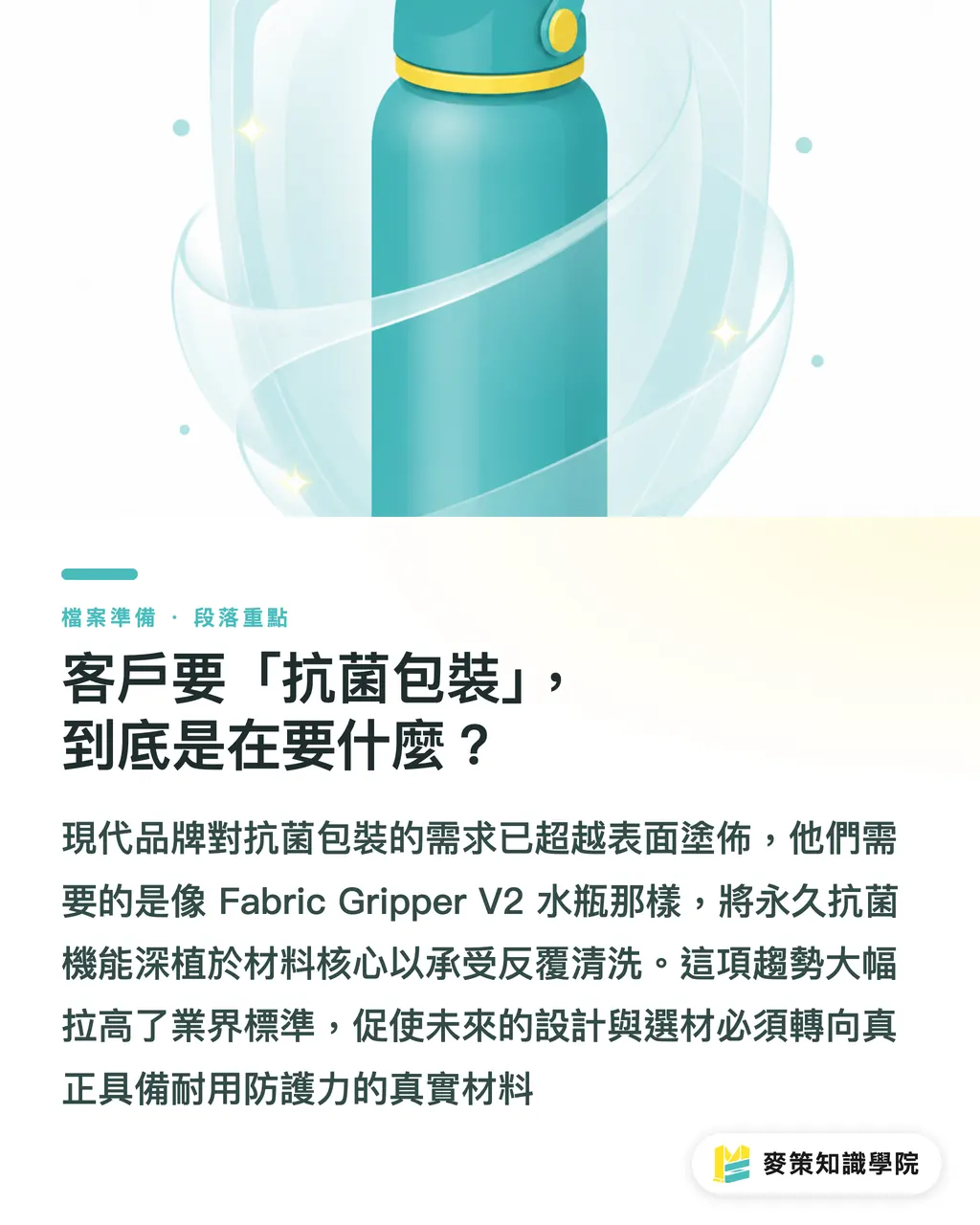
Over the past few months, the food and delivery brand clients I work with have set much higher bars for packaging hygiene. It used to be enough to add an antimicrobial varnish over a paper box, call it a marketing highlight, and call it a day. But seeing Fabric roll out the Gripper V2 reusable bottle, I knew the industry benchmark was just pushed up another notch
This product directly promotes 'permanent' antimicrobial protection, targeting high-frequency settings like sports, dining, and delivery. That means the packaging material has to withstand repeated commercial washing and physical friction. Traditional printed surface coatings simply cannot hold up. Brands now want functionality baked right into the material's DNA, and for those of us handling design and material selection upfront, the rules of the game have changed
Surface Coating vs. Masterbatch Additive: Practical Differences
The core difference comes down to whether the antimicrobial agent sits on the surface or is blended directly into the material
From my time on production lines, antimicrobial packaging processes generally follow one of two routes. For the Gripper V2 to claim permanent results, it is almost certainly the latter. When a client requests this kind of high-performance material, I always suggest consulting MINDS, who have direct experience handling specialty plastics, to evaluate molding and printing feasibility instead of guessing on your own
・Surface Coating: Applied as the final step, usually as an extra antimicrobial varnish over the ink. The advantage is low cost and straightforward outsourcing, but the downside is that it wears off after some friction or a few cycles in the dishwasher
・Masterbatch Additive: Antimicrobial agents like silver ions are blended directly into the raw plastic resin before injection molding or blow molding. Tooling and material costs are higher upfront, but the protection lasts as long as the bottle itself and will not rub away from surface wear
3 Blind Spots to Watch When Sending High-Performance Plastics to Print
When working with antimicrobial materials, designers cannot just focus on visuals. You have to verify compliance, surface tension, and artwork labeling
The physical properties of antimicrobial plastics differ from standard PET or PP. No matter how good your layout looks, it is useless if the ink will not adhere or regulators reject the packaging. Here is the practical checklist you should review before sending anything to production
1. Request material compliance documentation: The FDA has recently tightened checks on self-determined GRAS (Generally Recognized as Safe) claims for food-contact materials. Before sending jobs out, always ask your supplier for food-grade safety declarations on the antimicrobial agent to confirm it will not leach toxic substances
2. Check surface tension (Dyne level): Plastics with antimicrobial additives often turn out slicker or repel ink. Proofing runs are a step you can never skip, and production lines sometimes need an extra corona treatment pass so the ink can actually grab on
3. Standardize packaging claim copy: If you plan to print a 'permanent antimicrobial' badge on the artwork, make sure the client's legal team has reviewed the test reports. As a designer, your job is to keep those badges aligned with dieline and bleed rules so they do not get trimmed off, and keep these special claim layers isolated in your file
Prepress in Practice: How to Set Up Files so the Plant Won't Reject Them
Your prepress logic depends on how the antimicrobial property is built into the product, and you need to make the finishing layers clear in Illustrator
A lot of junior designers think adding a note saying 'needs antimicrobial' is enough, but production operators will usually reject those files immediately. Artwork files are blueprints for the factory floor, and we have to label them in a language production teams understand
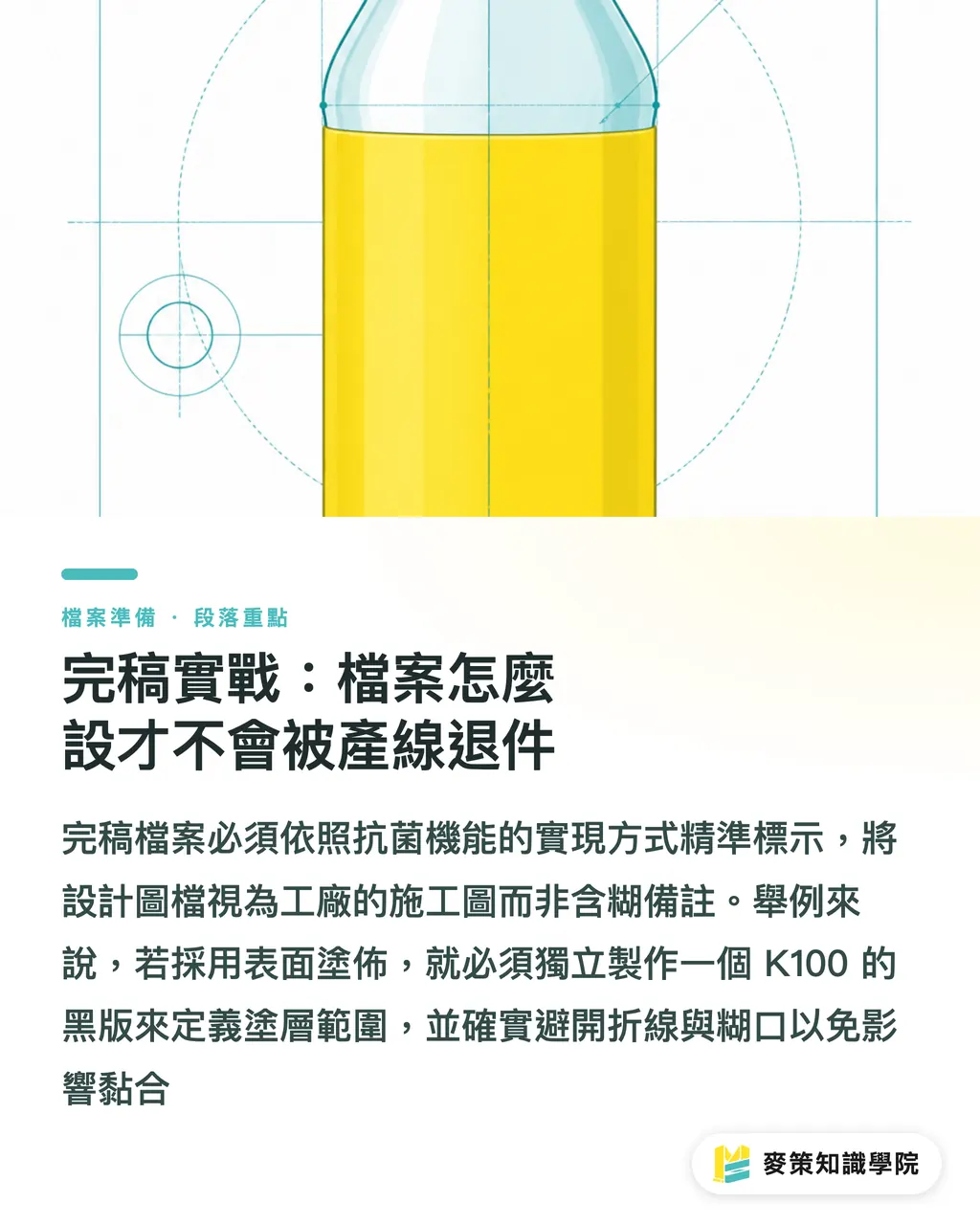
・If using surface coating: Create a dedicated 100% K spot plate in your prepress file (similar to setting up a spot UV or foil stamping layer) to clearly mark the coating coverage area. I usually recommend keeping it away from fold lines and glue flaps so the coating does not weaken adhesive bonding
・If using masterbatch additive (like Gripper V2): You do not need a dedicated plate on the artwork because the entire bottle is inherently antimicrobial. The priority here is specifying the exact supplier material code in the work order's material field, along with a note in the file reminding them to test ink adhesion
・Bleed and dot screens: High-performance plastics sometimes lack ideal surface smoothness. Large solid color blocks can easily show mottling or uneven ink laydown. I suggest using halftone gradients or letting the base material show through, while keeping bleed at the standard 3 mm
Key Takeaways
Antimicrobial performance is moving away from surface coatings driven by marketing toward material-level masterbatch additives
Reusable packaging is becoming a hard requirement, and standing up to washing and wear is the baseline
A designer's job is no longer just visual. It is about mastering material compliance and ink adhesion in post-processing
Further Thoughts
For small and mid-sized print shops and packaging design teams, Fabric's case is a clear wake-up call. As overseas markets build hygiene directly into materials, we cannot just keep selling paper boxes or pretty graphics. The teams that can help brands solve new materials, environmental compliance, and print adhesion all together will win long-term contracts. Next time you start a project, try asking your client upfront: 'Have you considered using antimicrobial masterbatch for this packaging?'
Further Reading
FAQ
- Can antimicrobial packaging be used directly as a food container?
- Not necessarily. You must verify whether the antimicrobial agent and base substrate hold FDA or local food-contact grade certifications. You cannot rely solely on general antimicrobial test reports
- Do I need to mark the antimicrobial coating area during prepress?
- If it is a surface coating, you need a dedicated spot black plate in the prepress file to indicate coverage. If the antimicrobial property is built into the material itself (like the Gripper V2), simply specify the material code on the work order, with no extra plate needed on the artwork
- Are printing costs higher for antimicrobial plastics?
- The raw material itself costs more, but printing fees vary. If surface tension shifts, the plant may need additional corona treatment or specialty inks, which is where extra processing costs actually come in
Related articles


The Print × AI weekly
The print and AI know-how designers, brands and enterprises can use before they commit — one email, every week
MINDS Free Tools
Imposition calculator and preflight file check — free prepress tools, right in your browser.
MINDS Group
Need actual printing or gifting services?
From premium printing to online ordering and festive gifts — the MINDS Group sister brands take it from here.