
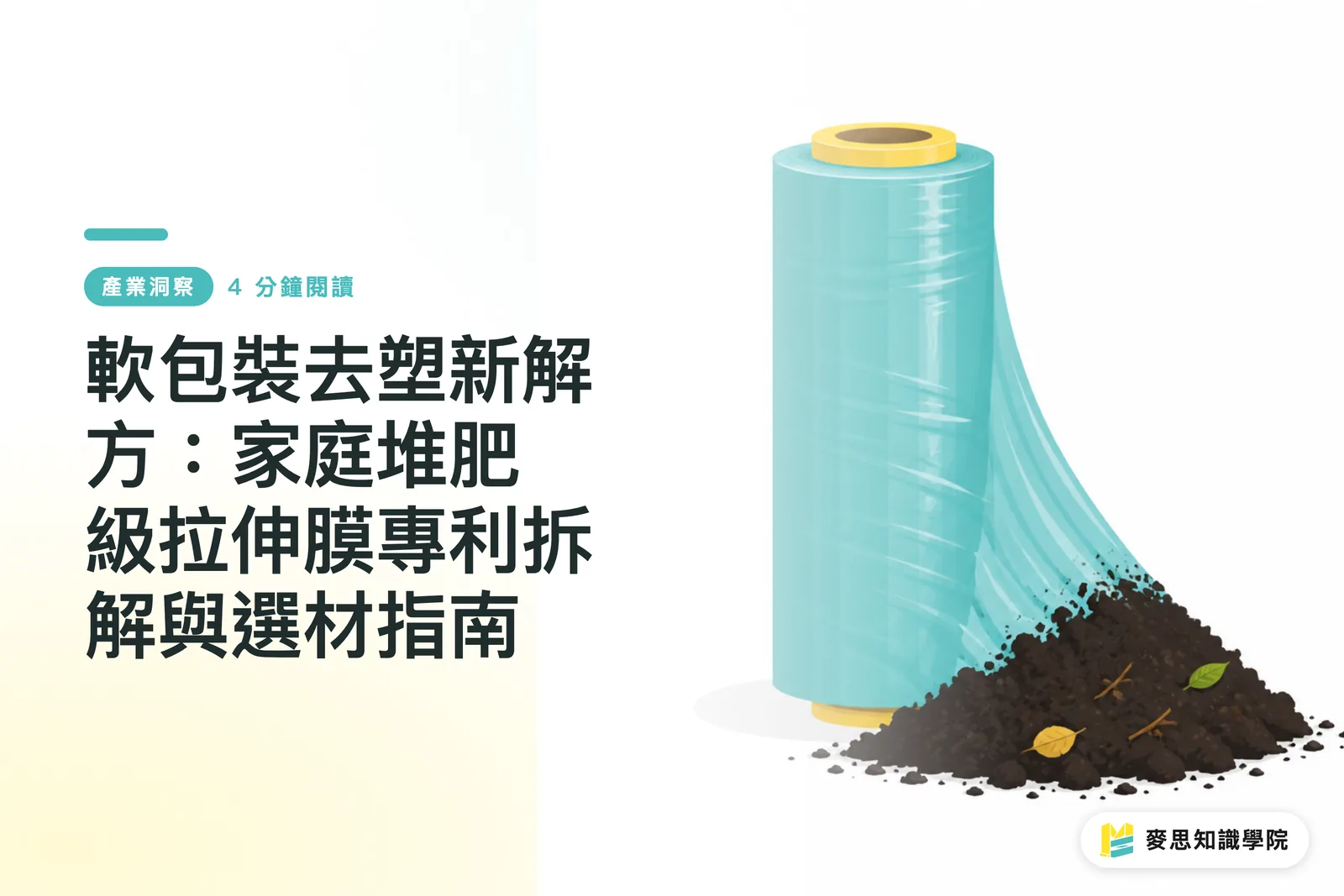
Why "Home-Compostable" Stretch Film Is the Real Breakthrough for Flexible Packaging
Lately, every chat with export clients about the EU's new PPWR regulations circles back to the same headache. It's rarely the cartons that hurt. It's that outermost wrap of film
Conventional petrochemical stretch film is dirt cheap and easy to run. It is also a nightmare to recycle
Eco alternatives have existed for a while, but most of them only clear the bar for industrial composting
A recent patent disclosed in Greendot Biopak receives home compostable patent for stretch film lands right on that sore spot
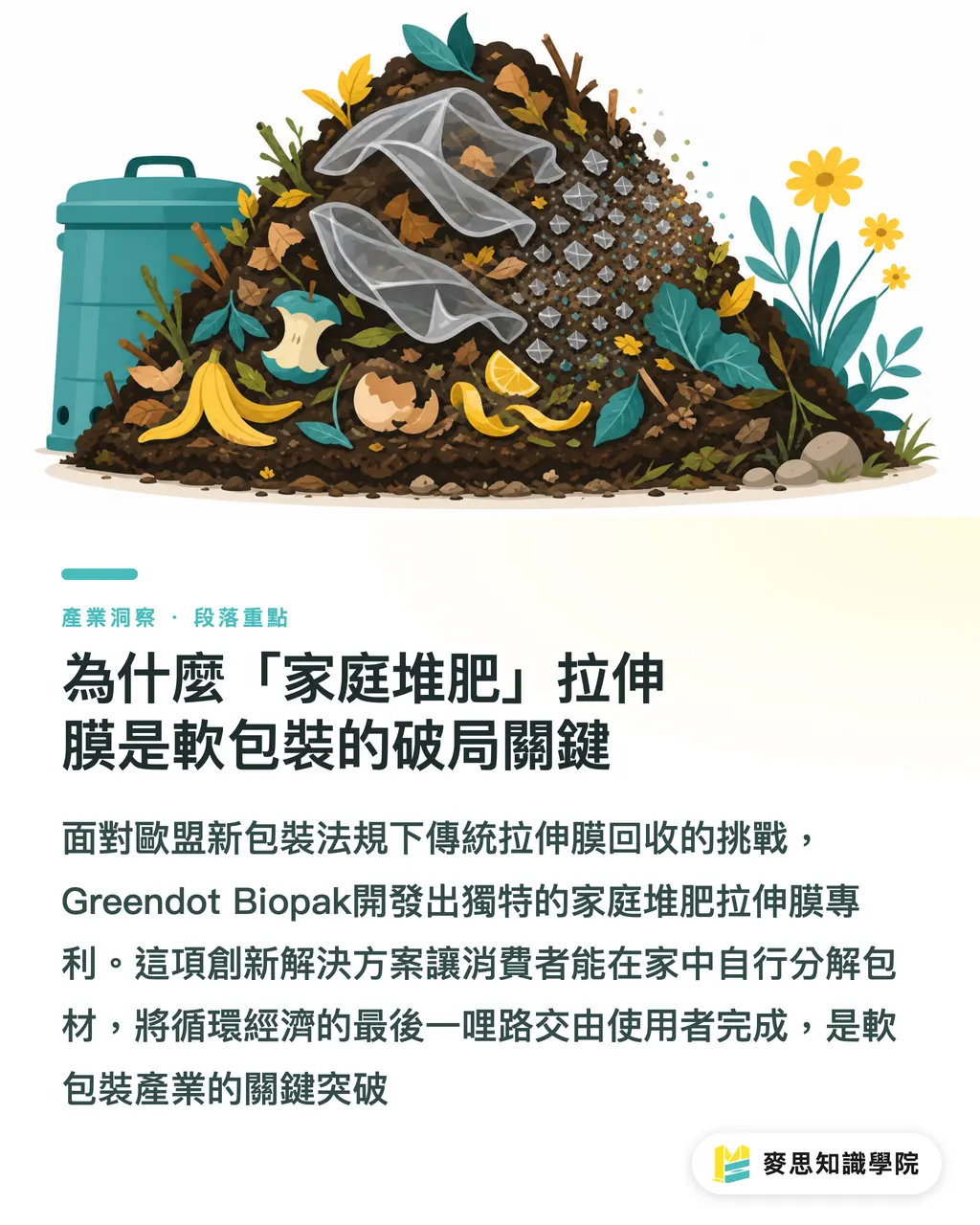
Their stretch film breaks down under normal home-compost conditions, with no need for high-heat, high-humidity centralized facilities
For food-packaging clients this is a genuine milestone. It means we can finally hand the last mile of the circular economy back to the consumer instead of getting stuck in a dead-end of missing infrastructure
Buyer Beware: The Real Differences Between Biodegradable, Industrial Compostable, and Home Compostable
When clients show up with a spec sheet and ask me to vet it, the most common trap is getting talked in circles by supplier language
Taiwanese brands sourcing sustainable packaging need to be ruthlessly clear on the technical bar and the end-of-life path for each of these three terms
・Biodegradable: The loosest of the three. It only says the material can be broken down by natural microbes. It says nothing about how fast, or under what conditions. This is the label most likely to invite greenwashing accusations
・Industrial Compostable: This is where most current eco films sit. The conditions are strict. Degradation only happens at a dedicated facility running 50–60°C. If Taiwan lacks the matching collection trucks and composting plants in your area, this stuff still ends up in the incinerator
・Home Compostable: Breaks down naturally at room temperature in a household kitchen-waste setup. This is the core value of the Greendot patent. It drags the back-end bar way down
How Taiwanese Print Shops and Brand Clients Should Handle the Material Switch
We've watched bamboo-based film vendors pivot, and we've watched brands start small with compostable labels on high-touch parts
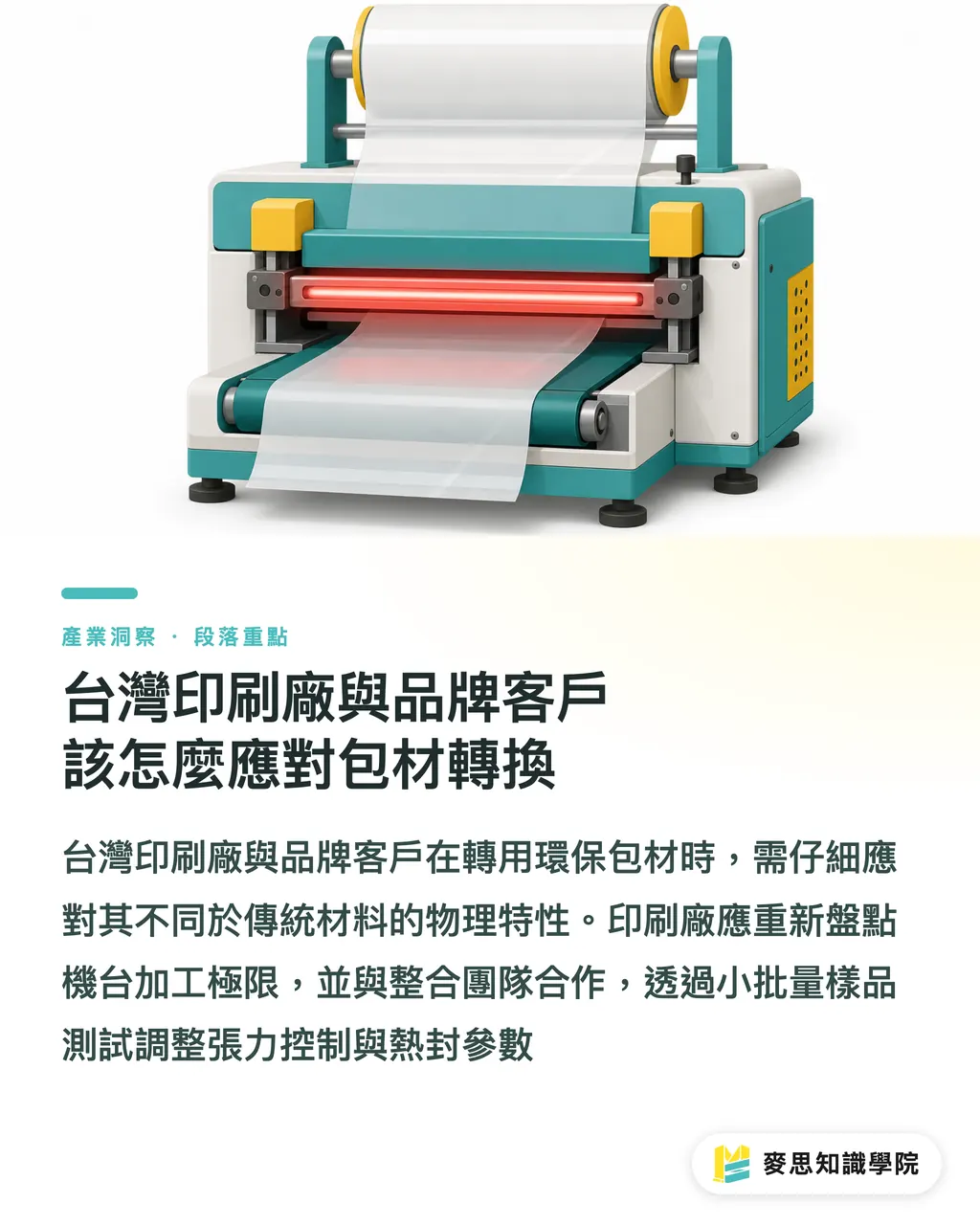
For the Taiwanese mid-sized print shops looking to bring in this new stretch film, the first step is a hard look at what your machines can actually take
Eco substrates almost never behave like petrochemical film on the line
The thing plant managers dread most is a drop in stretch performance or a heat-seal window that drifts out of spec
When working with integrated teams like MINDS, my suggestion is to grab small-batch sample rolls and run them on your actual equipment before committing
Pay special attention to the tension-control modules and re-baseline your heat-seal temperature
On the brand side, consider dipping a toe with a high-ticket SKU or a low-carbon flagship line. Confirm the protective performance and moisture barrier through shipping first, then roll it out across the catalog
Key Takeaways
・Greendot's new patent proves that flexible-packaging stretch film no longer has to be locked to high-temperature industrial composting
・When sourcing alternative packaging, brands should ask suppliers up front whether the film is home compostable or only industrial compostable
・Print shops need to run machine trials before quoting. Tension control and heat-seal settings almost always need to be reworked
Further Thinking
These days, plenty of export clients are scrambling for alternative materials because of incoming regulation. My usual advice is to start the audit with the part that hurts most: flexible packaging
Now that home-compostable stretch film has cracked through, the MINDS team can slot materials like these into the higher-tier sourcing library when we put together one-stop packaging programs
Run small-batch trials on a handful of core SKUs first. Confirm structural strength and line compatibility. This kind of measured, boots-on-the-ground rollout is what actually helps clients bank full ESG credit
Further Reading
FAQ
- What counts as a home-compostable packaging material?
- A material that microbes can break down in an ordinary room-temperature home compost bin, with no need to ship it to a high-heat, high-humidity industrial facility
- What is the biggest gap between industrial composting and home composting?
- The breakdown conditions. Industrial composting needs a dedicated site running above 50°C. If the local waste system doesn't have a matching collection stream, the material ends up burned as ordinary trash
- What should a mid-sized print shop watch out for when adopting a new eco film?
- The main hurdle is machine fit. These new materials stretch and handle heat differently from conventional petrochemical plastic. You need to re-baseline tension settings and heat-seal temperature before any production run
References
Related articles


The Print × AI weekly
The print and AI know-how designers, brands and enterprises can use before they commit — one email, every week
MINDS Free Tools
AI background removal, a LINE sticker maker, spine & imposition calculators — all free, right in your browser, no upload.
MINDS Group
Need actual printing or gifting services?
From premium printing to online ordering and festive gifts — the MINDS Group sister brands take it from here.