
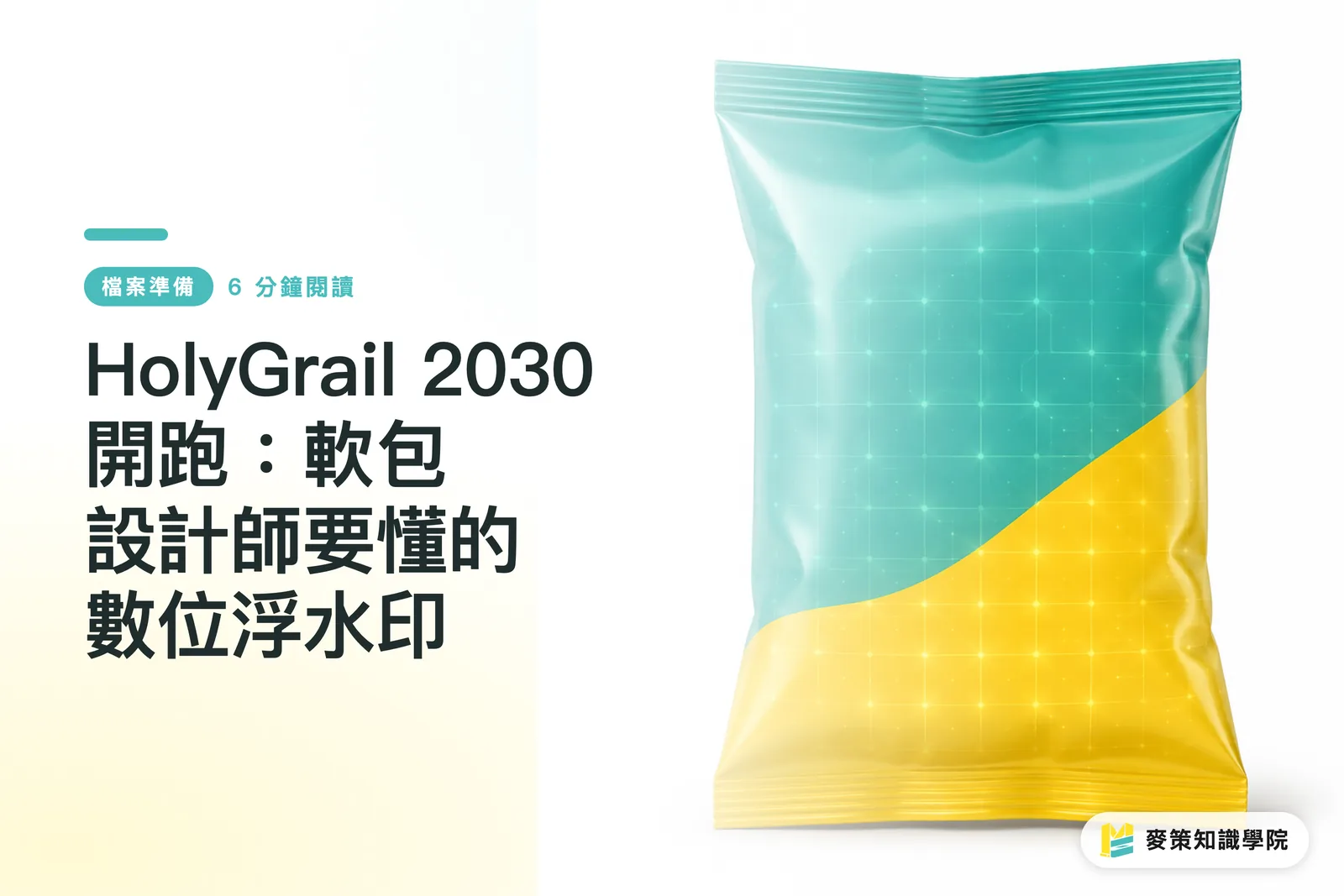
What is HolyGrail 2030, and why is it only reaching the trial stage now?
Sorting flexible packaging for recycling has been stuck for years. It is not that nobody wanted to solve it, but that the problem itself is genuinely tough. Once a snack bag drops into the recycling bin, traditional optical sensors only see a thin layer of multi-material film. They cannot tell whether it used to hold potato chips or laundry detergent. With similar materials and messy visuals, misclassification rates run high. Most end up in mixed waste or get downcycled into lower-grade applications, miles away from food-grade circularity
The HolyGrail 2030 trial aims to tackle this exact identification hurdle. In September 2026, three major brand owners, Mondelēz International (the parent company of Oreo and Chips Ahoy!), PepsiCo, and pladis, jointly announced their participation in a nationwide Belgian trial. The goal is to verify whether digital watermarking can help sorting systems accurately identify what a package originally contained, supporting higher-precision food-grade recycling streams
With three multinational snack giants joining in at once and testing real on-shelf products, the scale and intent are dead serious

How do digital watermarks work? The core logic designers need to grasp
Digital watermarking works by embedding a set of machine-readable data, such as material type, food-contact status, and brand IDs, into packaging background patterns or print color separations in a way that is virtually invisible to the naked eye. High-speed cameras at sorting facilities scan the conveyor belt, decode the watermark in real time, query the database, and route the item into the right recycling stream
The biggest difference from a QR code is coverage area. A watermark can be spread across the entire packaging surface without needing a dedicated square code box. Even when flexible packaging gets folded, crumpled, or partially torn during recycling, sorting systems can still pick up data from any remaining fragment. This matters a lot for plastic films, since they deform easily once they leave the shelf, making QR codes unreliable in this setting
Here is something designers should think about: packaging graphics are shifting from pure visual communication tools into information carriers that also handle machine identification. The functional boundaries of design are expanding
What key question is the Belgian trial testing?
The trial boils down to one central question: can digital watermarking achieve high enough sorting accuracy in a real household collection stream to support food-grade recycling?
The trial covers packaging films, rollstock, and other plastic food packaging collected through the Belgian household waste system. Belgium's PMC system (collecting plastic, metal, and beverage cartons together) is already well established, making it a solid benchmark testing environment. Each of the three brands contributes actual commercial products. The trial results will provide real data to evaluate what conditions must be met before rolling this solution out at scale
There is an even bigger driver behind this: the EU Packaging and Packaging Waste Regulation (PPWR) is moving forward, and future compliance requirements on recyclability will only become more specific. Brands need verifiable evidence to prove compliance. Simply claiming to be eco-friendly is no longer going to cut it

How should prepress workflows get ready?
Embedding watermarks into packaging designs adds an unavoidable step to prepress workflows. The current industry standard is to merge watermark data into color separations during platemaking. Here are a few practical points for design teams:
・Watermark embedding should be performed on production-ready platemaking files at 300 DPI or higher. Low-resolution sales mockups or drafts are not suitable, as they degrade read accuracy once embedded
・Background texture complexity, spot color usage, and overprinting on transparent substrates can all affect watermark scanning success. Always confirm compatibility with your printer before final artwork handover
・If a client specifies HolyGrail-compatible supply chain requirements, make sure the design spec sheet explicitly details watermark version control to avoid discovering missing watermark layers at the proofing stage
・Mono-material flexible packaging and digital watermarks go hand in hand rather than being mutually exclusive. Standardizing materials improves scan consistency, and combining both makes reaching food-grade sorting standards much easier than relying on either one alone
This workflow is still rarely discussed in Taiwan. For design studios and print shops handling European accounts, getting familiar with it now is far easier than scrambling when clients bring it up. When packaging artwork specifications require detailed verification, the proofing workflow at MINDS can help designers cross-check files before outputting plates
How should Taiwanese designers and brand clients respond?
Because the technology is still in trial phases, you do not need to overhaul all packaging specs today. However, here are a few things you can start doing right away:
・For brand clients or OEM partners working with Europe, proactively ask whether they have digital watermark requirements instead of waiting for them to bring it up
・Build flexibility into your artwork delivery specs: gravure, flexo, and digital inkjet handle watermark embedding details differently. Aligning with your printer early saves you from last-minute revisions
・Clarify background pattern constraints during initial client proposals, outlining which visual elements can be adjusted if watermarks need to be integrated down the road
From my long-term observations across packaging production lines and client meetings, what brand managers fear most is the chain reaction of altered specs, shifted layouts, jumped costs, and blown deadlines. Designers who frame this variable into spec discussions right from the proposal stage stay in control rather than waiting around on the back foot
Looking for short-run proofing to verify materials and print quality? MINDS offers online ordering and spec consulting, perfect for running a test batch before final platemaking

Key Takeaways
・Embedding digital watermarks into packaging artwork to let optical sorters read material types and food-contact history is the core approach of the HolyGrail 2030 trial
・Mondelēz International, PepsiCo, and pladis have entered the nationwide Belgian trial with real on-shelf products, putting the technology through rigorous real-world testing
・Watermarks can cover the entire packaging surface and remain readable even when films are crumpled, making them far better suited for flexible packaging recycling than QR codes
・Direct impact on design: production files should be at 300 DPI or higher, and background designs along with spot color usage must be verified with printers beforehand
・Mono-materials and digital watermarks can work together, and combining them makes meeting food-grade recycling thresholds much easier than doing either alone
Further Considerations
The HolyGrail 2030 trial marks a new chapter for sustainable flexible packaging: identification technology is landing directly on the design desk, no longer just a task for materials engineers. For packaging designers in Taiwan, this is the time to build differentiated expertise early on. When clients eventually ask whether you can deliver artwork tailored for watermark embedding, having a clear answer sets you apart. With the EU PPWR moving fast, design studios serving European exports or global brands should run a pilot project this year to iron out uncertainties now, instead of cramming when client demands land on your desk
Further Reading
FAQ
- Will digital watermarks embedded in packaging design be visible to the naked eye?
- Under normal conditions, they are barely noticeable. Watermarks are subtly blended into background patterns or color separations. However, the complexity of background textures and the use of spot colors can affect invisibility, so confirming proofing results with your printer beforehand is recommended
- What is the fundamental difference between HolyGrail 2030 digital watermarks and QR codes?
- Digital watermarks can cover the entire packaging surface, allowing sorting systems to read data from partial fragments even if flexible packaging gets crumpled or torn during recycling. In contrast, QR codes require a complete square area and easily fail when thin films deform, making them poorly suited for flexible packaging recycling
- Do Taiwanese brands need to comply with HolyGrail 2030 specs right away?
- The trial is still in testing phases in Belgium and is not yet a mandatory standard. For brands serving European clients or exporting into European supply chains, asking your partners about their current status now will save valuable time compared to starting from scratch once rules take effect
- Is watermark embedding handled by the designer or the print shop?
- It is typically handled during prepress platemaking. Designers need to deliver production-ready artwork at 300 DPI or higher and state version control requirements in the spec sheet. Design-side variables like pattern complexity and spot colors should be checked for compatibility with the printer beforehand, ideally before final handover rather than after proofing
- Should we choose mono-material flexible packaging or digital watermarks?
- You can use both together. They are not mutually exclusive. Mono-materials improve the purity of recycled flakes after sorting, while digital watermarks help sorters identify packaging attributes more accurately. Using them together makes achieving food-grade recycling standards far easier than relying on either one on its own
Related articles
The Print × AI weekly
The print and AI know-how designers, brands and enterprises can use before they commit — one email, every week
MINDS Free Tools
AI background removal, a LINE sticker maker, spine & imposition calculators — all free, right in your browser, no upload.
MINDS Group
Need actual printing or gifting services?
From premium printing to online ordering and festive gifts — the MINDS Group sister brands take it from here.