
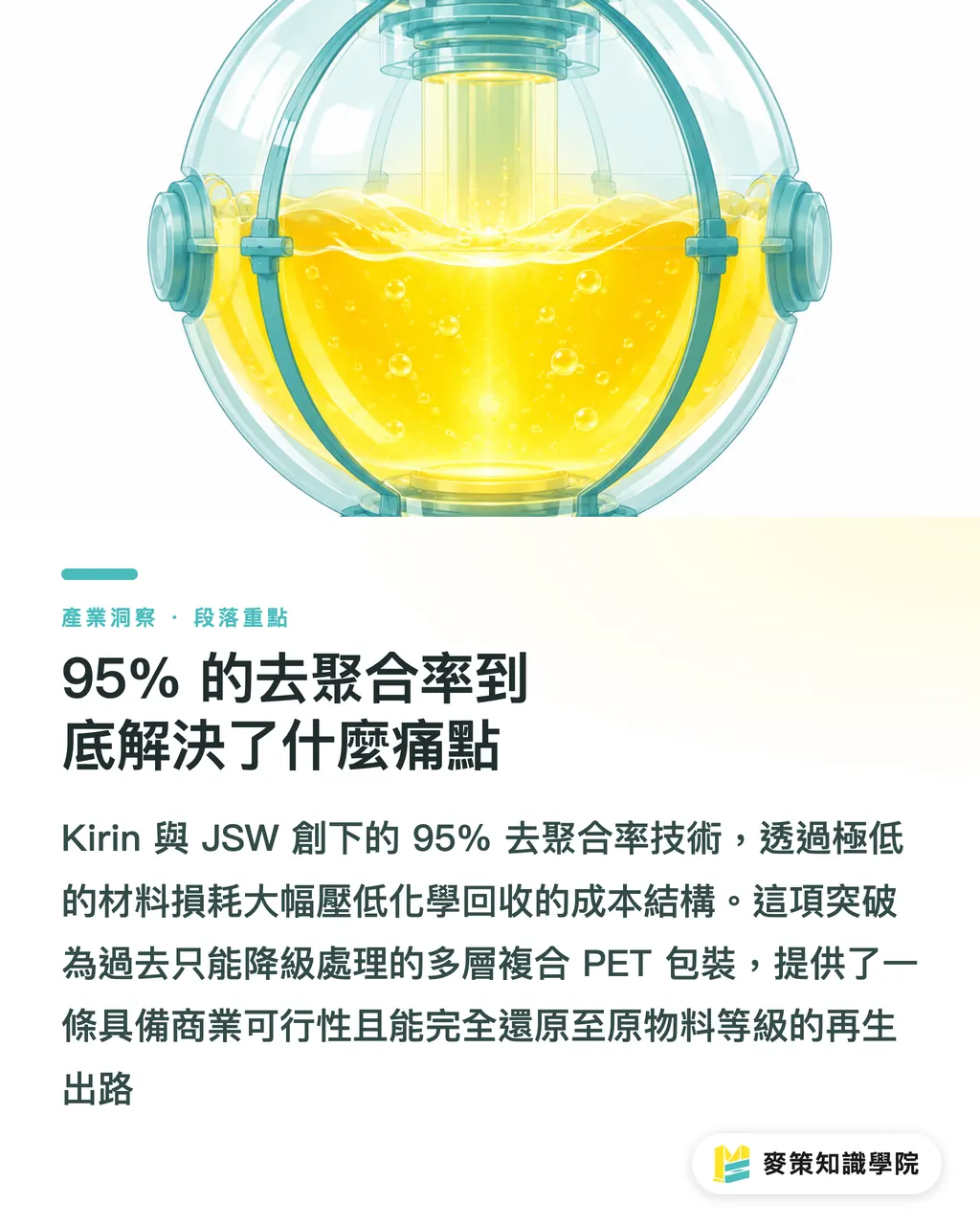
What Pain Point Does a 95% Depolymerization Rate Actually Solve?
A 95% depolymerization rate translates to extremely high yield. It lets multilayer PET packaging, which once could only be downcycled, return to virgin-grade raw material with minimal loss
According to a September 2026 report by Packaging Insights, the PET chemical recycling technology developed by Kirin and JSW achieved this benchmark
From my years watching production lines and working with clients, low conversion efficiency and steep energy costs have always been the real roadblocks for chemical recycling
Mechanical recycling is straightforward, but it hits a wall with multilayer flexible packaging or pharmaceutical packs. With heavy contamination and mixed plastics, incineration or downcycling is usually the only way out
Kirin and JSW tackled this by refining the depolymerization reactor and purification processes, cutting down the useless byproducts that plagued conventional cracking
Pairing JSW's deep machinery background with Kirin's brand-side testing gives this technology real commercial scale
Boosting the efficiency of breaking polymers back down to monomers fundamentally shifts the cost structure inside recycling plants
It opens a viable commercial path for packaging that relies on barrier layers for moisture and oxygen and cannot fit into standard mono-material recycling streams
When waste PET yields 95% pure monomer with only 5% loss, the price premium brands pay for chemically recycled rPET drops dramatically
For Taiwanese plants producing high-end export packaging, this is welcome news. It finally means access to a steady supply of high-grade recycled feedstock
Depolymerization Rate: The percentage of plastic polymer successfully broken down into monomers during chemical recycling. A higher rate yields more usable material to repolymerize into new plastic, maximizing economic returns
Are Multilayer Materials Truly Hopeless? Chemical Recycling and Green Hydrogen Team Up
Technical breakthroughs mean we no longer have to dump multilayer flexible packaging straight into incinerators
Beyond Kirin pushing PET depolymerization to 95%, another topic gaining serious traction across the industry is turning mixed plastics into green hydrogen
Visiting several large pharmaceutical and food plants over the past few months, I saw real anxiety over packaging that laminates aluminum foil and multi-ply plastics for moisture and oxygen barriers
Mechanical recycling cannot handle these materials. Chemical cracking and green hydrogen conversion, however, are carving out new end-of-life routes for inseparable multilayer packs
In other words, future packaging Life Cycle Assessments (LCA) will not be boxed into mono-materials as the only way forward
Once recyclers can efficiently depolymerize waste or produce hydrogen, export brands gain another practical card to play for compliance
That does not mean brands can use materials recklessly
Any multilayer material claimed to be chemically recyclable must provide verifiable proof of collection pathways and end-market processing. Otherwise, the European market will still classify it as non-recyclable
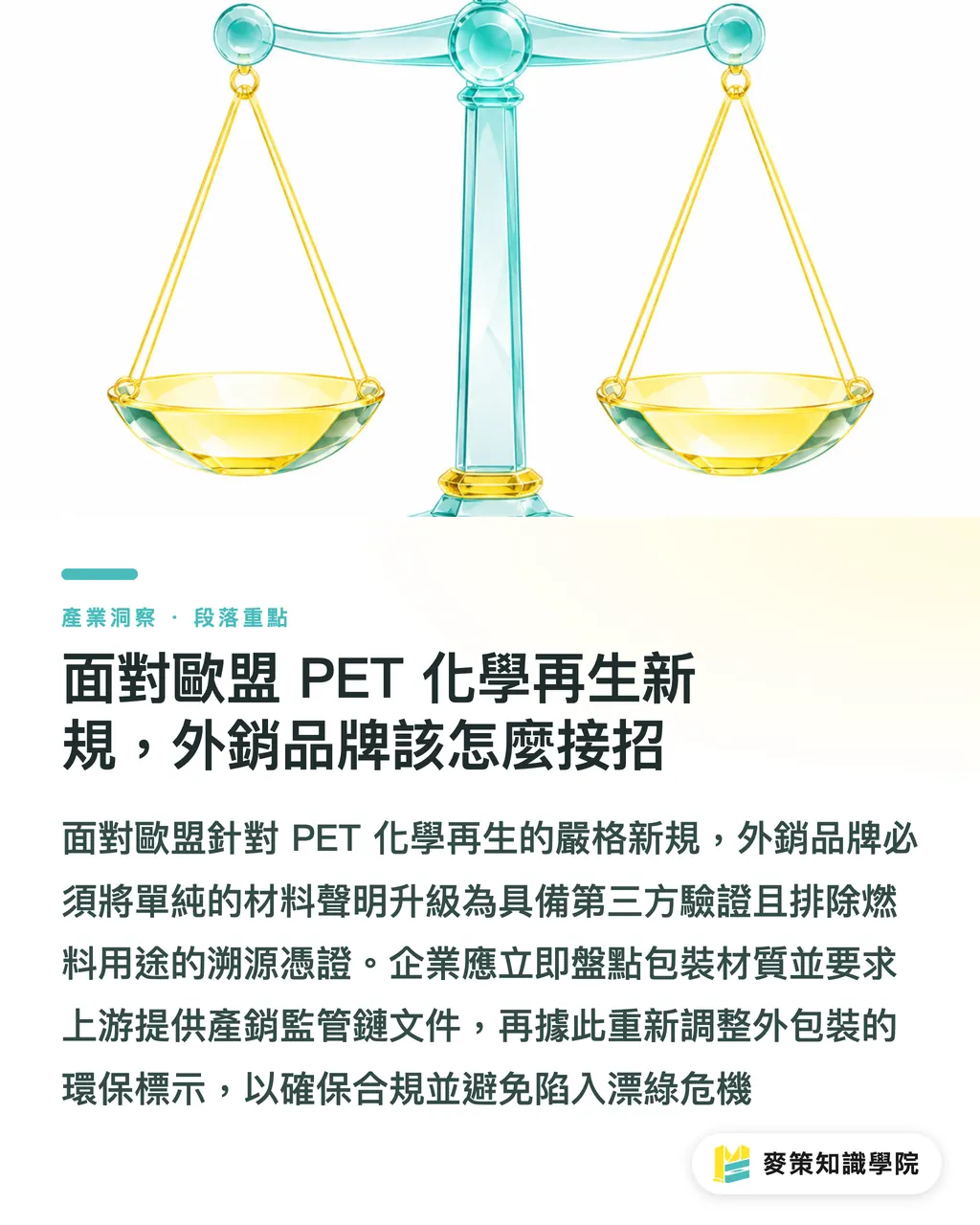
How Export Brands Should Handle the EU's New Rules on Chemically Recycled PET
Brands must move past simple material claims and upgrade to traceable procurement specs backed by mass balance and proof of non-fuel use
Now that the EU has defined how chemically recycled PET is calculated, PCR (post-consumer recycled) claims on export packaging cannot rest on a supplier's word alone
Plenty of print shop owners still believe that buying recycled resin automatically earns them the right to stick an eco-label on the pack
Some even think that as long as the base substrate is PET, the inks and security coatings on top do not matter. Under the new EU rules, that will backfire fast
Several cross-border e-commerce clients I spoke with recently are scrambling because their current packaging suppliers cannot produce audit documents that meet EU standards
The fuel-use excluded rule means the EU strictly excludes any plastic burned as fuel during the cracking process when calculating recycled content
Vendors used to count that burned volume to inflate their numbers. Now, you need chain-of-custody documentation issued by a third-party certifier
To avoid customs holds or stepping on ESG greenwashing landmines, you need a disciplined framework
It comes down to three steps
You can evaluate your products using the Mai Strategy Three-Step Packaging Compliance Framework:
・① Audit Current Materials: Check the actual weight ratio of PET to other polymers in your packaging and evaluate the technical feasibility of adopting chemically recycled resin
・② Secure Traceability Certificates: Demand chain-of-custody documentation from upstream suppliers that complies with EU fuel-exclusion principles
・③ Update Packaging Labels: Redesign on-pack environmental claims and recycling logos based on your verified PCR content
Do not sit on this. When MINDS helps clients with high-spec orders, we require every material traceability detail to be locked down before going to press
Mass Balance: An accounting principle used to track recycled material flows through mixed production lines. It allows virgin and recycled feedstocks to blend during processing while allocating verified recycled claims to final products through strict bookkeeping
PPWR Is Closing In: Where Does Packaging Redesign Go Next?
Brands must build material reduction and mono-material structures into early product development to meet PPWR recyclability targets
The EU Packaging and Packaging Waste Regulation (PPWR) sets aggressive reduction mandates for pharmaceutical packaging and e-commerce flexible pouches
While strides in chemical recycling give multilayer packaging a lease on life, global regulations on source reduction are not easing up
When designing new packs, you cannot let down your guard with hard-to-separate structures just because there is a 95% depolymerization plant at the end of the line
Flexible packaging in pharmaceuticals and beauty e-commerce faces the heaviest redesign pressure
PPWR also caps empty space and headspace ratios to stamp out overpackaging
That means e-commerce mailers must fit products tightly, while pharma packs, often loaded with tamper evidence and child-resistant layers, run head-on into mono-material rules
Take a breath
If your team is sweating the upcoming PPWR deadlines, the Mai Strategy Knowledge Academy consulting team can help you run recyclability assessments right at the drawing board
We have seen too many painful cases where finished packaging designs failed destination market environmental rules, and retooling molds cost ten times more than early consulting
From structural slimming and labeling compliance to raw material traceability, lock down these three gates before prototyping. Otherwise, rework costs will wipe out your export margins
That is why modern packaging design is no longer just about aesthetics. It requires real mastery of regional recycling regulations in practice
Key Takeaways
・Kirin and JSW achieved a 95% PET depolymerization rate, substantially boosting the commercial viability of chemical recycling
・New EU rules mandate that chemical recycling claims carry verifiable proof of mass balance and non-fuel use
・Brands should adopt the Mai Strategy Three-Step Packaging Compliance Framework, upgrading basic material claims into fully traceable procurement specifications
・Downstream recycling progress cannot replace source reduction. PPWR continues to enforce strict mono-material and design-for-recycling standards
Food for Thought
A technological leap buys time, but it is not a get-out-of-jail-free card. Kirin and JSW's breakthrough yield provides immediate relief for multilayer PET packaging, but under aggressive EU PPWR enforcement, the core of packaging design remains source reduction and mono-material construction. For converters and designers, the real next move is incorporating high percentages of chemically recycled resin without compromising protection, while weaving traceability data directly into production workflows. That is the only real foundation for lasting success in global export markets
Further Reading
FAQ
- What is PET chemical recycling?
- Chemical recycling breaks PET plastic down into its original monomers through chemical reactions, which are then repolymerized into new PET. This process can handle contaminated or multilayer packaging that mechanical recycling cannot process
- What are the EU's new regulations on chemically recycled PET?
- The EU requires all chemically recycled PET claims to rest on strict mass balance accounting and exclude any portion converted into fuel, preventing companies from exaggerating recycling numbers
- How does a 95% depolymerization rate affect the print and packaging industry?
- It means minimal material loss during recycling. This narrows the cost and quality gap between chemically recycled pellets and virgin resin, helping brands hit their ESG packaging targets
Related articles


The Print × AI weekly
The print and AI know-how designers, brands and enterprises can use before they commit — one email, every week
MINDS Free Tools
AI background removal, a LINE sticker maker, spine & imposition calculators — all free, right in your browser, no upload.
MINDS Group
Need actual printing or gifting services?
From premium printing to online ordering and festive gifts — the MINDS Group sister brands take it from here.