
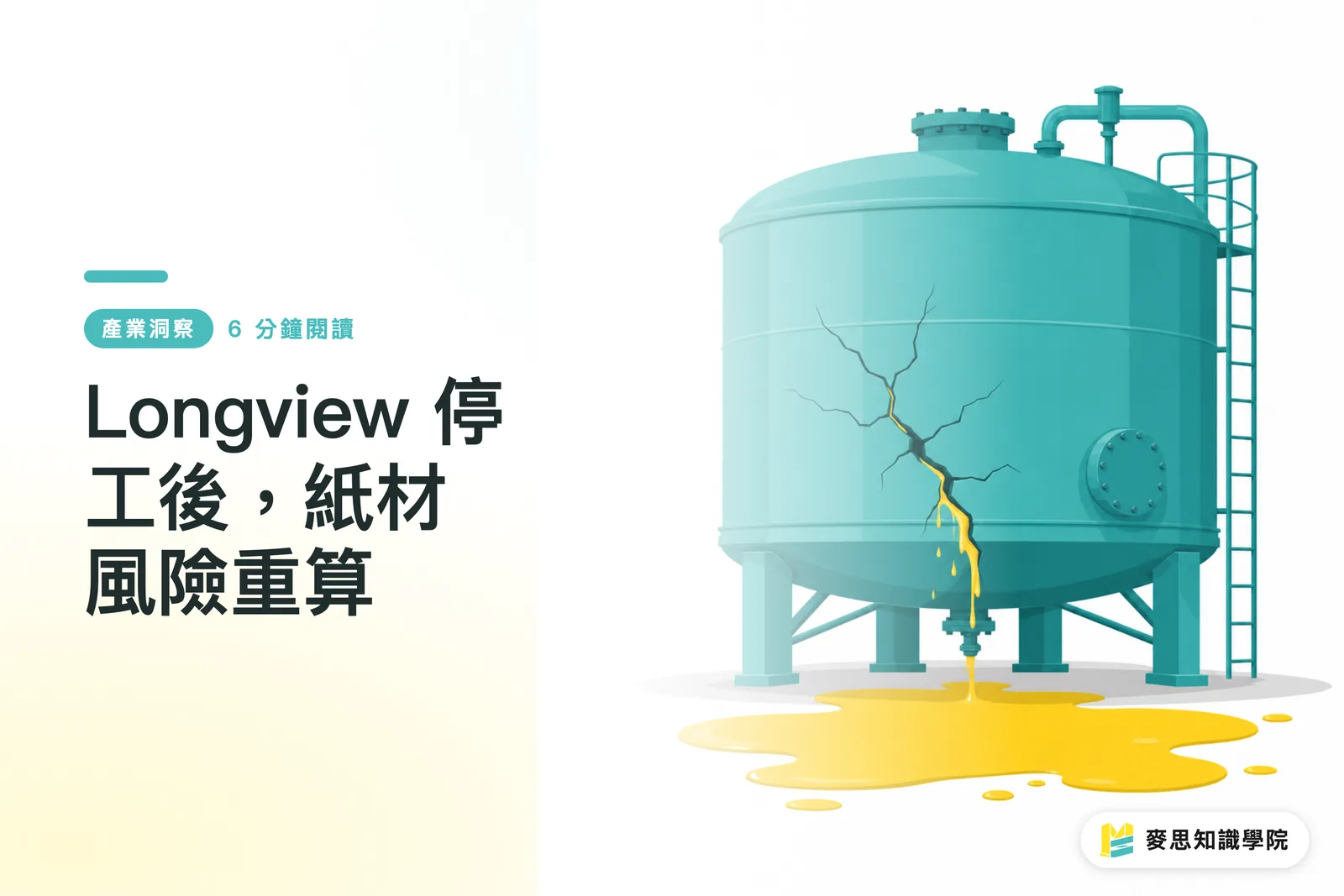
What Exactly Happened at Nippon Dynawave Longview?
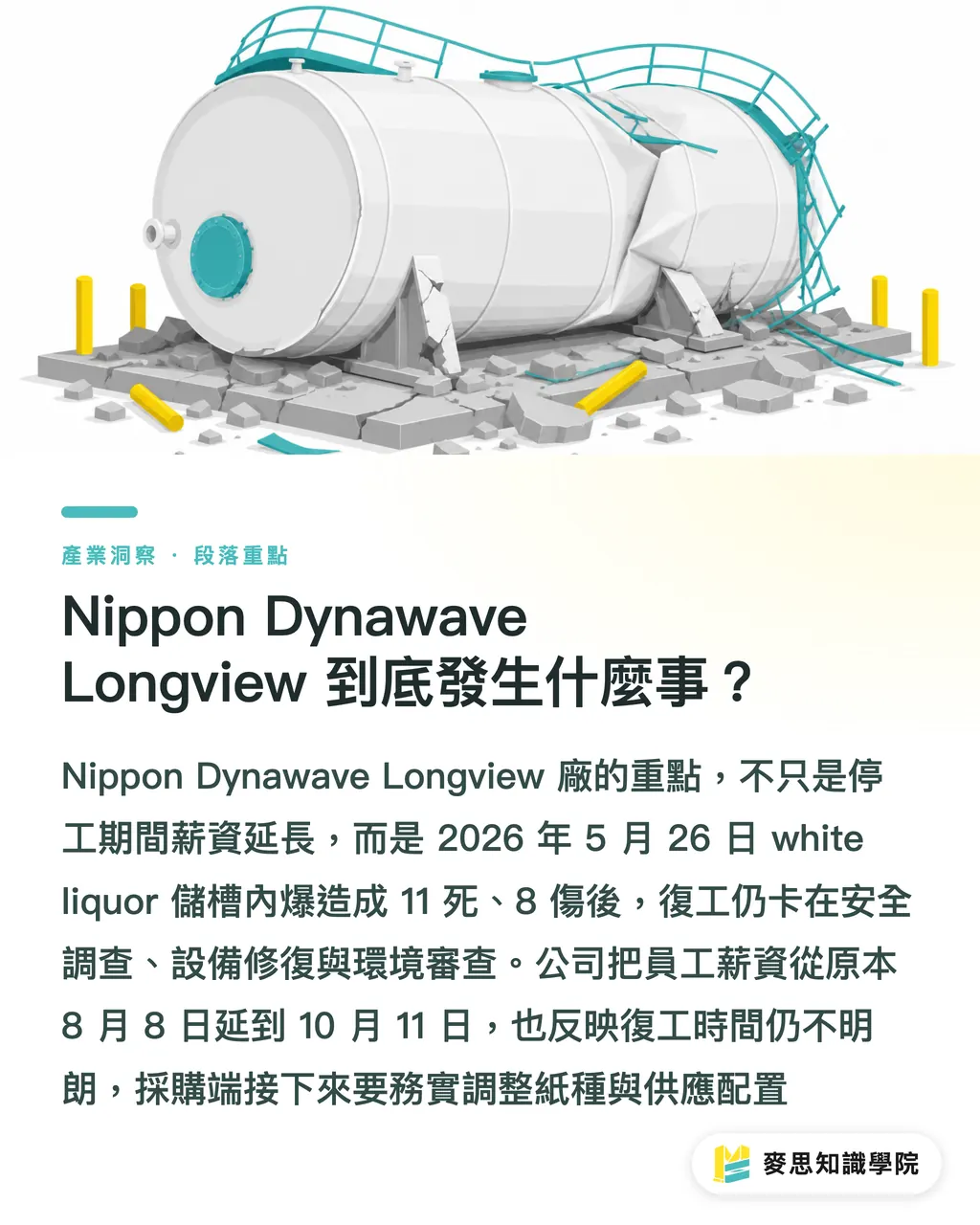
According to Packaging Dive's report on Nippon Dynawave continuing pay during the Longview mill shutdown, Nippon Dynawave Packaging announced in July 2026 that employee pay during the Longview shutdown would be extended to October 11. The original plan only covered pay through August 8
The accident happened on May 26, 2026. A white liquor tank implosion killed 11 people and injured 8, bringing operations at the Longview pulp and paper mill to a halt. Parent company Nippon Paper is still assessing the impact on production, shipments, the environment, and finances
This is very real
white liquor: an alkaline chemical liquor used in the kraft pulp process for cooking wood chips. Tank accidents usually pull safety, environmental, equipment integrity, and restart reviews into the same file
When I see a mill paying staff through a shutdown, my first reaction is not to ask how much prices will rise. It is that the restart path is still stuck behind three gates: safety, investigation, and repair. Procurement now has to plan paper grades around an unknown restart date
Why Can One North American Paper Mill Move Asian Quotes?
Concentration risk in North American pulp and paper mills: when a small number of large pulp and paperboard mills go down, replacement capacity is thin, and prices, lead times, and specification documents all tighten at once
Longview is one of North America's important supply points. The source material says it affects spot supply for lightweight coated paper and label stock. These papers are not consumed only in North America. Global brands, agents, converters, and Asian contract suppliers draw from the same pool of replacement capacity
I would read the shock in 3 layers
・Base-paper layer: with uncertainty still present before the Longview shutdown extends at least to October 11, buyers cannot treat autumn delivery as a stable assumption
・Spot-market layer: if replacement demand squeezes North American lightweight coated paper, label stock, and nearby grades, agents will shorten quote validity first
・Asia layer: if global brands cover paper in North America, Asian suppliers may face shifted orders, resubmitted approval documents, and cost-sharing talks
When a mill accident reaches the print floor, it is often not that paper disappears tomorrow. It is that a quote valid for 30 days today becomes valid for 7 days two weeks later. Sales has not changed the contract yet, but procurement already knows trouble is coming
Where Should Taiwan's Small and Midsize Print Shops Patch the Gaps Now?
Do not rush yet
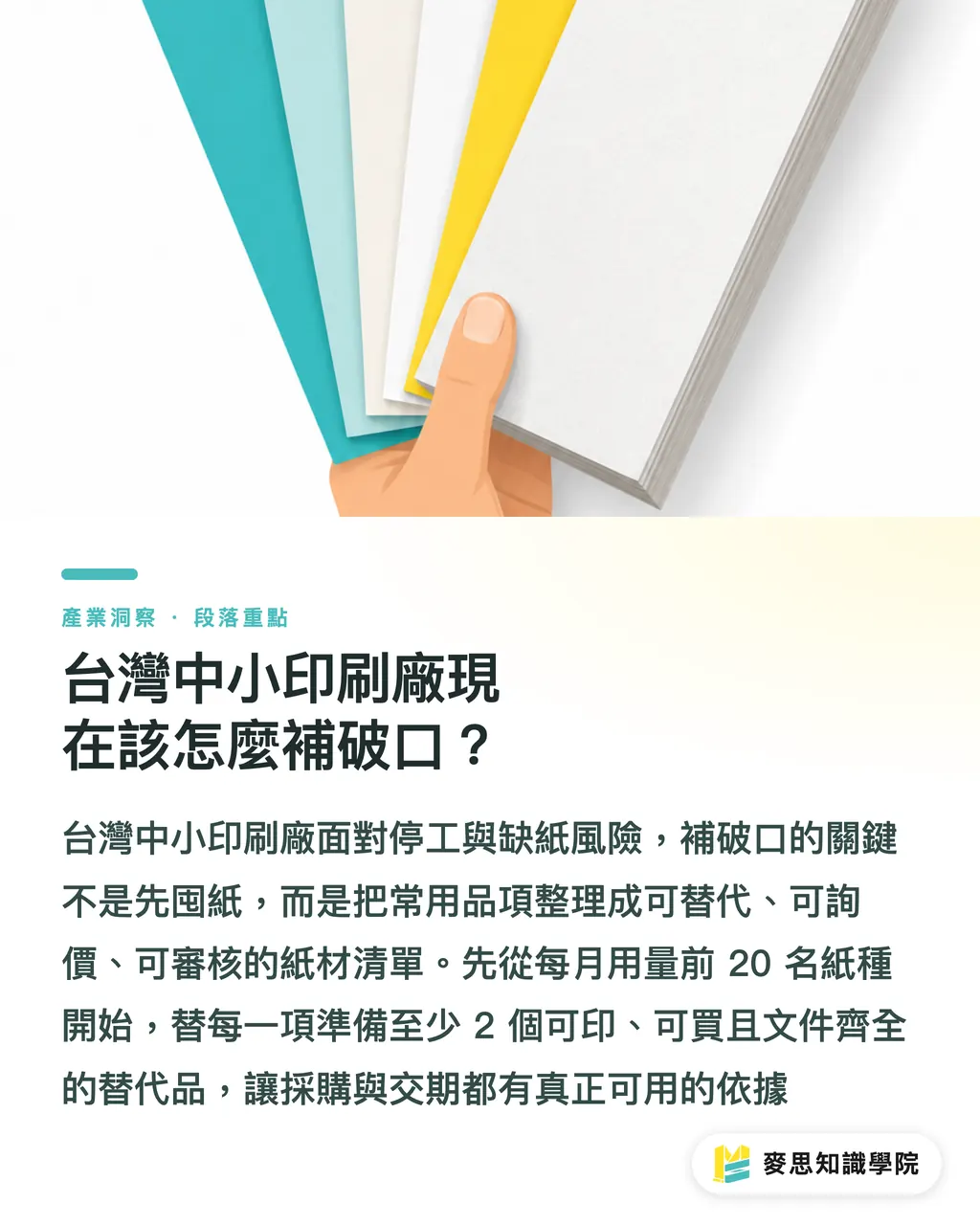
For Taiwan's small and midsize print shops facing a shutdown event like Nippon Dynawave's, the first step is not to stockpile as much paper as possible. It is to use MINDS' (MS) three print-submission checkpoints and turn common items into a list that can be substituted, quoted, and approved
・① Substitute paper list: for the top 20 paper grades by monthly usage, prepare at least 2 alternatives that are printable, purchasable, and complete in documentation
・② Quotes from multiple pulp and paper mills: ask 2 or more mills or agents for the same specification, and keep the quote validity period, minimum order quantity, and lead time on the inquiry sheet
・③ Approval document pack: keep FSC/PEFC, food contact declarations, material certificates, color sample records, and proofing dates under the same case number
The sentence I fear most on the floor is this: we have always been able to buy this paper. That sentence cannot go into a purchase order, and it will not save the delivery date
If a shop has no paper master file, it can start by asking the Mai Strategy Knowledge Academy consulting team to run a paper risk review. The scope does not need to be large. Start with the top 20 papers, top 10 customers, and top 5 fixed finishing conditions
How Should Brand Clients and Designers Rewrite Specifications?
Brand clients and designers do not need to change the look the moment they hear a paper mill has shut down. What really needs to change is how print specifications are written: do not name only one paper. Write the acceptable substitution conditions
・Paperboard: specify grammage, caliper, stiffness, brightness, surface coating, and varnishing limits
・Labels: specify facestock, adhesive properties, release liner, labeling environment, and heat-resistance needs
・Design files: put spot colors, varnish, fold lines, foil stamping, embossing, and die-cut tolerances into the print specification
Food cartons, labels, and hang tags are the 3 job types most likely to run into trouble when paper changes, because the visual result is only half the story. Cracked folds, lifted label edges, and varnish that will not bite are what make people sweat on production day
If the job is mid- to high-end fully custom commercial printing, having MINDS proof it on 2 paper options first is usually cheaper than discovering fold-line, color-difference, and varnish reactions on production day
What Can AI and SaaS Do About Paper Risk?
My view of AI in the printing industry is conservative. On paper risk, AI should not rush to predict a paper shortage. First, put purchase orders, BOMs, samples, certificates, and quote validity periods under the same case number
Print SaaS can start with 3 small jobs
・Link purchase orders, BOMs, proofing sheets, and FSC/PEFC documents to the same SKU
・Set temporary thresholds first, such as reminding procurement to requote when quote validity falls below 14 days, lead time rises above 30 days, or a single supplier accounts for more than 50%
・Use document comparison to catch differences after a paper grade changes mills, such as grammage, brightness, surface treatment, and food contact declarations
That is enough
For the MINDS team, mill events like this are a good SaaS feature topic: raise "paper" from a cost field into a risk object. Every paper change, every certificate, and every customer approval record should be able to return to the context of the same order

Key Takeaways
・Pay extended through October 11 means the shutdown has already gone beyond the scale of a normal annual maintenance outage. Procurement cannot wait for restart news before acting
・The paper gap shows up first in quote validity, then in lead time and substitute-paper approval
・A paper grade name is not a specification. Thickness, stiffness, brightness, coating, and documents are the language of substitution
・The most useful job for AI in paper risk is to turn paper relationships scattered across quotes, samples, and certificates into a searchable list
Further Thinking
On the print manufacturing side, align procurement lists with final artwork specifications first. On the design side, stop locking visual effects to a single paper name so often. On the SaaS and AI side, first turn the paper master file into a workflow that can be searched, approved, and requoted. If you need paper substitution, print specifications, and customer communication scripts organized into an internal process, ask the Mai Strategy Knowledge Academy consulting team to run a paper risk review. If you are holding a mid- to high-end fully custom commercial printing job, building a deliverable plan with 2 paper options first will be far steadier than changing paper at the last minute
Further Reading
FAQ
- Will the Nippon Dynawave Longview accident immediately create a paper shortage in Taiwan?
- Taiwan may not face an immediate paper shortage, but when North American spot supply tightens for lightweight coated paper, label stock, and packaging paper, Taiwan print shops serving global brand orders will first feel shorter quote validity periods and more substitute-paper approvals
- Why does the supply chain read meaning into pay being extended through October 11?
- The pay extension means the company expects shutdown handling to go beyond the original August 8 arrangement. The restart date still depends on safety, investigation, and repair variables, so procurement cannot treat a quick restart as its only assumption
- What is the first step for Taiwan's small and midsize print shops?
- List the top 20 paper grades by usage first. Prepare 2 alternatives for each grade, and put pricing, lead times, documents, and proofing results into the same paper risk table
- Do designers need to change the design?
- Designers do not need to change the visual first, but print specifications should move from a single paper name to substitutable conditions, such as grammage, thickness, stiffness, brightness, coating, and finishing limits
- Can AI predict a paper shortage?
- AI should not be used to guess the restart date. Print SaaS is better suited to organizing BOMs, supplier documents, and substitute-paper records first, so procurement knows within 14 days which orders need to be requoted
Related articles




The Print × AI weekly
The print and AI know-how designers, brands and enterprises can use before they commit — one email, every week
MINDS Free Tools
Spine width and imposition calculators — skip the manual math, free in your browser.
MINDS Group
Need actual printing or gifting services?
From premium printing to online ordering and festive gifts — the MINDS Group sister brands take it from here.