

Overview
Hit by both rising corrugated box costs and mill capacity restructuring, Taiwanese brands and print shops can no longer afford to cling to fixed contract prices, they need to shift toward dynamic structural planning and coordinated procurement. That means rethinking material specs and paper weights through the MINDS 'MSI Three-Gate Structural Assessment' (MS, mid-to-high-end fully customized commercial printing)
Old Corrugated Containers (OCC) are post-consumer recycled corrugated boxes and paperboard, the primary feedstock for fluting and linerboard production. Their market price directly sets the baseline manufacturing cost for packaging boxes and shipping cartons
Time to redo the math
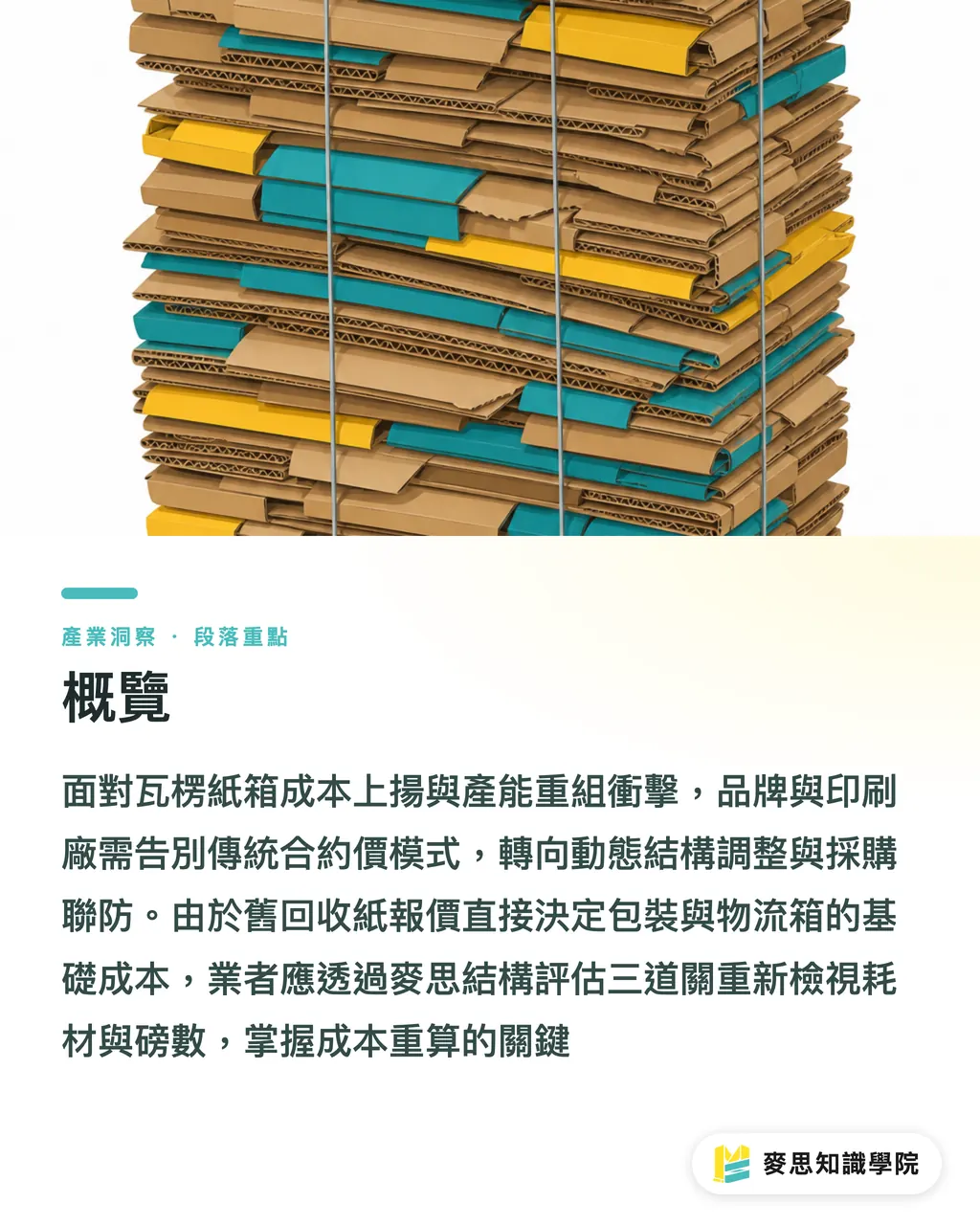
Why Does Rising Recovered Paper Price Rewrite the Cost Rules for the Packaging Market?
From my recent front-line conversations with paper mills and plant managers, raw material volatility has arrived faster and harder than anyone expected
According to TTOBMA, the international paper industry price index body, OCC prices followed a staircase pattern month by month through the first half of 2026, climbing from roughly $80 per ton at the start of the year to nearly $100 per ton by mid-year
That's still below the five-year average of $140 per ton, but compared to the slump of 2025, the warming spot market is already squeezing paper mill margins
As Packaging Dive reported, recyclers are enjoying a margin recovery while downstream containerboard manufacturers face significant cost pass-through pressure
These overseas fluctuations reach Taiwan within months. The old fixed-price, long-contract playbook simply can't handle today's market
What Do Mill Line Conversions Mean for Taiwanese Brand and Print Procurement?
Another important signal from the supply chain is upstream mills actively retooling equipment and shifting capacity
European paper giant Palm and others have been converting traditional paper machines to Corrugated Case Material (CCM) lines, a sign of strong sustained demand for corrugated packaging and a dramatic reshuffling on the supply side
The result: upstream raw paper supply is concentrating toward commodity corrugated board, squeezing the capacity available for coated paper and specialty paperboard
As major mills redirect resources toward corrugated raw materials, smaller Taiwanese companies without the flexibility to switch paper grades and weights risk being sidelined in the next price swing
For complex paper substitution or cross-material evaluations, you can consult the Mai Strategy Knowledge Academy advisory team at any time
How Should Taiwanese Brands and Print Shops Respond to the Raw Paper Shift?
When materials get reshuffled, blindly cutting prices just trades quality for savings. The real path to lower costs starts at the beginning of the packaging box: structure and function
Look at the data first: eight times out of ten, a box that breaks or blows the budget isn't about bad design, it's because the wrong material was chosen at the start, or the structure was never properly calculated
I regularly advise clients and designers to run through the 'MINDS (MS) Three-Gate Structural Assessment' before finalizing specs, as a cost-crisis safeguard:
・Gate 1 (Define Use and Load Capacity): Clarify the product's shipping conditions and weight requirements upfront, so you're not blindly stacking paper weights for no reason
・Gate 2 (Material and Flute Ratio): Switch between E-flute, B-flute, or double-wall structures based on compression requirements, and evaluate high-PCR recycled paper as a potential substitute
・Gate 3 (Die-Cut Layout and Digital Proofing): Before going to print, precisely verify die-cut dimensions and gripper margins, reduce paper edge waste, and run a physical structural test
What Real Benefits Can Unconventional Structures and Lightweighting Bring to Brands?
Packaging optimization isn't just about hedging against cost increases, it's a genuine opportunity to get ahead of international environmental regulations and raise a product's visual value
With EU PPWR regulations and EPR extended producer responsibility schemes rolling out across markets, international brands have long been moving away from excessive packaging toward precise structural design
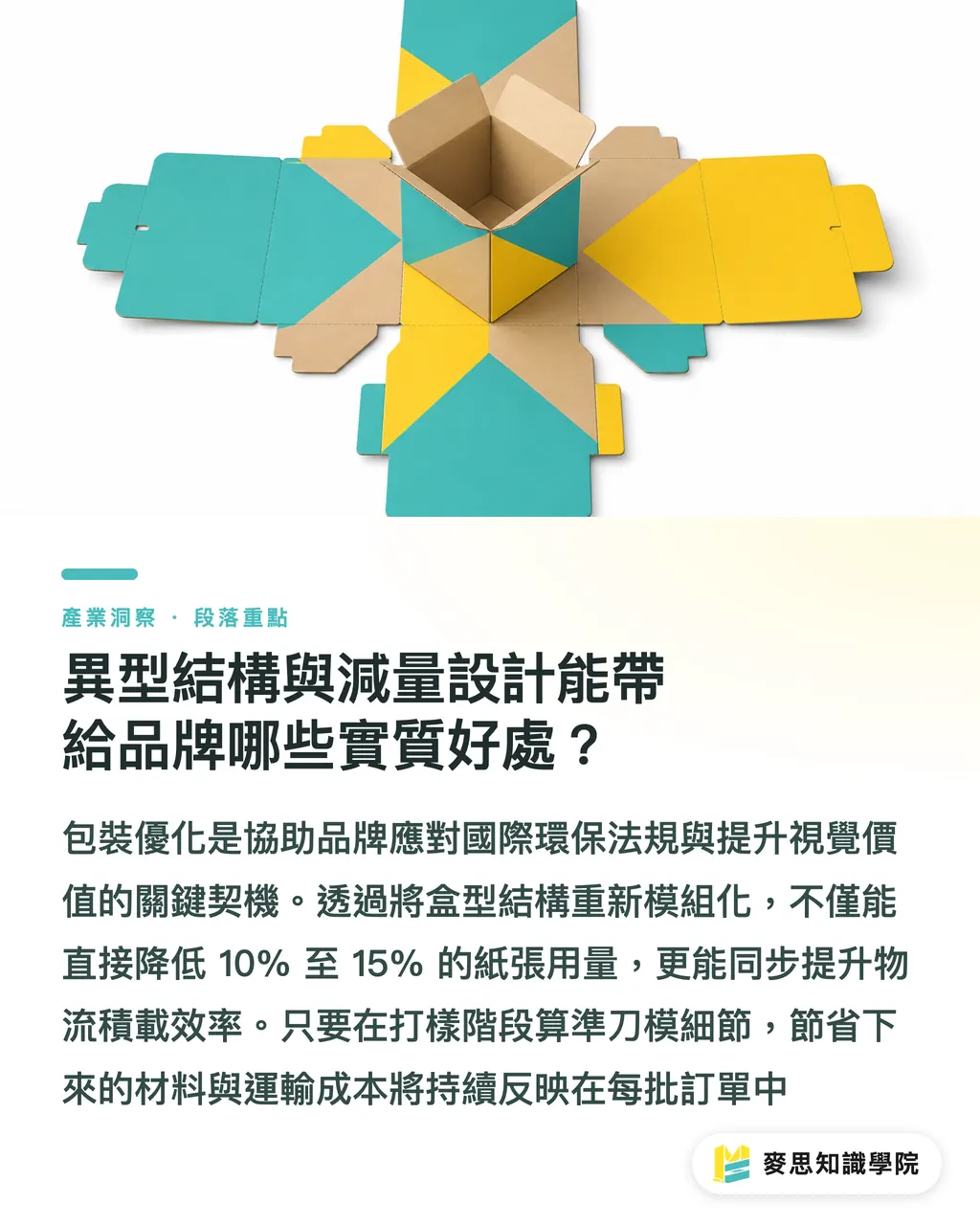
Remodularizing box structure doesn't just cut paper consumption by 10% to 15% directly, it also improves load efficiency when packing for shipping
Not so fast
Reworking a structure looks like it adds upfront testing time, but once you nail the die-cut details at the proofing stage, the material and shipping cost savings keep showing up in every batch order
Key Takeaways
・OCC prices kept climbing through 2026, making long-term fixed pricing obsolete, procurement must shift to dynamic material adjustment
・Upstream giants like Palm are actively converting lines to corrugated materials, signaling sustained long-term demand and a raw paper supply restructuring
・Packaging design should follow this sequence: define load capacity and shipping use first, select flute type and paper weight second, then proof and validate
・Running die-cut and paper weight optimization through the 'MINDS (MS) Three-Gate Structural Assessment' can cut paper waste by over 10% without sacrificing protection
・With regulations like EU PPWR being enforced, reducing packaging volume and introducing PCR recycled materials has become a hard requirement for brands exporting internationally
Further Reflection
For Taiwan's print manufacturing sector and brand clients, this wave of OCC price increases and mill capacity restructuring isn't a temporary headache, it marks a turning point for the packaging industry toward precision manufacturing
The old logic of using bulk purchasing to drive down costs no longer holds. Future competitiveness comes down to structural design precision and supply chain responsiveness
Print shops need to evolve from pure job-order subcontractors into packaging structure consultants, proactively calculating compression ratings and paper weight reduction for clients. Brands, meanwhile, should front-load packaging development timelines and bring AI die-cut layout and digital proofing into the early stages of the process
Only by tightly connecting design, materials, and manufacturing can you build a real margin buffer against raw paper cost volatility
Further Reading
FAQ
- What is the biggest impact of rising OCC prices on Taiwanese print shops and brand procurement?
- Rising OCC prices directly push up the manufacturing cost of corrugated fluting and linerboard, breaking down fixed long-term contract models. Print shops and brands need to adopt dynamic material adjustment and structural lightweighting strategies to protect their margins
- How should brands adjust their packaging design approach when corrugated board costs are volatile?
- Brands should change their design sequence: first confirm product weight and shipping conditions, then select flute type and paper weight, and finally prototype and test. Precise structural calculation cuts unnecessary material waste
- What specific requirements do EU PPWR and similar environmental regulations place on packaging material selection for Taiwanese export brands?
- The regulations require brands to reduce excessive packaging and increase the use of recycled materials such as PCR content. Brands need to optimize packaging structure and volume early to meet international markets' waste reduction and circular economy standards
References
- OCC 回收紙價按月上揚對供應鏈的分歧影響(TTOBMA 價格指數) · packagingdive.com
Related articles




The Print × AI weekly
The print and AI know-how designers, brands and enterprises can use before they commit — one email, every week
MINDS Free Tools
AI background removal, a LINE sticker maker, spine & imposition calculators — all free, right in your browser, no upload.
MINDS Group
Need actual printing or gifting services?
From premium printing to online ordering and festive gifts — the MINDS Group sister brands take it from here.