
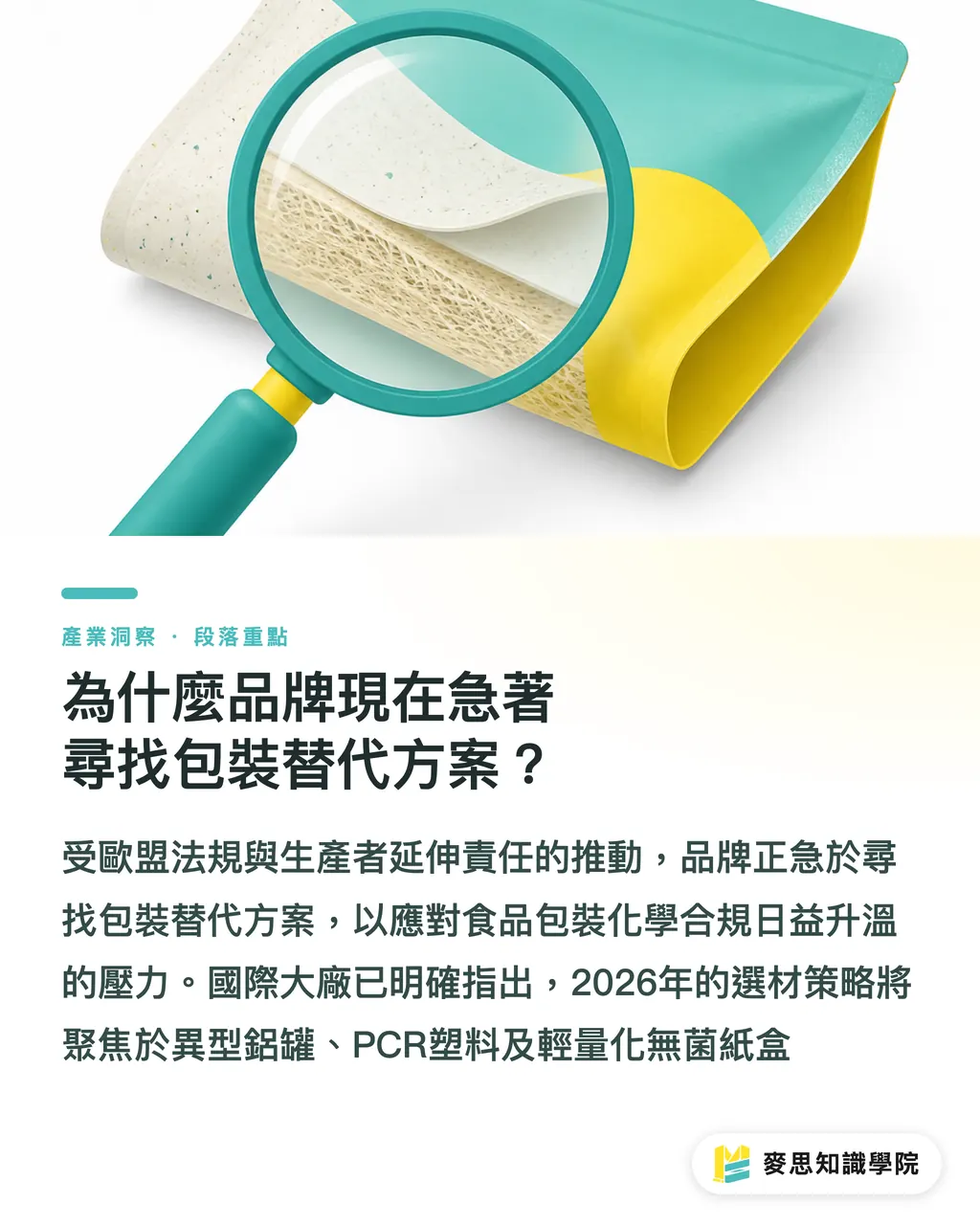
Why are brands urgently seeking packaging alternatives now?
In recent interactions with export-oriented clients, discussions have almost exclusively revolved around EU PPWR regulations and EPR (Extended Producer Responsibility)
Everyone is asking: What materials should we switch to that balance costs with visual impact?
From my long-term observation on production lines and client feedback, the chemical compliance pressure for food packaging is rising rapidly, and traditional plastics as well as PFAS-containing materials are being phased out at an accelerated pace
According to the latest industry intelligence reported by Packaging Dive, major international brands have converged on clear directions for their 2026 material selection strategies
These three pillars are: visually distinct custom-shaped aluminum cans, PCR (Post-Consumer Recycled) plastics focusing on the circular economy, and lightweight aseptic cartons
Visual Differentiation: How Svedka's custom aluminum cans grab shelf attention
In the past, when we discussed metal packaging, we mostly stuck to standard cylindrical aluminum cans
Svedka Vodka's launch of custom-shaped aluminum cans breaks consumer visual fatigue through physical structure
Aluminum has extremely high recycling value, which is a defensive strategy brands play to cater to environmental demands
Beyond defense, however, changing the can body contour through specialized molds is about establishing a strong brand identity on crowded retail shelves
For Taiwanese designers and brands, this means packaging cannot rely solely on flat printing; it requires a deeper understanding of the forming limits and tooling costs of metal processing
How to overcome mass production and processing hurdles with PCR materials?
Many believe that switching to recycled materials solves everything, but the reality on production lines is often disastrous
The PCR (Post-Consumer Recycled) polypropylene mass-production applications promoted by PureCycle precisely address a long-standing industry pain point: unstable batch quality and impurity residues
Previously, when small and medium-sized print shops tested recycled plastics, they often encountered issues like fluctuating heat-sealing temperatures or poor ink adhesion
Now, technologies like those from PureCycle allow PCR materials to cross the threshold of food-grade quality and stable supply
This is more than just a material experiment; the environmental standards for brand procurement have upgraded from "as long as it exists" to "must be able to reliably replace virgin materials."
Can aseptic cartons become the ultimate solution for carbon reduction?
The new aseptic cartons developed by Toppan in collaboration with Elopak showcase the pinnacle of lightweight packaging
The key design of aseptic cartons lies in using multi-layer composite paper-based materials to replace heavy glass or pure plastic containers
This not only significantly reduces the carbon footprint of the packaging material itself, but because of the reduced weight and square volume, it directly cuts down substantial carbon emissions in logistics and transportation
Combining my previous experience monitoring Elopak's low-carbon cartons, the introduction of this material requires perfect coordination with downstream filling equipment
Brands cannot just look at the quote for a single packaging material; they must meticulously calculate the conversion costs of the entire packaging and filling line
How should Taiwanese SMEs and brands make their choices?
After reviewing these three international cases, Taiwanese businesses must return to real business logic when evaluating
Do not blindly chase the latest materials; instead, audit your own market positioning and supply chain capacity
・For brands with sufficient budget and a need to capture high-end retail: Consider custom aluminum cans, trading structural innovation for high premiums and the benefit of 100% recyclability
・For factories where existing plastic production lines are difficult to modify: Prioritize testing high-quality PCR polypropylene, with "pain-free replacement of existing processes" as the guiding principle
・For enterprises focused on bulk logistics efficiency and carbon reduction targets: Aseptic cartons are the best use for optimizing transportation costs and carbon accounting data

Key Takeaways
・The battlefield for aluminum can packaging has shifted from flat printing to the development of three-dimensional custom structures
・The competitiveness of PCR materials is no longer just about the "environmental halo," but rather mass-production stability and processing compatibility
・The carbon reduction benefits of aseptic cartons only have commercial significance when calculated alongside logistics and transportation costs
Extended Reflections
For the MINDS team and the corporate clients we serve, material selection is never a single-choice question. As regulatory pressures close in, we must consider production machine limits and material compatibility during the design proposal stage. We help clients avoid the "looks great on screen, falls apart on the machine" transformation trap, and truly translate sustainability concepts into physical packaging with market competitiveness
Further Reading
FAQ
- Why are brands urgently phasing out traditional plastic packaging?
- EU PPWR regulations and pressure for food packaging chemical compliance are rising rapidly; failing to change materials early risks heavy fines or being banned from store shelves
- What is the most common pitfall for SMEs introducing PCR materials?
- The most fatal issue is unstable batch quality leading to heat-sealing failure or ink fading. It is crucial to find material sources with proven mass-production stability like PureCycle
- Are the conversion costs for aseptic cartons very high?
- Initially, it is indeed necessary to evaluate the compatibility of aseptic filling equipment, but the savings in logistics weight and carbon taxes often allow for the recovery of this investment in the medium to long term
References
Related articles
The Print × AI weekly
The print and AI know-how designers, brands and enterprises can use before they commit — one email, every week
MINDS Free Tools
AI background removal, a LINE sticker maker, spine & imposition calculators — all free, right in your browser, no upload.
MINDS Group
Need actual printing or gifting services?
From premium printing to online ordering and festive gifts — the MINDS Group sister brands take it from here.