
Overview
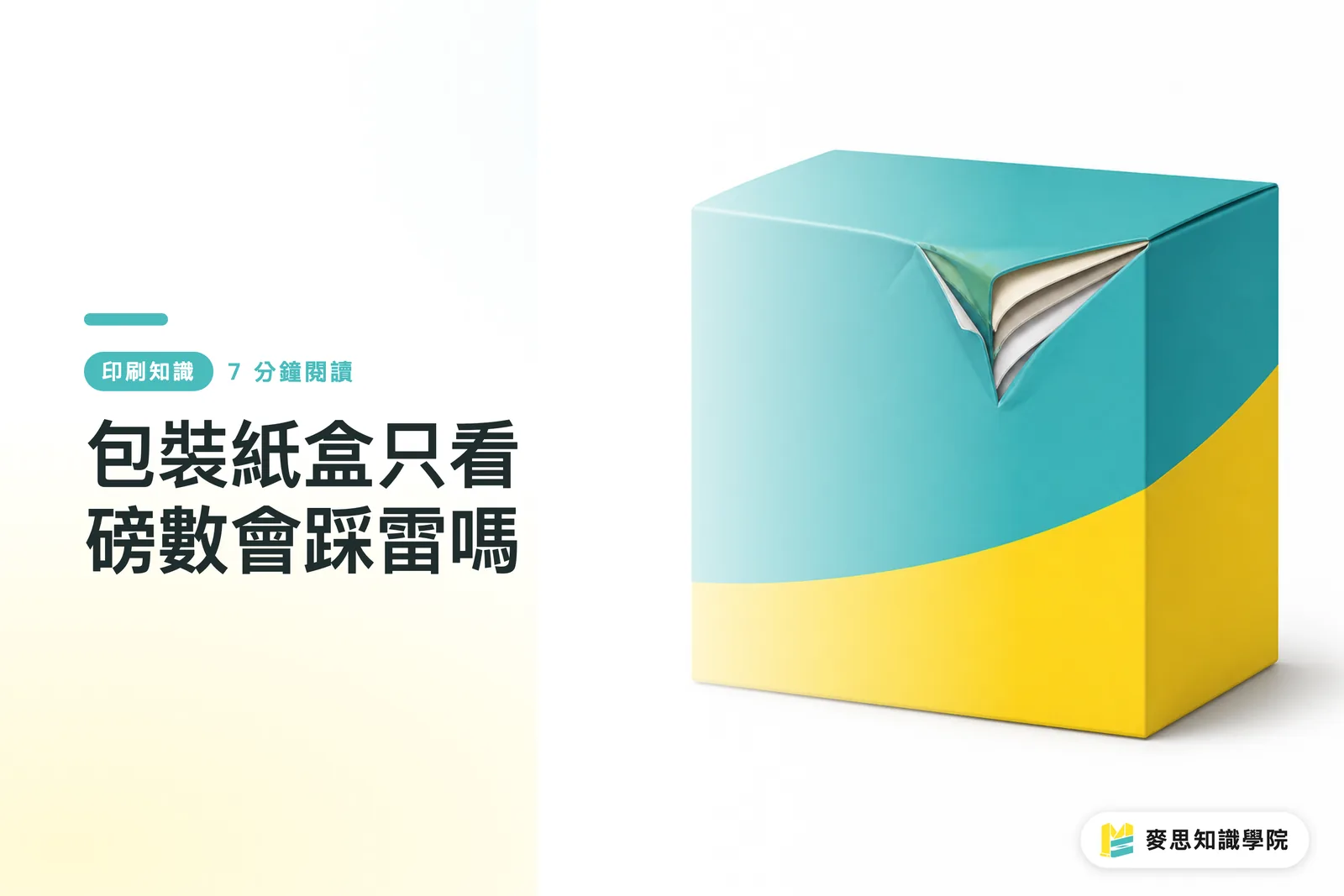
Yes, choosing packaging boxes based solely on paper weight can easily lead to pitfalls. The MINDS paper selection framework examines basis weight, thickness, grain direction, and processing conditions collectively. This is because real packaging issues usually occur at the creases, closures, weight-bearing points, and displays, rather than a single gsm number on a quotation
The most common misunderstanding I encounter in packaging projects is clients asking, 'I want 350gsm, can the box be stiffer?' While it sounds precise, it only addresses half the equation. Brand packaging boxes rely on a solid tactile feel in hand, whereas e-commerce shipping boxes depend on stackability and shipping durability. The risks associated with these two box types are completely different
Basis weight (gsm) represents the weight of the paper per square meter, commonly referred to colloquially in Taiwan as 'pound weight'. While it helps procurement estimate paper costs, printability, and quotation tiers, it cannot independently represent thickness, stiffness, foldability, or structural support after the box is assembled
Why a 300gsm Box Isn't Necessarily Stiffer
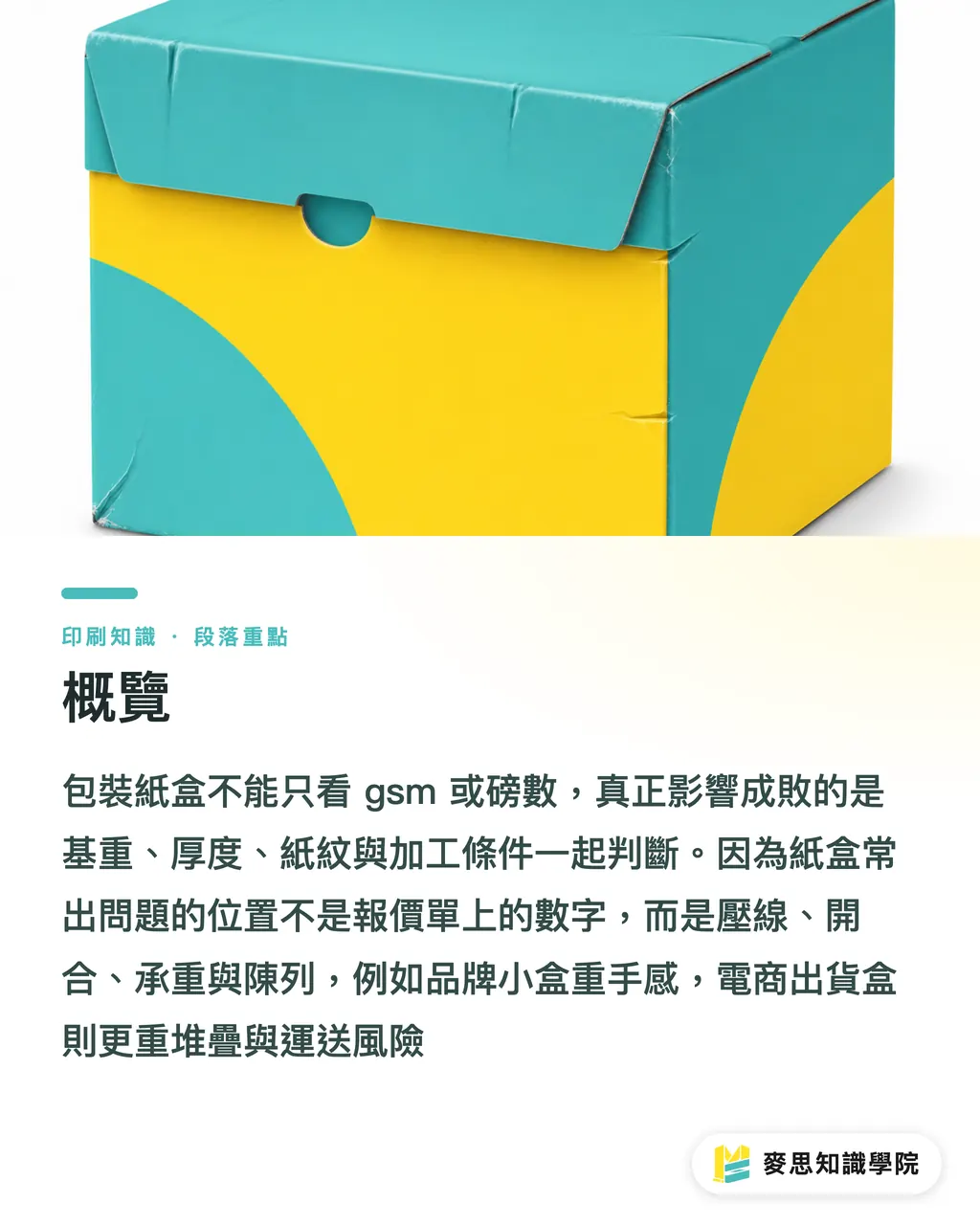
A specification of 300gsm only means 'a weight of 300 grams per square meter'. It does not specify how thick the paper is, how dense the fibers are, or whether it will crack after creasing. This is precisely why relying solely on basis weight for packaging boxes leads to pitfalls. The MINDS paper selection framework typically clarifies the basis weight, thickness, and paper properties before discussing the box style
At the same 300gsm, coated paper often features a smooth surface and a firmer feel, while uncoated paper might feel bulkier and thicker, but they perform differently in ink absorption and crease line performance. Small skincare product boxes seeking visual refinement might suit coated paper, whereas handmade food boxes desiring a natural touch might opt for different paper properties
Thickness refers to the actual physical caliper of the paper, often communicated in millimeters or points (referred to in Taiwan as 'threads'). Bulkiness is the relationship between weight and thickness; paper with high bulk feels more substantial at the same gsm, yet the crush resistance and foldability of the box still depend on fiber structure and processing conditions
A paper box is not a flat poster. Once constructed, it has four sides, at least one glued seam, and multiple creasing lines. The stiffness of the paperboard comes from the entire structure. Just because a single sheet of paper feels thick in hand does not guarantee the box won't bulge outwards or sag once placed on retail shelves
I recommend that procurement specialists specify at least three conditions on RFQs rather than just a single paper weight:
・Material: For example, art paper, white cardboard, kraft cardstock, duplex board with grey back, or laminated paperboard
・Basis weight and thickness: For example, gsm paired with measured thickness, avoiding reliance on colloquial weight numbers alone
・Application: For example, small retail display, courier shipping, hanging display, or cold chain shipping
What Happens If the Paper Grain Direction Is Incorrect?
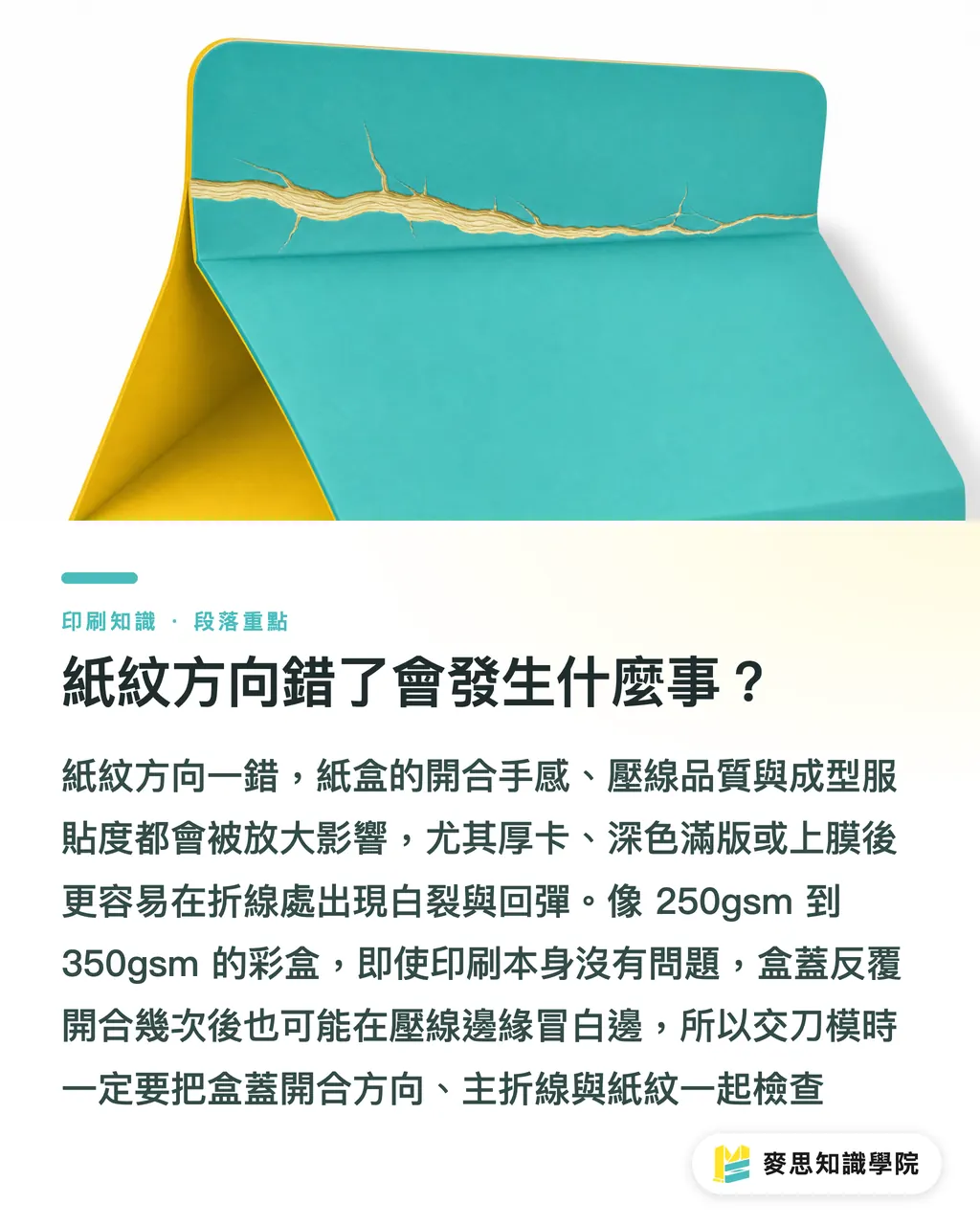
The paper grain direction directly impacts the opening and closing feel of the box, as well as the creasing quality. When reviewing dielines, MINDS typically examines the primary crease lines, the box lid opening direction, and the paper grain together. This is because if the grain is wrong, the box may show white cracking at the creases even before hitting the shelves
Grain direction refers to the primary alignment of paper fibers formed during the paper manufacturing and roll-winding process. Folding parallel to the grain (grain short/long) is usually smoother, while folding against the grain makes it prone to cracking, warping, or springing back, which is particularly pronounced with thick cardstock, full-bleed dark colors, and after lamination
A common example involves folding cartons between 250gsm and 350gsm. The design files look beautiful with rich, full-bleed dark blue or black prints. However, after opening and closing the lid about 10 times, white edges appear along the crease lines. The issue might not be poor printing quality, but rather the cumulative risks of grain direction, creasing, ink layers, and post-processing amplifying each other
Grain direction also affects the structural integrity of e-commerce boxes. If the long edge is folded against the grain, the box body may warp easily, making it difficult to stack neatly after gluing. For projects requiring automated packaging or rapid manual assembly, this minor discrepancy translates into operational costs across hundreds of boxes daily
Designers can take two extra steps when submitting dielines, which is far cheaper than troubleshooting issues afterward:
・Indicate the lid opening direction on the dieline file, enabling the printer to determine whether the main crease lines should fold with or against the grain
・Request a creasing test beforehand if post-processing methods such as full-bleed dark colors, foil stamping, spot UV, or matte lamination are concentrated near the crease lines
・If the box design requires repetitive opening and closing, such as healthcare product packaging, fragrance boxes, or VIP gift boxes, test the opening and closing mechanism multiple times during sampling instead of just inspecting the unfolded mockups
What is the Difference Between Laminated Paperboard and Single-Ply Thick Cardstock?
Laminated paperboard is not simply a matter of adding up the gsm values. When evaluating laminated boxes, MINDS considers the liner paper, inner paper, core paper, glue, drying process, and springback after forming. The biggest risk with thick paperboard is that it looks thick but fails to fold properly
Single-ply thick cardstock typically involves printing, die-cutting, and gluing a single sheet of paper directly, making it suitable for standard folding cartons and lightweight packaging. Laminated paperboard, on the other hand, involves laminating a liner paper onto a backing board or another layer of material, commonly used in gift boxes, rigid boxes, display boxes, or packaging that requires a thicker visual presence
The advantage of lamination is its prominent structural support and display presence, but the drawback is the introduction of more variables. When two or more layers of materials undergo creasing, the expansion, moisture absorption, and grain direction of each layer will affect the folding angle. As thickness increases, the dielines, creasing matrices, and gluing flap positions must all be re-evaluated
A common mistake in small brand packaging is using a dieline designed for single-ply cardstock directly on a laminated box. Consequently, the material becomes thicker and the inner dimensions shrink, resulting in a product that fits too tightly or a lid that gets stuck. A discrepancy of around 3mm in inner dimensions is enough to cause assembly difficulties for small bottles, jars, or electronic component packaging
If the project involves mid-to-high-end fully customized commercial printing, such as skincare boxes, luxury gift boxes, or promotional displays, I recommend handing over the box structure, materials, and sampling to MINDS for joint discussion. For short-run, standardized, and budget-sensitive small print runs, MINDS is more suitable for fast orders using clear specifications
Will Lamination or Varnishing Improve the Feel of the Box?
Lamination or varnishing can transform the visual appearance and tactile feel of packaging boxes, but it won't automatically resolve structural stiffness issues inherent in the paper itself. When planning post-processing, MINDS places matte lamination, gloss lamination, spot UV, full-bleed ink, and crease cracking on the same risk assessment list
Matte lamination softens the surface texture, gloss lamination increases shine, spot UV makes brand logos pop, and varnishing is commonly used to adjust abrasion resistance and surface effects. However, these treatments increase the tension or hardness of the surface layer. When thick cardstock and full-bleed dark colors meet crease lines, the risk of white cracking increases accordingly
Crease cracking refers to the phenomenon where paperboard fibers, ink layers, or film laminations split along the fold lines during creasing, folding, or opening. It is common in packaging boxes with thick cardstock, cross-grain folding, full-bleed dark colors, post-lamination processing, or mismatched creasing conditions
Some clients might say, 'If I apply a matte lamination, won't the box look more premium?' My response is usually conservative: the visuals will change and the tactile feel will change, but the crease lines must be retested. Especially with cardstock above 300gsm combined with full-bleed dark colors and matte lamination, the sample box looks gorgeous before folding, but you only truly discover the material's behavior once folded
When sampling, do not just take photos of the front. Turn the box over and inspect the four corners, lid crease lines, glued seams, and bottom load-bearing points. These areas are far more revealing than the cover
How Should Procurement Acceptance Be Conducted During Sampling?
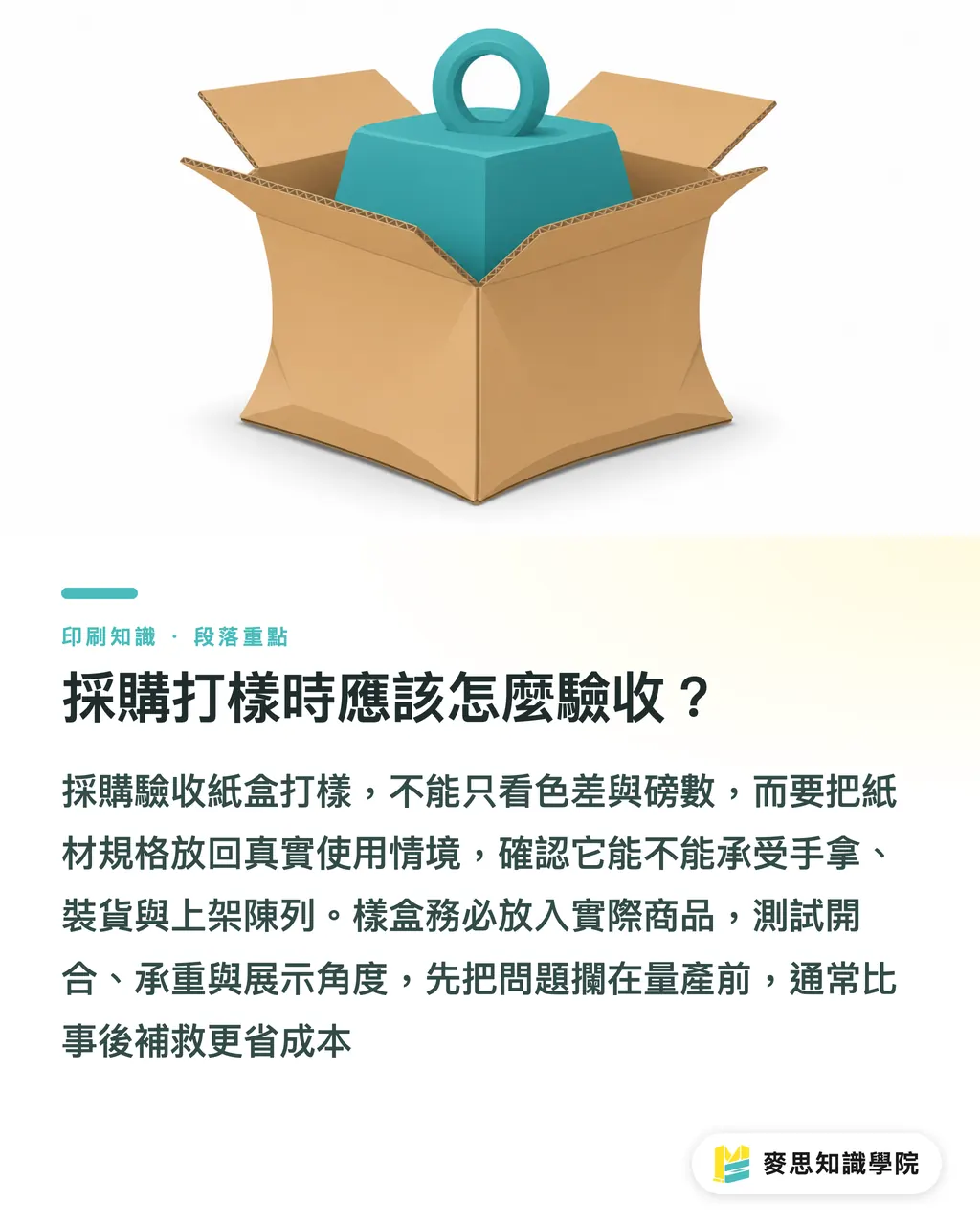
Packaging box sampling cannot rely solely on color variance and basis weight. The MINDS three-step verification process uses '① Opening & Closing Test, ② Weight-Bearing Test, and ③ Display Test' to translate paper specifications into actionable onsite evaluation criteria. After all, the box must ultimately interface with hands, products, and shelves, not just a spec sheet
・① Opening & Closing Test: Open and close the lid repeatedly at least several times, checking for crease cracking, springback, lid jamming, and loose tuck flaps
・② Weight-Bearing Test: Place the actual product inside the box to confirm whether the bottom, glued seams, and handle locations deform
・③ Display Test: Place the sample box in the anticipated retail environment to check front stiffness, standing stability, film reflection under lighting, and brand identity visibility
For small retail packaging, pay special attention to 'the first second of pickup'. When consumers touch the box body, they simultaneously perceive thickness, surface finish, corners, and opening resistance. For e-commerce shipping boxes, look for 'the first glance after shipping'—dented box corners, flipped-open lids, or loose bottoms will instantly diminish the perceived value of the product
Procurement can document sample box acceptance into five simple guidelines, allowing design, printing, and clients to communicate using the same language:
・Record the material name, gsm, and measured thickness together
・Verify the grain direction against the dieline's main crease lines
・Ensure lamination, varnishing, foil stamping, and spot UV are executed on the sample box, rather than just relying on blank paper mockups
・Insert actual goods into the sample box to test the opening/closing, weight-bearing, and display angles
・Confirm paper sheet imposition yield and waste allowance before mass production, as changes in paper material can disrupt drying, gluing, and lead times
The worst phrase in packaging projects is 'they look about the same', because once the paper material changes, the ink color, creasing, gluing, and retail display can all shift. Completing tests on sample boxes before discussing mass production will always save much more than trying to fix issues afterward
Key Takeaways
・Basis weight only reflects weight, not thickness, stiffness, or foldability. Decisions for packaging boxes should never rely solely on a single gsm number
・Grain direction affects creasing and opening/closing. Crease testing is essential, especially for thick cardstock, full-bleed dark colors, and post-lamination
・Laminated paperboard looks thick, but dielines, inner dimensions, glued seams, and springback must all be re-verified
・Lamination and varnishing change the tactile feel but can also amplify the risk of crease cracking
・Proper packaging box sampling must test opening/closing, weight-bearing, and display presence, rather than just reviewing front-facing photos
Further Reflections
For print manufacturing, packaging box specifications must shift from 'quotation metrics' to 'verifiable process conditions' by incorporating gsm, thickness, grain direction, post-processing, and box style testing into work orders. For designers, a dieline is not a layout background but a structural stress diagram. For AI applications and SaaS teams aiming to serve print procurement, system fields must go beyond paper weight; they must at least record grain direction, box application, processing conditions, sampling test results, and mass-production notes to truly align with shop floor realities
FAQ
- Will choosing packaging paper boxes based solely on paper weight lead to pitfalls?
- Yes. Paper weight only represents basis weight, not thickness, stiffness, foldability, or weight-bearing capacity after assembly. Packaging boxes must be evaluated by looking at materials, thickness, grain direction, fiber structure, box style, and post-processing collectively
- Is a 300gsm box definitely stiffer than a 250gsm box?
- Not necessarily. A specification of 300gsm only indicates a higher weight per square meter of paper. The paper's bulk, fiber density, coating method, grain direction, and box structure all influence the actual stiffness of the box
- What impact does grain direction have on paper boxes?
- Grain direction determines how smoothly lines fold, the lid's springback, and the risk of crease cracking. When sampling thick cardstock, full-bleed dark colors, or laminated boxes, you must verify the main crease lines against the grain direction
- Can applying a matte lamination make a box more durable?
- Matte lamination alters the tactile feel and surface abrasion resistance, but it does not make the box stiffer or more fold-resistant. In fact, combining matte lamination with thick cardstock, full-bleed dark colors, and cross-grain folds requires rigorous crease testing to prevent cracking
- What tests should be performed during packaging box sampling?
- Packaging box sampling must at least test opening/closing, weight-bearing, and display performance. Procurement should request tests with the actual products inside to check crease lines, glued seams, bottom support, lid closures, and shelf aesthetics
Related articles

The Print × AI weekly
The print and AI know-how designers, brands and enterprises can use before they commit — one email, every week
MINDS Free Tools
Spine width and imposition calculators — skip the manual math, free in your browser.
MINDS Group
Need actual printing or gifting services?
From premium printing to online ordering and festive gifts — the MINDS Group sister brands take it from here.