
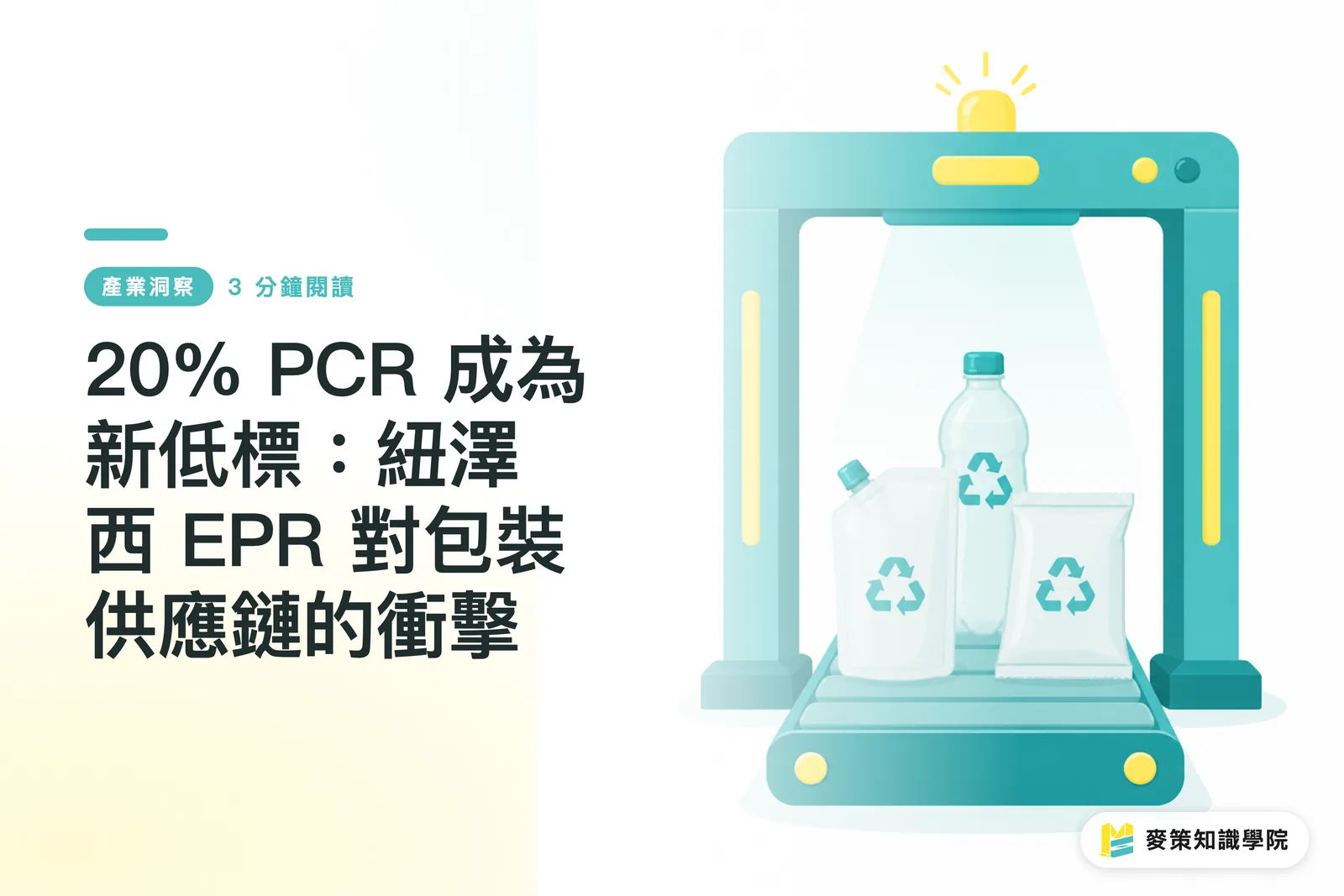
What does New Jersey's EPR bill actually demand?
EPR (Extended Producer Responsibility, a regulatory framework holding brands and manufacturers financially or physically responsible for end-of-life recycling and disposal) forces producers to pay for their waste. PureCycle and IPL Schoeller recently teamed up to launch packaging containing 20% PCR (post-consumer recycled) plastic. This is not just a green PR stunt. It is a concrete defense against New Jersey's upcoming EPR laws
Simply put, EPR means whoever makes the product pays to recycle it. Looking at Western markets recently, from California's recycling label rules to the EU PPWR (Packaging and Packaging Waste Regulation), the pressure keeps building. New Jersey's move shows that recycled content quotas have shifted from voluntary goals to hard thresholds. Packaging suppliers now need concrete material formulas to help brand clients clear this regulatory hurdle

Why is 20% PCR becoming table stakes for exporters?
This number is the bottom line for brand clients trying to keep products on store shelves. You might think 20% sounds easy. On the shop floor, the engineering reality is much tougher than the number suggests. Regranulating post-consumer plastic and blending it into virgin resin directly affects physical strength, tensile properties, and ink adhesion
Hitting 20% PCR while keeping structural integrity takes serious material R&D and testing. From recent export projects we have seen, brand owners are scrambling for answers. If they cannot prove their packaging has enough recycled content, they face steep eco-taxes or get kicked off retail shelves entirely. PureCycle's new package proves the tech works. Going forward, this is the bare minimum to win orders
How should Taiwan's packaging supply chain respond?
In recent years, I often hear peers say Taiwan hasn't mandated this yet so there is no rush. That is a dangerous illusion. Taiwan's printers and packaging converters do global business. If your brand client sells into New Jersey or the EU, this heat will reach your production lines
Facing this regulatory upgrade, my advice to our plant and clients is straightforward:
・Build real material traceability: You cannot just claim you use recycled content. You need third-party verification reports
・Push alternative materials to their limits: Start proofing now to pin down print variables and color delta once PCR is blended in
・Tap into compliance resources: If you do not have dedicated sustainability compliance staff in-house, seek external support from the Mai Strategy Knowledge Academy consulting team to map out the 2026-2030 regulatory timeline
The whistle blew on this race long ago. Turning these hard metrics into standard operating procedures early is your only ticket to staying at the negotiating table

Key Takeaways
・New Jersey's EPR rules turn recycled content quotas into mandatory thresholds. 20% PCR is becoming the new baseline for export packaging
・Adding PCR challenges structural packaging strength and ink adhesion. Supply chains must run material tests and proofs in advance
・Taiwanese suppliers cannot wait for local regulations. They must match their end clients' global compliance timelines and build verifiable traceability
Further Thoughts
This wave of EPR is both a threat and an opportunity for small and mid-sized Taiwanese print shops. While others wait on the sidelines, whoever delivers stable, traceable packaging that hits the 20% PCR mark first will win major export contracts over the next few years. Designers also need to get comfortable working within constraints, making design for recycling the primary lens for creativity. That is where the real battle for sustainable packaging happens
Further Reading
FAQ
- What is EPR (Extended Producer Responsibility)?
- It is an environmental policy framework that makes manufacturers and brand owners financially or physically responsible for the collection, treatment, and recycling of their products at end of life
- Why did PureCycle and IPL Schoeller launch packaging with 20% PCR?
- It directly answers upcoming EPR mandates in New Jersey, ensuring their clients' products clear local recycled content quotas to enter the market smoothly
- Does this affect Taiwanese printers that do not export directly to the US?
- Yes. Whenever your clients export goods to regions with these laws, compliance mandates flow down through supply chain contracts directly to Taiwan's packaging and printing plants
Related articles
The Print × AI weekly
The print and AI know-how designers, brands and enterprises can use before they commit — one email, every week
MINDS Free Tools
AI background removal, a LINE sticker maker, spine & imposition calculators — all free, right in your browser, no upload.
MINDS Group
Need actual printing or gifting services?
From premium printing to online ordering and festive gifts — the MINDS Group sister brands take it from here.