

Why Did a Toothpaste Tube End Up in Court?
Because once a brand prints 'recyclable,' consumers understand it as 'my local facility will take it.' Courts also evaluate this concrete commitment, and whether the material works in theory is only part of the equation. In Mai Strategy's Three Pre-Print Checkpoints, I treat this word as a commitment backed by evidence, not a decorative slogan
According to reporting on the Colgate-Palmolive Toothpaste Tube Recyclability Lawsuit Trial Date Set, a judge has scheduled the trial date, putting material disclosures, recycling labels, and consumer expectations under legal review. Target pushing its recyclable packaging goal out to 2035 reminds Taiwanese brands that sustainability timelines depend on supply chains and recycling infrastructure. Adding a recycling logo at the print shop at the last minute will not fix it
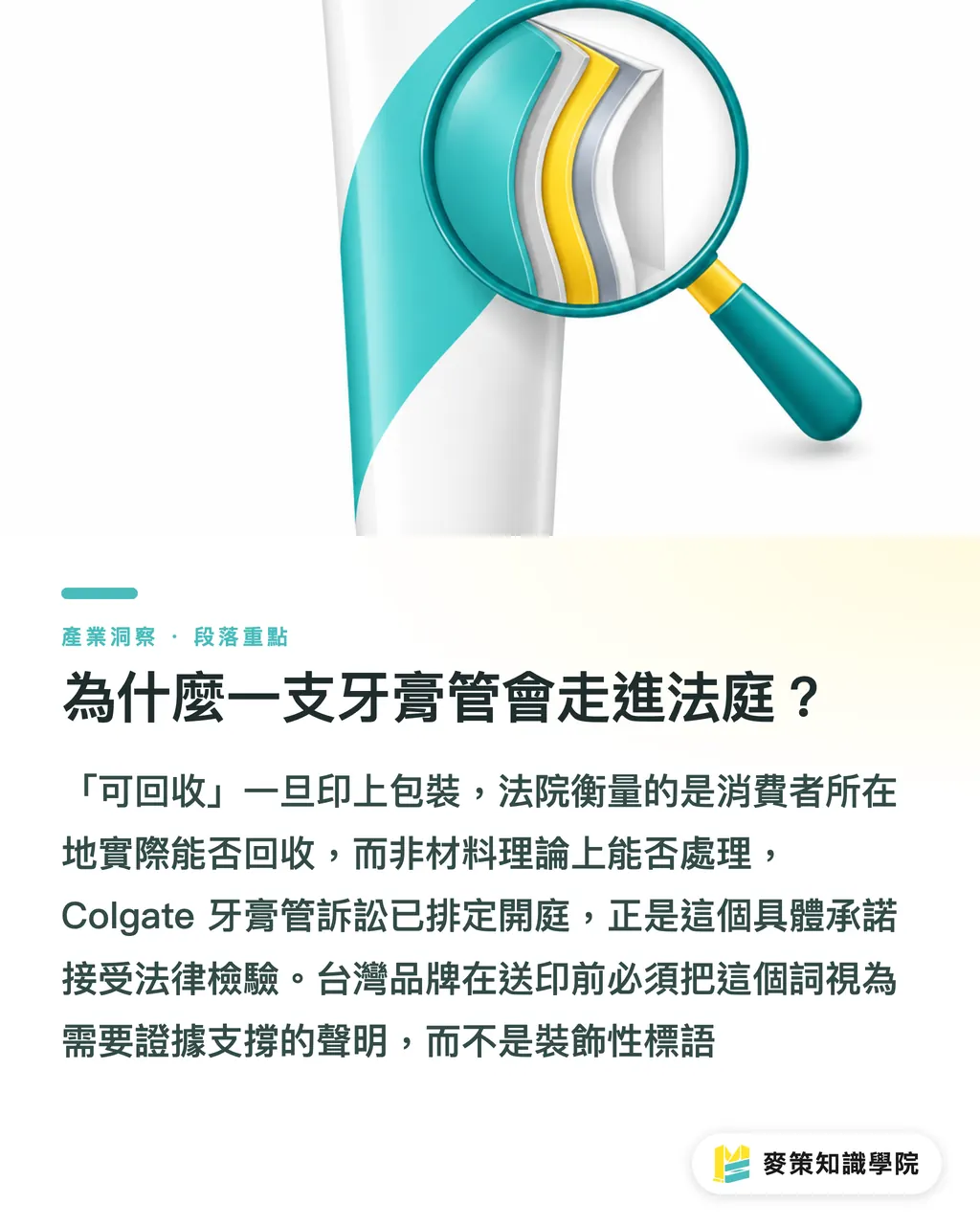
What Does 'Recyclable' Actually Require?
Recyclability must hold up across materials, package structure, local collection, sorting equipment, and reprocessing markets. Miss one link, and the claim risks sounding like lab-only theory
Recyclable packaging: Packaging whose materials, structure, and printed components can realistically be collected, sorted, and reprocessed into recycled raw materials in a specified market
On the production floor, I constantly remind brands that material names are just the starting point. For toothpaste tubes, you must look at how the tube body, crimp, cap, inks, adhesives, and residue move through sorting streams. For beverage bottles, you also have to check whether the bottle, cap, label, and resin color complicate sorting. The Colgate case makes this gap concrete: what makes sense in design may not be accepted by local recycling facilities
How Can Design Files Catch Recycling Risks Early?
The most effective move is building recycling reviews into material selection and prepress before proofing, signing off on design choices, printing techniques, and public copy in the same round. I organize this into Mai Strategy's Three Pre-Print Checkpoints
・① Structural Check: Confirm which recycling stream the tube or bottle body, cap, label, and adhesive each follow, identifying components that cannot be mixed
・② Print Check: Inspect whether inks, varnishes, lamination, metallic effects, or shrink sleeves alter sorting or reprocessing conditions, archiving material specifications alongside final prepress files
・③ Claims Check: Frame 'recyclable' as a market-specific, conditional statement backed by evidence. If proof is lacking, do not inflate the promise
Both toothpaste tubes and beverage bottles need these three checkpoints. Proofing only shows you can print it, not that recyclers can take it. Waiting to fix problems after launch makes reprints and revisions far more expensive
How Should Brands Set ESG Timelines Without Backfiring?
Timelines must separate technical readiness, recycling system acceptance, and market claims, keeping verifiable proof of delivery for each. Target extending its recyclable packaging target to 2035 reminds brands to link milestone years back to product specifications, supplier capabilities, packaging copy, and sales markets
・Design Layer: Confirm materials and printing methods, locking non-substitutable parts into specifications
・Recycling Layer: State clearly which regions and systems actually accept the item, storing evidence in the same project file
・Communication Layer: Keep consumer-facing wording aligned with the first two layers. Global ambitions cannot override local conditions
Handled this way, delays become manageable schedule adjustments. Printing 'recyclable' without proof leaves brands explaining every single word during customer complaints or lawsuits
What Should Taiwanese Brands and Print Shops Do Right Now?
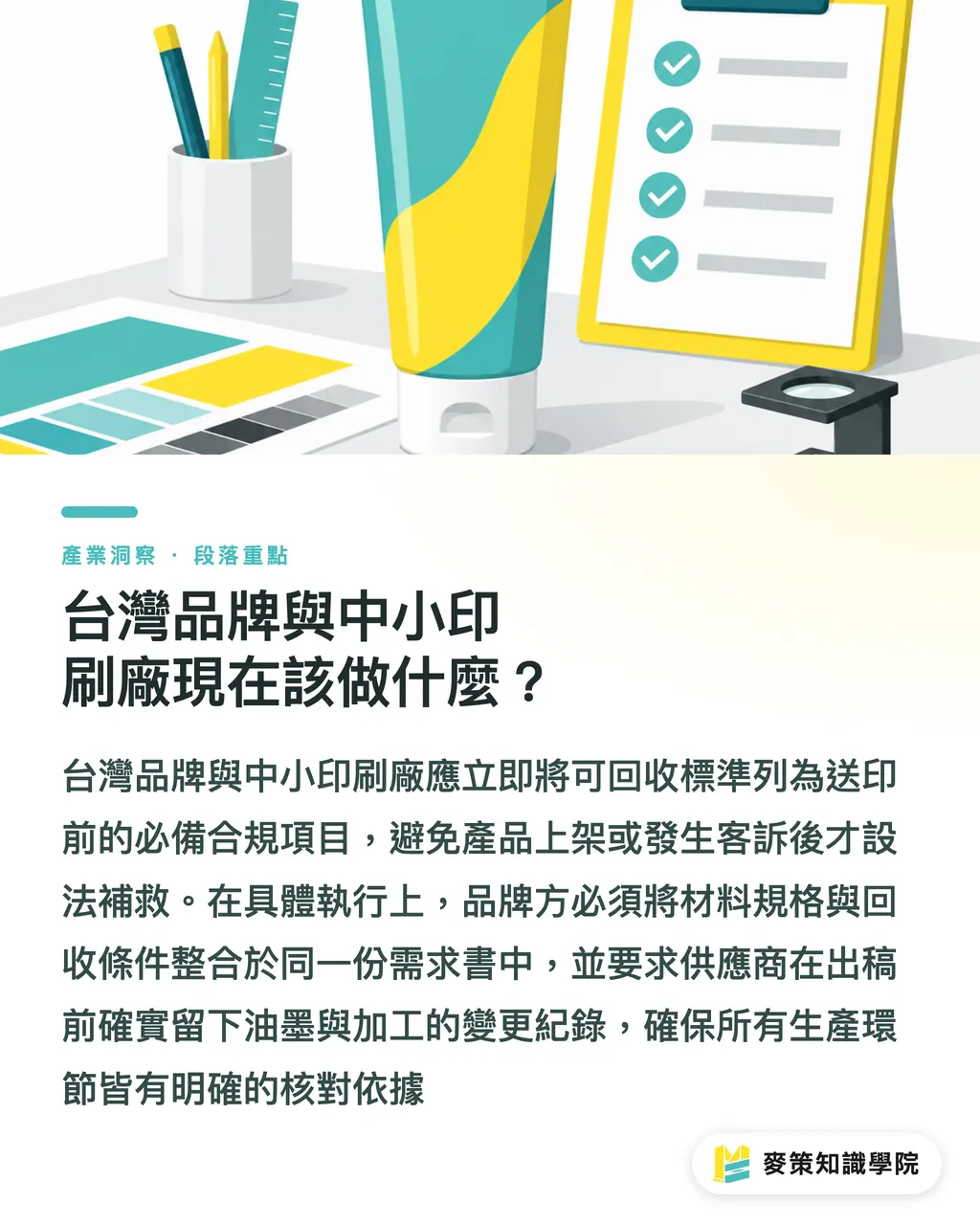
Treat 'recyclable' as a pre-press compliance checkbox right now, instead of scrambling to add explanations after proofs are done, products hit shelves, or complaints roll in. Small and medium print shops should pick one active toothpaste tube or beverage bottle project and organize the records into a clean handoff file
・Brand Owners: Place target markets, materials, recycling conditions, and claim versions into a single brief, and require suppliers to provide verifiable documentation in procurement contracts
・Designers and Printers: Set a mandatory material review before outputting files, keeping version records for every change to labels, inks, coatings, and finishing
・AI Tools: Use them to extract specifications, compare versions, and flag missing details. SaaS platforms preserve links between revisions, proofs, and claims, while leaving recycling feasibility to real-world recycling systems and professional audits
If you need help turning this data into an audit checklist, the Mai Strategy Knowledge Academy consulting team can assist. When moving into physical proofing, MINDS can verify materials and production processes early on
Key Takeaways
・A material labeled recyclable does not mean local collection trucks will take it
・The toothpaste tube lawsuit reminds brands that packaging claims must follow local recycling systems
・Putting structure, printing, and copy onto the same pre-print checklist surfaces risks during the design phase
・Target pushing its deadline to 2035 sends a clear message: sustainability roadmaps must shift alongside supply chain capabilities
Taking It Further
For print manufacturing, the next step is bringing materials, inks, finishing, and revision logs into standard operating procedures. For design teams, recycling requirements should sit right beside the first structural draft. For AI and SaaS teams, the most valuable capabilities are spotting claim discrepancies across different markets, flagging missing evidence, and tracking who changed what and when. Pick one product line for a full retrospective review, run it through once, and then decide which fields are worth standardizing into your system
Further Reading
FAQ
- What is the core dispute in the Colgate toothpaste tube lawsuit?
- The dispute centers not just on whether the packaging material can be recycled, but on whether municipal recycling programs where consumers live actually accept it, and whether the 'recyclable' claim led consumers to expect more than local systems deliver
- Does mono-material packaging guarantee recyclability?
- Not necessarily. Caps, labels, adhesives, inks, product residue, and local sorting infrastructure can all prevent it from being recycled in practice
- When should brands review design for recyclability?
- Brands should audit recyclability during initial design drafts and material selection, completing structure, printing, and claims reviews before ordering proofs
- What does Target pushing its packaging goal to 2035 tell Taiwanese brands?
- Brands should anchor sustainability goals to timelines verifiable by supply chains and recycling systems, adjusting consumer-facing copy to reflect real market conditions
Related articles


The Print × AI weekly
The print and AI know-how designers, brands and enterprises can use before they commit — one email, every week
MINDS Free Tools
AI background removal, a LINE sticker maker, spine & imposition calculators — all free, right in your browser, no upload.
MINDS Group
Need actual printing or gifting services?
From premium printing to online ordering and festive gifts — the MINDS Group sister brands take it from here.