
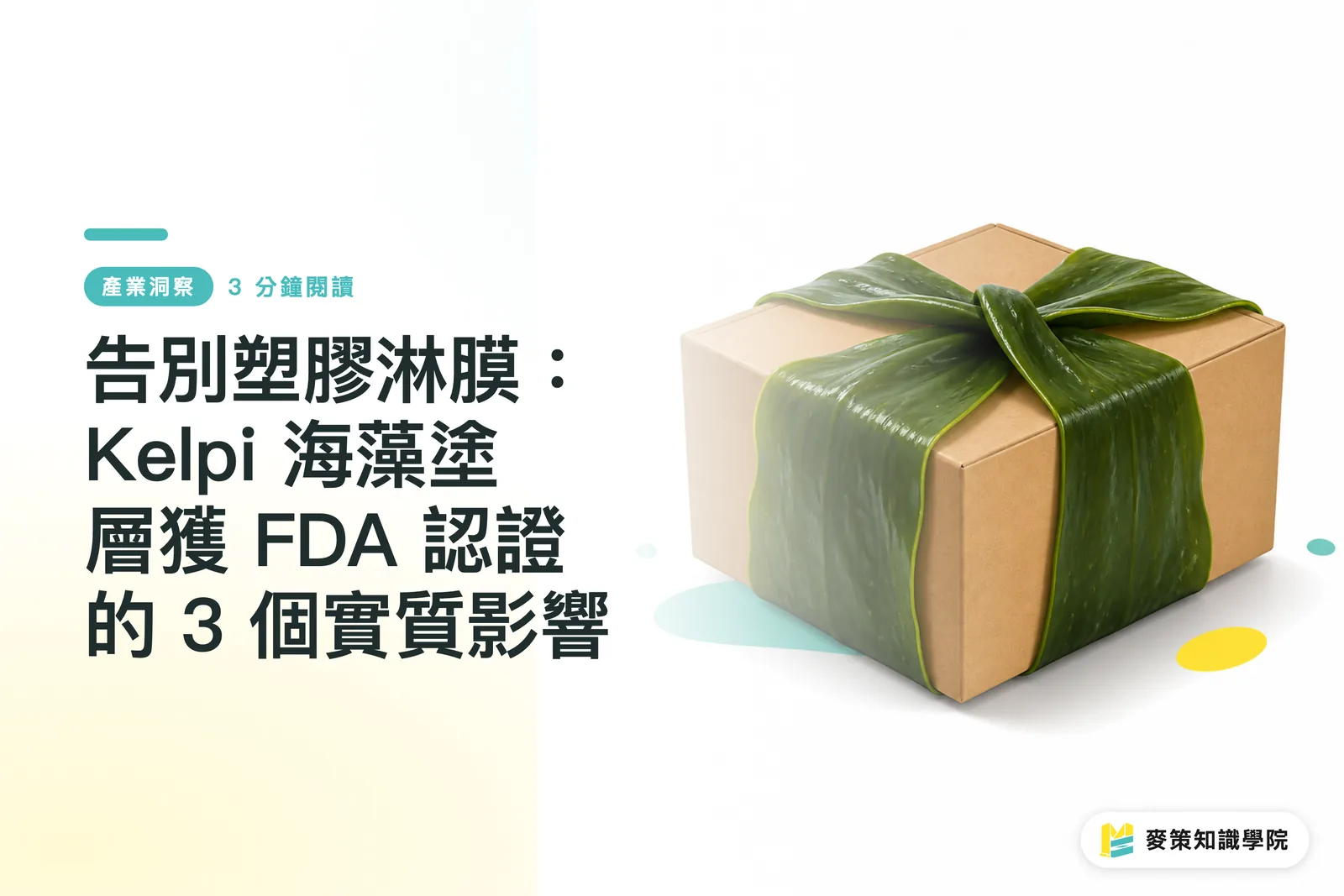
Why the FDA's Green Light for Seaweed Coating Is a Major Turning Point
For the past few years, brands have talked endlessly about all-paper packaging. But in food applications, the real bottleneck has always been that grease- and moisture-resistant PE (polyethylene) plastic lining. Without a lining, paper boxes cannot handle hot or greasy food. With it, paper becomes a nightmare for recycling facilities. That is why the seaweed-based coating developed by Kelpi (a UK seaweed biotech packaging startup) drew so much industry attention after securing FDA clearance
This green light means plant-based coatings are no longer just lab-bound eco concepts, but materials that can actually enter commercial use. The logic mirrors Coperion's mechanically recycled plastics getting cleared for food packaging. Once regulatory hurdles clear, international brands preparing for the upcoming PPWR (EU Packaging and Packaging Waste Regulation) will definitely speed up their adoption of green alternatives
Why Changing Paper Without Changing the Coating Fails to Fix Recycling
From my years on the production line and working with clients, plenty of brands spend heavily on FSC (Forest Stewardship Council) certified eco-friendly paper to polish their sustainability image, only to keep using traditional solvent-based coatings or PE linings for surface protection. That is a real shame
The environmental benefit of that approach falls apart the moment the package enters the recycling stream. To make paper packaging truly circular, coating materials have to upgrade along with the paper. Kelpi's core tech uses abundant marine biomass to extract a high-barrier film that directly replaces petrochemical plastics
This does not just solve end-of-life recycling. Compared to older water-based bio-based UV-cured coatings, seaweed grows rapidly without consuming fresh water or fertilizer, taking carbon footprint reductions a huge step further. That is what actually matters
How Small-to-Mid Brands and Print Shops Should Handle This Material Shift
Regulatory clearance for green materials is great news, but bringing them to the production floor means real growing pains. When substrate surfaces shift from plastic to seaweed extracts, existing ink formulations, adhesion testing standards, and post-press rub resistance at print shops will take the direct hit
Brands should not rush to swap every package to seaweed coatings right away. Take a breath. The first step is auditing high-barrier requirements across current product lines, running small pilot batches for food boxes or flexible packaging that require grease and moisture resistance to test material compatibility
If your packaging has strict plastic-free compliance requirements, you can reach out to the Mai Strategy Knowledge Academy consulting team for a full compliance evaluation and production rollout plan covering recent EPR (Extended Producer Responsibility) regulations and material transitions. Preparing early prevents the nightmare of inks failing to adhere on the press when regulations take full effect
Key Takeaways
・Kelpi's seaweed coating cleared FDA hurdles for food contact, accelerating the phase-out of traditional PE linings
・Switching to eco-friendly paper without upgrading the coating fails to fix recycling deadlocks, since true paper recyclability relies on barrier layer upgrades
・New bio-based coatings alter paper surface tension and properties, requiring print shops to re-evaluate ink adhesion and rub resistance standards early
・As regulations like the EU's PPWR tighten, brands should run small-batch pilot tests with green alternatives for high-barrier packaging needs
Food for Thought
Sustainable packaging has moved well past the stage of marketing storytelling
Kelpi's clearance is a clear signal that the future of green packaging comes down to who can reliably bring compliant new materials into mass production the fastest
For Taiwanese print manufacturers and brand clients, this is a supply chain survival test. Mastering printability on new materials lets you secure a voice in the next procurement cycle. Stop treating sustainability as extra credit over the next couple of years, because it has become the entry ticket
Further Reading
FAQ
- What specific advantages does seaweed coating offer? Why not just stick with water-based coatings?
- The standout advantage of seaweed coating is its strong grease and moisture barrier without consuming fresh water or fertilizers during raw material growth. While water-based coatings also reduce pollution, seaweed technology provides protection much closer to conventional plastic linings in high-grease food contact scenarios while remaining fully recyclable with paper
- Does adopting these new bio-based coatings require changes to existing packaging design and printing?
- Yes. Shifts in physical substrate properties directly affect ink adhesion and drying speeds. Brands must check in with their print shops during the design phase to see if ink formulations need adjustments, ensuring rub resistance and color vibrancy stay intact
- Will packaging regulations in Europe and the US impact Taiwanese brands?
- Any brand that exports products or plans to sell on global e-commerce platforms will definitely feel the impact. With strict rules on packaging recyclability under frameworks like the EU's PPWR, Taiwanese brands that replace petrochemical linings with seaweed coatings earlier will be far better positioned to avoid upcoming green trade barriers
Related articles


The Print × AI weekly
The print and AI know-how designers, brands and enterprises can use before they commit — one email, every week
MINDS Free Tools
AI background removal, a LINE sticker maker, spine & imposition calculators — all free, right in your browser, no upload.
MINDS Group
Need actual printing or gifting services?
From premium printing to online ordering and festive gifts — the MINDS Group sister brands take it from here.