
What Exactly Is Tetra Pak Doing This Time?
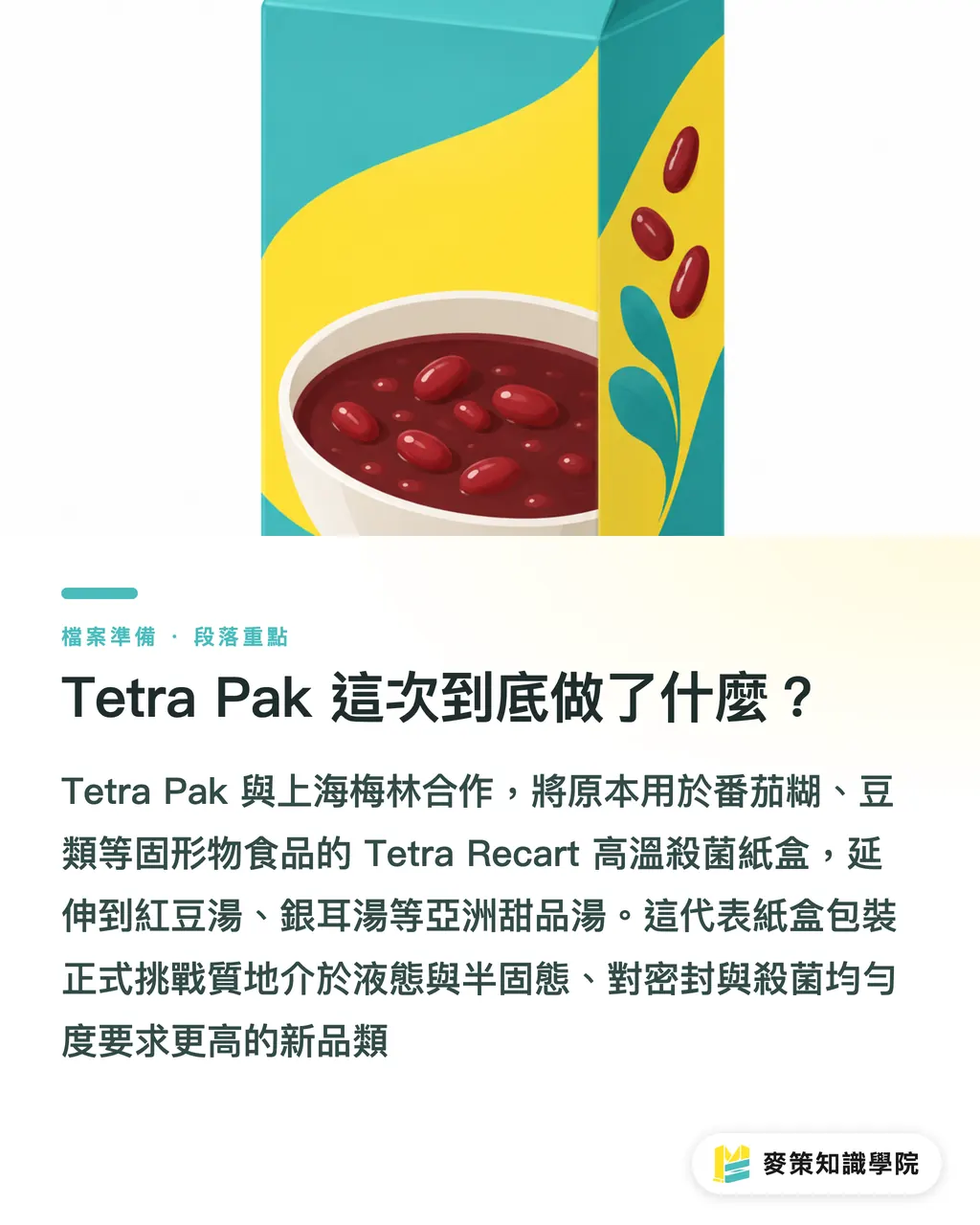
The answer is simple: Tetra Pak has partnered with Chinese food giant Shanghai Meilin to extend Tetra Recart carton packaging, originally used for solid foods such as tomato paste and beans, into the new dessert soup category
Tetra Recart is a brick-shaped carton designed by Tetra Pak specifically for retort foods. It uses a multilayer composite made of paperboard, aluminum foil, and polyethylene (PE) film. It looks like a Tetra Pak brick but can withstand retort sterilization. It has traditionally been used for foods such as tomato products and pet food that need long shelf lives at room temperature and contain solid particles
This move into dessert soups is a key step. Dessert soups such as red bean soup and tremella soup are common Asian dessert products. They have mostly been sold in aluminum pouches or metal cans, with a texture somewhere between liquid and semi-solid. That places higher demands on package sealing and sterilization uniformity. By choosing this category, Tetra Pak is effectively testing whether the carton structure can handle contents that are more watery than tomato paste
How Does the Structure of a Dessert Soup Carton Work?
The key is that the brick-shaped carton has to meet the demands of both high-temperature sterilization and liquid-food sealing at the same time. That is much harder than packaging foods with solid particles
・Material layers: The outer paperboard provides the print surface and stiffness, the middle aluminum foil blocks light, oxygen, and microbes, and the inner PE layer provides heat sealing and leak resistance. All three are needed to withstand the high temperatures and pressure inside the retort vessel
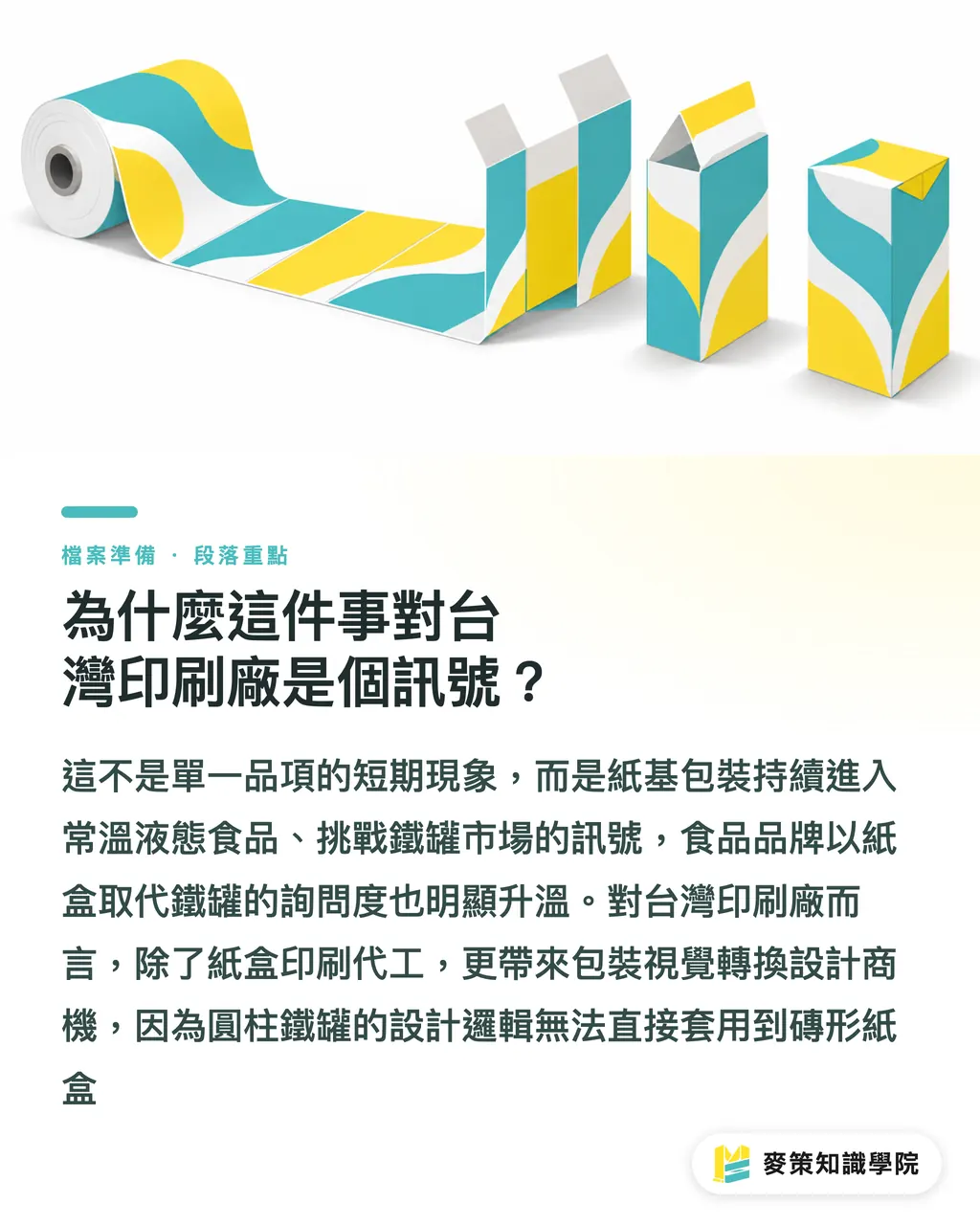
・Forming process: The paper web is printed in roll form first, then folded, filled, and heat-sealed into a brick-shaped carton. This is a roll-fed printing and downstream forming workflow, completely different from conventional folding cartons, which are usually die-cut first and then glued
・Sterilization conditions: Retort processing usually takes place at 110 to 130 degrees Celsius under pressure. Carton corners, seams, and seals are the areas most likely to fail, making them key indicators of yield for this type of carton
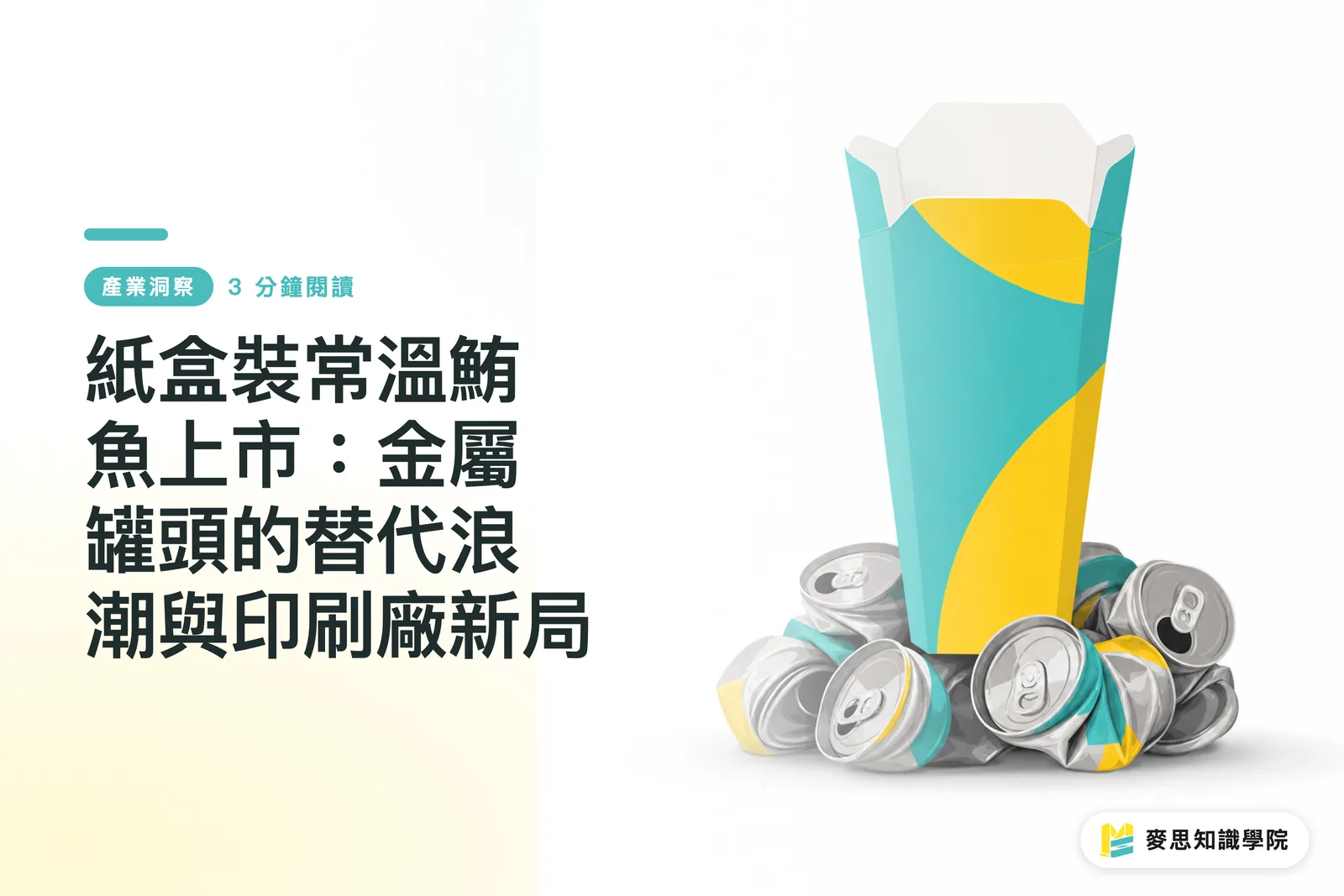
I made the same point when shelf-stable tuna in cartons first came to market: for flexible composite materials to enter the territory of rigid, shelf-stable foods, you always solve sealing and pressure resistance first, then talk about print finish. The order cannot be reversed
Why Is This a Signal for Taiwanese Printers?
Because it shows that paper-based packaging is continuing to move into the traditional territory of metal cans in shelf-stable liquid foods. This is not a flash in the pan tied to a single product
From the packaging-printing projects I have seen over the past month or two, food brands are clearly asking more often about replacing metal cans. The reasons are usually practical: cartons weigh less than metal cans, stack more efficiently during logistics, and feel friendlier in the hand than cold metal. They also offer more surface area for brand visuals on the shelf
For Taiwanese printers, this trend creates two kinds of business. One is contract printing for existing carton supply chains. The other is visual-transition design for brands. The design logic for the curved surface of a metal can cannot simply be carried over to a brick-shaped carton. Typography, color-block placement, and window position all need to be planned again
Which Structural Details Should Designers Check Before Taking on a Project?
On retort carton projects, the easiest trap for designers is not color. It is failing to understand the constraints around forming and sealing zones
Before delivery, run through these checks:
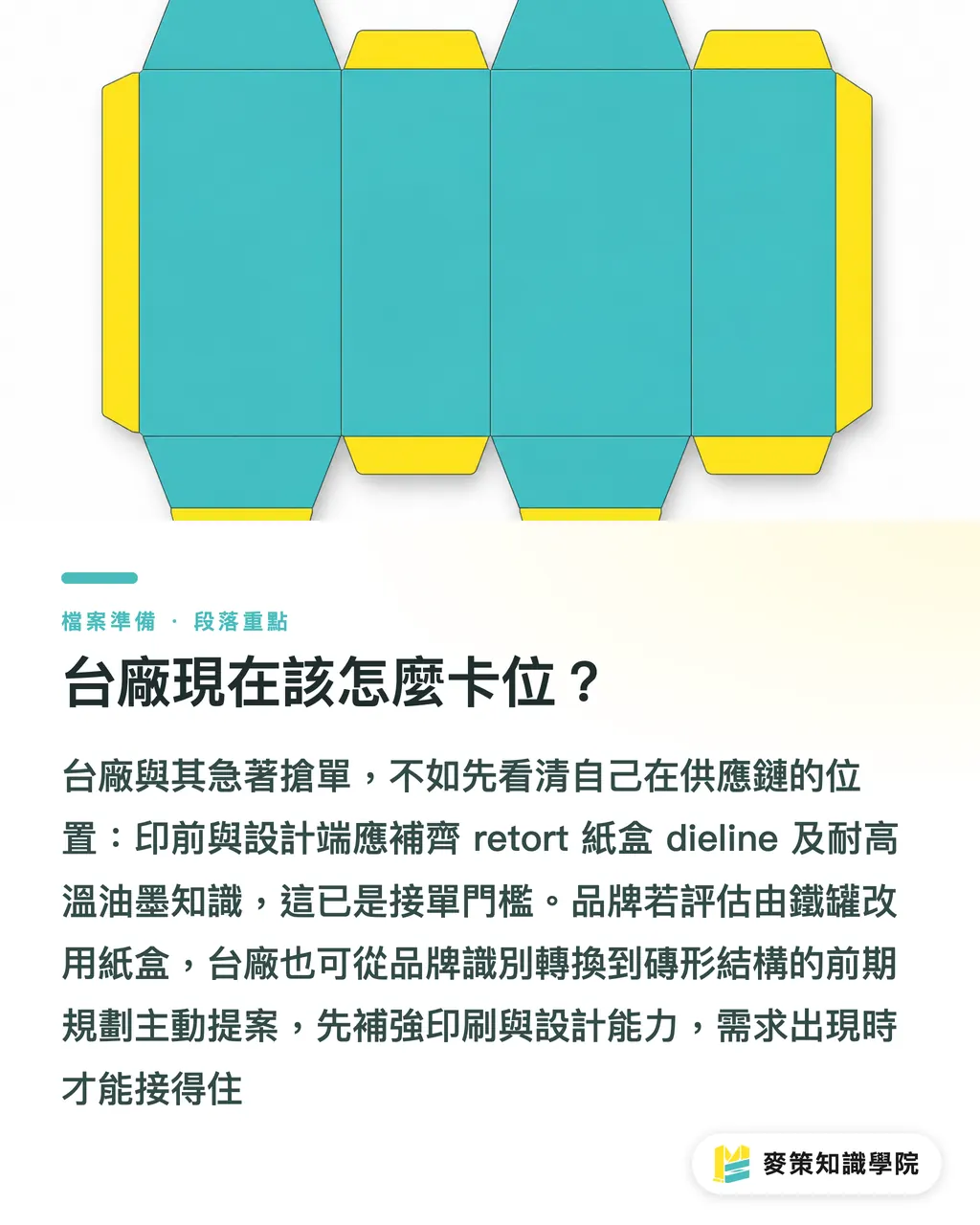
1. Confirm the carton template with the printer or contract packer first. The fold lines and sealing areas on a brick-shaped carton are no-print zones. Artwork must not sit on the heat-seal strips, or the seal-failure rate will rise
2. Confirm that the ink has passed high-temperature retort testing. Standard offset inks can fade or blister under retort heat and pressure, so use the high-temperature-resistant ink system specified by the supplier
3. Allow enough tolerance around bleeds and fold lines. The paper fiber direction affects angular error after forming, so it is wise to leave an extra safety margin compared with ordinary folding-carton packaging
4. Keep the barcode and expiration-date print areas away from folded corners. The curved surfaces created after roll-fed printing and forming can distort the barcode enough that scanners cannot read it
5. Before submitting the artwork, always check the placement of the color blocks against the printer's dieline. Do not look only at the flat artwork
Without a printer that has actually produced retort cartons, a project like this can easily end with an entire batch being scrapped because of ink-temperature resistance or sealing-tolerance issues. Designers should ask about the contract manufacturer's capacity and yield history during the proposal stage. For custom specifications across brands or large-volume sampling runs, they can work directly with a mid- to high-end fully customized commercial printer such as MINDS to finalize the structure. For small quantities or market-test versions, they can consider Mai Printing's online ordering model
Advantages:
・Lighter than metal cans, with lower logistics and shelf-stocking costs
・A large printable surface gives brands more room to express their visual identity
・Brick cartons stack more efficiently than cylindrical cans, making better use of warehouse space
Disadvantages:
・Retort sealing and ink temperature-resistance requirements are considerably higher than for standard folding cartons
・Liquid or semi-liquid contents carry a higher risk of sealing failure than solid foods
・Specialized forming equipment is required, and a standard folding-carton printer may not be able to take on the job directly
How Should Taiwanese Manufacturers Position Themselves Now?
Understanding which link in the supply chain you occupy matters more than rushing to chase orders
If you work in prepress or design, now is the time to fill in your knowledge of retort-carton dielines and high-temperature-resistant inks. This is a requirement for taking on the work, not a bonus. If a brand client is considering switching from metal cans to cartons, early planning for the visual transition, including how to move the brand identity onto a brick-shaped structure, is a service you can proactively propose. Anyone who wants a more systematic understanding of packaging structures and brand-transition cases can also work with the Mai Strategy Knowledge Academy consulting team to take stock
This trend does not mean Taiwanese manufacturers need to buy retort equipment themselves. It means they should first fill the knowledge gap on the printing and design side, so they can handle the work when brand clients are ready to switch
Key Takeaways
・Tetra Pak and Shanghai Meilin are extending Tetra Recart cartons into Asian dessert soups, bringing paper-based packaging once again into the metal can's traditional territory in shelf-stable foods
・Dessert soups contain semi-liquid contents, so retort-carton sealing and high-temperature-resistant ink requirements are stricter than for solid foods
・No-print zones, fold-line tolerances, and barcode placement on brick-shaped cartons follow a completely different logic from traditional folding-carton design
・Designers must check the dieline and high-temperature-resistant ink specifications before taking on a project. A flat artwork proof is not enough
・The opportunity for Taiwanese printers lies in prepress expertise and brand-transition design, not in rushing into retort-equipment investment
Further Thoughts
For printing manufacturers, this is the time to fill in their retort-carton prepress knowledge. Waiting until brands actually decide to switch from metal cans to cartons will be too late. For designers, the next step is to build a working relationship with a printer that has real experience producing high-temperature-sterilizable cartons, and turn dieline and high-temperature-resistant ink specifications into standard operating procedures. Brand clients can first use a small test run to validate the carton's shelf appeal and consumer acceptance, then decide whether to make a full conversion. There is no need to do it all at once
Further Reading
FAQ
- How is Tetra Recart different from a standard Tetra Pak carton?
- Tetra Recart is a brick-shaped carton designed specifically for foods that undergo high-temperature sterilization. Compared with the Tetra Pak bricks commonly used for shelf-stable dairy products, its structure accounts more carefully for the pressure and heat resistance required by retort processing. It has traditionally been used for solid foods such as tomato paste and beans
- How is dessert soup in a carton different for consumers?
- Cartons are lighter than metal cans, easier to open, and offer more printable shelf space than cylindrical cans, giving brands room for richer visual information. But sealing stability depends on process controls. The package itself cannot guarantee it
- Can Taiwanese printers take on retort-carton printing directly?
- That depends on whether the plant has a high-temperature-resistant ink system and downstream forming capability after roll-fed printing. If a standard folding-carton printer lacks the relevant equipment and yield-validation records, it should start with prepress artwork and brand visual-transition services, then assess equipment investment step by step
- What is the easiest place to make a mistake when preparing artwork for carton food packaging?
- The most common problems are placing text or graphics over heat-seal strips or folded corners, which can lead to seal failures or barcode-scanning failures. Before delivery, always use the printer's dieline to check where the color blocks land. Do not rely only on the flat design artwork
Related articles
The Print × AI weekly
The print and AI know-how designers, brands and enterprises can use before they commit — one email, every week
MINDS Free Tools
AI background removal, a LINE sticker maker, spine & imposition calculators — all free, right in your browser, no upload.
MINDS Group
Need actual printing or gifting services?
From premium printing to online ordering and festive gifts — the MINDS Group sister brands take it from here.