
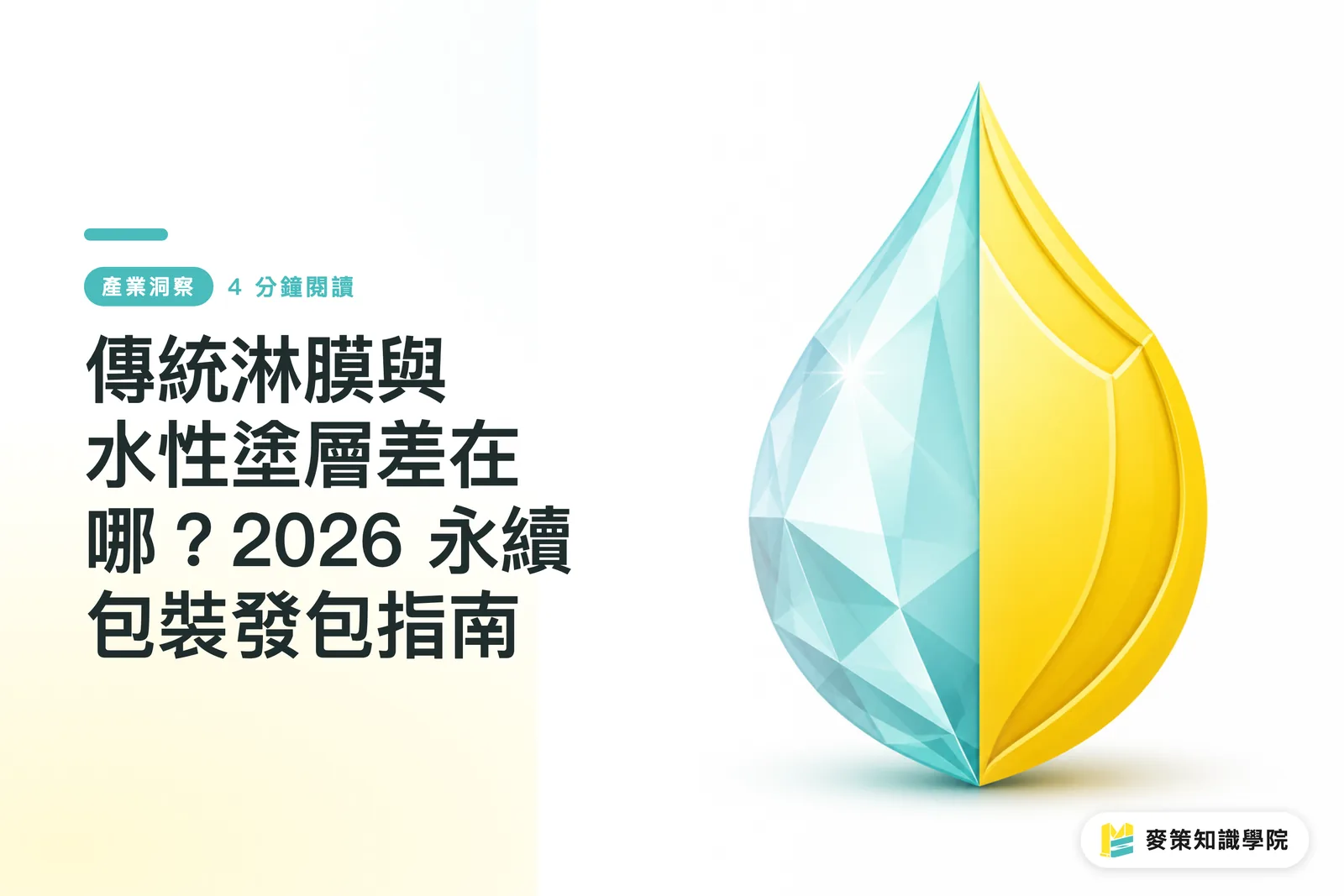
Why Is Everyone Looking for Water-Based Coatings Now?
Driven by tighter environmental regulations worldwide and brand ESG pressure, traditional hard-to-recycle plastic-coated paper is quickly being replaced by water-based coatings and specialized vacuum metallized films. According to a report by research firm Smithers, the global packaging coatings market will approach $15.4 billion by 2026. Barrier coatings remain the largest segment, with water-based coatings growing the fastest over the next five years
Over the past few months, client inquiries often start with: 'Can we make this all-paper and recyclable?' Nobody wants to use plastic anymore. But when it comes to moisture and grease resistance for takeout containers and frozen foods, many fear failures and fall back on PE or PP film coatings. Extrusion coatings still make up 33.4% of total global packaging coatings. That is a massive share. However, as California standardizes labeling regulations and Victoria in Australia bans EPS packaging, water-based coatings have shifted from green marketing talk into hard procurement mandates

What Are Water-Based Barrier Coatings?
A water-based barrier coating is a polymer material dispersed in water that is applied to paper surfaces to form a dense protective barrier. It blocks moisture and grease penetration while keeping the paper recyclable
In the past, printing greaseproof food boxes usually meant laminating a plastic film onto the paper surface. This film blocked water and oil, but it also made the paper impossible to repulp in standard paper mills, so it ended up burned as trash. Aligning with trends showcased at print expos like FESPA, new-generation water-based barrier coatings were created to solve this recycling bottleneck. Instead of laminating a film, you coat it onto paper like a varnish, allowing consumers to drop it directly into standard paper recycling after use
What Is the Difference Between Traditional Film Coating and Water-Based Coating?
The biggest difference comes down to paper recycling compatibility and the limits of physical protection. Traditional plastic coatings leave few weak spots in protection but are hard to recycle, while water-based coatings are easily recyclable but demand tight processing tolerances. When comparing quotes, evaluate these two materials on different planes:
・Traditional polyolefin film coating: Excellent moisture and grease resistance, stable heat sealing, lower unit cost. The downside is that it cannot be repulped directly and requires specialized equipment to separate plastic from paper fibers, which clashes with brand plastic-reduction goals
・Water-based barrier coating: Applied via coater, lower carbon footprint, and mostly repulpable right alongside paper. The downside is that performance under heavy grease and liquid exposure (such as holding hot soup for long periods) is still evolving, and it alters paper surface tension, making folder-gluer bonding trickier
From my years of observing production lines, water-based coatings are most vulnerable to folding. If die-cutting and creasing settings are off, micro-cracks form along the folds, letting moisture seep right through. You cannot just look at unit price when sending out orders
How Should You Inspect and Accept Sustainable Packaging Orders?
Accepting eco-friendly packaging orders takes more than feeling sample textures. You have to run blind tests based on end-use scenarios, focusing on water-barrier duration, fold durability, and finishing compatibility. I often advise clients to follow the 'Mai Strategy Three-Gate Print Protocol' developed by the Mai Strategy Knowledge Academy consulting team:
1. Real-use scenario testing: Fill the container with the actual contents. Put hot oil in if you sell hot food, or store it in the freezer if you sell frozen goods. Leave it for the target shelf life, then check seams and paper surfaces for dark spots from seepage
2. Fold and rub resistance checks: Pick up the carton and look closely at the creasing lines and four corners after assembly. If the water-based coating shows cracking, whitening, or flaking powder, the protective barrier is already compromised
3. Folder-gluer bonding verification: Water-based coatings have different surface properties than plastic films. You must have the finishing plant verify whether existing adhesives bond securely, or if heat-sealing temperature and pressure need recalibration
Changing materials means changing processes. Bringing your converting factory in early for live production testing is the real way to hedge risk

Key Takeaways
・Barrier coatings dominate the global packaging coatings market, with water-based formulations driving growth over the next five years
・Traditional film coatings provide great moisture and grease barriers but are hard to recycle. Water-based coatings solve the repulping problem but must overcome folding challenges
・Procurement inspection must include real-use content testing and gluing verification to guarantee actual barrier protection after folding and assembly
Further Thoughts
For brand buyers and packaging designers, sustainability is no longer about swapping spec sheet materials for green buzzwords. Every material switch affects production line conditions across printing, die-cutting, and gluing. Finding a print partner that understands material properties, running line tests and physical performance checks early, and clearly defining the protective limits of new materials are key to capturing this multi-billion dollar green opportunity with confidence
Further Reading
FAQ
- What is extrusion coating?
- A process where molten polymer (such as PE) is extruded directly onto paper or film substrates. It delivers outstanding moisture and grease barriers, but makes paper recycling significantly harder, and still accounts for over 30% of global packaging coatings
- Can water-based coated paper packaging really be recycled directly?
- Most water-based coatings are designed to be repulpable and can break down in standard paper recycling streams. However, acceptance criteria vary across recyclers and regions, so packaging for export should be verified for local paper recycling certifications
- How much will packaging procurement costs increase when switching to water-based coatings?
- Looking strictly at material and coating labor, water-based coatings run slightly higher than traditional plastic films. But factoring in emerging plastic taxes, Extended Producer Responsibility (EPR) fees, and brand green premiums, the total cost is actually more competitive
Related articles
The Print × AI weekly
The print and AI know-how designers, brands and enterprises can use before they commit — one email, every week
MINDS Free Tools
AI background removal, a LINE sticker maker, spine & imposition calculators — all free, right in your browser, no upload.
MINDS Group
Need actual printing or gifting services?
From premium printing to online ordering and festive gifts — the MINDS Group sister brands take it from here.