
Overview
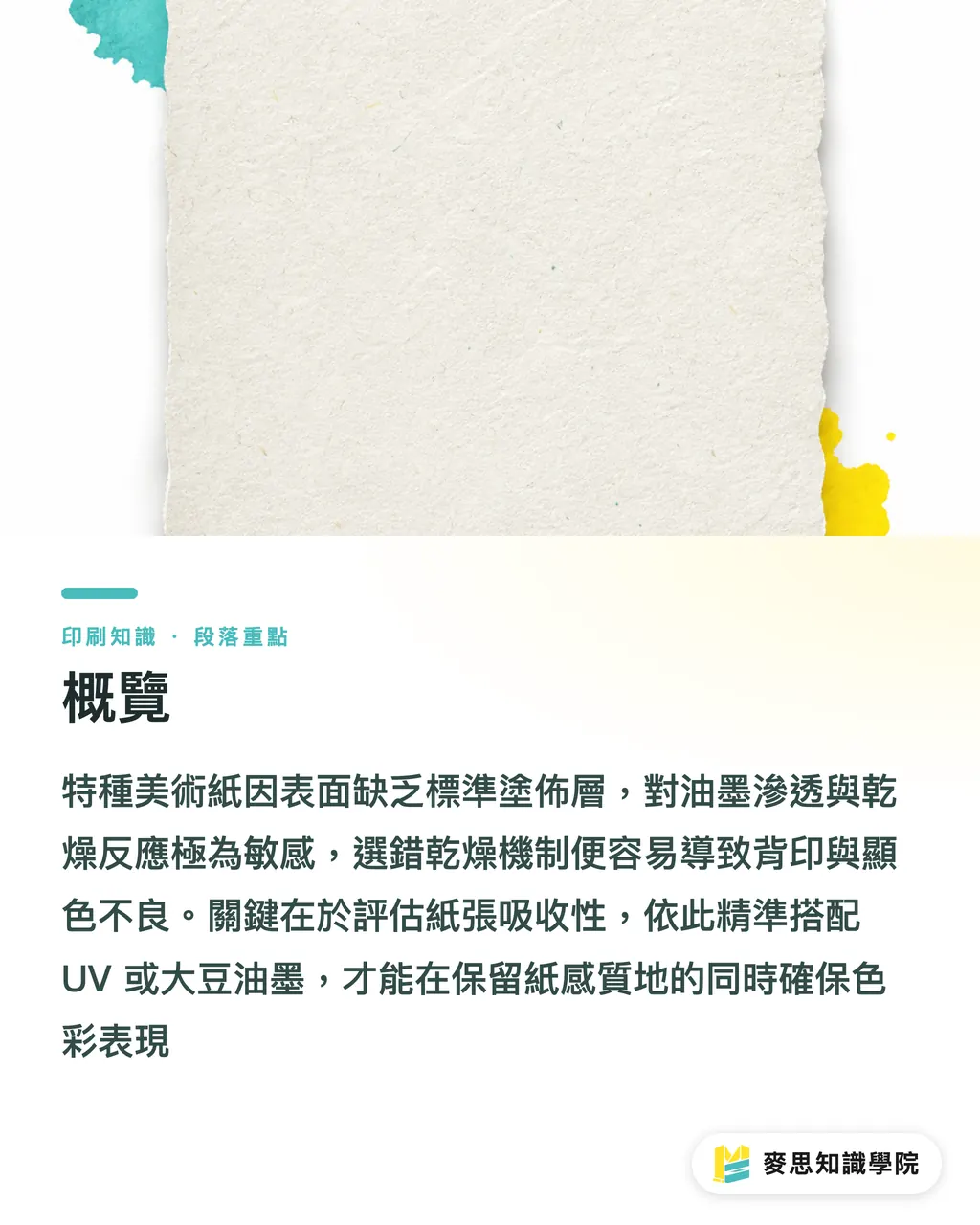
Specialty art paper printing uses uncoated stocks or unique substrates to highlight texture. If you choose the wrong ink drying mechanism, set-off and poor drying will quickly follow. Fixing this requires evaluating paper pores and substrate surface tension. Following the material evaluation method used by MINDS, you can match UV or soy inks to the paper's absorbency to protect both texture and color rendering
Specialty Art Paper Printing: Offset printing on uncoated stock, premium fiber sheets, or foil boards. Because these materials feature unique surfaces and lack standard coating layers, they are sensitive to ink penetration and drying reactions. You need to match the ink and curing equipment directly to how the substrate absorbs moisture and ink
Why Does Soy Ink Cause Set-Off and Smudging on Art Paper?
Many designers love the raw, tactile feel of uncoated art paper, but its surface behaves like a sponge. Traditional soy ink relies on paper pores to absorb ink binders, then uses oxygen in the air to cure through oxidative polymerization
On uncoated stock or low-absorbency substrates, poor ink control or heavy stack pressure causes uncured ink to transfer onto the back of the sheet above it. This leads to severe set-off and blocking defects
Hold on
Solving this means understanding the three-step press-check control logic used on the floor at MINDS (MS, mid-to-high-end bespoke commercial printing):
・① Ink Volume Control and Under-Color Removal: Cut total ink coverage during prepress color separation to prevent saturating paper pores
・② Anti-Set-Off Spray and Stack Limits: Apply micron-level anti-set-off powder right after printing to separate sheets, and keep delivery pile heights low
・③ Allow Full Drying Time: Soy ink needs 12 to 24 hours to fully oxidize and cure. Never rush into cutting or post-press finishing
When Should You Bite the Bullet and Upgrade to UV Printing?
When you switch to non-porous substrates like metallic foil board, black cardstock, or synthetic plastic paper, traditional soy ink cannot penetrate and has no way to absorb moisture. Drying time drags out for days, or the ink simply fails to bond
UV ink cures and cross-links in under 0.1 seconds when exposed to specific light wavelengths. This mechanism completely bypasses the need for paper pores and air oxidation
It comes down to this
If your project hits any of these three production scenarios, talk to MINDS about a UV printing solution:
・Non-absorbent specialty substrates: Printing on metallic cardstock, clear PET, or dense black cardstock
・Rush jobs with complex finishing: Needing immediate foil stamping, embossing, creasing, or cutting without waiting 24 hours for ink to dry
・Heavy dark solid blocks: Large dark solid areas scratch easily with conventional ink, whereas cured UV ink forms a hard, highly durable film with excellent adhesion
How Should Designers Test Paper Stocks and Inks?
Balancing the raw touch of art paper with rich ink color requires practical testing. Highly absorbent art papers often dull the final colors, while low-absorbency sheets can cause ink flaking or surface scuffing
Before committing to full production runs, designers and buyers should run through a complete surface finishing and adhesion test workflow:
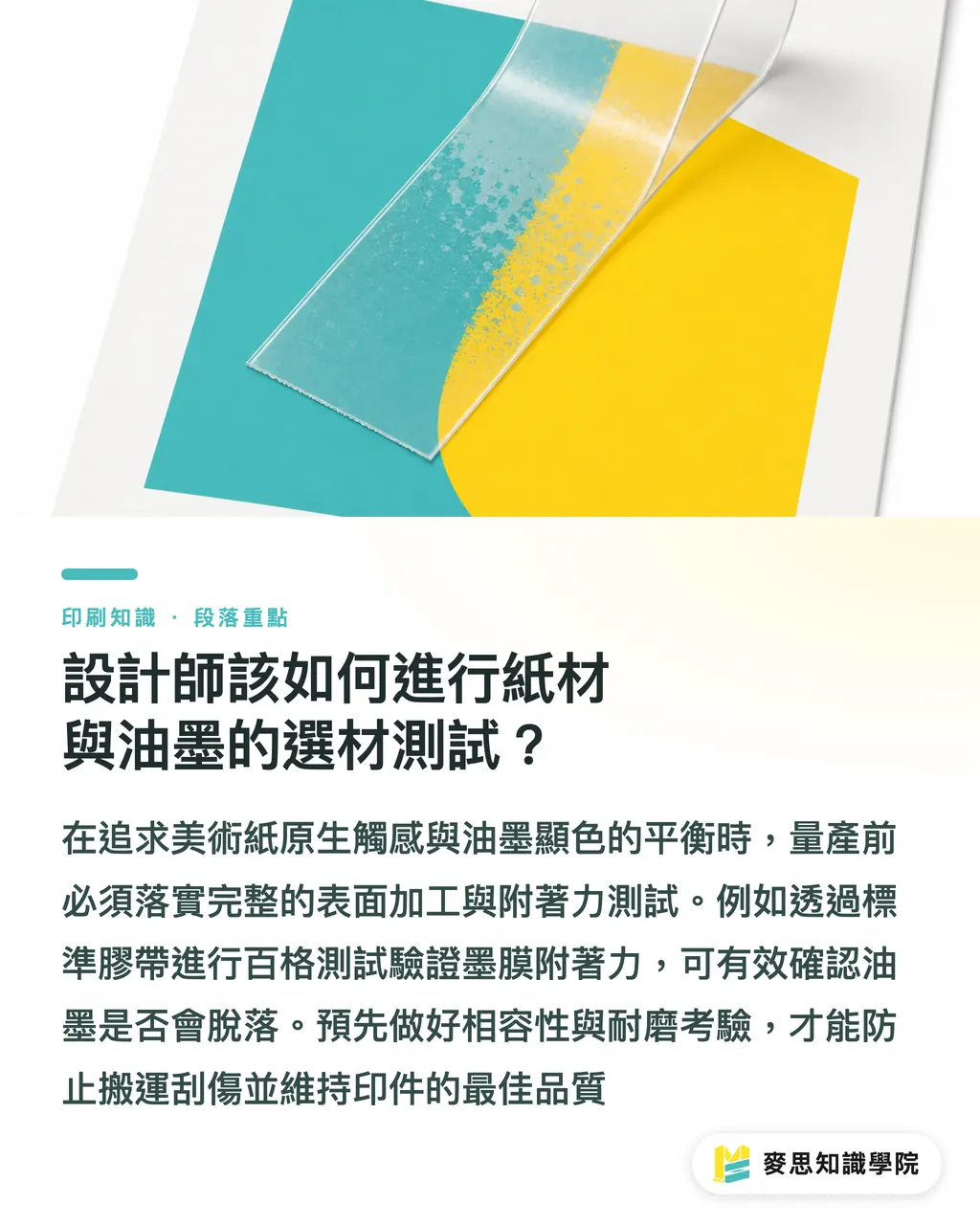
・Cross-hatch adhesion testing: Run a standard tape cross-hatch pull test on printed proofs to make sure the ink film does not peel off
・Rub testing for transit: Perform rub tests on dry sheets to prevent printed pieces from scuffing against each other during shipping
・Coating and lamination compatibility: Verify that your UV or soy ink does not reject spot UV, embossing, or aqueous varnishes during finishing
Key Takeaways
・Uncoated art paper absorbs ink like a sponge, so give soy inks a full 12 to 24 hours to oxidize and dry
・Metallic boards and non-absorbent stocks should jump straight to UV printing, using instant light curing to prevent set-off nightmares
・Buyers and designers should run cross-hatch and rub tests before print production to ensure solid ink-to-substrate bonding
・Using prepress under-color removal and ink volume limits keeps the natural texture of art paper intact without dulling the colors
Looking Ahead
When picking specialty papers and eco-friendly inks, print buyers and graphic designers should never look only at unit print costs. From post-press yield rates and lead-time risks to the finished tactile quality, evaluating the ink drying mechanism is what keeps your project out of trouble. As AI tools enter print prediction, prepress color management and ink-limit automation will get even sharper. Still, real press-floor expertise on paper porosity and ink physics remains the bottom line for quality control
FAQ
- Why do colors printed on specialty art paper look duller than on screen?
- Art paper lacks a smooth coated layer. Ink sinks quickly into the fiber pores, reducing light reflection and making colors look muted and flat. You can counter this with prepress color compensation and a moderate boost in contrast
- How long after printing with soy ink can cutting or foil stamping begin?
- Traditional soy ink dries through penetration and oxidative polymerization. It generally needs 12 to 24 hours of resting time to fully cure before post-press finishing. Rushing this window easily causes set-off and scratching
- Can metallic foil board or black cardstock be printed with soy ink?
- Metallic boards and black cardstocks have virtually no surface pores. Soy ink cannot penetrate them and struggles to oxidize. Forcing it will leave you with wet, sticky ink that peels off over time. Choosing UV light-cured ink is strongly advised
- How do you test whether ink adhesion on specialty paper meets quality standards?
- Once the proof is dry, perform a cross-hatch tape peel test and a rub test. This confirms the ink bonds tightly to the paper surface and will not flake or scratch during post-press finishing
Related articles

The Print × AI weekly
The print and AI know-how designers, brands and enterprises can use before they commit — one email, every week
MINDS Free Tools
Spine width and imposition calculators — skip the manual math, free in your browser.
MINDS Group
Need actual printing or gifting services?
From premium printing to online ordering and festive gifts — the MINDS Group sister brands take it from here.