
Why Proposals Always Get Stuck at "It Doesn't Feel Right"
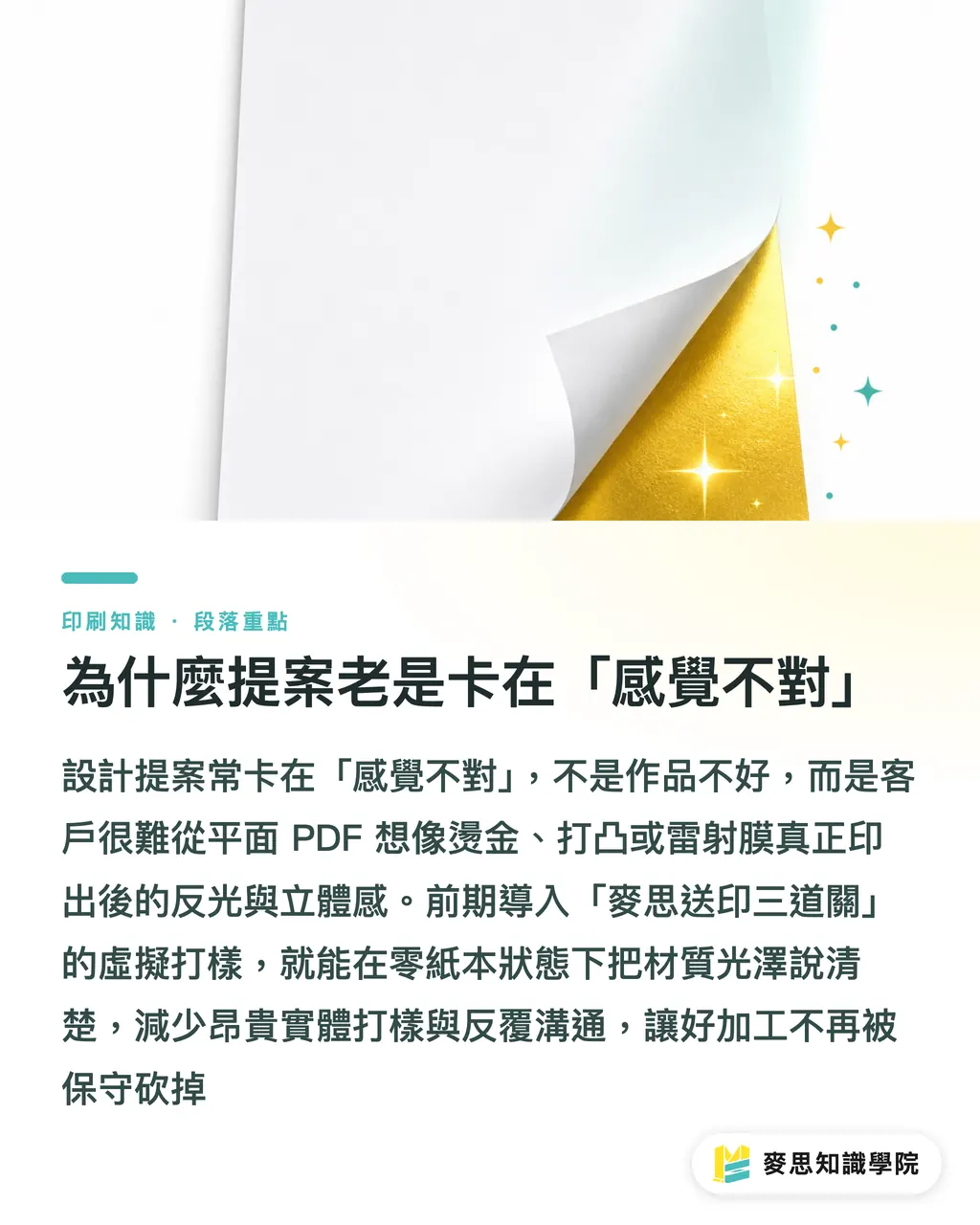
Design proposals most often stall because clients cannot picture the reflective, dimensional feel of foil stamping, embossing, or holographic film out of thin air. Add a virtual proofing step early in the proposal stage with MINDS (MS, mid-to-high-end fully custom commercial printing) and its three-step print submission process, and you can show material sheen with precision without using any paper, making it much easier for clients to say yes
From the clients and projects I have worked with recently, many designers are not spending most of their energy on creating. They are burning it on explaining to clients that "the printed result will absolutely not look like this stiff, flat color on the screen."
In the past, confirming the reflective effect of special finishes meant relying on expensive physical proofs
A press test could easily cost tens of thousands, and the back-and-forth shipping and communication would drag the project schedule down even further
Clients stare at a flat PDF and cannot turn it into a three-dimensional image in their heads. In the end, they often play it safe and cut the very finishing ideas that would have made the piece stand out
How Virtual Proofing Helps Designers Cut Major Costs
Virtual Proofing means using 3D rendering and ray tracing to calculate and reproduce paper texture, foil refraction, and embossing height differences on screen in real time. It can sharply reduce the money and time traditionally spent producing physical samples on press
The design workflow stopped being purely theoretical a long time ago
Treat AI as a tireless creative assistant. First, use it to quickly generate rich 2D textures and complex finishing mask layers
Then import those black-and-white masks into 3D packaging simulation software
The system calculates in real time how different environmental light sources behave when they hit holographic film or pearl paper
This approach can shrink a proofing period that would often take two weeks into a single afternoon
If you get stuck while bringing these tools into your workflow, the Mai Strategy Knowledge Academy consulting team will usually help map out the layer logic between different software tools, so the simulated effect stays faithful
What Gaps to Watch from Screen to Press
Many beginners think that if a 3D mockup looks good, the machine can print it. This is the disaster I see most often on the production floor
AI-generated content is an excellent inspiration engine in the early stage, but once you move into production handoff, muddy pixel edges will absolutely make prepress staff break down
To cross the technical gap between screen and press, you must strictly separate visual presentation files from final production files
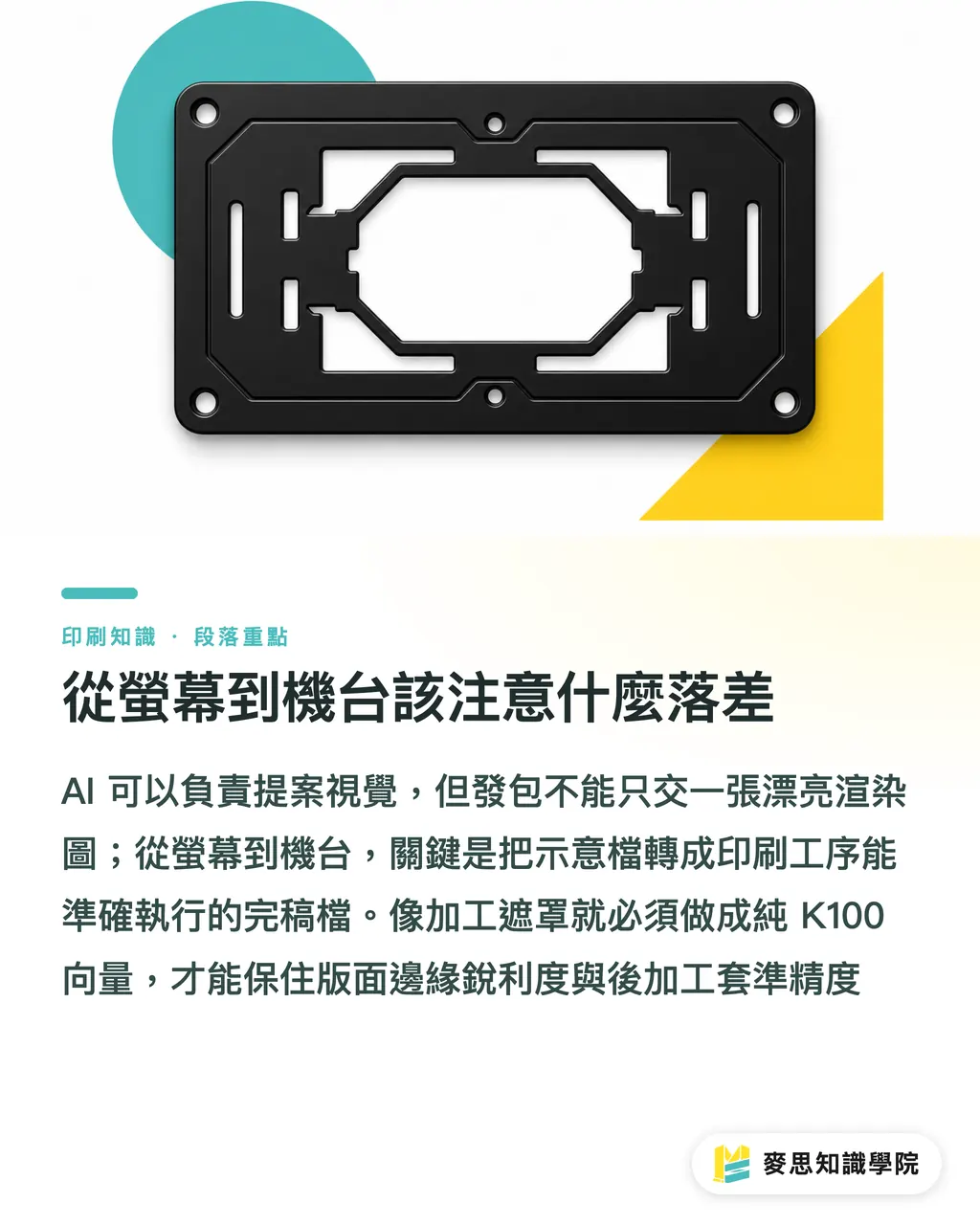
・Finishing masks must be converted into pure K100 vector graphics to ensure sharp edges on zinc plates or screen plates
・Extreme lighting effects inside 3D software must be brought back to reality, with paper ink absorption and surface coating characteristics taken into account
・For foil stamping and embossing to register correctly, line weight and spacing have physical limits. You absolutely cannot copy AI-generated random textures straight into production
For this kind of high-end custom requirement, the prepress team at MINDS will require vector files with clearly defined layers, not a single rendered image
It is simple. Use AI as the proposal hook, and use vectors as the production baseline
That is enough
Key Takeaways
・Physical proofing is no longer the only answer. Virtual proofing can compress two weeks of communication costs into one afternoon
・AI handles complex finishing masks and textures, while 3D software calculates physical light and shadow in real time
・Extreme on-screen lighting must return to reality. Foil stamping and embossing lines still need to follow physical limits and vector file standards for production
Further Thinking
Lately, I have clearly felt that designers who understand both print finishing and 3D simulation have a major advantage when quoting projects. Do not resist using AI to produce finishing masks. It can turn the communication costs you save into real profit. As a next step, try picking an old project, drop the original single-color foil stamping layer into 3D software, add environmental lighting, and feel for yourself the kind of visual tension that makes clients buy in immediately
FAQ
- Can virtual proofing really replace physical proofing completely?
- It can replace more than 90% of what is needed during the proposal approval stage. But for special color registration or new paper stocks that have not been tested before, a partial physical proof is still recommended before going on press to confirm ink absorption
- Can AI-generated artwork be sent directly to make a foil stamping plate?
- Absolutely not. AI outputs raster images, and the edges contain anti-aliased gray values. A foil stamping plate must be made from a clean, pure K100 vector file, or the finished plate will turn into a blurry mess
- If I want to create a 3D mockup of holographic film, how should I set up the software to make it look realistic?
- The key lies in the choice of environmental lighting, or HDRI, and the material's index of refraction, or IOR. You need to give the 3D software an environment with strong light variation before the rainbow reflections of holographic film can show up properly
Related articles
The Print × AI weekly
The print and AI know-how designers, brands and enterprises can use before they commit — one email, every week
MINDS Free Tools
Spine width and imposition calculators — skip the manual math, free in your browser.
MINDS Group
Need actual printing or gifting services?
From premium printing to online ordering and festive gifts — the MINDS Group sister brands take it from here.