
Why is 2025 the 'Reckoning Year' for Packaging Sustainability?
What many fail to realize is that 2025 wasn't just a randomly selected year, it is the deadline for a whole wave of pledges brands made years ago
During the global wave of commitments seven or eight years ago, a host of major brands touted slogans like '100% recyclable, reusable, or compostable packaging by 2025.' It sounded great at the time, but now the clock has run out, and it's time to settle the bill
In their latest 2025 sustainability reports, Mars and Mondelēz disclosed the actual progress of their packaging targets, admitting that some goals were missed. This transparency is far more interesting than the numbers themselves because it validates a point I've made for years: packaging sustainability is never just marketing copy; it is an engineering challenge with strict KPIs and deadlines
From my long-term observations on the production line and client side, most of those who made these declarations back then underestimated one key thing: a massive supply chain gap lies between 'designing it' and actually 'recycling it.'
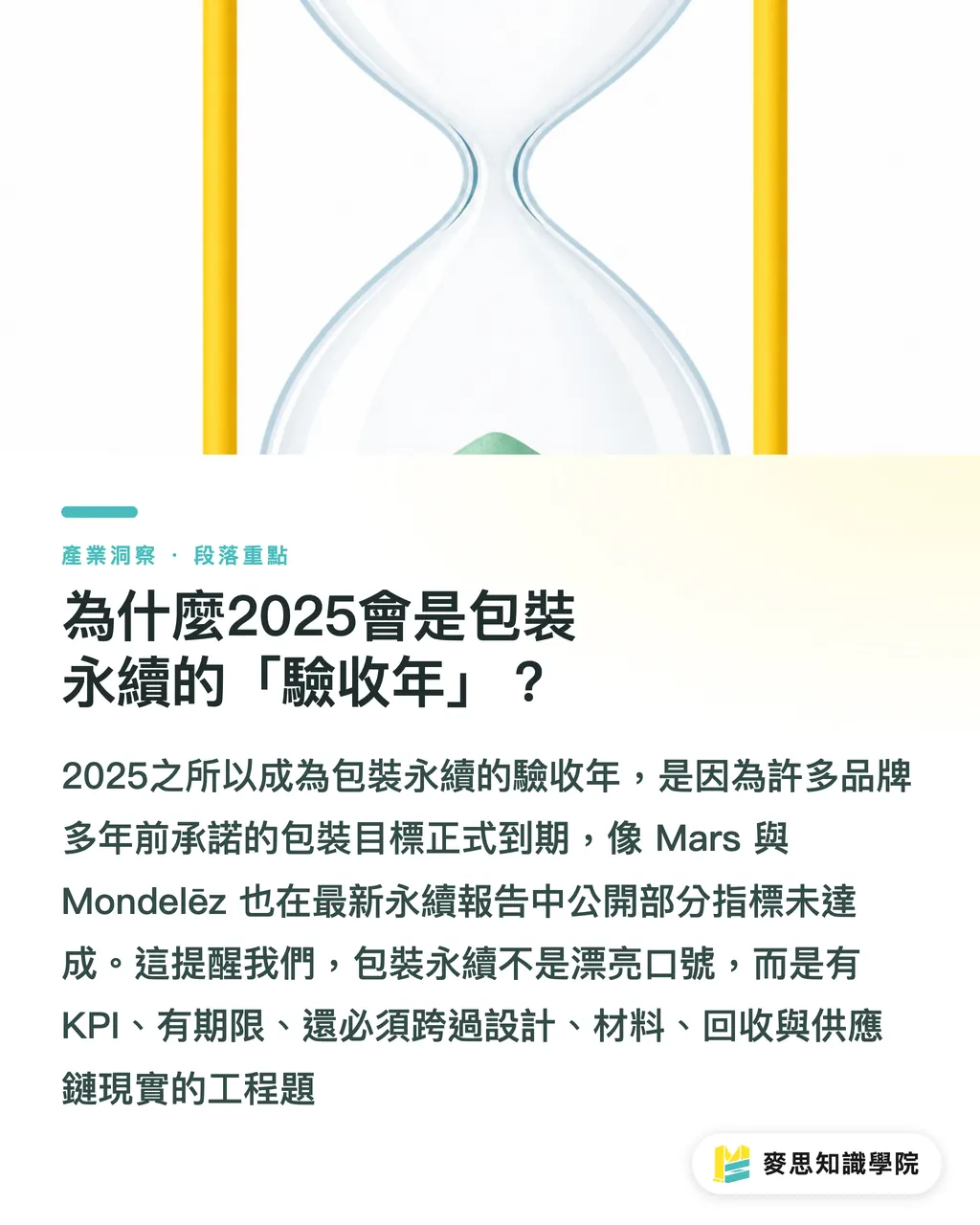
Where Exactly Are Mars and Mondelēz Stuck?
When you open the reports, it is clear that the unmet goals were rarely due to a lack of resolve to reduce plastic, but rather the hurdles of material structure
The core of the issue lies in the definition of the word 'recyclable.' For packaging to be truly recyclable, it is not enough to simply claim it is; it must be successfully collected, sorted, and reprocessed into raw materials by existing recycling systems. There are several common bottlenecks in this process:
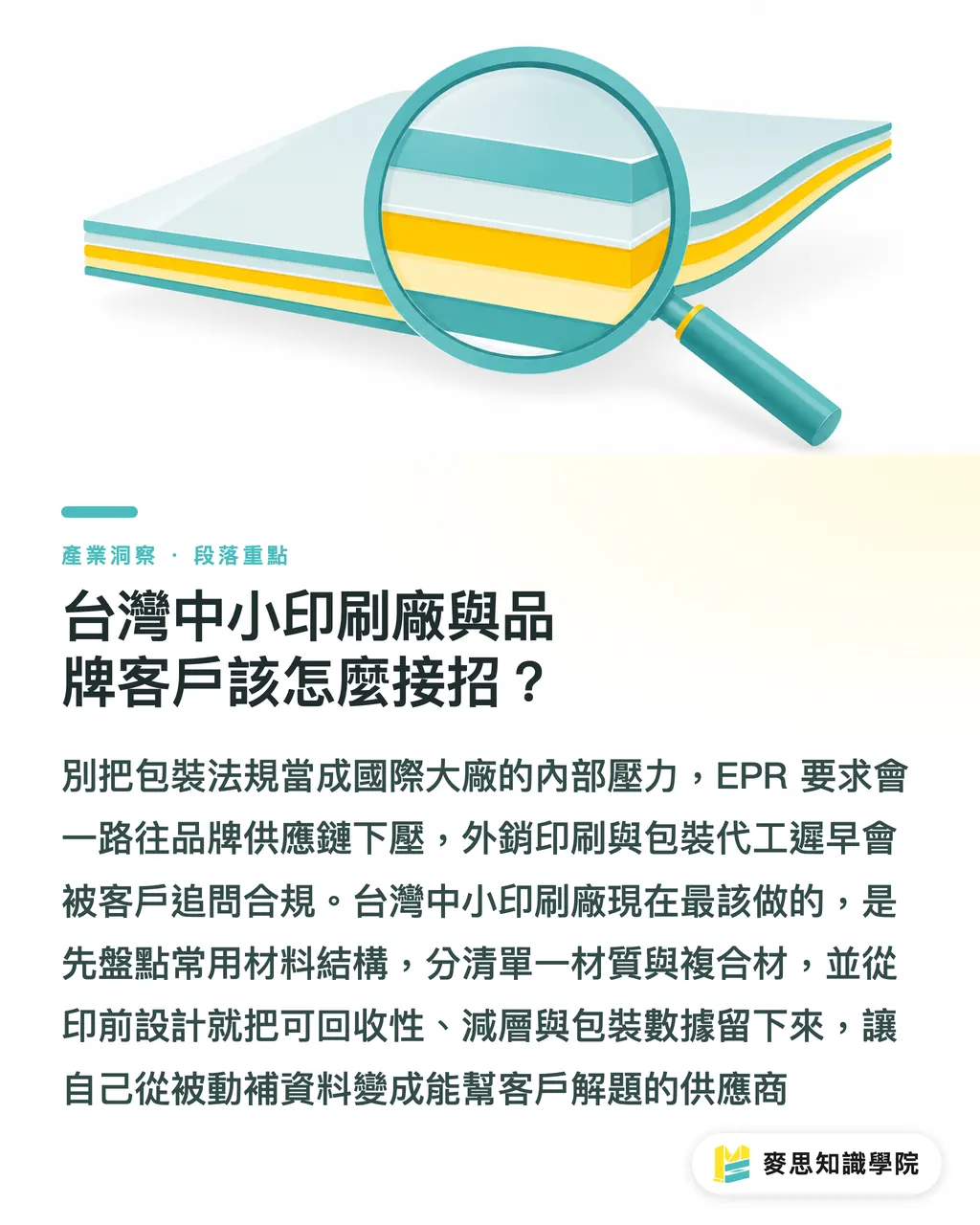
・Multi-layer barrier films: Flexible packaging often laminates multiple materials to block oxygen and moisture. While theoretically protective, these layers are virtually impossible to separate at recycling facilities
・Dark and full-bleed printing: Thick ink layers and mixed colors degrade the quality of recycled resins, making downstream buyers refuse to accept them
・Small flexible pouches: Too light and small for optical sorters to catch, they end up sent directly to incinerators as waste
This is why major brands have invested heavily and switched materials, yet their progress remains stalled. It's not for a lack of effort; they have hit the hard reality of 'design for recycling'—a step that cannot be bypassed
In other words, these two companies paid the tuition fees first and laid out the invoice for everyone to see. For those still figuring things out, understanding where they got stuck is equivalent to saving three years of trial and error
Is Compostable Packaging the Solution, or Another Trap?
Coinciding with this report card, the buzz surrounding compostable packaging is noticeably heating up. According to reports from Packaging Insights, driven by regulatory shifts, compostable materials are accelerating from concept to real-world application
It sounds wonderful on paper, but I need to pour some cold water on it. The biggest trap of compostable packaging is that it quietly shifts the burden from the 'material side' to the 'end-of-life processing side.'
Industrial composting and home composting are entirely different. Most materials labeled as compostable require the high temperatures and controlled humidity of industrial composting facilities; they will not decompose if thrown into standard organic waste or trash bins. In Taiwan, industrial composting infrastructure remains very limited, which leads to a harsh reality: you might use compostable materials, but without matching downstream processing facilities, they end up in the incinerator just like conventional plastics
Therefore, my view is straightforward: whether compostable packaging qualifies as sustainable depends entirely on whether your destination market has a matching collection and composting infrastructure, not just on the fine print of a material specification sheet
How Should Taiwanese SME Printers and Brand Owners Respond?
Do not dismiss this as internal business of multinational giants. This wave of pressure will cascade down the supply chain, and export-driven businesses will be the first to feel it
Extended Producer Responsibility (EPR) regulations like California's SB 54 and the EU's PPWR are very real and already on active timelines. When brands are chased by regulators, they will turn around and chase you, their OEM and packaging suppliers. Over the last month or two, I have noticed a clear shift: the questions from clients have evolved from 'can we make this more eco-friendly?' to 'is this packaging compliant in such-and-such market?'
Here are a few actionable directions you can take immediately:
・Assess material structures first: List the flexible packaging and laminated films you commonly use. Highlight which are mono-materials and which are multi-material composites, as composites represent high-risk items going forward
・Integrate recyclability into prepress design: Reducing layers, switching to mono-materials, and controlling ink coverage are design decisions that can be addressed at the prepress stage, rather than trying to fix things after issues arise
・Don't rush blindly into compostables: Verify first if the destination market has industrial composting infrastructure. If not, a recyclable mono-material is often a far more pragmatic choice than a compostable one
・Help clients log data: Packaging weight, PCR content, and material categories. If you don't start tracking these numbers now, you will be scrambling to fill the gaps when brand clients request them for ESG reporting and EPR filings
Ultimately, the biggest gift this report card offers to Taiwanese firms is spelling out exactly how difficult it is to meet these goals. Understanding where the giants slipped up and turning those insights into design guidelines for your own orders is much faster than figuring it out from scratch
Key Takeaways
・2025 is the target deadline for a whole wave of brand packaging pledges. Mars and Mondelēz have transparently shared their unmet goals, exposing the reality gap between commitments and execution
・The obstacle for major brands is not their resolve to reduce plastic, but the harsh definitions of 'recyclability': multi-layer films, dark full-bleed prints, and small flexible pouches are all bottlenecks that current recycling systems cannot digest
・Compostable packaging shifts the problem from the material to the processing end. In markets without industrial composting facilities, compostable packaging ultimately ends up in incinerators alongside conventional plastics
・Recyclability is a design decision that must be integrated at the prepress stage (layer reduction, mono-materials, controlling ink coverage), rather than treated as a post-production fix
・EPR regulations will filter down the supply chain to OEMs and printing plants. Start logging packaging data now to avoid scrambling when brand clients demand it in the future
Further Reflections
The implications of this for prepress design are very direct: in the past, prepress focused on printability and color accuracy; now, it must take on an additional dimension—'can this structure be recycled?' We recommend that printing plants integrate fields like material category, weight, and recycled content directly into their standard quoting and proofing workflows, transforming sustainability from a cost item into a competitive advantage for winning orders. For brand clients, rather than chasing the trendiest new compostable materials, it is wiser to first clarify the recyclability of existing packaging, as regulations check end-of-life results, not material gimmicks. At MINDS (MINDS), we naturally evaluate material structures alongside the target market's regulations when handling export orders. This audit logic is now proving to be highly relevant
Further Reading
FAQ
- Why did Mars and Mondelēz miss their 2025 packaging targets?
- The main barrier was the high standard of what defines 'recyclable.' Formats like multi-layer films, dark full-bleed printing, and small flexible pouches cannot be effectively collected, separated, or reprocessed into quality resins by existing recycling systems. Therefore, even when materials were switched, progress remained limited
- Is compostable packaging more eco-friendly than recyclable packaging?
- Not necessarily. Most compostable materials require the high-temperature and controlled-humidity environment of industrial composting facilities to degrade. If the destination market lacks these facilities, they will ultimately be incinerated like conventional plastics. Recyclable mono-materials are often a more practical solution
- Will Taiwanese SME printing plants be affected by sustainable packaging regulations?
- Yes, especially those in the export sector. EPR regulations such as California's SB 54 and the EU's PPWR target brands, but this pressure will ripple down the supply chain to OEMs and packaging suppliers. Brand clients will start demanding data on materials, weights, and compliance
- What preparations should printing plants make now?
- First, audit commonly used material structures and identify high-risk items like multi-layer composites. Next, integrate recyclability into prepress design (such as reducing layers, switching to mono-materials, and controlling ink coverage). Finally, begin logging data such as packaging weight and PCR content for clients
References
- 品牌永續包裝2025成績單:Mars與Mondelēz告訴你達標有多難 · packagingdive.com
Related articles



The Print × AI weekly
The print and AI know-how designers, brands and enterprises can use before they commit — one email, every week
MINDS Free Tools
AI background removal, a LINE sticker maker, spine & imposition calculators — all free, right in your browser, no upload.
MINDS Group
Need actual printing or gifting services?
From premium printing to online ordering and festive gifts — the MINDS Group sister brands take it from here.