
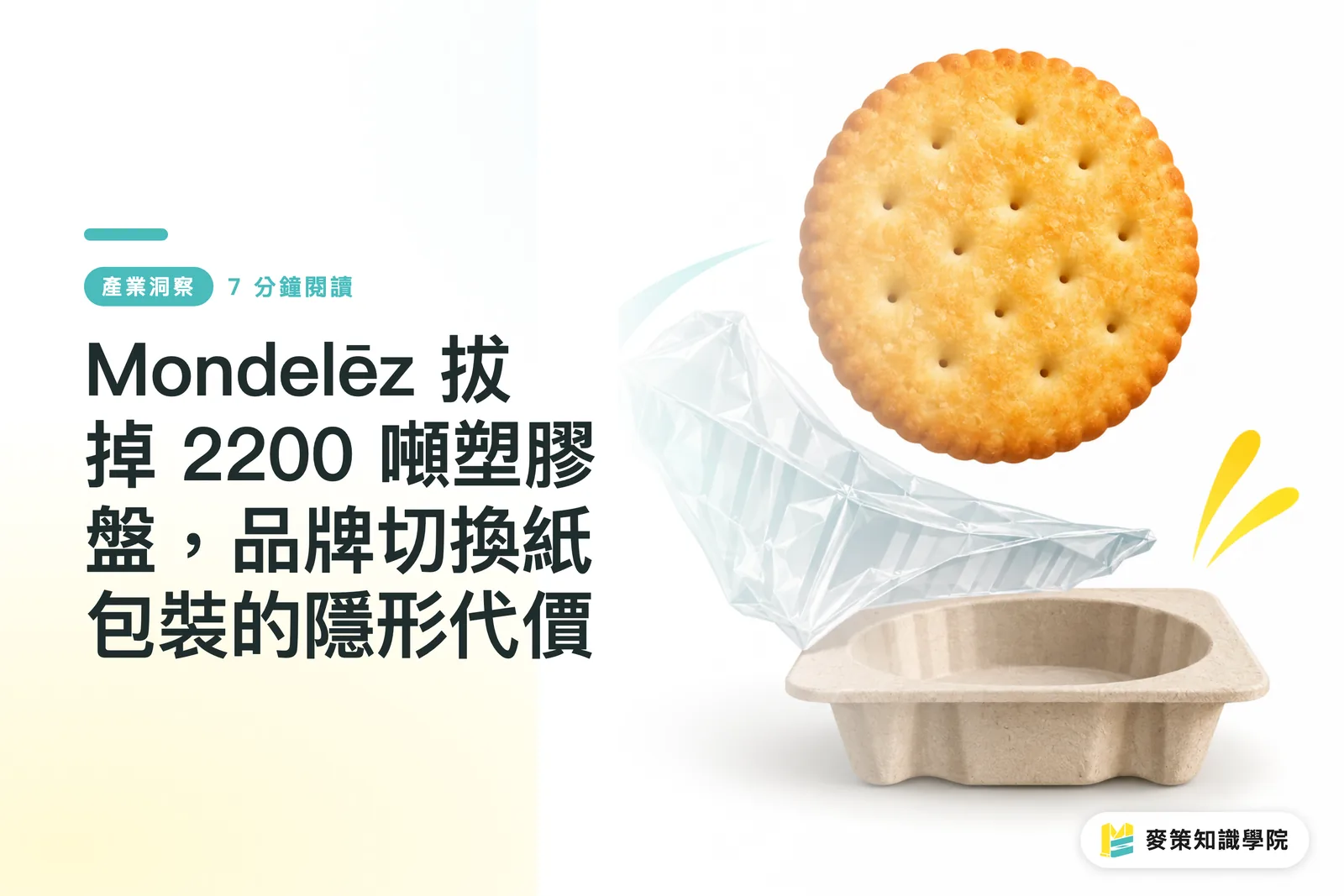
Why Mondelēz Dared to Replace Plastic Trays Across 115 Products at Once
Regulatory deadlines are closing in. Europe's Packaging and Packaging Waste Regulation (PPWR) sets clear recycling targets for 2030, forcing FMCG giants to overhaul production lines ahead of schedule
Lately, whenever we talk with brand clients exporting to Europe, the conversation always circles back to this regulation
This aggressive move by Mondelēz is a real-world production overhaul driven directly by regulatory pressure
In one sweep, they replaced rigid PET trays across 115 biscuit varieties from eight brands, including LU, Milka, and Cadbury, with paper certified by the Forest Stewardship Council (FSC), an organization promoting responsible forest management worldwide
Spanning 25 European markets, that means 28,000 tons of biscuits get new packaging every year
From this shift alone, they estimate eliminating 2,200 tons of virgin plastic at the source annually
Factor in both the outer wrapper and the inner paper tray, and the plastic content per product drops by a steep 80%
The company had already gone through an earlier transition phase, shifting parts of its packaging to material containing 80% recycled PET (rPET)
Yet faced with tightening anti-plastic pressures and soaring procurement costs for food-grade rPET, jumping straight to renewable paper-based materials became the bet food giants had to make

What Hidden Pitfalls Do Brands Face When Switching to Paper Packaging?
The biggest pitfalls involve gas barrier performance and physical structure. Paper does not naturally block moisture, so protecting biscuit shelf life demands extra processing techniques
Olivier Kintzig, Packaging Director for biscuits at Mondelēz Europe, admitted that over recent months they rebuilt every layer of packaging from scratch, from tray design all the way to shipping pallets
From my years observing production lines and client setups, this kind of foundational material swap runs headfirst into three harsh reality checks
・Moisture and gas barrier: PET trays are naturally waterproof and airtight, while paper is porous
To keep biscuits from going soggy, paper trays usually require a water-based barrier coating or an ultra-thin moisture-resistant film lamination
Apply too much coating, and you ruin repulpability during downstream paper recycling. Apply too little, and shelf life gets cut in half. Finding that sweet spot is an expensive, trial-and-error process
・Structure and line tolerance: Most plastic trays you pick up in supermarkets are thermoformed. They are thin, flexible, and absorb shock exceptionally well
Switching to paper requires folding to create the same three-dimensional tray. If grain direction and paper weight are misaligned, the corners burst open during high-speed folding on the forming machine
Increasing the basis weight prevents tearing, but it adds packaging bulk and weight, eating up precious pallet space during transport
・Color and prepress calibration: For visual designers, this is the most painful step
Saturated, glossy brand spot colors that pop on plastic film behave differently on fibrous paper. The ink gets absorbed, leaving colors looking muted or even grayish
Prepress color separation and dot gain compensation must be completely redone. You cannot hold FSC paper packaging to the visual benchmarks of plastic
Why Green Claims for Paper Packaging Feel Like a Paperwork War
Regulations today do not run on good vibes. They run on hard evidence, and you must present third-party audited data to prove your paper tray is actually greener
Over the past few years, many brands assumed switching to kraft brown packaging meant instant sustainability. Under modern audit scrutiny, that mindset is dangerous
The moment you switch biscuit trays to paper, intense green claims scrutiny follows right behind
・FSC Chain of Custody: As mentioned earlier, FSC certification verifies that paper comes from responsibly managed forests
The system demands a continuous chain of custody. From logging and papermaking to slitting and final printing, every facility handling the material must hold valid certification
If even one link in the chain breaks, you cannot legally print that tree logo on your packaging
・Recycled fibers versus food safety: Claiming your trays use recycled fiber can backfire quickly in food packaging
Because recovered pulp comes from mixed origins, it often carries traces of mineral oil hydrocarbons (MOSH/MOAH) or heavy metals
When the paper tray comes into direct contact with fat-rich biscuits, these substances can migrate into the food
Right now, food-grade paper packaging still depends heavily on virgin pulp, or requires a certified food-contact barrier layer. That circles straight back to the recyclability dilemma
・The mass balance accounting method: Certain specialty papers calculate recycled content using a mass balance approach
Physically, the sheet in your hand might not contain recycled material, but the supplier allocates an equivalent proportion on their books. Backing this up demands rigorous document tracking to fend off greenwashing accusations

How Smaller Brands Can Navigate the Shift to Paper
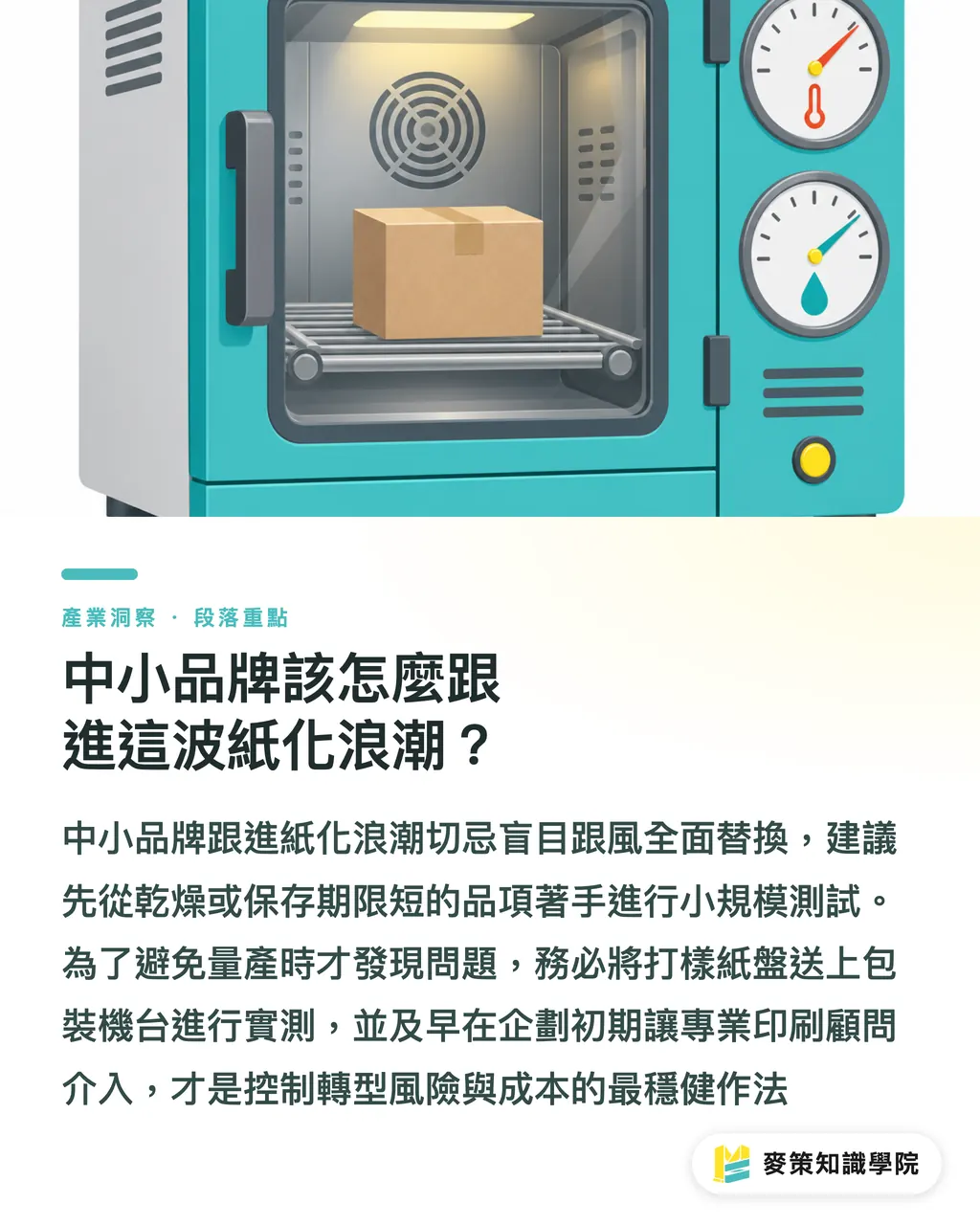
Do not try to switch everything to paper on day one. Audit your existing lineup first, then run small-scale pilot tests on dry goods, items with shorter shelf lives, or products where the outer box already offers plenty of protection
Smaller brands do not have the capital to burn through endless trial-and-error like multinational conglomerates
When reading industry news like this, my advice is to break your decision into three concrete steps instead of following the crowd blindly
1. Check compliance and supply chain readiness: Clarify exactly what certifications your target market requires
Right now, the gold standard is FSC certification. Check whether your print shop and paperboard suppliers hold this credential
If they do not, you will either need to find new vendors or help them get certified. Both carry hidden costs
2. Run live production tests and climate cycles: A prototype cut on a sample plotter looks great on a desk, but running smoothly on an automated packaging line is what actually counts
Feed prototype paper trays through actual packaging machinery at full speed to verify cartoning yields
Next, place them in temperature and humidity chambers to see if they hold up against harsh environmental swings
3. Re-evaluate EPR costs and disposal labeling: Extended Producer Responsibility (EPR) regulations in many countries fee packaging based on material composition
Paper processing fees are generally lower than those for multi-layer composite plastics, which can work in favor of your cost structure
At the same time, redesign the recycling guidelines on the outer packaging. State clearly that the paper tray goes with paper recycling and the film goes with plastics, preventing consumer confusion
For projects that involve swapping base materials, I strongly recommend bringing in production-savvy print consultants early in planning
In our experience handling mid-to-high-end custom packaging at MINDS, spotting paper stress limits and ink adhesion issues before prototyping is infinitely cheaper than printing tens of thousands of boxes only to discover they jam the packaging line
Key Takeaways
・International regulations like Europe's PPWR are the primary driving force behind this switch to paper. Strict 2030 targets for recycling and recycled content leave brands with no way out
・Ditching plastic trays is never just a material swap. Moisture coatings, structural weight limits, and pallet loading volumes all demand complete recalculation
・FSC certification and traceable documentation are baseline requirements now. Green packaging without verifiable proof will simply get flagged as greenwashing
・Color rendering differs dramatically between uncoated paper stocks and plastic films. Brands must learn to strike a balance between saturated visual expectations and raw sustainable textures
Looking Ahead
Seeing a heavyweight like Mondelēz jump in proves that packaging de-plasticization has moved past proof-of-concept experiments and into raw cost and supply chain reality
If Taiwanese brands continue treating paper packaging merely as an artisanal aesthetic for marketing, adapting will be painful once Western and regional Asian EPR mandates tighten in coming years
Moving forward, conversations between designers and print shops cannot stop at whether something looks pretty on press. The real questions are whether the paper pack survives the punishment of high-speed lines, locks out moisture on supermarket shelves, and slides cleanly into standard paper recycling streams
Further Reading
FAQ
- Why not just use 100% recycled plastic instead of switching to paper?
- While recycled PET (rPET) cuts carbon emissions, regulations like PPWR aim to curb the total volume of plastic entering the environment. On top of that, market prices for food-grade rPET keep climbing every year. Paper's standing as a renewable resource gives it far greater strategic value for global brands over the long haul
- Will switching from plastic trays to paper shorten a food product's shelf life?
- There is serious risk here. Paper has virtually no gas or moisture barrier properties on its own, so it relies on water-based barrier coatings or specialized laminations. If that barrier is inadequate, or if the coating develops micro-cracks during folding, the shelf life of the biscuits will collapse
- Does using FSC-certified paper automatically make your packaging eco-friendly?
- FSC certification only proves the wood pulp came from responsibly managed forests. It says nothing about whether the finished product can be recycled. If a paper tray is coated with non-recyclable chemical barriers for grease and moisture protection, it still ends up in an incinerator. Genuine environmental value depends on whether municipal recycling facilities can actually process the material
Related articles


The Print × AI weekly
The print and AI know-how designers, brands and enterprises can use before they commit — one email, every week
MINDS Free Tools
AI background removal, a LINE sticker maker, spine & imposition calculators — all free, right in your browser, no upload.
MINDS Group
Need actual printing or gifting services?
From premium printing to online ordering and festive gifts — the MINDS Group sister brands take it from here.