

Overview
Trade-offs in eco-friendly finishing come down to three checkpoints: paper stock, finishing methods, and disassembly. At MINDS, my rule of thumb is simple: secure the needed durability first, strip out composite finishes that contaminate paper recycling, and restore texture using paper grain, spot layers, and structural design
Finishing is not just a decorative checklist. It is part of the recycling path
'Eco-friendly finishing' means picking methods across laminating, varnishing, foil stamping, embossing, glueing, window patching, and coatings that minimize interference with disassembly, sorting, and repulping, while preserving the protection and brand identity the package needs
I've seen many packaging projects spend time early on picking FSC paper, recycled stock, or monomaterials, only to derail the recycling path later with gloss lamination, plastic windows, heavy adhesives, or special coatings
The biggest shame isn't spending extra money. It's having a design that looks eco-friendly, but turns out hard to tear down, separate, or re-process at the recycling plant
Here is how to apply the three pre-press checkpoints at MINDS (a provider of mid-to-high-end bespoke commercial printing):
・① Paper Check: Confirm whether the primary material is a single paper family, and whether it can handle printing, scoring, forming, and transport ・② Finishing Check: Inspect whether laminating, varnishing, foil stamping, embossing, window patching, or glueing actually serve a real function ・③ Disassembly Check: Put yourself in the recycler's shoes. Can consumers strip away non-paper materials in 10 seconds? Does the box still act like paper?

Why Packaging Texture Fails Even After Switching to Eco-Paper
The most common complaint after switching to eco-paper is that colors look dull, blacks lack depth, foil stamping loses pop, and varnishes look uneven
It isn't that the paper is bad. It's that the design is still relying on the visual language of coated paper or standard white board
Take a solid dark print. Put it on a rougher recycled paper, and as the ink absorbs into the fibers, it loses sharpness. If you try to force the pop back with a layer of gloss film, the visuals might return, but recycling becomes much harder
I usually ask designers to do three things first:
・Replace large solid dark areas with tint blocks under 70%, line work, or subtle background patterns, letting the paper texture take part in the composition ・Replace three stacked finishes with one strong hero element, such as swapping film lamination for embossing or spot varnish ・Proof key colors first, especially cream, light gray, dark green, and navy, which shift most easily on eco-friendly paper
Eco-friendly paper isn't a drop in quality. It simply demands a different approach from the designer
Building a high-end feel through paper texture is almost always more timeless than slapping on full-surface gloss film
Choosing Common Finishes: Which Ones Disrupt Recycling Most?
Post-press finishes break down into two categories: adding a layer of material, or altering the paper's shape and surface
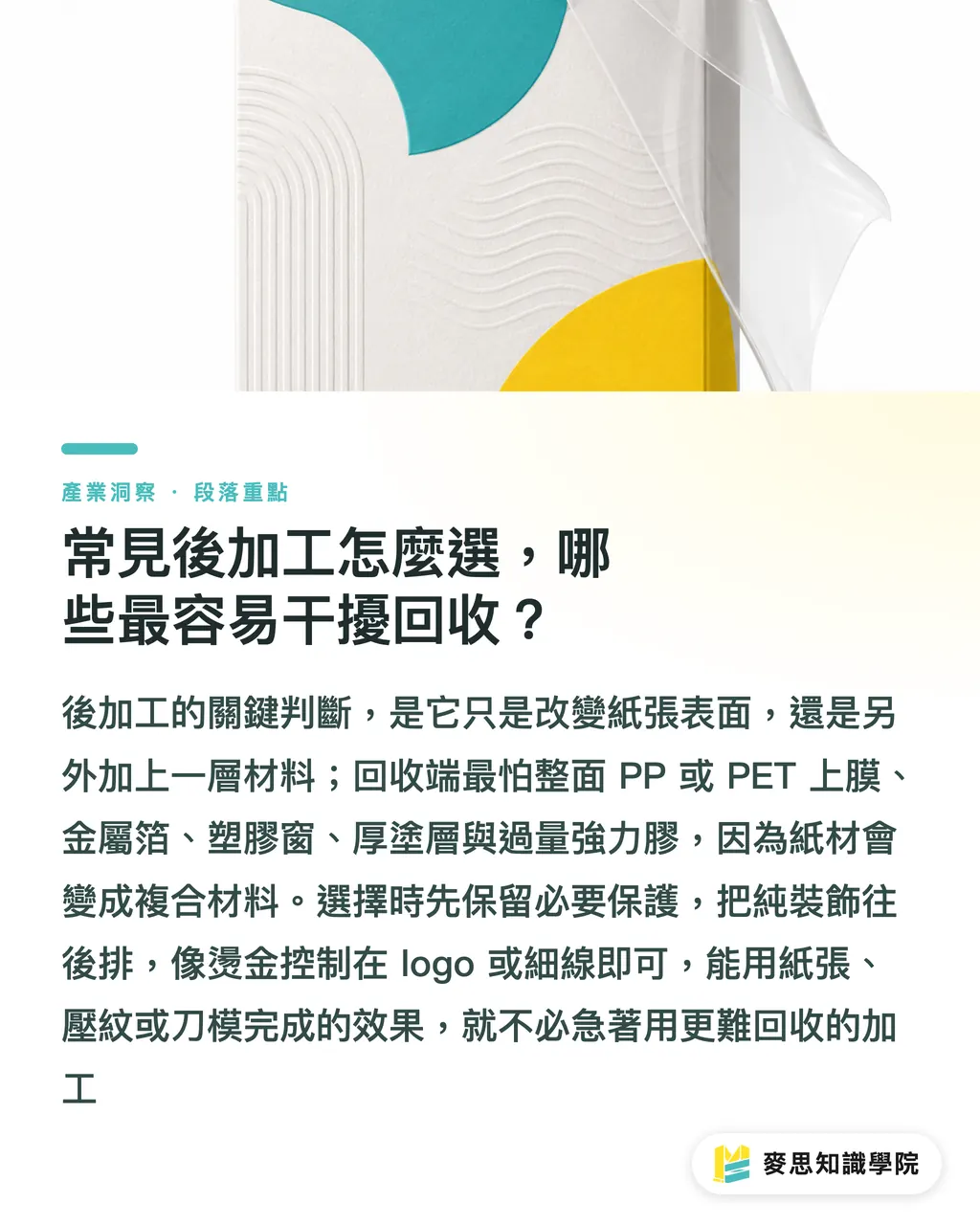
Recyclers dread the first group most, because film, metal foil, plastic windows, heavy coatings, and strong adhesives make paper composite
Here is how to evaluate common techniques:
・Laminating: High visual impact with clear anti-scratch, moisture, and dirt resistance. But it heavily disrupts recycling, especially full-surface PP or PET film. Great for outer boxes facing high friction, long transit, or long shelf lives, but poor for small packaging tossed after a few days
・Varnish: Available in matte, gloss, or spot effects. Usually easier on recycling than full lamination. If you just need light texture or stain protection, ask your printer first if aqueous or spot varnish will work
・Foil Stamping: Builds brand presence quickly, but larger foil areas disrupt paper recycling more. I recommend limiting foil to a logo, fine lines, or a single focal point, rather than covering whole panels
・Embossing / Debossing: Uses pressure to reshape the paper without extra added materials. A great alternative to foil stamping or spot gloss, though fine lines and small text need enough paper thickness and pressure tolerance
・Glueing: Stronger adhesive isn't always better. The right amount holds shape, withstands shipping, and opens normally. Excess hot melt or mixed-material bonding slows down disassembly
・Window Patching: Clear windows display products, but plastic sheets turn cartons into composite materials. If cutouts, card inserts, or printed graphics work, don't rush to patch plastic
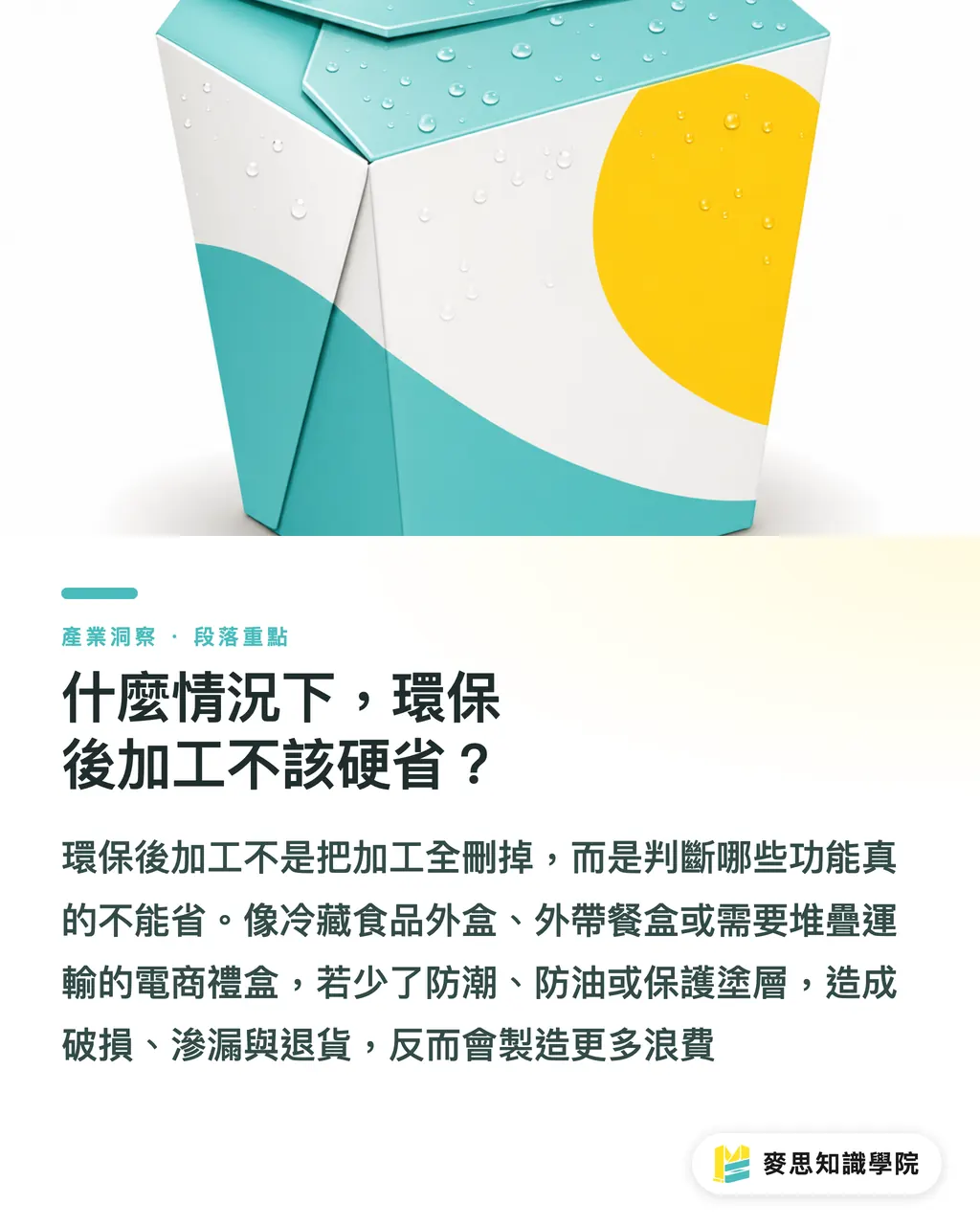
・Special Coating: Grease-proof, water-resistant, and abrasion-resistant coatings each have their place. Takeout food containers need functional coatings, but dry goods boxes might not. Ask about coating types and recycling limits upfront
My rule for trade-offs is straightforward: keep essential protection, push pure decoration to the back, and if paper, embossing, or die-cuts can solve the issue, don't rush to use composite materials
How Designers Can Balance Texture and Sustainability
The scariest line during design is: 'We'll ask the printer about this later.'
When finishes are left until final artwork is ready, you're usually stuck with two choices: pay up to force it through, or scrap and redesign
A safer path is writing four questions directly into design notes during early proposals:
・Does this finish serve protection, identity, tactile feel, or pure decoration? ・Is this packaging meant for 1 day, 1 week, or saved for over 6 months? ・Will consumers need to separate paper, plastic, metal, or other materials when tearing it down? ・If one finish is removed, can paper texture, print layering, or die-cut structures recover 70% of the visual effect?
Take a skincare box as an example. If a brand wants matte lamination, foil stamping, embossing, and spot gloss all together, I pull matte lamination out for discussion first
If high scratch resistance isn't needed, swap matte film for matte aqueous varnish. Shrink foil stamping to just the logo. Keep embossing on the brand name, and restrict spot gloss to key line art
The final look retains depth, but material burden drops significantly and costs stay manageable
When MINDS handles bespoke mid-to-high-end projects like this, our goal isn't making designs plain. It's organizing finishes from 'we need everything' into 'every layer has a reason.'
What Questions to Ask During Purchasing and Production Line Talks
Print buyers shouldn't ask only about unit price. When it comes to finishing, ask four things together: function, material, alternatives, and proofing cost
Take the same box. Full-surface lamination and spot varnish differ completely in price, turnaround time, wear resistance, and recycling impact. Comparing on total price alone makes it easy to pick an option that looks cheap upfront but creates headaches later
Before sending files to print, ask your printer directly:
・Which foreign material does this finish add? ・If switched to spot finishing, what are the minimum area and line width? ・Does this adhesive or coating affect disassembly or paper recycling? ・Is there a simpler alternative technique that yields a similar look? ・Do we need an unprinted dummy, digital proof, or press proof? Which sample shows the real texture best?
I advise small and mid-sized businesses to make at least one dummy or press proof, especially for projects with window patches, embossing, unusual box structures, or heavy cardstock folds
Unprinted dummies test structure, while press proofs test color and finishing. They serve different purposes, so don't let screen renders replace floor-level judgment
If your team uses AI or SaaS tools for packaging proposals, set fixed fields for finish purpose, material layers, disassembly method, and alternatives
Tools can flag missed items, but design, procurement, and printers still need physical samples to make final calls
When Should You Not Cut Eco-Friendly Finishes?
Eco-friendly doesn't mean stripping every finish clean
Some packaging requires moisture resistance, grease resistance, scratch resistance, anti-counterfeiting, or long-distance shipping. Functional finishes shouldn't be judged on aesthetics alone
For instance, refrigerated food boxes, takeout containers, or e-commerce gift boxes built for stacked shipping. If essential coatings or protections are omitted, damaged goods, leaks, and returns end up creating far more waste
I organize finishes into three levels:
・Must-Keep Finishes: Affects safety, hygiene, shipping, compliance, or product protection. Keep these first, then look for options with fewer composite materials. ・Trim-Down Finishes: Impacts brand feel but isn't strictly necessary, like large foil areas, full-surface gloss film, or full-panel coatings. Scale them down to spot or small areas. ・Cuttable Finishes: Added purely to crowd the layout, increase shine, or mirror competitors. Cut these and fill the gap with whitespace, paper texture, or die-cut structures
This is my core stance on eco-friendly finishing: for sustainability to work in practice, we can't just preach reduction while pretending texture doesn't matter
Good packaging is something brands want to use, production lines can run reliably, consumers can tear apart easily, and recyclers can actually handle
Key Takeaways
・Check if eco-finishing turns material composite first, then ask if the visual effect is truly necessary
・Be cautious with lamination, windows, and special coatings. Embossing and paper texture are often cleaner sources of quality
・Great sustainable packaging isn't plain to the point of losing brand identity. Every finish layer must have a functional reason
・Ask your printer during the design proposal phase. Changing finishes after final artwork is ready usually sends costs and layouts out of control
・Compare quotes based on function, materials, disassembly, and proofing, not just total price
Further Reflections
For printing manufacturers, eco-friendly finishing shifts line communication upstream, bringing sales, design, prepress, finishing, and procurement around the same drawing early on. For designers, the source of texture shifts from adding materials to using paper stock, pressure, and structure. For AI and SaaS teams, incorporating finish intent, material layers, disassembly methods, and alternative techniques as fixed fields in proposal tools prevents last-minute cost and recycling issues after final artwork. If your project involves high-ticket packaging, gift boxes, or mid-to-high-end commercial printing, consulting MINDS or the advisory team at Mai Strategy Knowledge Academy early on for unprinted dummies and press proofs is far more practical than putting out fires in the final week
FAQ
- Does eco-friendly finishing mean you can never laminate?
- Not necessarily. If packaging needs scratch resistance, moisture protection, or long shelf display, lamination serves a functional purpose. If it's just for extra shine, evaluate aqueous varnish, spot varnish, paper texture, or embossing first
- Does foil stamping impact recycling?
- Large foil areas add non-paper materials to the surface, while small logos or fine lines are easier to manage. In design, shrink foil stamping to a single brand focal point
- Is window packaging less eco-friendly?
- Plastic windows turn cartons into composite materials and complicate teardown. If showing the product isn't mandatory, switch to cutouts, card inserts, or printed product graphics
- Does recycled paper always yield lower quality packaging?
- Recycled paper has distinct tone and fiber characteristics, so standard white board design rules don't directly apply. Using whitespace, line weight contrast, low-coverage tints, embossing, and spot finishing can actually yield a more grounded, premium feel
- What should you ask your printer first before sending files?
- Ask which extra material the finish adds, if it can be spot-applied, whether it impacts teardown, and if simpler alternatives exist. These four questions prevent post-press revisions far better than asking about price alone
Related articles



The Print × AI weekly
The print and AI know-how designers, brands and enterprises can use before they commit — one email, every week
MINDS Free Tools
AI background removal, a LINE sticker maker, spine & imposition calculators — all free, right in your browser, no upload.
MINDS Group
Need actual printing or gifting services?
From premium printing to online ordering and festive gifts — the MINDS Group sister brands take it from here.