

Overview
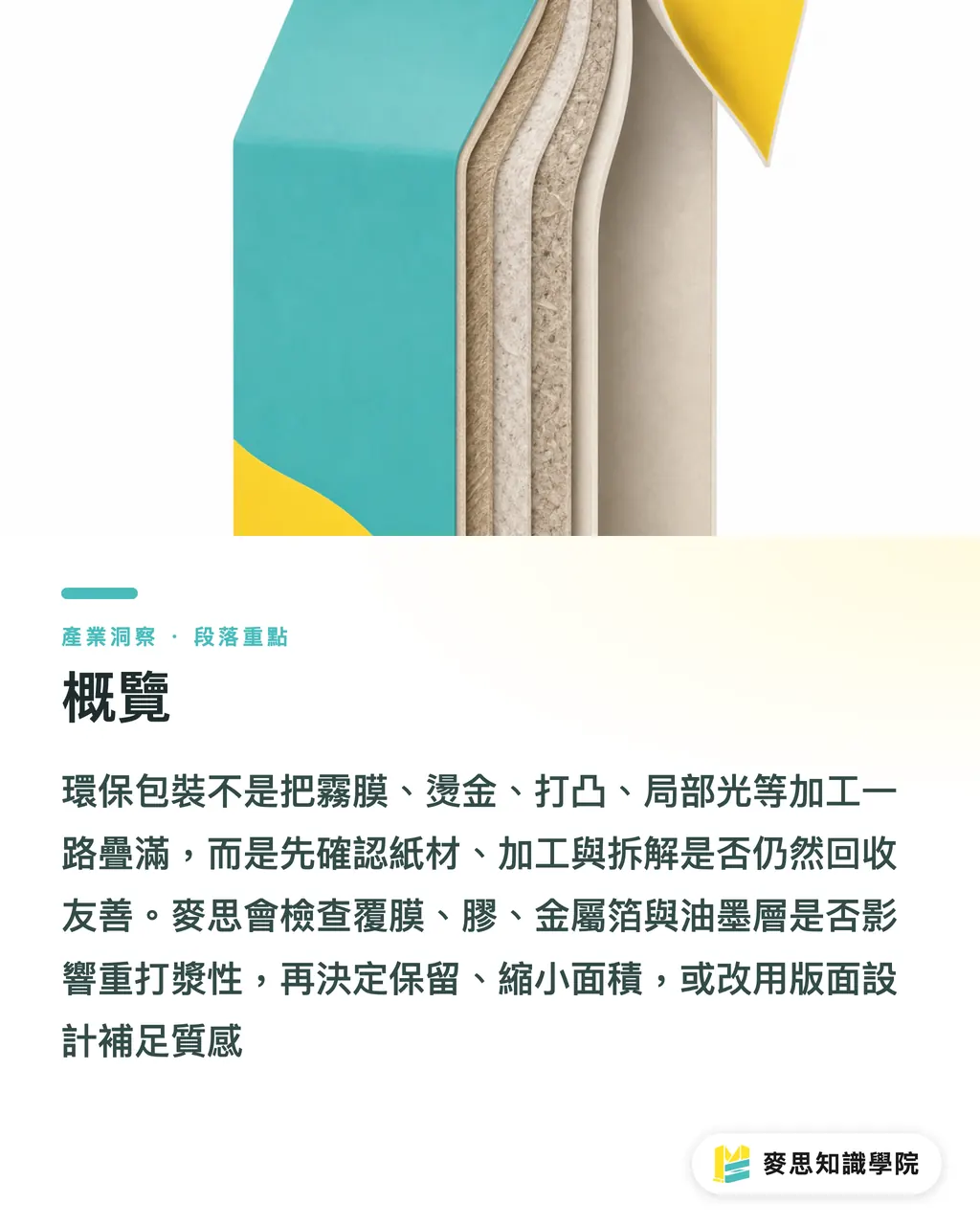
Eco-friendly packaging can use matte lamination, foil stamping, embossing, spot UV, and specialty paper textures, but you shouldn't stack every finish on top of each other as mere decoration. MINDS (MS) uses the 'MINDS (MS) 3-Step Prepress Check' looking at ① Paper Stock, ② Finishes, and ③ Disassembly. We first check whether a finish adds a burden to recycling, then decide whether to keep it, shrink its area, or use layout design to achieve the desired texture
Definition of eco-friendly post-press finishing: Adding processes like varnishing, debossing/embossing, foil stamping, or textured pressing after printing on boxes, hangtags, or packaging, while keeping paper recyclable, easy to disassemble, and low in plastic load
Definition of repulpability: Whether waste paper can re-disperse into pulp in water and separate foreign materials during recycling, which is affected by film lamination, glue, metallic foil, and ink layers
Can Eco-Friendly Packaging Use Matte Lamination, Foil Stamping, and Spot UV?
Eco-friendly packaging can use finishes. The real issue lies in coverage area, material layering, and disassembly complexity. For the exact same box, a small embossed area usually leaves the paper's original recyclable condition far intact compared to full-surface plastic matte lamination, without sacrificing visual impact
When I evaluate packaging finishes, I ask 5 questions first
・ Does this layer protect the product, such as offering scratch, dirt, moisture, or scuff resistance?
・ Does this layer carry brand identity, like the logo, key visual, signature colors, or a premium feel?
・ Does this layer stand out on the shelf, such as applying spot UV only to the product name or focal image?
・ Will this layer blend paper, plastic film, metallic foil, and glue together, raising separation costs at recycling facilities?
・ Can this layer be replaced by paper stock, ink, embossing, or layout white space?
I recommend brands shift their thinking from 'Do we want it to look pretty?' to 'Does this layer have a specific job?' If matte lamination is only used to tone down glare, an aqueous matte varnish might be enough. If foil stamping is only meant to look upscale, shrinking it to a single logo or accent line often feels cleaner and works better than covering the whole surface in foil
Which Finishes Make Recycling Difficult?
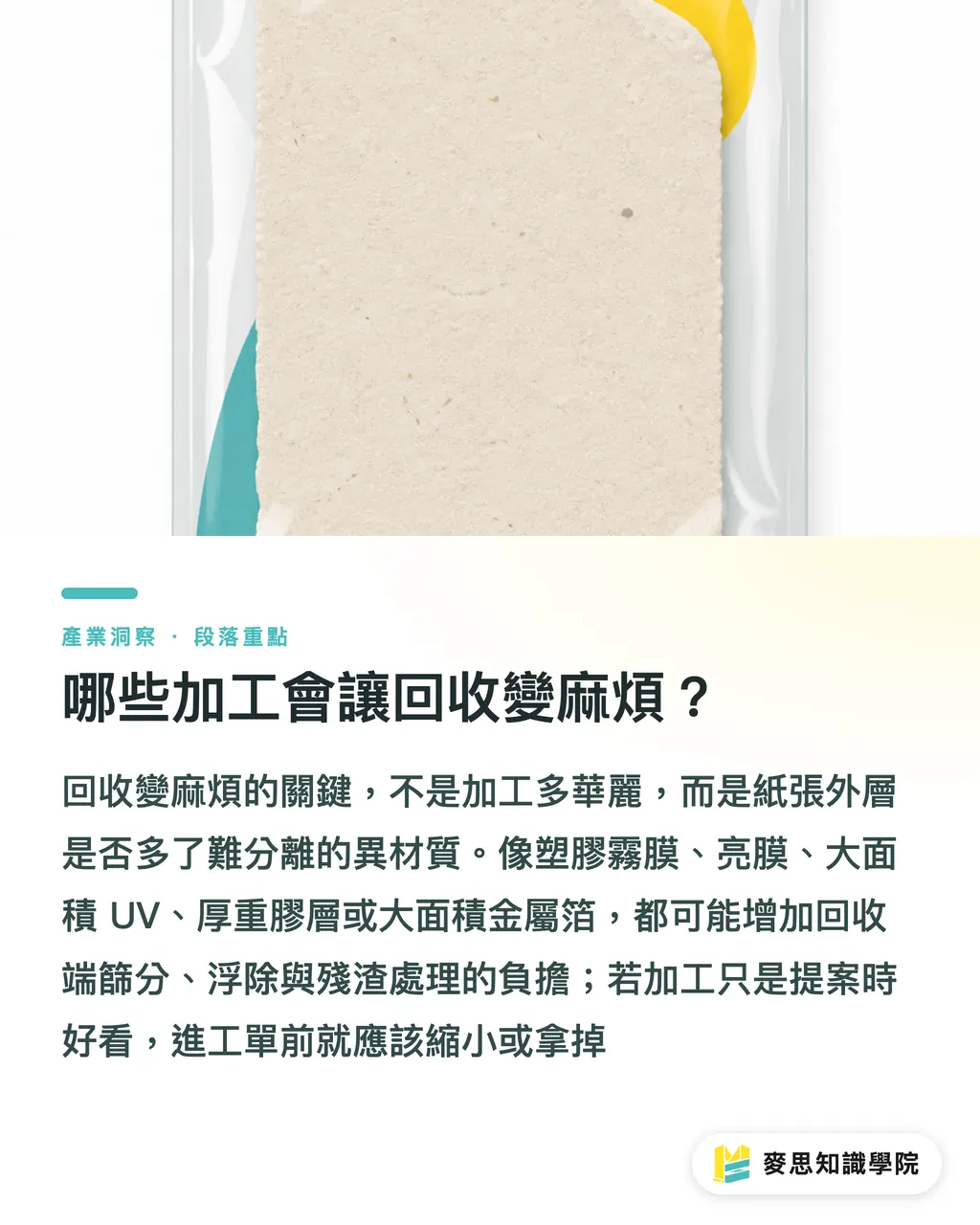
Recycling problems rarely stem from a finish looking fancy. They happen because hard-to-separate materials are added to the paper. Plastic film, large-area UV coating, heavy glue layers, and extensive metal foil often cause screening, flotation, or residue issues during recycling
Here is how I view 6 common post-press finishes:
・ Plastic Matte or Gloss Lamination: Weak recyclability; good scratch and dirt resistance; offers a smooth premium visual feel; cost is usually higher than simple varnish. Best for outer boxes with genuine protection needs
・ Aqueous Coating: Lower recycling impact; scuff resistance isn't as high as thick film; offers gloss or matte finishes; favorable cost and mass-production stability. A great first choice for high-volume packaging
・ Spot UV: Small areas create sharp focal points; large coverage increases coating burden; strong visual contrast; cost depends on surface area and alignment precision
・ Gold or Silver Foil Stamping: Used in moderation, it helps brand logos pop out clearly; large foil coverage makes foreign matter separation harder for recyclers; high visual value; cost depends on plate fees, placement, and coverage
・ Embossing, Debossing, and Texture Pressing: Mainly alters paper surface structure; without extra film, recycling load is lower than lamination; great tactile feel; die costs need to be budgeted upfront
・ Specialty Paper and Tactile Coatings: Puts texture directly back into the paper stock; recyclability depends on coating and fiber condition; understated visual style; ideal for brands that don't want to rely on high-gloss effects
On the press room floor, we use a simple rule of thumb: if packaging needs to survive logistics, shelf placement, and customer handling, keep protective finishes. If a finish only looks good on a screen presentation, cut it or scale it down before sending it to production
MINDS (MS) 3-Step Prepress Check: How to Decide Which Finishing Layer to Keep?
The MINDS (MS) 3-Step Prepress Check works well for eco-friendly packaging finishes. Packaging mistakes rarely stem from a single technique; they happen when paper stock, finishes, and disassembly aren't evaluated together. A design may look great on paper, but if recyclers can't tear it apart, your ESG story falls flat
・ ① Paper Stock Check: First, define the task of the paper itself. Food boxes, skincare outer boxes, and e-commerce shipping boxes face different wear conditions. Paper weight, coating state, and surface fiber texture must be set first
・ ② Finishing Check: Next, clarify the function of each finish. Matte lamination handles scuff resistance, foil stamping handles identity, embossing handles touch, and spot UV handles focal interest. Cut any finish without a clear job
・ ③ Disassembly Check: Finally, check if consumers and recyclers can process the item. Window patches, carrying cords, magnetic closures, tape, and stickers must all be factored into the packaging, not just the main box
For small and medium enterprises developing eco-friendly packaging, I suggest marking 'must-keep finishes' and 'replaceable finishes' on your layout before quoting. If your brand is doing mid-to-high-end custom commercial printing, you can bring this finish list to MINDS to review paper stock, techniques, and mass-production limits together
Hold on a second
Fewer finishes don't automatically mean more eco-friendly, nor do more finishes make a brand look stronger. Keeping just 1 or 2 purposeful focal points on a box while letting paper stock, white space, color blocks, and structure handle the rest usually creates a cleaner look that stands the test of time, giving off a mature brand feel
What Alternatives Can Designers Use for Finishes?
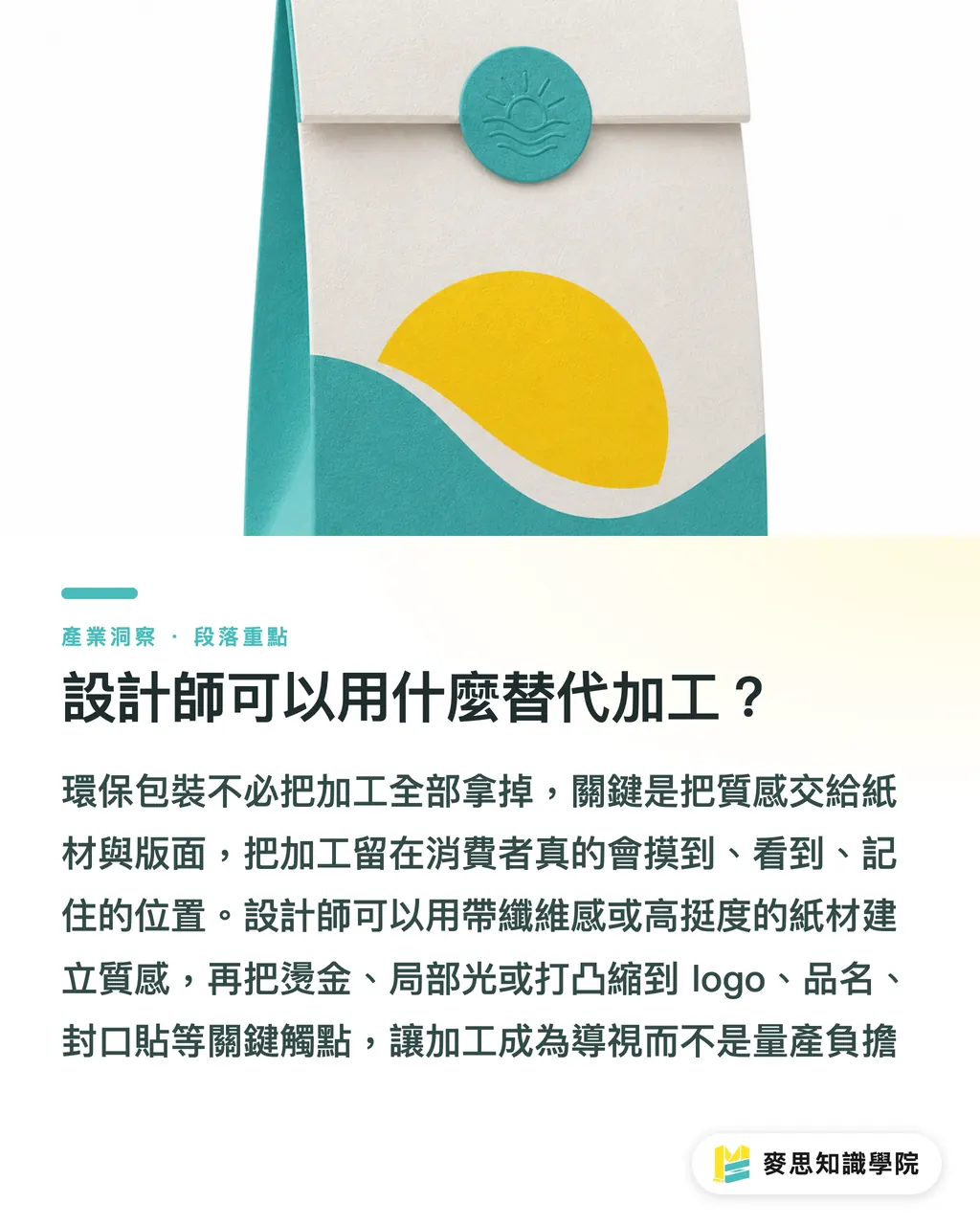
If designers want to avoid a cheap look on eco-friendly packaging, try these 3 alternative approaches: paper-first, layout-first, or targeted-finishes-first. These 3 routes reflect production realities far better than stripping everything away, making them much easier for clients to accept
・ Paper-First: Use fibrous, natural-toned, or high-stiffness paper stock to carry texture so the packaging doesn't rely on full-surface matte film to feel premium
・ Layout-First: Build brand presence through generous white space, desaturated colors, typographic hierarchy, and visual proportions. One strong key visual communicates much clearer than blending 5 effects together
・ Targeted-Finishes-First: Restrict foil stamping, spot UV, or embossing to the logo, product name, closure sticker, or opening cue. Make finishes serve as visual guidance rather than environmental burdens
File preparation needs adjusting too. Spot UV, embossing, and foil stamping usually require separate finishing plates. When submitting files, designers should clearly separate die lines, bleed, finishing layers, and color proofs, so prepress operators don't have to guess which layer goes onto the machine from a single PDF
For AI application and SaaS teams, eco-friendly packaging finishes can be structured into a 5-question pre-quote checklist: protection, identity, shelf impact, recycling impact, and alternatives. When the Mai Strategy Knowledge Academy consulting team plans this type of content, we build printing constraints straight into the workflow instead of delivering pretty proposals alone
It's simple
Place packaging finishes where consumers will actually touch, see, and remember them. Let paper stock and layout speak for the rest. Eliminating one unnecessary finish often removes one mass-production variable
Key Takeaways
・ Eco-friendly packaging can use finishes, but every layer must serve a clear purpose in protection, identity, or shelf appeal
・ Exercise extra caution with plastic film, large-area UV, and extensive metallic foil, as foreign materials make recycling harder
・ Embossing, texture pressing, aqueous coating, and specialty paper are top choices for balancing texture with eco-friendly storytelling
・ Designers should inspect paper stock, finishing plates, die lines, and disassembly methods together before sending files to print
・ Great ESG packaging isn't bland or expressionless; it places texture right where it matters most
Further Thoughts
Printers should quote 'doable' and 'worth doing' separately. Designers need to turn finish selections from a wish list into a decision matrix. AI and SaaS teams can turn paper stock, finishes, and disassembly into quotation and review workflows. A practical next step: take an existing package, mark must-keep finishes, replaceable finishes, and removable finishes, then ask your printer for an unprinted sample or small proof to check tactile feel and fold lines. Many ESG packaging issues reveal themselves right on the proofing table
FAQ
- Can eco-friendly packaging use matte lamination?
- Yes, eco-friendly packaging can use matte lamination, but plastic matte film increases the separation load during paper recycling. If you only want to reduce glare, consider aqueous matte varnish or rely on the natural matte texture of the paper stock first
- Does foil stamping make eco-friendly packaging unrecyclable?
- Whether foil stamping affects recyclability depends on coverage area, placement, and foil volume. A small stamped logo is far easier to manage than full-surface metallic effects. If a brand wants to retain a premium feel, concentrate foil stamping on a single identity focal point
- Are embossing and texture pressing considered eco-friendly finishes?
- Embossing and texture pressing mainly alter the paper's surface structure. Without added plastic film, they suit eco-friendly packaging far better than film lamination. Designers should still verify paper thickness, fold placement, and die costs
- How can eco-friendly packaging balance texture and cost?
- Eco-friendly packaging should secure essential protection first, then brand identity, and finally decorative touches. SMEs can replace large-area film lamination with aqueous coating, targeted embossing, specialty paper, and layout white space
- How should eco-friendly post-press finishes be checked before printing?
- Run a 3-step check before sending files to print: suitability of paper stock, clear purpose for each finish, and ease of disassembly for consumers and recyclers. Prepare separate finishing plates for spot UV, foil stamping, and embossing to prevent errors during mass production
Related articles




The Print × AI weekly
The print and AI know-how designers, brands and enterprises can use before they commit — one email, every week
MINDS Free Tools
AI background removal, a LINE sticker maker, spine & imposition calculators — all free, right in your browser, no upload.
MINDS Group
Need actual printing or gifting services?
From premium printing to online ordering and festive gifts — the MINDS Group sister brands take it from here.