
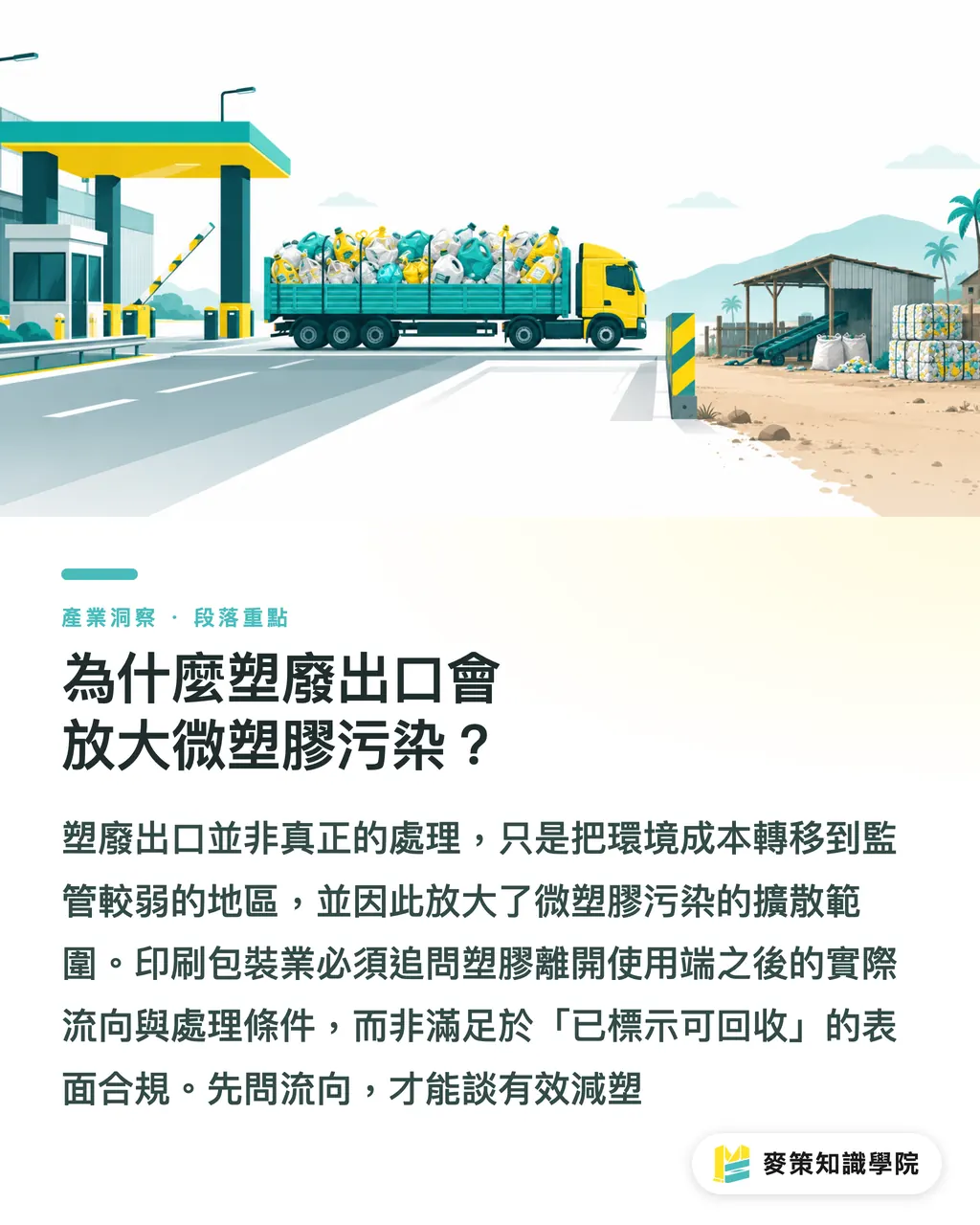
Why Does Exporting Plastic Waste Intensify Microplastic Pollution?
Because exporting plastic waste across borders does not make it disappear. It only moves the burden of handling it and the environmental cost elsewhere. Packaging Insights, a specialist publication focused on the packaging industry, cites the latest research in Global Plastic Waste Trade Intensifies Microplastic Pollution: Responsibility and Opportunity in the Printed Packaging Supply Chain, showing that many recipient countries are in regions with weaker oversight, so cross-border trade can actually intensify microplastic pollution
Brands can use Mai Strategy's Three Print Checkpoints to bring the risk back to three decision points: materials, processing, and destination
Microplastic pollution is the environmental contamination caused when tiny particles formed as plastic breaks down enter water, soil, and ecosystems. It cannot be treated as a distant ocean issue
The printed packaging industry cannot look only at whether a package is labeled recyclable when it leaves the factory. It also needs to ask where it goes after use, who has the capacity to handle it, and where pollution will end up if the process fails
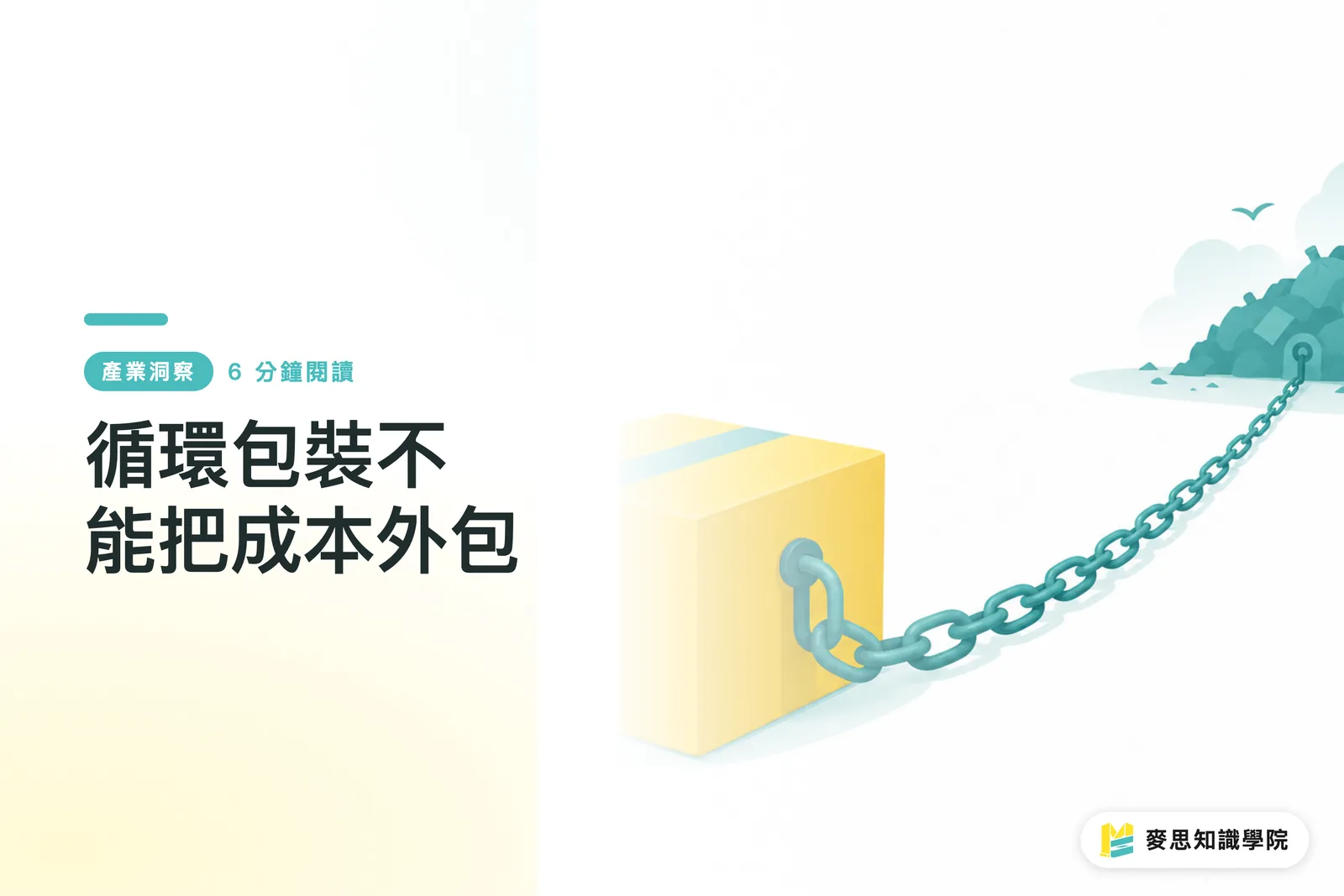
From my years of watching production lines and customer purchasing decisions, I have learned that export is not the same as completed disposal. When a brand hands plastic waste to a cross-border recycling chain without knowing the recipient country's processing conditions, its plastic-reduction story can become an externalization of environmental costs
Ask where it goes before talking about plastic reduction
Why Do Brands' Plastic-Reduction Commitments Need to Reach the Printer?
Because the promise a brand prints on its packaging is shaped by three stages: the substrate, printing and finishing, and post-use handling. Simply asking a printer to switch to a 'recyclable material' without asking whether that material can enter an actual recycling system does not make the responsibility real
Packaging Insights explains this shift clearly. Exporting plastic waste has not actually solved the problem. Instead, it puts new pressure on both brands' plastic packaging claims and printers' proposals for recyclable materials
Brand clients will first ask whether the appearance can be maintained, whether the unit price will rise, and whether the lead time can be met. All of that is reasonable. But the packaging's environmental story cannot stop at procurement specifications, because once pollution risk is shifted, the brand still has to answer whether the plastic-reduction material can actually be handled by real-world systems
Printers are not there to carry all of a brand's responsibility, but they are among the first to see the limitations of materials, inks, coatings, adhesives, and processing. If design only hands over a visual file and procurement only compares unit prices, both sides will miss the downstream risks created by material choices
Brands want answers. I treat a recyclable-material proposal as a supply-chain questionnaire. At minimum, it should answer where the material comes from, how it will be printed, and where it will go in the end
How Can the Printed Packaging Supply Chain Move Responsibility Upstream?
The shift is to replace 'Can it be printed?' with 'Can we clearly account for the material, processing, and post-use destination?' Mai Strategy's Three Print Checkpoints can be built into the brand brief, proofing sheet, and procurement sign-off so design and printing can talk on the same document
・1. Materials checkpoint. Confirm the substrate composition and recycling conditions before using words like 'eco-friendly.' Composite materials, hard-to-separate structures, and differences in recycling capacity across markets all need to be included in the supplier's response
・2. Processing checkpoint. List printing, inks, coatings, adhesives, and post-processing in the proof approval, and require the printer to explain which conditions could affect downstream sorting or treatment
・3. Destination checkpoint. Confirm the market of use, recycling system, and waste flow. Cross-border transfer is only a logistics step. It cannot by itself be treated as proof that the plastic waste has been properly handled
The value of the three checkpoints is that they turn a brand's sustainability requirements into work items that suppliers can answer, printers can execute, and designers can deliver. Small and midsize brands do not have to redo every item at once. Start with packaging that uses a lot of plastic, is sold across borders, or has high brand visibility, and keep a record of the material and processing decisions made at each proof
How Should Taiwanese Brands Buy and Communicate Now?
Taiwanese brands should first turn 'recyclable' on packaging from a claim into a verifiable procurement requirement, then tell consumers what they can substantiate
For example, a brand may complete printing in Taiwan and export the finished product to an overseas market. If the purchase order lists only the substrate name and recycling mark, but not the processing conditions or post-use destination, the brand cannot answer the most direct question from consumers: after this package is used, does the local system actually accept it?
This is the order I would use to put it into practice
・1. Map the main packaging. Start with one item that uses a lot of plastic or is sold across borders, and trace its materials, processing, and post-use route
・2. Put supplier responses into the brief and procurement specifications. Do not turn unsupported claims such as 'recyclable' or 'eco-friendly' directly into front-of-pack copy
・3. If the same package is sold in different markets, check the local recycling conditions separately. One set of wording cannot cover every market
The conditions need to carry through to proofing and mass-production communication. Brands can discuss fully customized commercial-printing material and processing options with MINDS. The design team can also put this checklist into proposals, giving sustainability communication a material basis
Check first, then speak
Key Takeaways
・Plastic waste exports are not a treatment endpoint. Brands need to trace waste to the recipient country and its post-use route
・Plastic-reduction commitments must move from material claims to verifiable checks across materials, processing, and destination
・Printers should enter the brand's procurement process early, because they know the material and processing constraints best from the shop floor
・Cross-border transfer shows only that logistics occurred. It does not prove that plastic waste was properly handled
Further Thoughts
Printing manufacturers should keep material and processing conditions in quotations, proofing, and mass-production documents instead of scattering them across chat logs. Designers should tie every sustainability claim to material or treatment evidence they can provide. AI adoption can start by organizing supplier specifications, comparing versions, and flagging missing information, but it should not decide for people that a given material is definitely recyclable in a given market. SaaS products can turn material, processing, market, and evidence fields into traceable records, so brands can retrieve the history of every redesign. The next step is to take one cross-border package through Mai Strategy's Three Print Checkpoints
Further Reading
FAQ
- Why does exporting plastic waste increase microplastic pollution?
- Cross-border exports do not eliminate plastic waste. They only move the burden of handling it to recipient countries. The latest research cited by Packaging Insights indicates that recipients are often in regions with weaker oversight, so pollution risks expand
- If a brand switches only to recyclable packaging, does it still need to manage printing and finishing?
- Yes. The substrate, inks, coatings, adhesives, and post-processing can all affect whether packaging enters actual recycling and treatment systems. Brands should require printers to record these conditions in proofing and procurement documents
- Where should a small or midsize Taiwanese brand start?
- Start with a core package that uses a lot of plastic or is sold across borders. Use the Three Print Checkpoints to check its materials, processing, and post-use destination, then put whatever can be substantiated into external communications
- Can packaging simply say '100% recyclable'?
- Without evidence for the material composition, processing conditions, and recycling system in the market where it is used, '100% recyclable' should not be presented as a universal claim. Recycling conditions must be checked separately in each market
Related articles


The Print × AI weekly
The print and AI know-how designers, brands and enterprises can use before they commit — one email, every week
MINDS Free Tools
AI background removal, a LINE sticker maker, spine & imposition calculators — all free, right in your browser, no upload.
MINDS Group
Need actual printing or gifting services?
From premium printing to online ordering and festive gifts — the MINDS Group sister brands take it from here.