
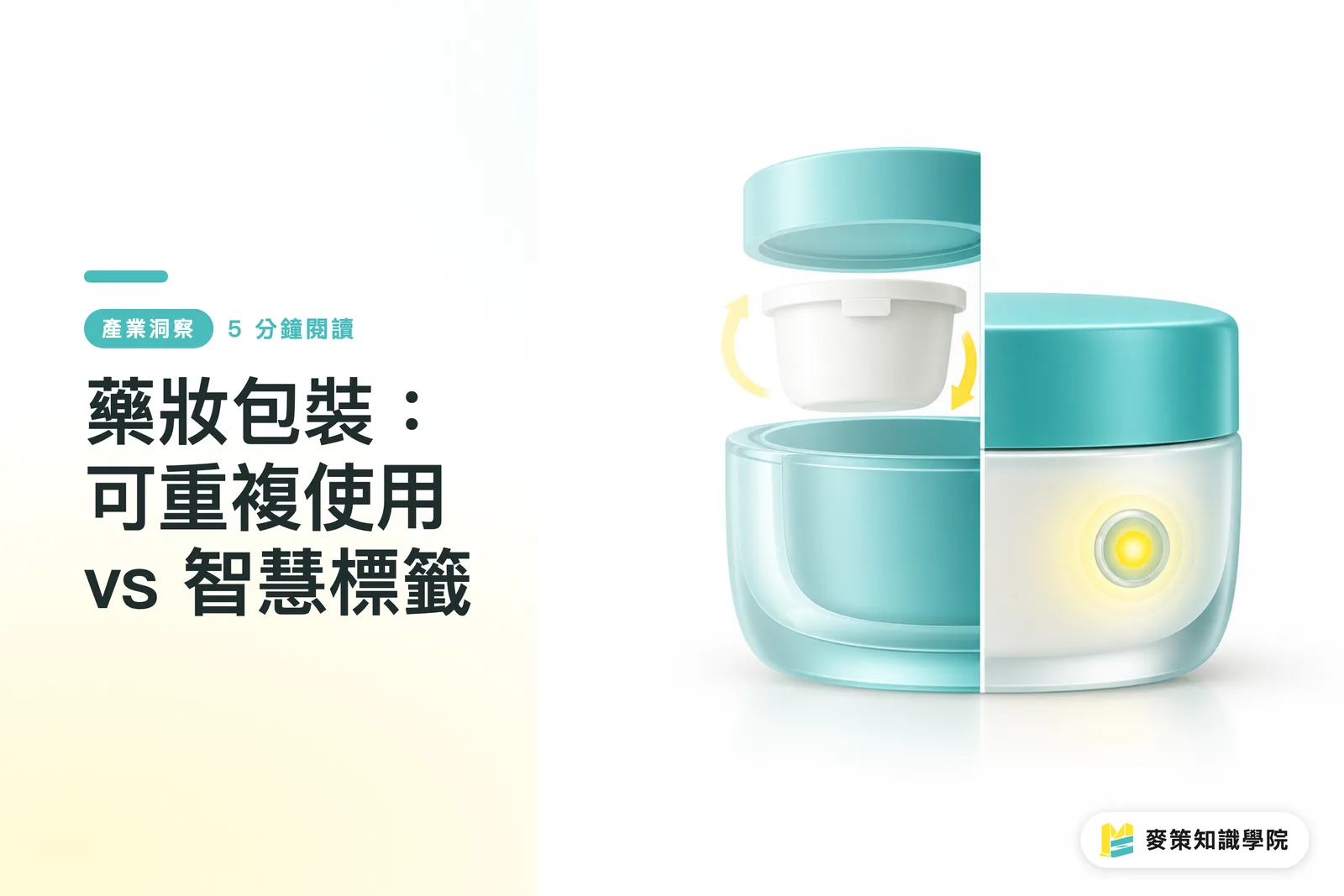
Why are pharma-beauty packages chasing smart and sustainable at once?
Because use cases have moved into the home, and packaging now has to handle usage safety, plastic reduction, and product information all at once. Packaging Insights' "At-Home Pharma Packaging Innovation" points to directions like dose tracking, easy-open features, and plastic-reducing structures, and Medicos Group has launched a reusable beauty vial system. Put the two cases side by side and the shared direction is clear: pharma-beauty packaging now has to carry the whole use and refill process
The thing I keep telling clients first is to map the usage flow before talking materials. Who picks it up, where they open it, how they know the dose, what happens to it after use, if these questions don't have answers, a smart label is just added cost stacked on top. And if the container has no refill or recycling path, sustainability stays a concept on the packaging, nothing more
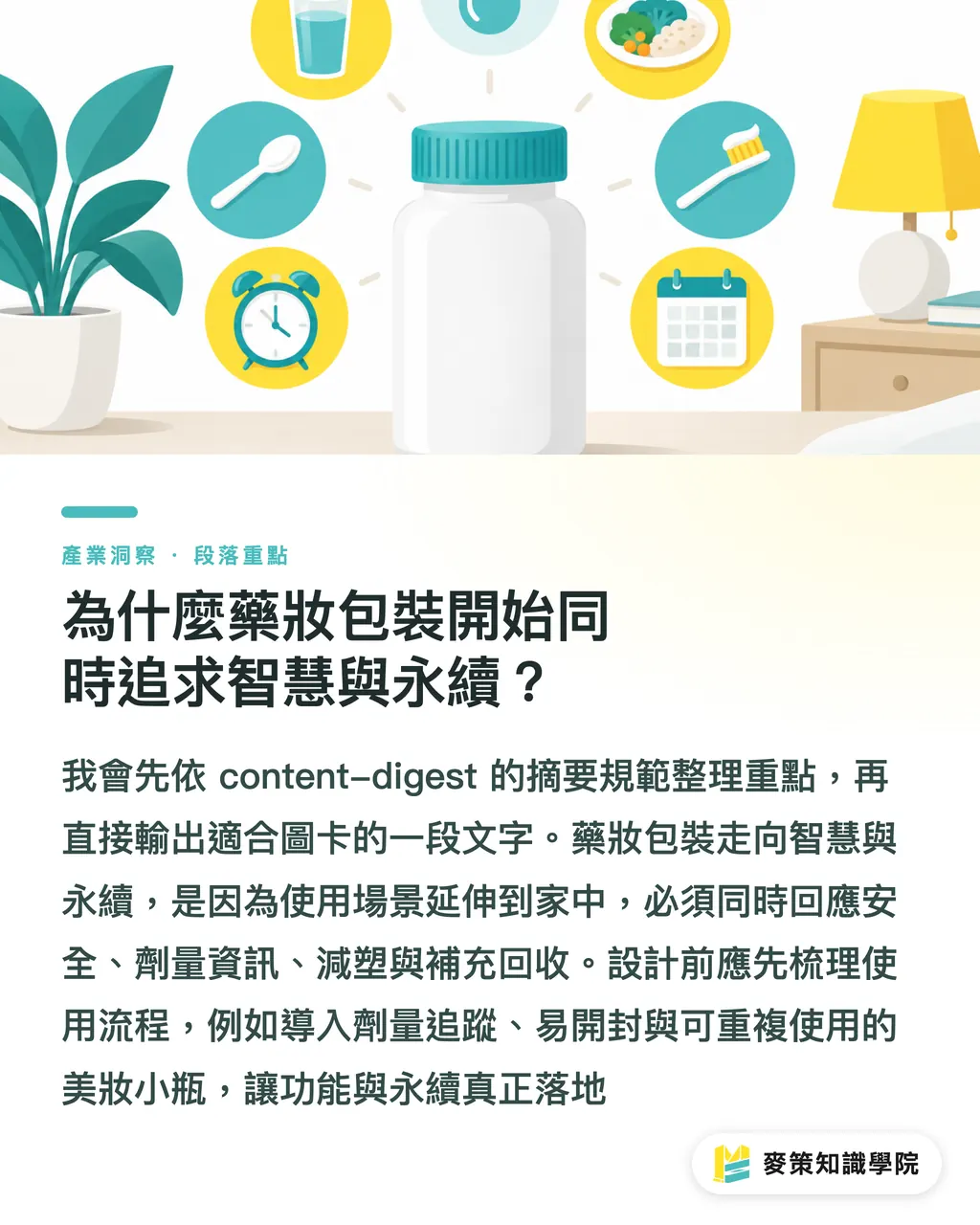
Which at-home problem should a smart label solve first?
Smart labels should solve dosage and identification first, then consider adding interactive features. At-home medical use needs the user to follow prompts to take the product, and family members or caregivers need to identify it quickly; the dose tracking and easy-open features mentioned in the source material map directly onto these two real-world problems. If a small package also has to carry batch, serial number, or refill information, the layout can't be crammed together right before printing
・Dosage information: font size, placement, and contrast serve the user first; a linked feature can come later
・Identity traceability: when serial numbers or batches are needed, reserve the variable-data zone for the printing and inspection process from the start
・Open-and-use interaction: test the label, seal, and container together, so the information reads fine but the package isn't a struggle to open
I treat a smart label as a use interface, not decoration. The first version carries one high-value action only, say, checking usage instructions or identifying a batch, so the brand can confirm consumers actually use it before deciding whether to add more
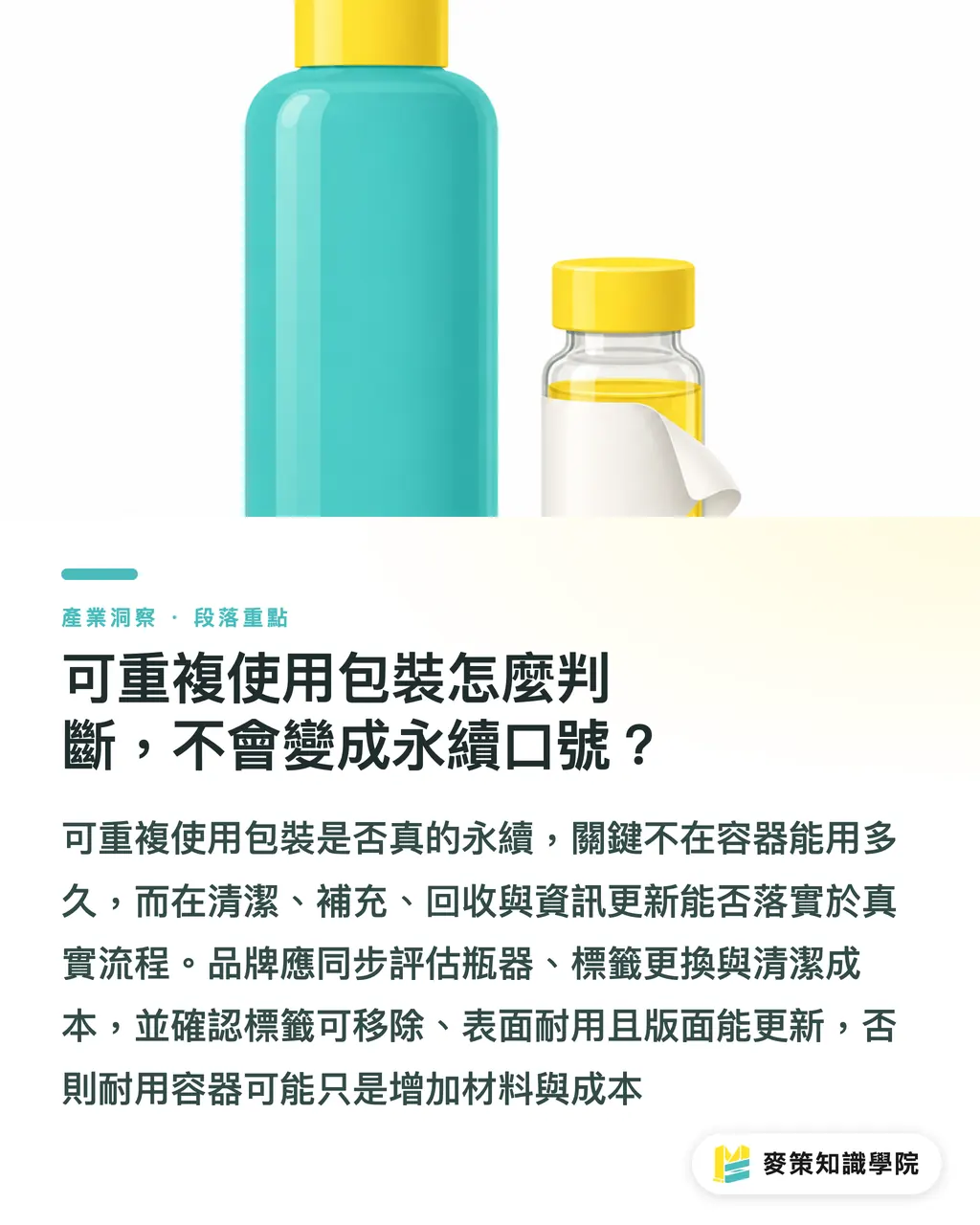
How do you tell if reusable packaging is real, not just a sustainability slogan?
Whether reusable packaging is actually more sustainable comes down to whether cleaning, refilling, reuse, and label updates can all happen within a real-world workflow. Medicos Group's reusable beauty vial system offers a container design direction; the brand still has to fill in how it gets recycled after use, how the contents get swapped, and how consumers tell new information from old
Advantages:
・The container body extends brand touchpoints, and identity can be preserved through refills
・When materials, cleaning, and refill processes are communicated clearly, consumers find the sustainability claim easier to buy
Drawbacks:
・Wear, adhesive residue, label swaps, and surface treatment all come back to printing and post-press work
・Without a refill or recycling channel, a durable container may just add material and cost
Brands need to put unit cost, label replacement, cleaning method, and communication cost on the same spreadsheet. Printers shouldn't just quote a single price for printing the bottle either, at minimum, proofing should spell out whether the label can be removed, whether the surface holds up, and whether the layout can be updated
How do brands take dual-track packaging into mass production?
Brands should first use small batches to verify usage flow, packaging function, and print stability together, before locking specs for a long run. Here's how my "three-gate print review" works
・1. Define the use case first: confirm whether it's single-use, repeat-refill, or shared among family members, and write down the open, take, store, and dispose path
・2. Then integrate materials: put the container, label, ink, coating, and adhesive through the same proofing round, checking legibility, wear resistance, and label-swap needs
・3. Finally assess production risk: confirm how serial numbers or variable data get delivered, who's responsible for version confirmation, and whether small-batch results can be replicated at scale
As packaging equipment lead times stretch out, working through these three gates first keeps a brand from discovering, only once the equipment arrives, that the layout, label, or usage flow needs redoing. Brands still finalizing specs can talk through structure, surface treatment, and proofing with MINDS printing first; if the work touches brand, design, and procurement coordination internally, the Mai Strategy Knowledge Academy consulting team can help sort out requirements
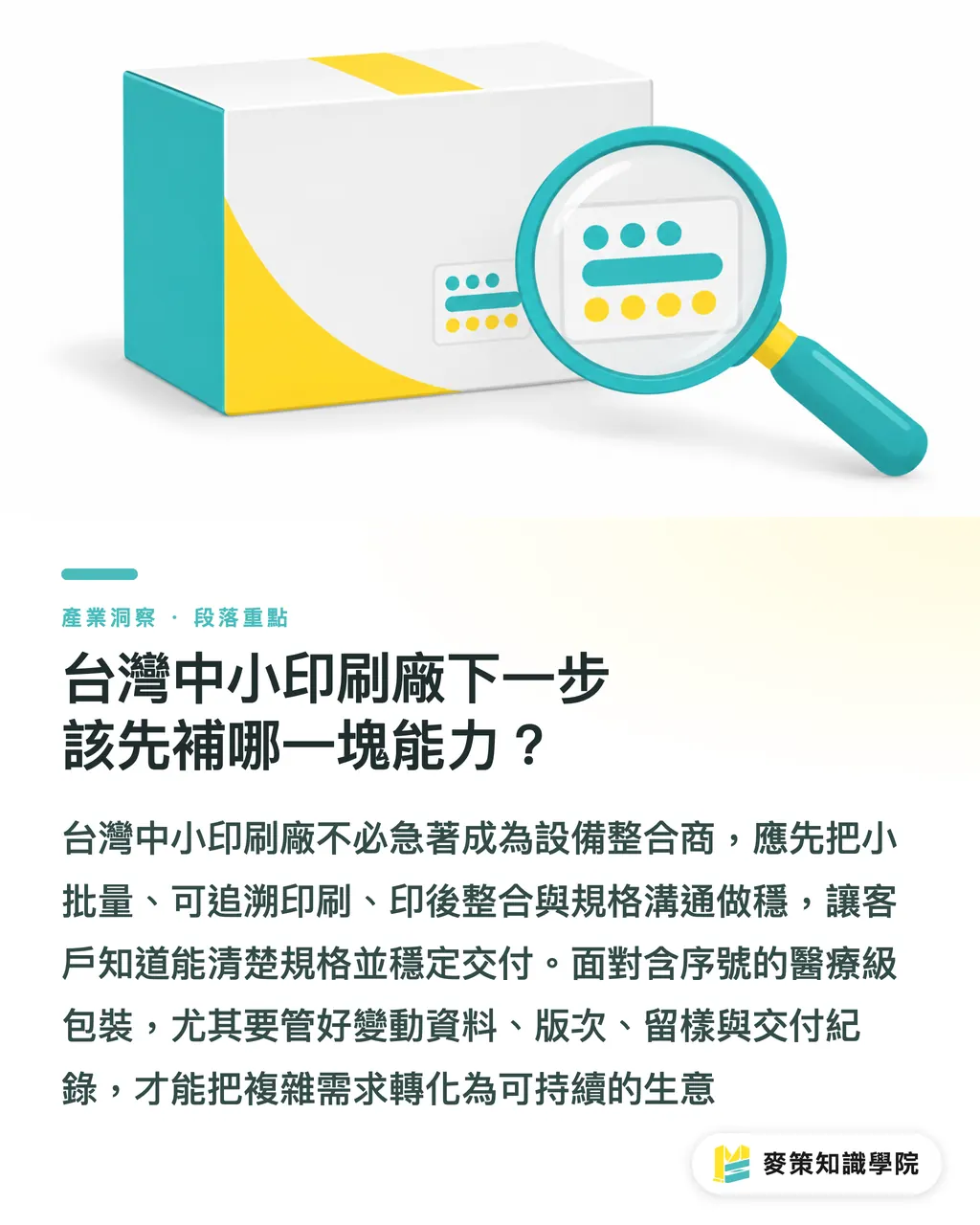
What capability should Taiwan's SME printers build next?
Taiwan's SME printers should build small-batch traceable printing, post-press integration, and spec communication first, there's no need to turn into an equipment integrator right out of the gate. I've watched pharmacy and medical auto-dispensing equipment adoption for a long time, and lately I'm seeing more small-format, serialized, traceable medical-grade packaging requests; that means printers need to manage variable data, version control, retained samples, and delivery records properly
Designers need to reserve a data-variable zone and usage-prompt space early in layout, so serial numbers, dosage, and regulatory information don't get squeezed in at the last minute. Printers need to write small-batch proofing, post-press processing, and version confirmation into their quotes and lead times, not just hand over a stack of finished product. Brands, meanwhile, need to translate ESG language into refill, recycling, or usage instructions consumers can actually follow
In my experience, the capability that builds trust first is getting a small-quantity spec right, producing it, and then delivering the next batch to the same standard. Complex labels are just one topic among many, it's consistent delivery that gives smart and sustainable features a real shot at becoming a business
Key Takeaways
・Reusable sustainability has to be verified together with the refill, cleaning, recycling, and label-update process
・Smart labels should handle dosage and identification first, more features don't automatically mean better packaging
・Small-batch proofing is the low-cost entry point for brands to test consumer perception and print stability
・The new value for SME printers sits in traceable data, post-press integration, and consistent delivery
Further Thoughts
When brands move to implementation, start with a cross-department spec sheet: is the container reusable, who's the label meant to be read by, which data fields will change, how will printing and post-press be verified, and what happens after use. Design uses it to lay out pages, printers use it to manage proofing and versions, procurement uses it to compare long-run costs. AI tools paired with spec-comparison capability fit well for checking versions, data fields, and text discrepancies; SaaS (cloud subscription software) paired with version-tracking capability fits scenarios where brands, designers, and printers share files. These can cut missed edits and lost communication, but they can't substitute for physical testing. The next step is to pick one item for small-batch verification, so cost, print quality, and consumer perception all factor into the decision at once
Further Reading
FAQ
- Do smart labels and reusable packaging have to be done together?
- Not necessarily. At-home medical use can start with dose tracking and easy-open features; beauty refill systems can separately evaluate whether the container, label, and refill or recycling path work together
- What should reusable packaging verify first?
- Verify first whether cleaning, refilling, reuse, and label updates can happen within a real workflow, then compare material and printing costs. A durable container with no refill or recycling path still leaves the sustainability claim incomplete
- How can Taiwan's SME printers take on smart packaging work?
- Start by building small-batch traceable printing, serial number or variable-data management, post-press verification, and version records, then work with brands to define long-run specs together
- How do brands control the budget for smart, sustainable packaging?
- Start with a small-batch verification of one item, confirm the usage function and data fields, then decide on materials, surface treatment, and long-run quantity, this avoids costs ballooning from late-stage redesigns
Related articles


The Print × AI weekly
The print and AI know-how designers, brands and enterprises can use before they commit — one email, every week
MINDS Free Tools
AI background removal, a LINE sticker maker, spine & imposition calculators — all free, right in your browser, no upload.
MINDS Group
Need actual printing or gifting services?
From premium printing to online ordering and festive gifts — the MINDS Group sister brands take it from here.