
Overview
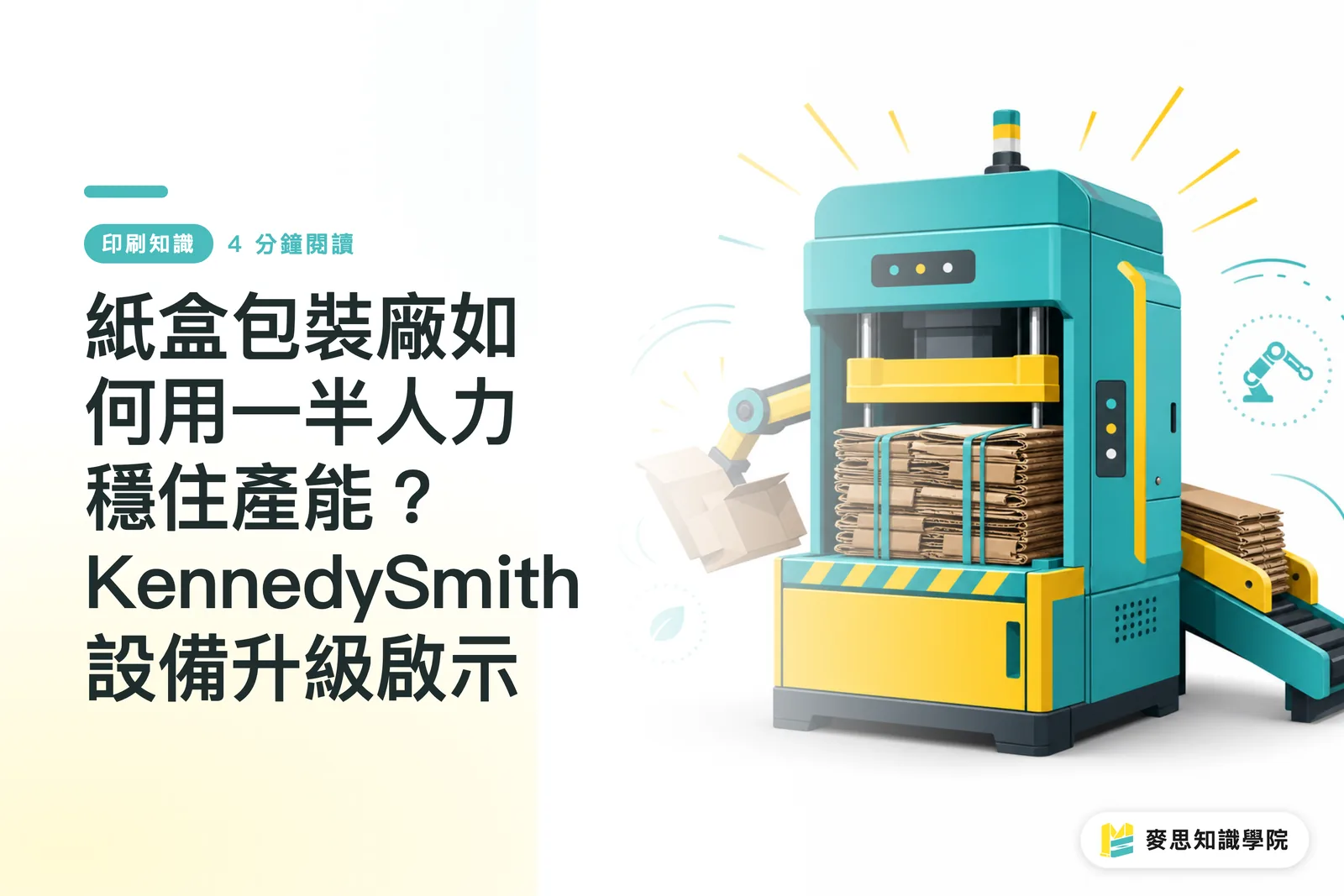
When lead times get crushed and skilled operators are getting harder to find, the smart play for a folding-carton shop is to de-skill the line and crank up single-shift output through heavy automation
When MINDS walks mid-to-high-end custom jobs through evaluation with clients, we feel this pressure first-hand: anywhere in the world, the printers that cut human input out of prepress and presswork are the ones pulling in the rush orders
The recent call by Scottish packager KennedySmith to install a Koenig & Bauer Rapida 106 is, frankly, a live-fire lesson for Taiwan's mid-sized shops

Why Automation Matters Right Now
In recent talks with clients, the same number keeps coming up: North American pulp and paperboard capacity contracted 5.1% in 2025, and the squeeze on raw stock isn't letting go through 2026
Materials cost more, customers push lead times shorter, and the press operators who actually know what they're doing are vanishing. Every packaging shop on the planet is feeling it
KennedySmith focuses on food and medical-grade folding cartons, categories with zero tolerance for error. They looked at digital and flexo, then doubled down on upgraded offset. Stability and de-skilling won the argument
Once skilled labor becomes the bottleneck, the IQ of your equipment decides how big and how fast you can run
How High Automation Actually Collapses the Shift Schedule
The headline number out of KennedySmith: three shifts now do what used to take six
They got there on the back of the Rapida 106—a six-color plus inline coater configuration, loaded with fully automatic plate-changing and an advanced logistics stack
・Automatic plate change cuts makeready waste to the bone
・Line networking and positioning let the press track its own progress
Same logic as Bobst's refreshed MASTERFOLD shaving 20 minutes off folder-gluer changeovers, press-side efficiency wins are just as eye-opening
Side dividend: energy use dropped hard. Fewer shifts plus a new dryer with tight heat-recovery loops meant their Q1 2026 power bill came in 26% lower than the year before
What "De-Skilling" Looks Like in Practice
De-skilling means handing the steps that used to live in a veteran operator's head over to systems and automated hardware, so a regular press minder can hit the same quality bar
On KennedySmith's setup, that includes inline PDF-based inspection, the machine catches misprints and color drift on its own
The old way had an experienced lead minder pulling sheets one after another to check. Now the standard lives in the system, scrap drops, and medical-grade zero-tolerance spec actually gets met
Same playbook as EyeC folding prepress QC into the finishing stage: push the checkpoint upstream, hand it to automation, and free the floor operator to keep the line flowing
What Should Taiwan's Mid-Sized Shops and Brand Owners Do?
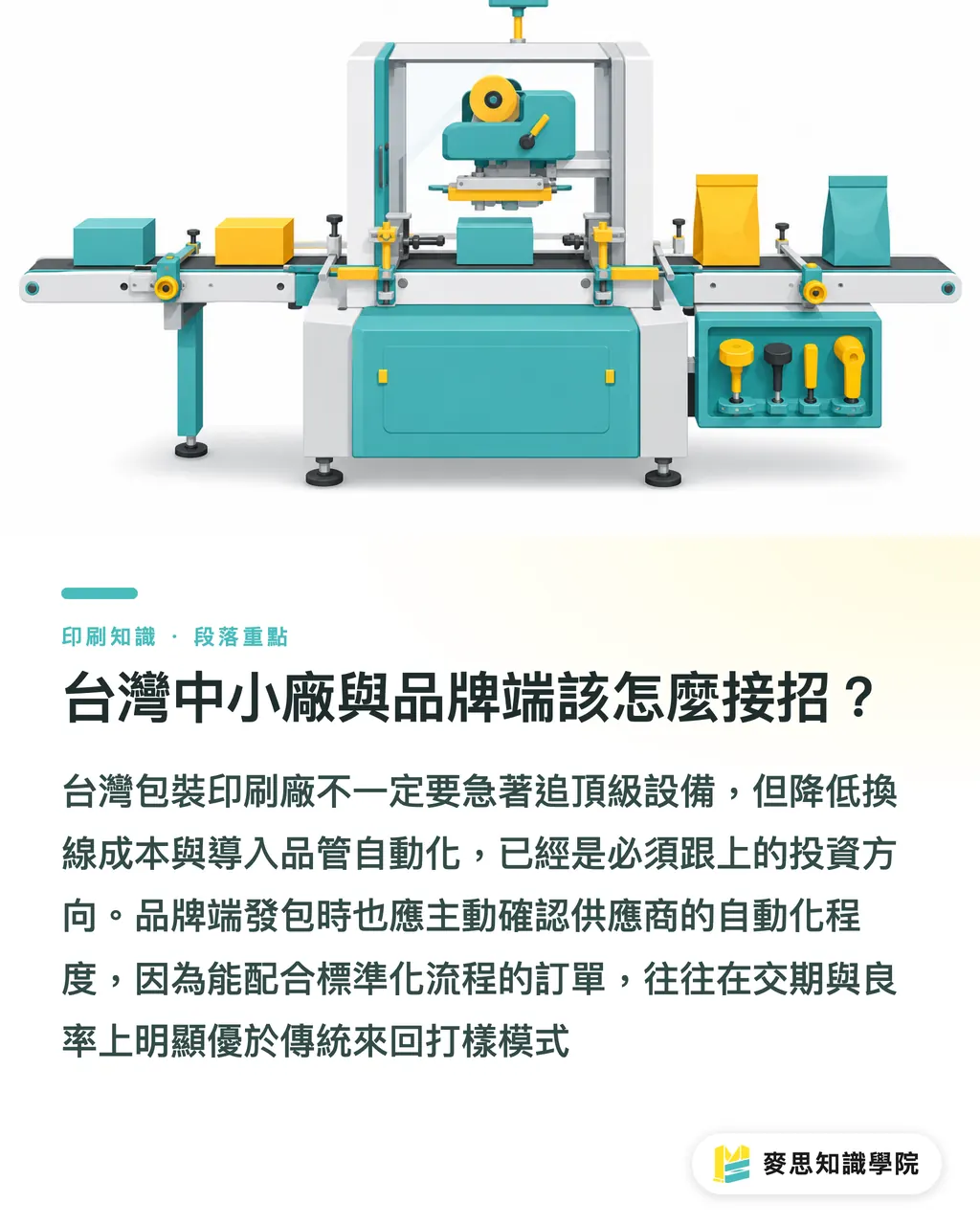
Buying a top-tier six-color press is a stretch for most Taiwan carton printers, but shorter changeovers and automated QC are non-negotiable bets
Brand owners sourcing packaging should start asking vendors how automated their lines are. That answer decides whether a rush job actually ships on time
Running MINDS's mid- and entry-tier online ordering business (MYS), the pattern is clear: clients built around standardized, automated workflows hit better lead times and yields than the old back-and-forth proofing dance
Spend on whatever cuts your changeover time and your scrap. That pays back faster than chasing the highest top speed on the spec sheet
Key Takeaways
・Under labor pressure, de-skilling the line and adding inline QC is the most direct way for a packaging shop to hold output
・Makeready speed beats absolute print speed. It's the real edge on high-mix, short-run, tight-deadline work
・Cutting human intervention lifts single-shift output and pulls scrap and energy costs down with it
Bigger Picture
What the KennedySmith case really proves: the bar in packaging print has moved from "whose press is fastest" to "whose changeover hurts the least."
When Taiwan's mid-sized carton shops plan their next equipment refresh, the first thing to audit is which step on the floor eats the most veteran know-how, color conversion in prepress, plate alignment on press, or folder-gluer setup downstream
That's also the opening for SaaS and AI vendors. A lightweight vision-inspection or scheduling plug-in that talks to the old iron on the floor will land with a print shop owner a lot harder than another full ERP pitch
Further Reading
FAQ
- A packaging printer is short on people, besides paying more, what else can they do?
- The durable fix is to de-skill from the equipment side. Bring in fully automatic plate-changing and inline quality inspection so the line doesn't live or die by a single senior press operator
- Why does cutting makeready time matter more than the press's top speed?
- Orders are getting smaller and deadlines tighter, so a press might change jobs several times a day. If every changeover burns half an hour and a few hundred sheets of waste, no top speed recovers that hidden cost
- What should brand owners actually look at when picking a packaging supplier?
- Beyond the portfolio, ask one more question: is their color management and QC done by eye, or by an inline system catching errors automatically? The more automated the shop, the safer your rush order
Related articles




The Print × AI weekly
The print and AI know-how designers, brands and enterprises can use before they commit — one email, every week
MINDS Free Tools
AI background removal, brand stamping, and a LINE sticker maker — free design tools, right in your browser, no upload.
MINDS Group
Need actual printing or gifting services?
From premium printing to online ordering and festive gifts — the MINDS Group sister brands take it from here.