
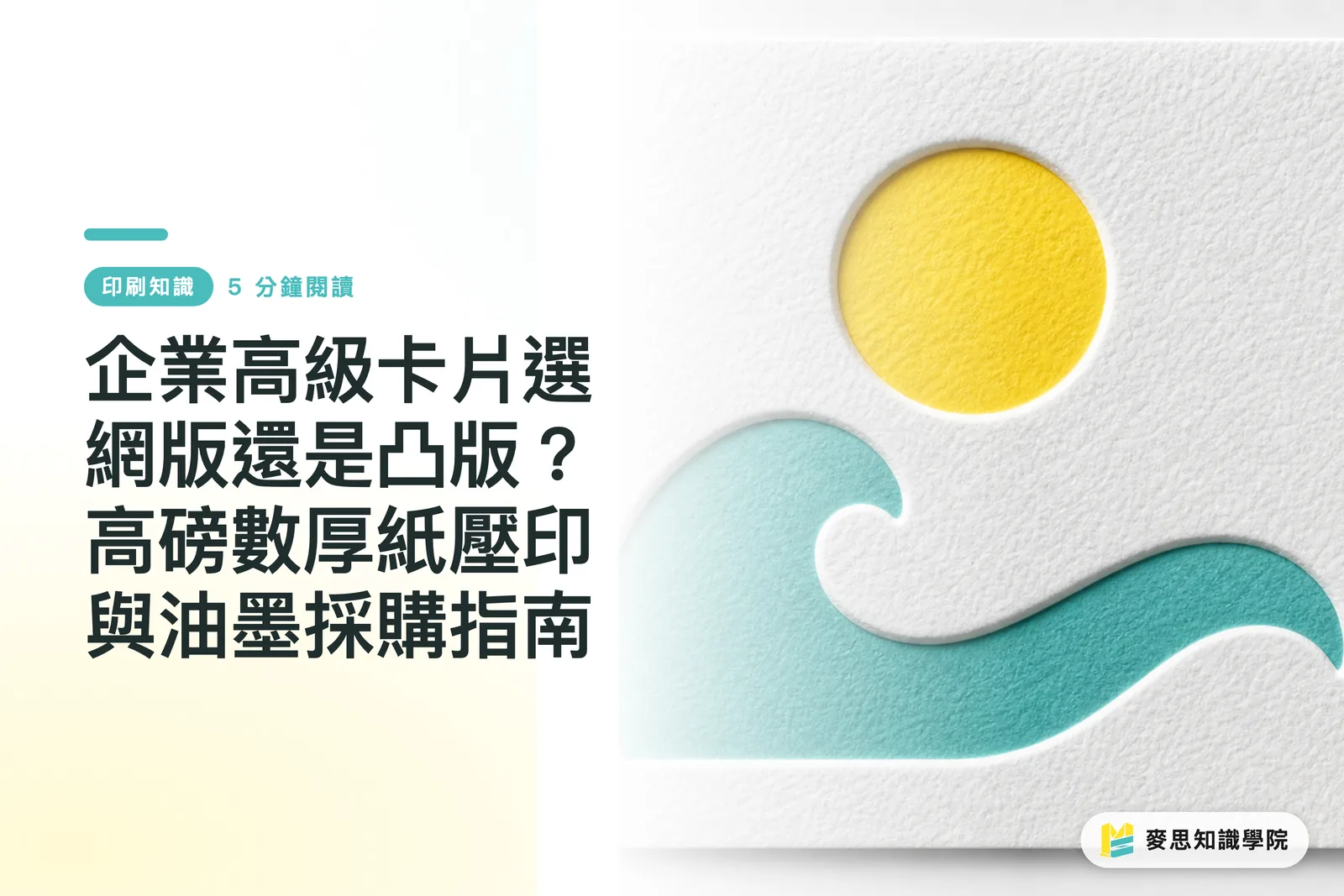
Should heavyweight business cards use screen printing or letterpress?
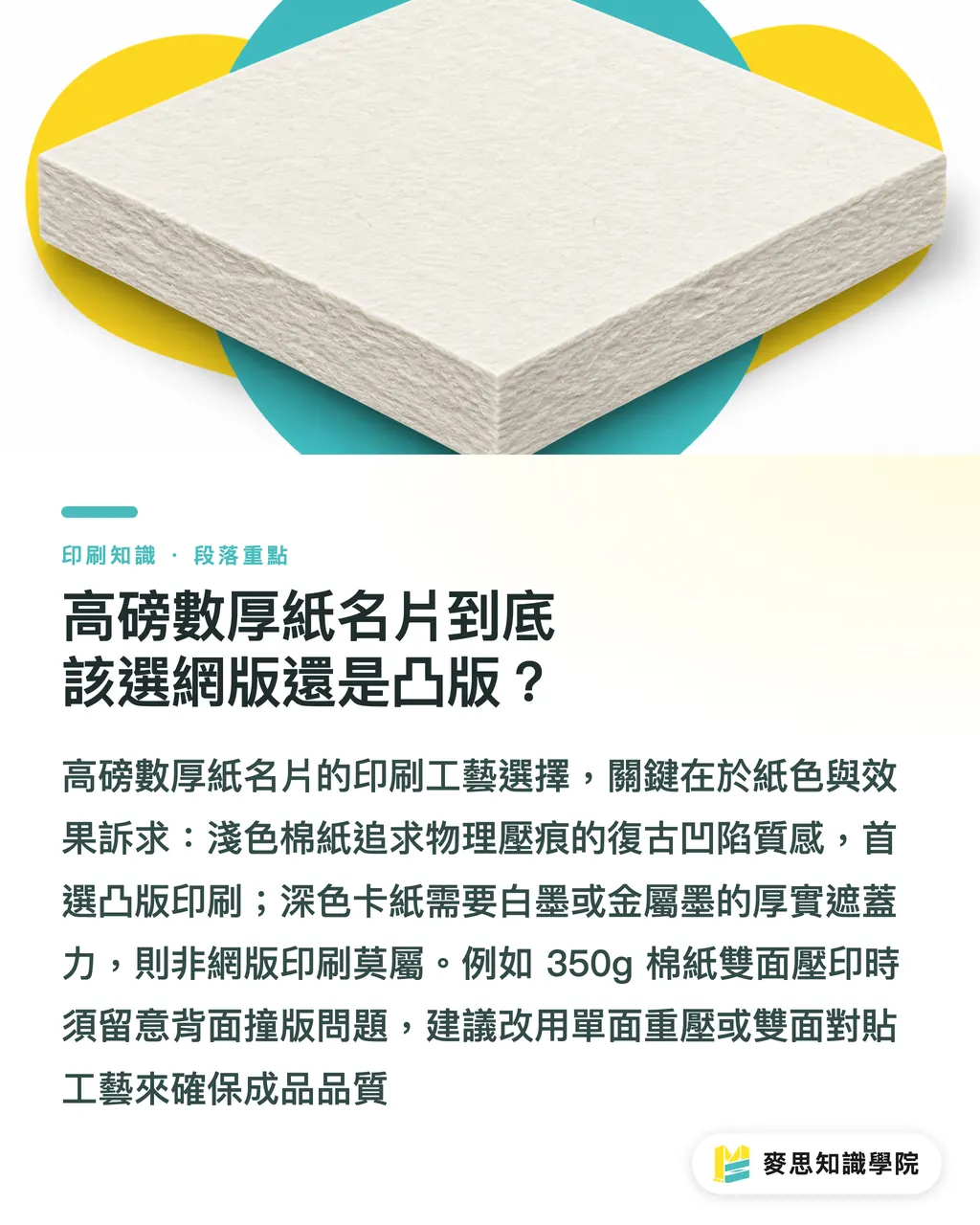
When producing premium cards on heavyweight cotton paper or specialty paper above 350g, the choice between screen printing and letterpress mainly depends on paper color and whether a real impressed texture is needed. For pale cotton paper with a physically pressed, vintage ink mark, letterpress is the first choice. For white ink or metallic ink on dark card stock, screen printing is essential because of its extremely high ink opacity. When planning mid-to-high-end business cards, companies can make a quick decision through the "MINDS (MS, mid-to-high-end fully custom commercial printing) three-gate print submission check" from MINDS:
・① Paper color and ink color: choose screen printing for bright ink or white ink on dark card stock, and letterpress for a real physical impression on pale cotton paper
・② Paper weight and double-sided printing: double-sided impressions on cotton paper above 350g require attention to show-through impact marks on the back. Switch to heavy pressure on one side or duplex mounting
・③ Cost and capacity: choose zinc or steel letterpress plates for small refined runs and fine text. Choose screen printing for special materials and luminous heavy ink
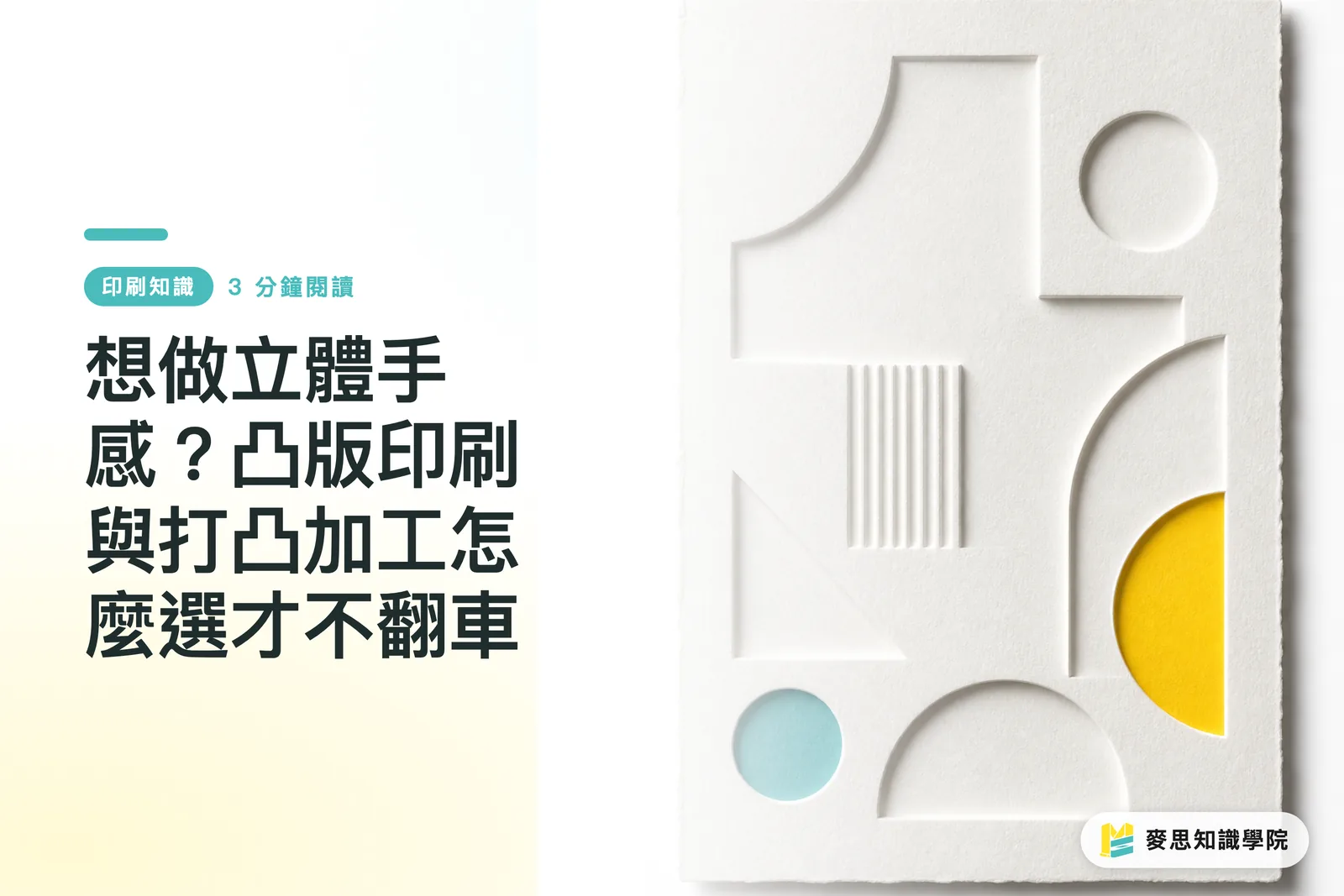
Letterpress uses a raised plate to apply physical pressure and transfer ink onto the paper. It creates a calm, sunken texture and vintage ink marks on heavyweight cotton paper, making it especially suitable for lines and text on one-sided cards or thick stock
Screen Printing pushes ink through mesh openings onto the substrate with a squeegee. It creates a very thick ink layer and strong opacity, making it the preferred process for solid white ink or metallic ink with a substantial feel on dark card stock
The two processes have completely different physical foundations in terms of craft behavior and material compatibility:
・Letterpress: suitable for 350g and 600g soft cotton paper and pale card stock. The ink layer is thinner, but the impressed feel is excellent, and fine-line detail can be extremely delicate
・Screen Printing: suitable for dark card stock, acrylic, metal, or thick cards. The ink layer can reach 30-50 microns. There is no indentation, but the raised ink feel and opacity are strong
Look at the paper color
How should letterpress pressure be controlled, and how do you avoid plate-collision problems?
The appeal of letterpress comes from the physical meeting point of pressure, plate material, and paper fibers. When a raised plate presses into soft cotton paper above 350g, the paper fibers are compressed and deformed while locking in the ink, forming a dimensional impression with a subtle shadow
This process is highly sensitive to final artwork and physical limits. Production lines often run into three major problems:
・Broken hairlines: ultra-fine lines below 0.2pt can deform or break under heavy pressure because the plate does not receive force evenly
・Filled-in small type: if tiny text below 8pt carries too much ink, heavy physical pressure will push the ink outward and cause counters and gaps to stick together
・Double-sided impression collision: when heavy pressure is applied on both sides of paper around 350g, the front-side indentation can directly damage the printed graphics and text on the back
To avoid double-sided plate collision, experienced press operators usually recommend heavyweight card stock above 500g, or duplex mounting: print one side of each of two 300g sheets first, then mount them together. This keeps the deep pressed feel on both front and back without causing the graphics and text to collide or deform
Simple as that
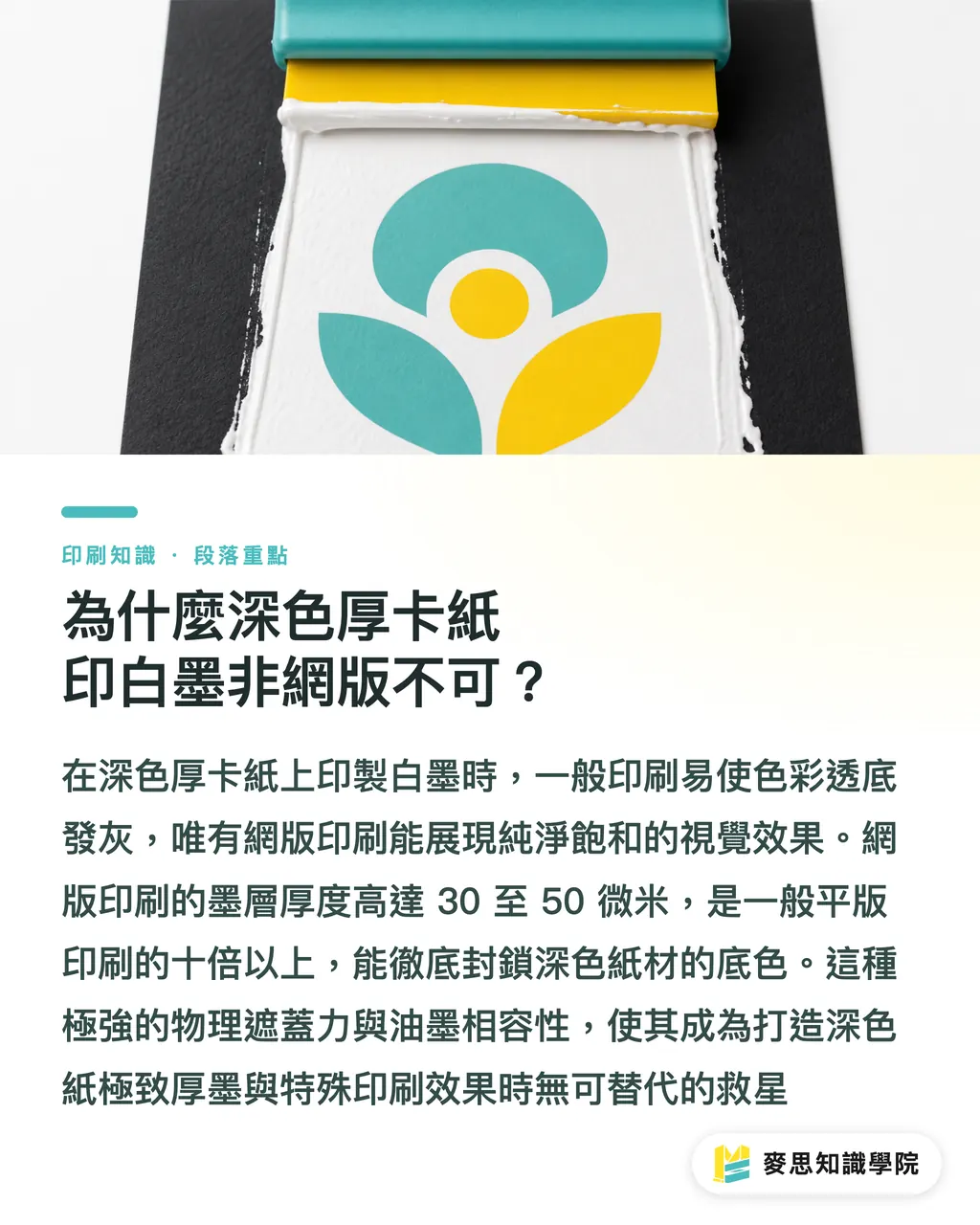
Why is screen printing the only real choice for white ink on dark thick card stock?
When a designer specifies 400g black card stock for corporate invitations or premium business cards, white ink printed by offset or digital methods is often swallowed by the base paper color and turns grayish white. In this situation, screen printing is the only thing that saves the result
Screen printing relies on mesh openings and squeegee pressure to push ink onto the paper surface. Its ink layer can reach 30-50 microns, more than ten times the 2-3 micron layer of standard offset printing. This extremely thick coating power can fully block the base color of dark paper
Screen printing has clear production advantages for specialty printed pieces:
・Opacity on dark paper: pure white ink, bright yellow ink, or metallic silver ink printed on black or dark blue thick card stock stays saturated without the base showing through
・Special ink compatibility: it can easily carry luminous ink, spot thick-feel UV, matte ink, and metallic-powder ink
・Adhesion to special materials: beyond heavyweight paper, it also adheres beautifully to nonporous substrates such as acrylic, metal nameplates, and glass
For small basic business card needs with a budget focus, online retail options from Mai Printing are also worth considering. But when the job involves extreme heavy ink on dark paper and custom specialty inks, the physical advantage of screen printing cannot be replaced
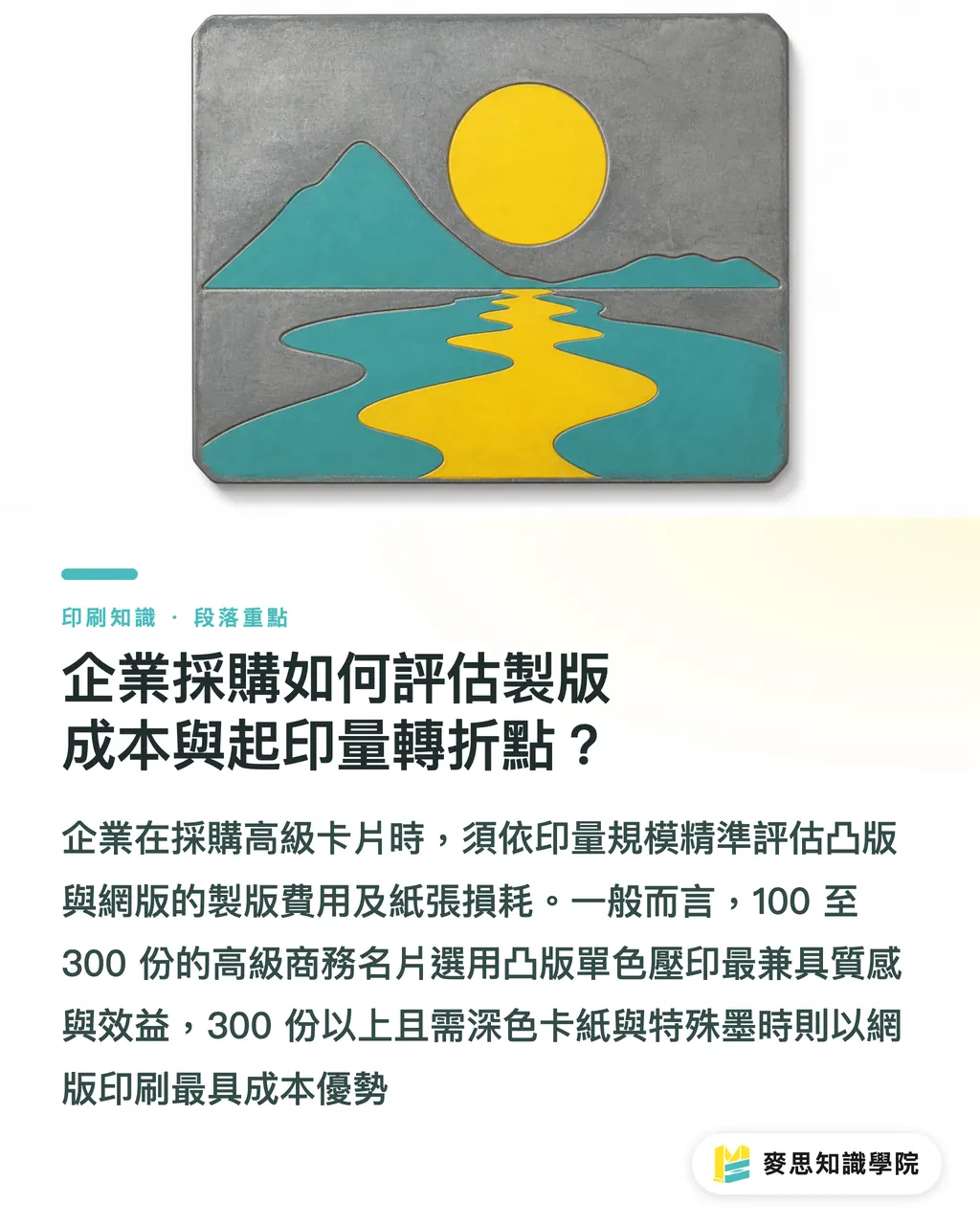
How should corporate buyers evaluate plate costs and order-volume breakpoints?
When companies make purchasing decisions for premium business cards and cards, they need to clarify not only the visual and tactile requirements, but also the plate-making cost structure and run-size logic behind letterpress and screen printing
Letterpress mainly uses zinc plates or steel plates. Zinc plates are faster to make and cost less, making them suitable for medium-to-short runs within 500 copies. Steel plates have high pressure resistance and excellent detail retention, making them suitable for long-run branded cards above 2000 copies
Screen printing requires photosensitive screens. Setup cost increases by number of colors. Single-color screen setup is relatively manageable, but multicolor registration raises the upfront plate cost. The usual order-volume breakpoint falls between 300 and 500 copies
Key points for comparing procurement cost and process fit:
・Plate-making cost: letterpress zinc and steel plates are priced by area and material. Screen printing setup is priced by color count and mesh specifications
・Order-volume breakpoint: for 100-300 premium business cards, single-color letterpress gives the strongest texture and value. For specialty inks on dark card stock above 300 copies, screen printing becomes more cost-efficient
・Production waste: heavyweight cotton paper and specialty paper are expensive per sheet. For letterpress pressure setup, reserve about 15% to 20% extra paper stock
That is enough
Key Takeaways
・Choose letterpress for a real impressed feel on pale 350g cotton paper. Choose screen printing for saturated white ink and metallic ink on dark thick card stock
・Letterpress artwork should avoid lines below 0.2pt and small text below 8pt. For double-sided heavy impressions, upgrade to 500g thickness or use duplex mounting
・Screen printing creates an ink layer as thick as 30-50 microns, more than ten times the opacity of offset printing. It is the clear first choice for specialty inks and dark paper materials
・For 100-300 copies, single-color letterpress delivers the best value for premium business cards. For multicolor dark-paper specialty jobs above 300 copies, screen setup is the better buy
Further Thinking
From the standpoint of print manufacturing and design outsourcing, the texture of heavyweight specialty paper is not about how complex the process is. It comes down to whether the ink, pressure, and paper fibers match properly. When AI-assisted prepress checking is introduced in the future, line-width limits, font size, and paper weight should be automatically cross-checked so designers can accurately predict plate-collision and ink-fill risks before sending files out, sharply reducing the trial-and-error cost of press setup
Further Reading
FAQ
- Why does double-sided letterpress on cotton business cards above 350g easily cause the two sides to collide?
- Because 350g cotton paper has limited thickness. Heavy physical pressure pushes the paper fibers at the front-side indentation, which can damage the text and graphics already impressed on the back. Upgrading to heavyweight paper above 500g or using duplex mounting is recommended
- Why does white ink on dark card stock look grayish in offset printing, while screen printing can make it pure white?
- Offset printing has an ink layer of only 2-3 microns, so the dark paper base can easily show through. Screen printing creates a 30-50 micron ink layer with extremely high coating opacity, allowing it to fully cover the dark background
- When using letterpress for premium cards, how should buyers choose between zinc plates and steel plates?
- Zinc plates cost less to make and have a faster turnaround, making them suitable for small-to-medium premium business card runs within 500 copies. Steel plates withstand higher pressure and hold extremely fine lines, making them suitable for large branded print runs above 2000 copies
- How is the plate-making cost for screen printing calculated?
- Screen printing creates separate photosensitive screens according to the number of colors. More colors mean higher plate costs. For the best purchasing value, keeping the design within 1 to 2 colors is recommended
Related articles
The Print × AI weekly
The print and AI know-how designers, brands and enterprises can use before they commit — one email, every week
MINDS Free Tools
Spine width and imposition calculators — skip the manual math, free in your browser.
MINDS Group
Need actual printing or gifting services?
From premium printing to online ordering and festive gifts — the MINDS Group sister brands take it from here.