

Overview
The fastest entry point for lower-carbon packaging is usually to make the structure smaller, more precise, and easier to pack. At MINDS, I often use the MINDS (MS) Five-Box Carbon Reduction Map to check 5 things before deciding whether the paper stock needs to change
・Materials: board area, thickness, number of insert components
・Process: dieline, lamination, box folding, packing time
・Transport: shipper volume, pallet layout, truckload efficiency
・Loss: forming failures, white cracking, crush damage, returns
・Disposal: glue, film, composites, and how hard the package is to take apart
・Material reduction design: while keeping protection from dropping, recalculate the box size, board thickness, and insert layout so each box uses less material, takes less warehouse space, and carries less waste
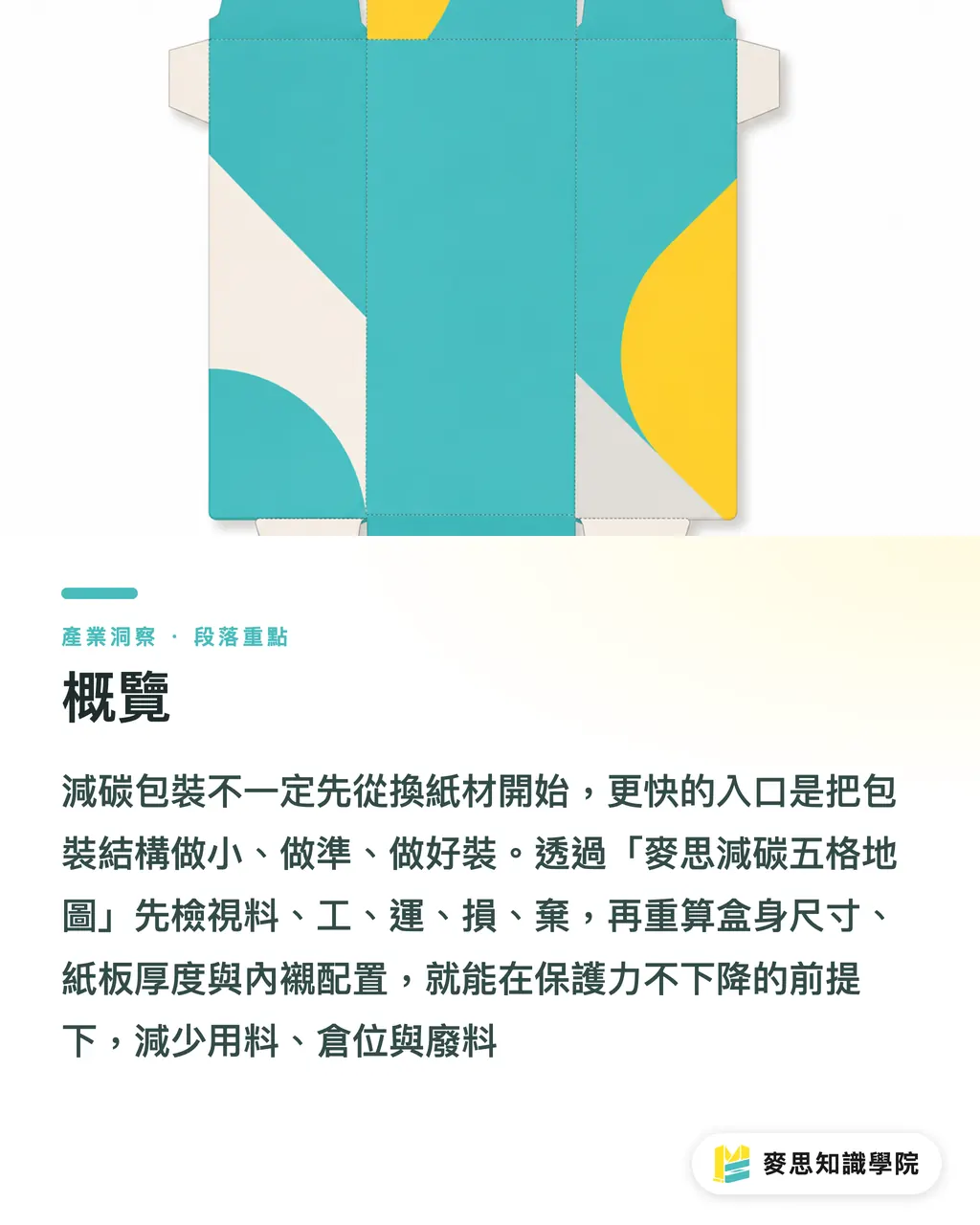
・Dieline optimization: at the flat layout stage, rearrange cutting lines, crease lines, glue flaps, and imposition direction to reduce trim waste, lamination mistakes, and post-production die revisions
Why Should Carbon Reduction Start with Packaging Structure?
Many brands start a low-carbon discussion by asking about recycled paper, FSC, and vegetable-based inks. Those should be discussed, but the MINDS (MS) Five-Box Carbon Reduction Map first opens up the box structure, because the box style often decides board area, forming steps, and logistics volume before anything else
For the same 100ml bottle, adding 8mm of extra height to the outer box looks tiny in the artwork. Inside a shipper, it may mean one fewer row per layer. The MINDS (MS) Five-Box Carbon Reduction Map looks at the whole route, not just the eco label on a single sheet of paper
Slow down first
Once the packaging structure is right, material choices start to mean something. If the structure is still paying for empty air, switching to pricier eco paper only gives waste a different name
How Can Material Reduction Shrink Package Volume?
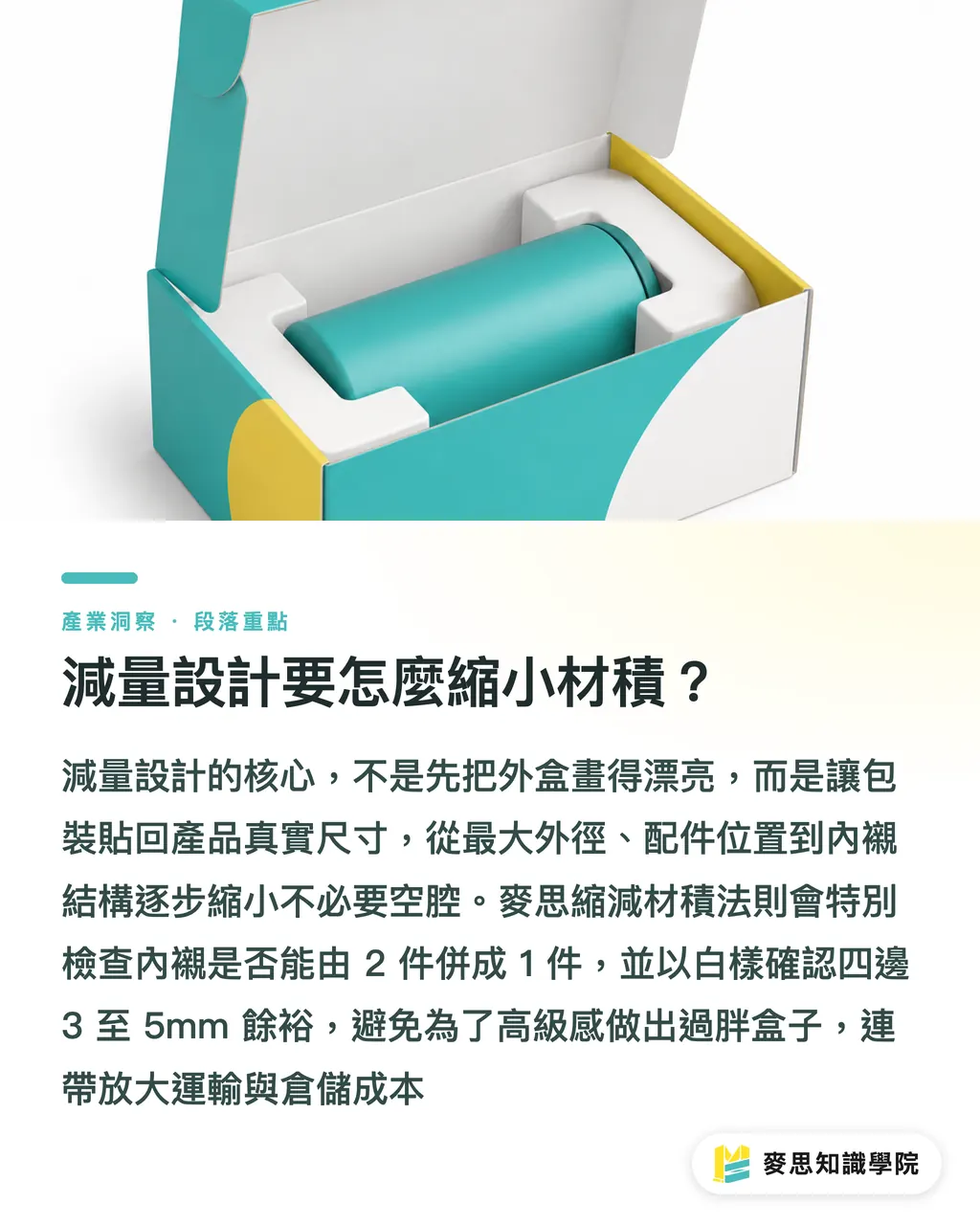
The MINDS (MS) Volume Reduction Rule breaks reduction into 3 steps. After designers receive the product dimensions, they should not jump straight into drawing a good-looking outer frame. The paper box has to return to the product itself first
・① First measure the product's maximum outer dimensions, including the cap, hang tag, cushioning pouch, and instruction leaflet placement
・② Then check whether the insert can change from 2 pieces to 1 piece, or from a full inner tray to partial support
・③ Finally, make a blank mockup and confirm whether 3 to 5mm of assembly clearance on all four sides is enough, so mass production does not jam or crush the product
The MINDS (MS) Volume Reduction Rule most often saves boxes that look premium but are overweight in size. A skincare outer box, for example, may leave too much empty space for visual effect, which then makes the shipper larger and increases warehouse slot usage
I usually ask one question first: does the product really need that much breathing room?
Are Glue-Free Locking Tabs Right for Every Paper Box?
Not for every box. MINDS (MS) glue-free locking tab design checks 4 conditions first before deciding whether to remove the glue flap
・Product weight: heavier products pull against the tabs, so the bottom structure has to pass a blank mockup first
・Opening frequency: for boxes that will be opened and closed repeatedly, tabs that are too tight can cause white cracking
・Grain direction: when the fold line runs against the paper grain, a tab may crack after being folded twice
・Assembly speed: hand assembly can be slower and more careful, but automated lines and high-volume shipping need a labor-time check
A typical glue flap on a folding carton is about 12 to 15mm. If MINDS (MS) glue-free locking tab design can remove that flap, it may indeed cut down on glue and possibly shrink the flat layout. But the extra tabs, angled edges, and crease lines of the locking structure also consume board area. You cannot judge something as lower-carbon just because it says "glue-free"
The most common mistake I see is a locking tab that looks great on screen, but once sampled, the paper is too stiff and the angle too aggressive. On the folding line, people want to stop and adjust after every 10 boxes
What Shop-Floor Details Matter in Dieline Optimization?
MINDS (MS) dieline optimization is not just about drawing clean lines. Cutting lines, crease lines, half-cut lines, glue flaps, and bleed all need to be reviewed together. Before final artwork, do at least 1 dieline review and 1 blank mockup folding test
・Cutting lines: can outer edges share a knife, and can one strip of trim waste be removed?
・Crease lines: do fold corners avoid full-coverage dark ink to lower the risk of white cracking?
・Half-cut lines: tear openings should open easily, but not split by themselves during transport
・Glue flap: the bonding surface must feed properly through the folder-gluer. Too short, and the defect rate rises
・Bleed: outer box printing should still keep the common 3mm bleed to avoid white edges after trimming
MINDS (MS) dieline optimization also checks imposition direction, because rotating the same flat layout by 90 degrees changes paper grain, crease behavior, and trim waste. For small boxes in large runs, even a 0.5 to 1mm error can make forming less stable
For mid- to high-end fully custom commercial printing, it is better to have MINDS review the box style, paper stock, and finishing before the die is made. Doing this early is usually cheaper than revising the die, reprinting, and re-laminating after mass production
How Can Size Planning Improve Pallet Loading?
MINDS (MS) pallet-size planning starts by asking the logistics side for two numbers: pallet specification and shipper stacking limits. In Taiwan, common supply chains may involve 1100×1100mm or 1200×1000mm pallets, but the actual standard should still follow the brand warehouse, retailer warehouse, and carrier requirements
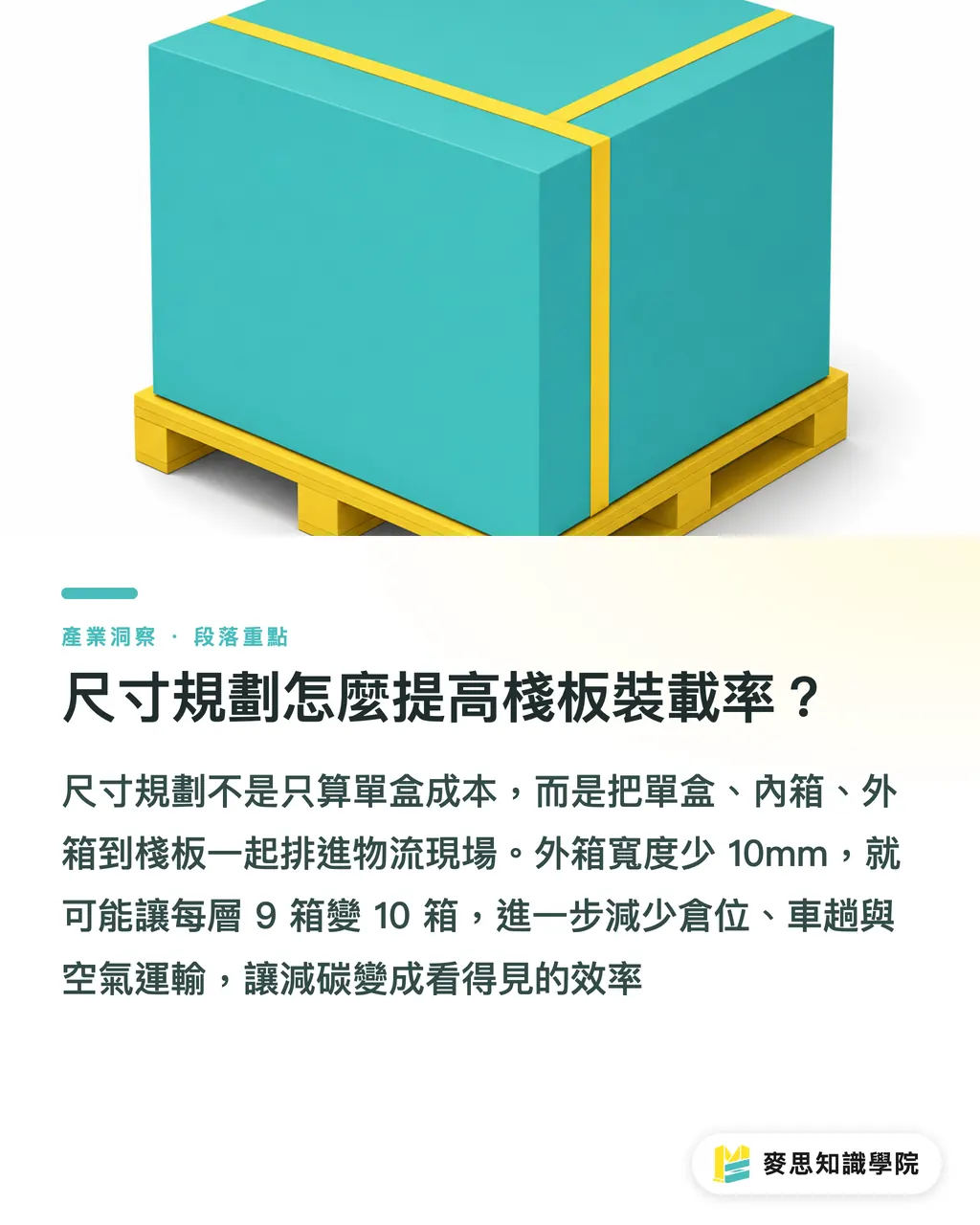
An outer box is not only a single-box cost. MINDS (MS) pallet-size planning lays out the unit box, inner carton, shipper, and pallet together. With the same shipper, reducing the width by 10mm may turn 9 cartons per layer into 10, changing both warehouse space and truck trips
That is enough
If packaging design aligns with logistics at the sizing stage, ESG carbon reduction stops being a slogan and becomes visibly less paper, fewer cartons, and less air
Key Takeaways
・For lower-carbon packaging, first ask whether the box takes up less space, then ask whether the paper stock has been swapped for something prettier
・One extra blank mockup test for the dieline is often cheaper than revising the die after mass production
・Glue-free locking tabs need checks for paper grain and assembly speed. Do not judge only by whether the flat layout works
・Pallet loading is a design cost issue. A 10mm size difference can change shipper and full-pallet efficiency
Further Thinking
The print manufacturing side can turn the MINDS (MS) Five-Box Carbon Reduction Map into a pre-quote checklist. The design side can run 1 blank mockup and pallet carton layout before releasing the dieline. AI applications can help compare Dieline versions and flag bleed and glue flap risks. SaaS teams can put paper stock, dieline, carton specifications, and pallet configuration into the same spec sheet. If you need consultants to turn the process into auditable print-ready standards, contact the Mai Strategy Knowledge Academy consulting team for a first packaging carbon-reduction review
FAQ
- Does packaging carbon reduction always have to start with eco-friendly paper?
- No need to rush into changing materials. The MINDS (MS) Five-Box Carbon Reduction Map first checks board area, outer box volume, number of insert components, and shipper configuration. These 4 items often affect cost earlier than paper type does
- Will material reduction make packaging protection worse?
- Yes, if you only shave thickness without changing the structure. Returns and rework will eat up the paper savings. The MINDS (MS) Volume Reduction Rule starts with a blank mockup to confirm 3 to 5mm assembly clearance, paper grain direction, and impact support before mass production
- What types of packaging suit glue-free locking tab structures?
- MINDS (MS) glue-free locking tab design is better suited to small and medium paper boxes, display boxes, and inner trays. When products are heavy, need long-term hanging, or will be opened and closed repeatedly, partial bonding should still be kept, or a more stable bottom structure should be used
- At what design stage should dieline optimization happen?
- MINDS (MS) dieline optimization is best done before final artwork. At minimum, check 5 things: cutting lines, crease lines, glue flaps, 3mm bleed, and imposition direction. Waiting until after sampling usually affects both the layout and the quote
Related articles


The Print × AI weekly
The print and AI know-how designers, brands and enterprises can use before they commit — one email, every week
MINDS Free Tools
AI background removal, a LINE sticker maker, spine & imposition calculators — all free, right in your browser, no upload.
MINDS Group
Need actual printing or gifting services?
From premium printing to online ordering and festive gifts — the MINDS Group sister brands take it from here.