
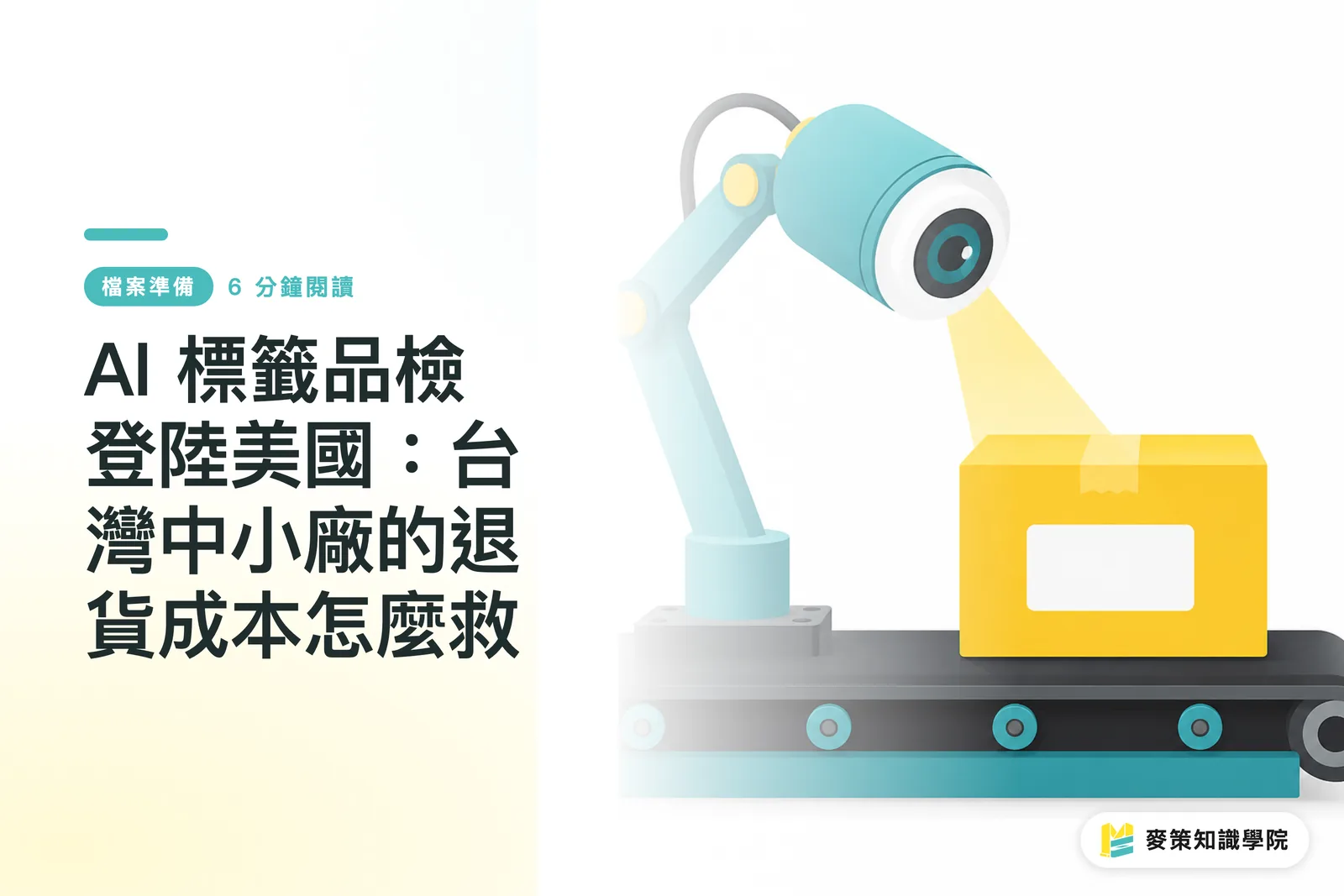
What Exactly Is AI Label Inspection, and How Does It Compare to Manual Visual Checks?
AI automated label inspection uses high-speed cameras paired with machine learning models to compare every single label against a golden master in real time on the production line. Common defects it catches include color registration shift, missing print, hickeys, die-cut ink bleeding, broken characters, and barcode readability. A good system is judged by whether its false-negative and false-positive rates are more consistent than human eyes, not by how flashy the AI sounds
Compared to manual inspection, the difference comes down to three things. First is speed: running at 100 meters per minute is standard on the line, and human eyes simply cannot keep up. Second is consistency: night shifts, fatigue, and mood all swing human pass-fail calls. Third is traceability: every rejected label leaves behind an image record and a defect category tag, which gives you rock-solid proof whenever a customer disputes quality
Lucid Imaging entered the US market on August 17, 2026, targeting this exact gap in automated inspection. For small and mid-sized Taiwanese label plants, the takeaway here is not about a specific brand. It is that automated inspection is rapidly becoming standard equipment across mainstream Western label supply chains

Why Small and Mid-Sized Taiwanese Label Plants Need to Look at This Right Now
Most Taiwanese label converters have between 10 and 50 workers, mainly taking short-to-medium-run orders for cosmetics, food, wine labels, and industrial tags. These jobs feature high SKU counts, frequent plate changes, and tight color tolerances, making them the exact battleground where manual checks fail most often. Looking at client return reasons over the past few years, color registration shifts and dirty spots consistently rank in the top three, driven by night shifts, operator skill gaps, and rushed deadlines
Do the math on return costs: rejecting a batch of labels is never just about reprinting the paper. When you add up reprinted ink, press time, shipping, and damaged credibility, the total cost often runs 2 to 3 times the raw material cost. The real value of AI inspection is not saving one inspector's wage. It is catching bad labels right on the press instead of waiting for a full shipment to get rejected at the client's door. That is where you stop margin bleeding
Western markets have far lower tolerance for label flaws than Taiwan, especially in cosmetics and food. Once a client's foreign brand headquarters gets a single complaint, factory audits get ten times tighter. The right moment to adopt automated inspection usually is not when the line breaks down. It hits when sales tries to win export orders or faces a factory audit, only to realize there are no traceable quality records to show
How Does AI Visual Inspection Work, and Where Does It Get Stuck on the Floor?
The basic workflow of AI visual inspection is camera capture -> model comparison -> defect rejection -> image archiving. The backbone is a convolutional neural network (CNN, an image recognition model mimicking the human visual cortex) trained on defect patterns. With every run and every newly tagged NG sample, the model gets slightly sharper. Systems like Lucid usually come with pre-trained models for common flaws, allowing plant quality managers to fine-tune them using their own NG samples. That fine-tuning step is what makes the model actually work on your specific line
On the shop floor, three bottlenecks pop up most often:
・Lighting: Label substrates include transparent, translucent, metallized, and paper stocks. If lighting is off, the camera sees defects everywhere
・Job changeovers: Retraining the model for every new SKU is every plant's nightmare. A solid system keeps changeover setup under 10 minutes
・Maintenance: Dirty lenses, line vibrations, and ink fumes cause model accuracy to drift over time, requiring regular recalibration
To put it bluntly, AI inspection does not just work out of the box. It is a three-part engineering commitment: install it, train it, and maintain it. Plants most often neglect the third part. Leave it alone for two years, and the model degrades right back to the level of manual visual inspection

Should Taiwanese Plants Jump In? Answer These Three Questions First
Before rushing to ask about price tags, follow a clear decision framework. First, how much margin do returns and rework eat up each year? Lay out the numbers: if annual return losses come close to or exceed the investment of one inspection line, you have your answer. Second, do your main clients require traceable inspection logs? Export orders in cosmetics and food almost always ask for this, and getting by on Excel sheets will not hold up for long. Third, what is your changeover frequency and SKU complexity? If job changes are too frequent and SKUs are overly messy, you need to clean up your printing process and plate management first so the AI has clean images to learn from
If your answers point to serious return pain, export pressure, and out-of-control SKU complexity, you can move forward with vendor discussions. There are plenty of automated inspection options on the market, ranging from pure computer vision to AI optical sorting. When picking a vendor, do not just look at accuracy claims. Check changeover setup time, local after-sales support, and whether defect classification reports integrate with your ERP. Those three factors decide whether the system ends up abandoned
To make it stick, I often share a three-checkpoint rule I use with clients: Mai Strategy's Three Gates to Press. Gate 1: translate the true costs of returns and rework into hard numbers. Gate 2: pick one flagship SKU for a two-week POC (Proof of Concept) test to test the waters. Gate 3: verify whether reports flow into your ERP and whether you can draft clear changeover SOPs (Standard Operating Procedures). Only when all three gates clear should you roll it out across the entire line

Key Takeaways
・AI label inspection saves actual profit margins lost to returns and rework, not just an inspector's salary
・Plants with frequent changeovers and messy SKUs must clean up their print floor first before the AI can learn properly
・Traceable visual inspection logs are hard currency for winning export orders and passing client audits
・The right rollout sequence is tallying return costs -> POC testing -> locking down SOPs, not expecting plug-and-play perfection
Deeper Perspectives
From the print manufacturing side, the immediate dividend of this AI inspection wave will go to mid-to-high-end label converters, because their clients already treat this as an audit requirement for export jobs. What small and mid-sized plants need to do right now is not throw money at hardware. They need to get clear accounting on three fronts: return costs, changeover frequency, and SKU complexity. With those three ledgers in hand, you have the backing to pitch the boss and the hard criteria to pick the right solution instead of getting led around by sales pitches
From the design and prepress side, AI inspection will force file quality up another notch. When a production line can catch a 0.1 mm registration shift in under a second, bleed margins, trapping (tiny overlapping borders between adjacent colors to avoid white gaps), and color management on the designer's end must meet stricter standards, because NG samples will get flagged right at prepress. In other words, prepress staff and press operators must start speaking the exact same language about defect tolerances instead of talking past each other
From the AI application and SaaS perspective, label inspection will be the earliest mature niche for AI in printing. Defect samples are quantifiable, ROI can be calculated clearly, and clients have a clear willingness to pay. The next wave will expand into automated quoting, plate change scheduling, and automated prepress artwork checks, all representing different entry points built on the same underlying logic
Further Reading
FAQ
- How much does an AI label inspection system cost?
- Off-the-shelf solutions vary widely, from standalone visual inspection units to full-line AI optical sorting setups, with a broad price range. A common adoption path for small and mid-sized Taiwanese plants is running a POC on a flagship SKU first, then spreading costs through leasing or phased rollouts to avoid overcommitting up front
- Can AI inspection catch 100% of all defects?
- No. No inspection system has a zero-miss rate. In practice, the goal is balancing false-negative and false-positive rates and maintaining that standard consistently. The real strength of AI is that it does not get tired and creates a traceable record, not that it produces zero defects
- Will small and mid-sized Taiwanese label plants get phased out if they do not adopt AI inspection right now?
- Not in the short run, but competing for export orders will become increasingly tough. Audit checklists for cosmetics and food brands already list traceable quality records as a prerequisite, and lacking them will directly cost you orders. Domestic jobs and low-tier orders will see little immediate impact
- How does AI inspection relate to press-side color management (ICC, ISO 12647)?
- They are tightly connected. Whether the colors and shapes seen by AI cameras remain stable depends fundamentally on color management and process standards. If prepress ICC Profiles (device color translation tables for standard color spaces) and press-floor ISO 12647 (international print quality standards) are weak, even the sharpest AI model will drown in noise
- Can designers help reduce the chances of AI inspection rejections before sending files to press?
- Yes. The three most direct steps are leaving sufficient bleed, setting proper trapping, and using the right ICC Profile for color space conversions. AI inspection catches sub-0.1 mm registration shifts and text edge flaws ruthlessly. Getting artwork details right directly cuts down NG rates
Related articles




The Print × AI weekly
The print and AI know-how designers, brands and enterprises can use before they commit — one email, every week
MINDS Free Tools
AI background removal, brand stamping, and a LINE sticker maker — free design tools, right in your browser, no upload.
MINDS Group
Need actual printing or gifting services?
From premium printing to online ordering and festive gifts — the MINDS Group sister brands take it from here.