
Overview
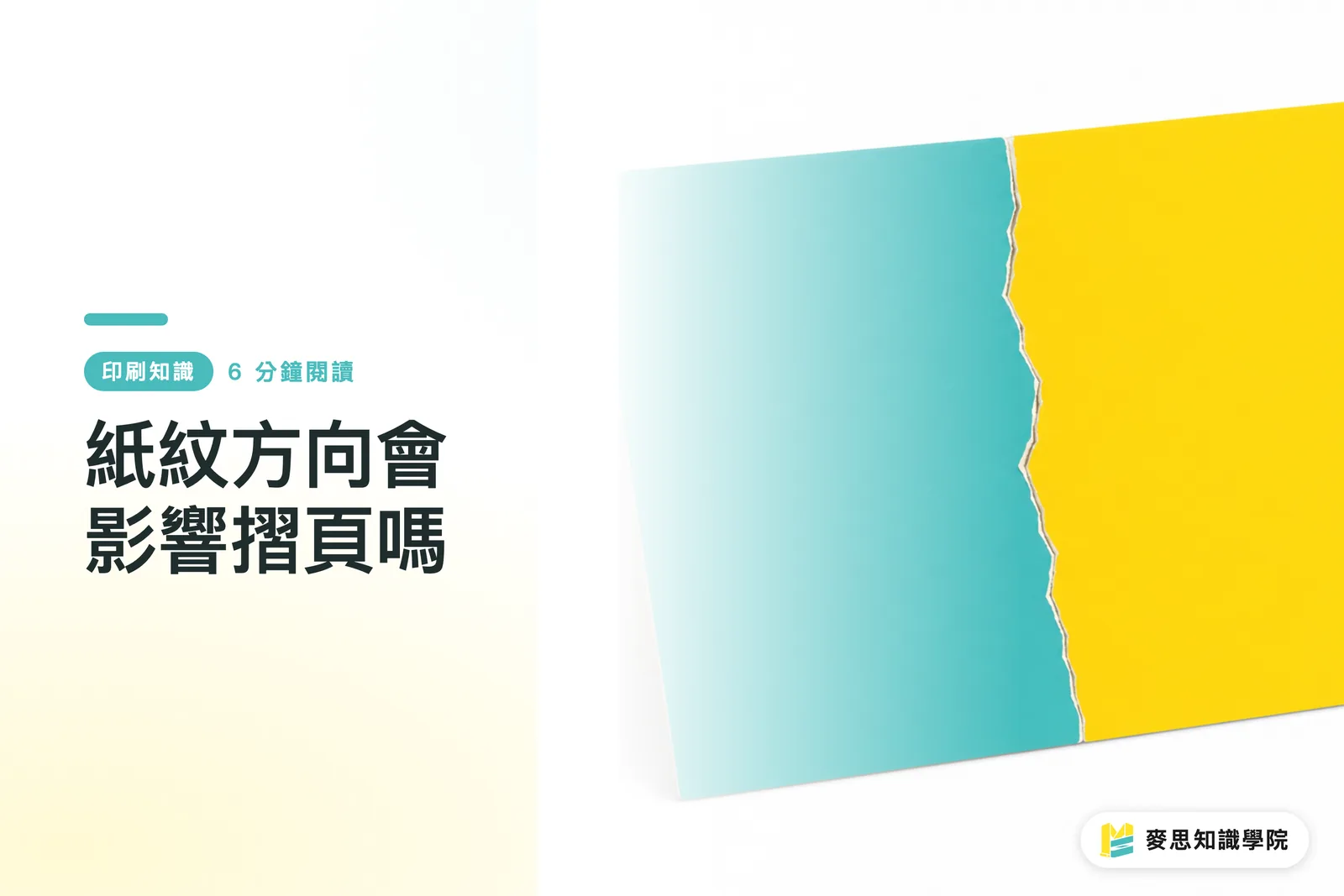
Yes. Paper grain direction is the hidden key to whether a fold works. When MINDS checks folding, covers, and paper box structures, we first look at whether the fold line follows the paper fibers, then decide whether creasing, a size change, or an imposition adjustment is needed
This article uses the most common folding, cover, and paper box cases from the print floor to explain which paper direction details should be checked before final artwork is approved, so you can remove the risk of against-the-grain cracking before the file ever goes to print
What Is Paper Grain Direction?
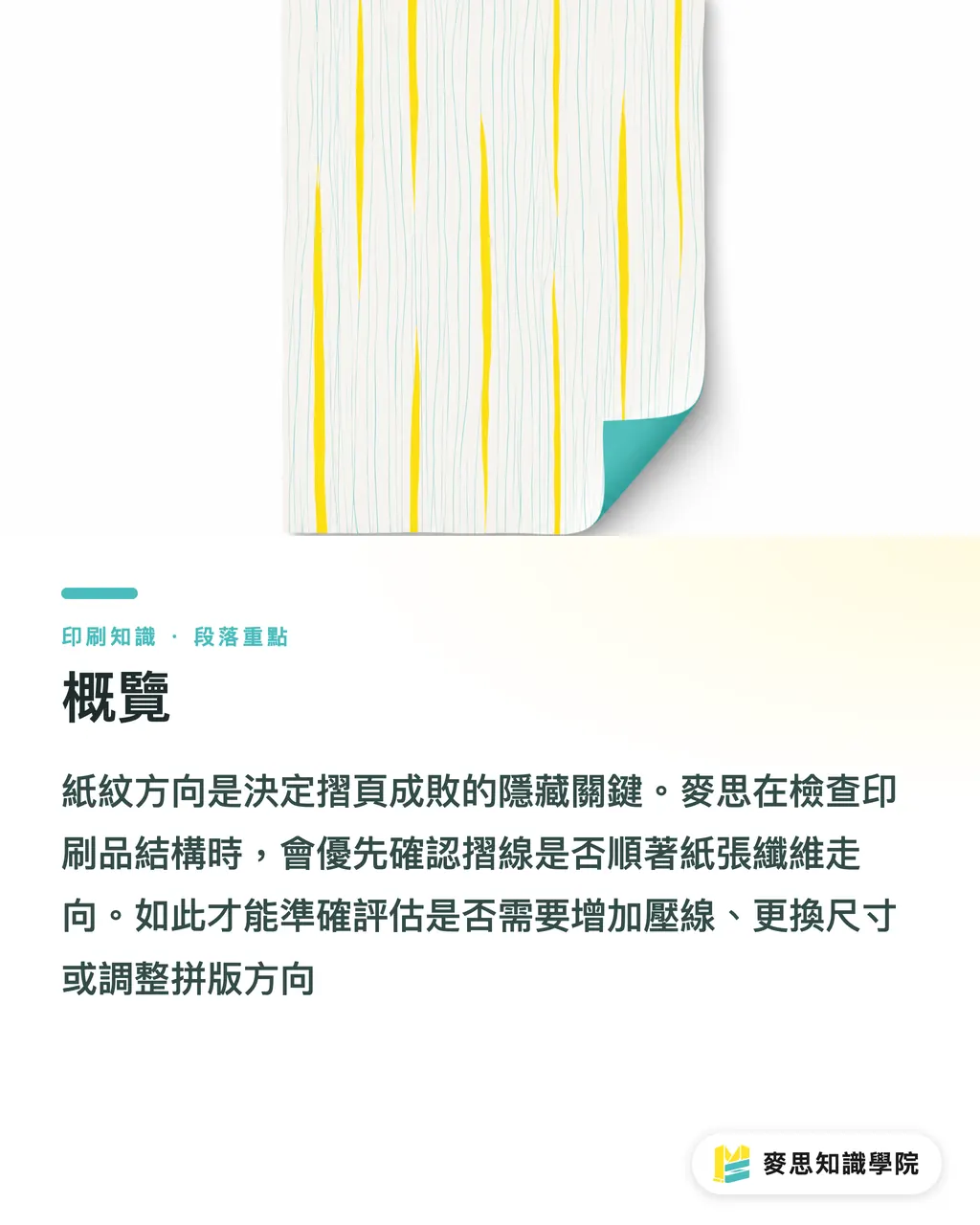
Paper grain direction is the main direction in which paper fibers align during papermaking. On print floors in Taiwan, people often call it "silk flow" or "paper fiber." Folding along the fibers is folding with the grain. Folding across the fibers is folding against the grain. On the same sheet, the folding behavior can change a lot depending on direction
When I check fold cracking on site, the first thing I usually look at is not ink color. I look at whether the fold line is fighting the grain
・With-grain fold: the fold line runs parallel to the fiber direction, so the paper is more willing to bend and the crease is usually smoother
・Against-grain fold: the fold line cuts across the fibers, making the surface easier to pull apart. This is more obvious on heavy paper, dark full-coverage printing, and laminated pieces
・Common trouble spots: fold lines on tri-fold DM pieces, spines on casebound or perfect-bound covers, flaps and main fold lines on paper boxes, and center folds on business cards or invitations
If an A4 DM is printed on thin coated paper, the against-grain issue may not be obvious. But switch to card stock above 250gsm, add a dark background and matte lamination, and the fold line will start telling the truth
Paper has no mouth, but the fold line speaks
Why Do Against-Grain Folds Crack So Easily?
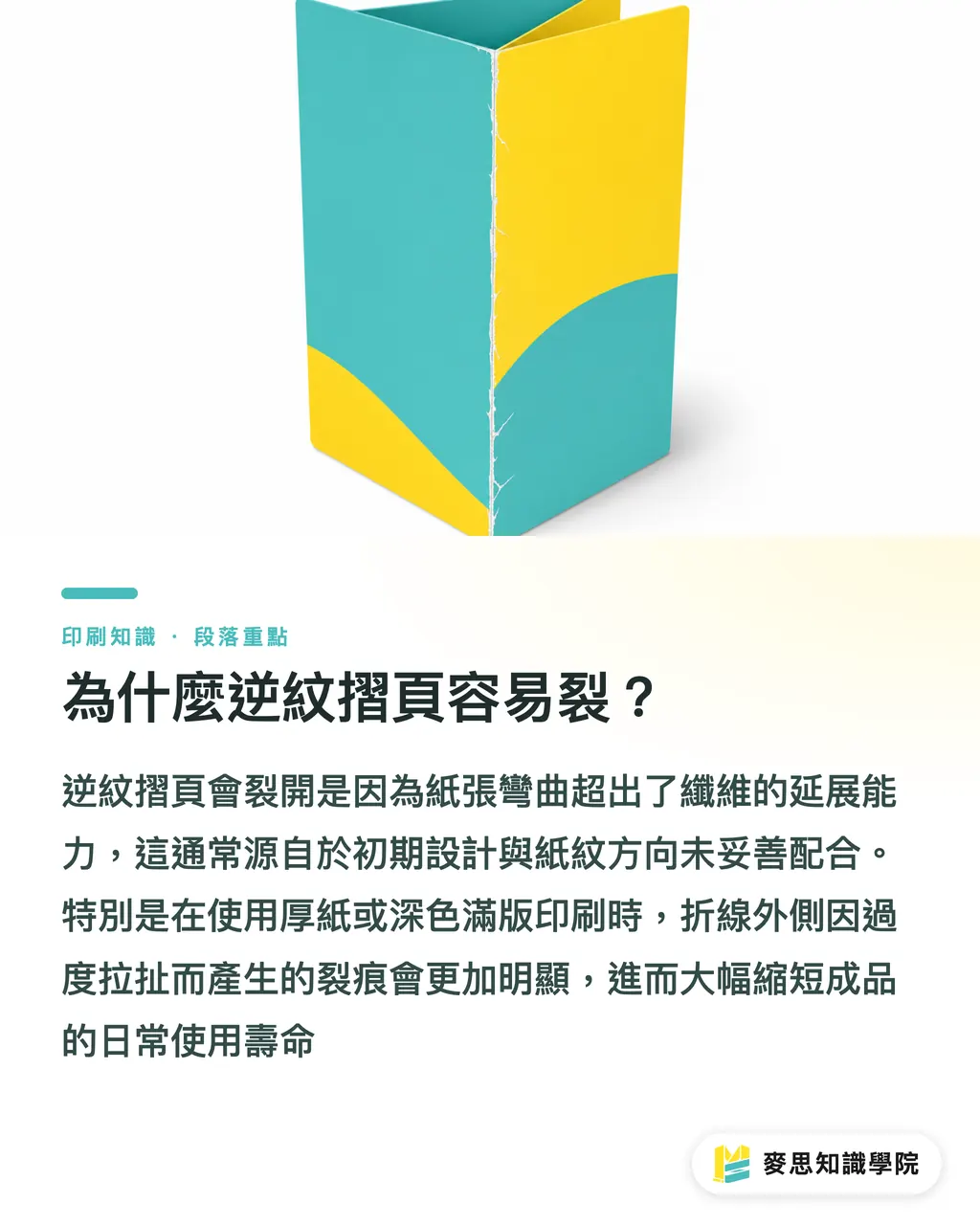
Against-grain folds crack because the paper surface is forced to bend beyond what the fibers can stretch. The outside of the fold is pulled, the inside is compressed, and the ink layer, film layer, and coated surface can all break together
This is not about poor technique from the pressroom operator, and it is not always poor paper mill quality. Much of the time, the design size, grain direction, and finishing sequence were not aligned from the start
・Heavy paper: the thicker the paper, the larger the bending radius, and the more obvious the tension on the outside of the fold
・Dark printing: full-coverage colors such as black, deep blue, dark green, and burgundy show cracks very clearly
・Lamination: matte and gloss films add another layer of material to the surface. When the piece bends, the film and paper surface are pulled at the same time, making cracks easier to see
・Coated paper: coated art paper and matte coated paper have harder surfaces, so heavy paper folded against the grain is more likely to burst than uncoated paper
・Book spines and paper boxes: book spines need to be opened repeatedly, and box fold lines need to take forming pressure. Against-grain folding shortens service life
Take a perfect-bound cover as an example. If the cover spine runs against the grain, the customer may only feel that it is stiff the first time they open it. After 20 or 50 openings, white cracking or film cracking may appear along the spine edge
When MINDS handles higher-end catalogs, brand manuals, and packaging boxes, we check spine direction, main fold lines, and paper grain together, because whether the finished product works well is often hidden inside structures you cannot see
How Should Fold Lines Be Arranged Safely?
Fold lines should ideally follow the paper grain, especially on heavy paper, covers, paper boxes, invitations, and printed pieces that need to open and close repeatedly. If the layout size forces the fold line against the grain, the size, paper stock, creasing, or imposition direction should be adjusted in advance
The three MINDS prepress checks I give designers are simple:
・① Set the structure first: decide the half fold, tri-fold, accordion fold, spine, or box main fold line before the visual layout is finished
・② Ask about grain next: before printing, confirm the parent sheet size, grain direction, and imposition method, because the same finished size may have different cutting options
・③ Add creasing last: for heavy paper, lamination, dark full-coverage printing, or against-grain fold lines, treat creasing as a required process, not an optional extra
The detail designers most often miss is imposition direction. On screen, you see a 210 × 297mm layout. The printer sees how the large sheet will be cut, imposed, run on press, and folded
For the same tri-fold DM, if it is forced into an unfavorable grain direction just to save paper, the fold line may end up running against the grain. What you save is trim waste. What you may lose is fold quality across the whole run
For lower- to mid-priced retail printing in standard sizes, online-order items from Mai Printing usually have fixed sizes and finishing options. Designers should confirm before ordering whether the stock is suitable for heavy-paper folding, instead of leaving every problem to be judged after the finished pieces arrive
When Is Creasing Required?
For heavy-paper folding, laminated folding, dark full-coverage folding, main fold lines on paper boxes, and book cover spines, I would directly recommend creasing. Creasing is not decoration. It gives the paper a controlled path to bend
Creasing uses a die before folding to form a groove in the paper, allowing it to bend along the intended position and reducing the chance that the coated surface, ink layer, and film layer are pulled apart during folding
Creasing helps, but it is not magic
・Card stock above 250gsm: creasing should be assessed first, especially for invitations, menus, sleeves, and card-style folded pieces
・Fold lines after lamination: crease before folding. The harder the film, the less it should be forced to fold raw
・Dark full-coverage areas crossing a fold: consider lightening the color near the fold, avoiding large solid areas, or using creasing to reduce visible white cracking
・Paper box fold lines: main fold lines, flaps, and tabs need to be checked together with the die line and grain direction, not just judged by whether the flat layout looks good
・Against-grain folds that cannot be redesigned: creasing can save part of the problem, but very thick, very stiff, laminated stocks may still crack
The real value of creasing is turning uncontrolled bursting into a more predictable fold
What Should You Confirm With the Printer Before Final Artwork?
Before final artwork, confirm at least 4 things: finished size, paper type and thickness, main fold direction, and whether lamination and creasing are needed. If even 1 of these is confirmed too late, the whole layout and imposition may be affected
I have seen plenty of rejected jobs. The design was not bad. The design simply met the production process too late
・Half-fold cards: confirm whether the fold line can follow the grain, whether heavy card stock needs creasing, and whether double-sided artwork avoids the high-pressure fold area
・Tri-fold DM pieces: confirm whether the inner panel width needs to be reduced by 1-2mm to prevent binding or paper push when folded
・Book covers: confirm spine width, flap position, cover grain direction, and reading direction. Perfect-bound books need extra care
・Paper box die lines: confirm the main fold lines of the box body, opening flaps, tab direction, and grain direction. Box forming cannot be decided by flat graphic design alone
・Laminated products: confirm film type, fold-line position, and creasing sequence, so the piece does not print beautifully only to show white lines after folding
If the project is a brand catalog, rigid box, invitation, or high-value commercial print job, I would suggest sending the paper sample, die line, folding method, and finishing conditions directly to MINDS for joint evaluation. If it is a standard business card, simple DM, or regular card, Mai Printing's fixed specifications are better suited to quick ordering
Good printing is not just sending out a file. It means deciding how the paper should fold before it is even cut

Key Takeaways
・Paper grain direction decides whether the paper is willing to fold. Heavy paper folded against the grain is the easiest to burst
・Lamination adds another stressed layer along the fold line. Matte film and dark full-coverage printing need special care to avoid white cracking
・Creasing is not a patch for defects. It is basic structural design for heavy-paper folding
・Design size, parent sheet size, and imposition direction must be checked together. The layout on screen is not the same as paper movement on the production line
・Folding, book spines, and paper boxes are not flat design problems. They are paper stress problems
Further Thinking
For print manufacturing, paper grain direction should be part of quoting and job-ticket checks, not something left for pressroom operators to fix by experience. For designers, folding method, paper stock, and finishing should be decided during the visual concept stage, so the entire layout does not need to be rebuilt after final artwork. For AI adoption and SaaS tools, the real value is not generating pretty layouts for customers, but turning production risks such as "heavy paper, lamination, dark color, against the grain, creasing required" into automatic prepress alerts, keeping mistakes at the file stage instead of letting them reach the production line
FAQ
- Does paper grain direction really affect folding?
- Yes. Paper grain direction affects whether a fold lies smoothly. With-grain folds are easier to make, while against-grain folds are more likely to create white cracking or burst lines on heavy paper, dark printing, and laminated pieces
- How do I know whether a fold line should run with or against the grain?
- As a rule, main fold lines should follow the paper grain as much as possible, especially cover spines, main fold lines on paper boxes, and half-folds on heavy card stock. If the size or imposition cannot follow the grain, discuss creasing, changing paper, or adjusting the size with the printer in advance
- Why does folding after lamination crack more easily?
- After lamination, the paper surface has an extra film layer. During folding, the film, ink layer, and paper surface are pulled together. If the fold is also against the grain, on heavy paper, or over a dark full-coverage area, white cracking becomes more obvious
- Does heavy-paper folding always need creasing?
- Heavy-paper folding is usually best creased, especially card stock above 250gsm, laminated products, dark full-coverage designs, paper boxes, and book covers. Creasing lets the paper bend along a planned position and lowers the risk of bursting
- What should designers ask the printer before sending files to print?
- Ask at least whether the finished size affects grain direction, whether the main fold line can run with the grain, whether heavy paper or lamination needs creasing, and whether the imposition direction will change fold stress. These 4 points directly affect finished quality
Related articles
The Print × AI weekly
The print and AI know-how designers, brands and enterprises can use before they commit — one email, every week
MINDS Free Tools
Imposition calculator and preflight file check — free prepress tools, right in your browser.
MINDS Group
Need actual printing or gifting services?
From premium printing to online ordering and festive gifts — the MINDS Group sister brands take it from here.