
Overview
US plastic bottle recycling fell below 60% in 2024, and APR/Stina data shows PET and HDPE bottle recovery down 89.3 million pounds from 2022. The message to Taiwan brands and printers is direct: rPET can't be a catch-all sustainability promise. MINDS (MS, mid-to-high-end custom commercial printing) recommends running your package through the "MINDS three-gate print submission checklist", checking sorting, processing, and declarations, before hitting the press
What Happened with US Bottle Recycling in 2024?
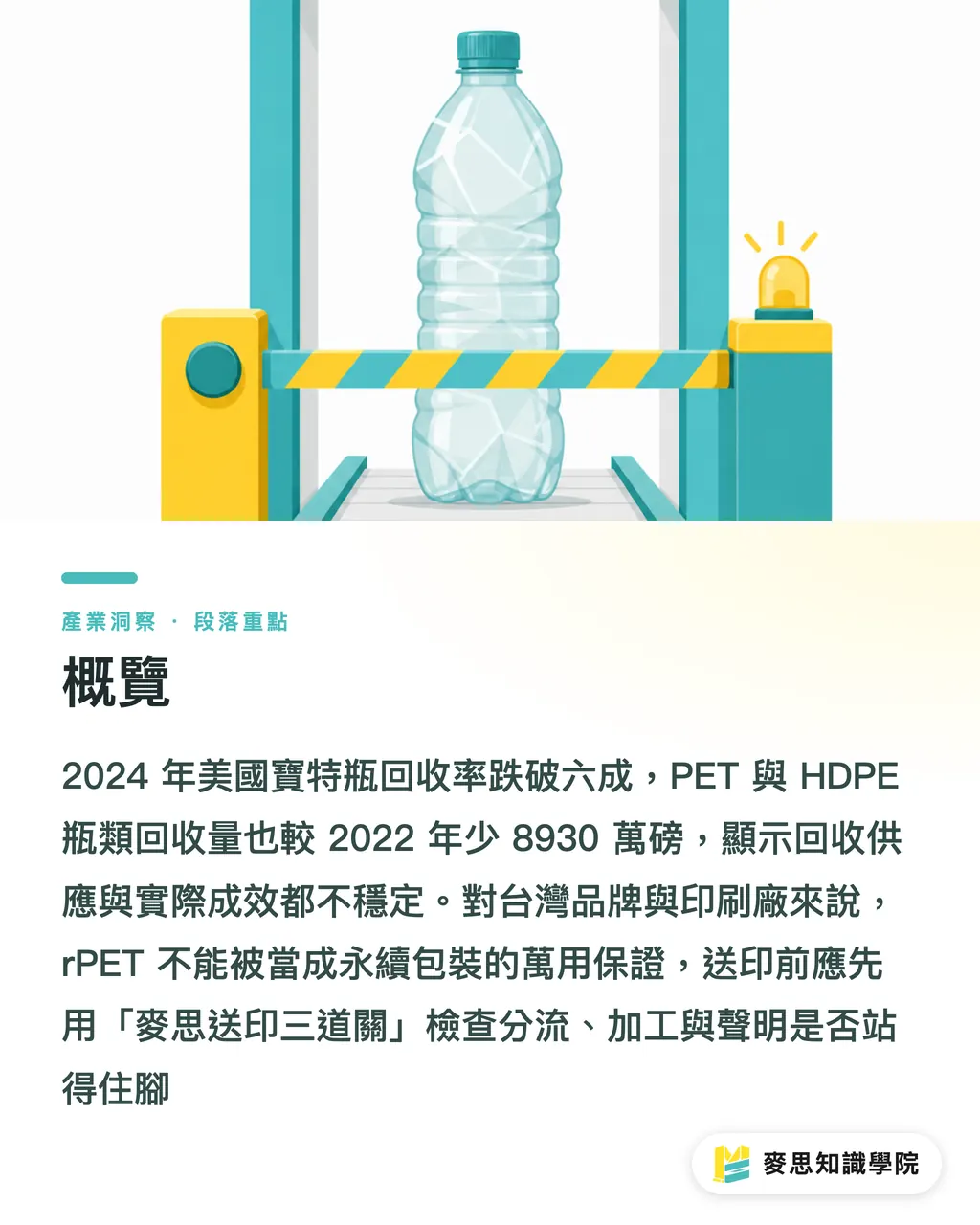
Packaging Dive covered this on July 20, 2026, in US bottle recycling rates dropped, but other plastic recycling rose. In 2024, the US recycled over 5.1 billion pounds of post-consumer plastic, up roughly 2.3% from 2022, but PET and HDPE bottle recovery dropped by 89.3 million pounds. Bottles became the most glaring hole in this recycling uptick
On the print floor, my first thought is: hold on. Just because a brand switches to rPET or slaps "recycled content" on the carton doesn't mean the package reaches the right sorting bin. That label ring in your design, that varnish layer, that glue strip, the recycling end usually decides whether it's in or out long before the material name even matters
Why Did PET Drop While Film and Other Plastics Rose?
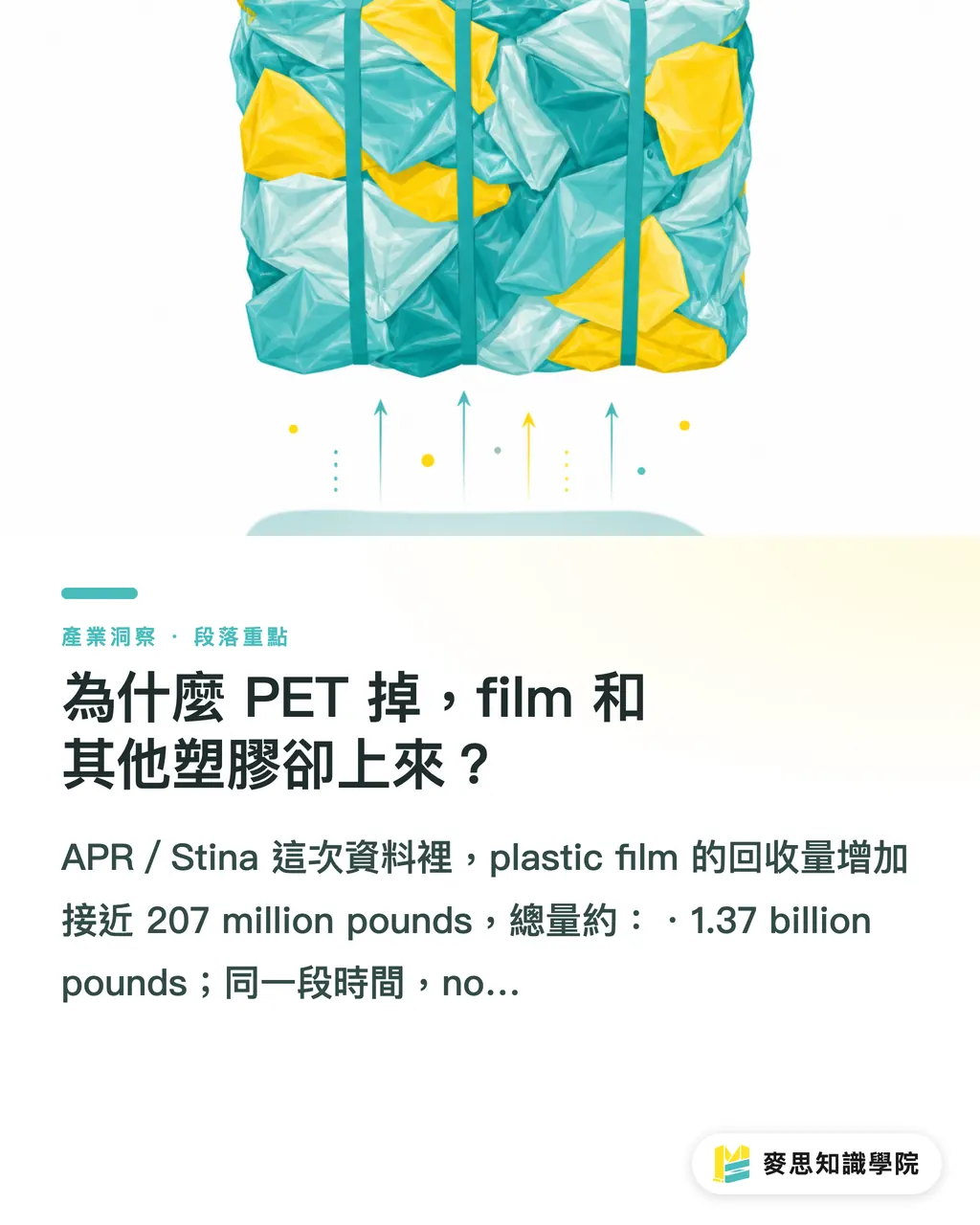
In this APR/Stina data, plastic film recovery jumped nearly 207 million pounds, reaching roughly 1.37 billion pounds; same window, non-bottle rigids dropped only by 7.5 million pounds. The US recycling market is rewarding streams that are easy to gather, easy to sort, and actually worth money. Bottle material is proven, but demand, contamination, and price keep squeezing it
The scrap market doesn't lie. Packaging Dive noted that 2024 recyclers dealt with soft PCR demand, high recycled plastic bale prices, cheap virgin resin, and extra contamination eating into margins. When a printer lands a PCR-containing package job, don't just ask "do we have stock", ask if the material stream is stable, if it can be processed, and whether the customer's claim will hold water
Design for Recycling, Three Points to Check
Design for Recycling: aligning your packaging design with collection, sorting, washing, and end-use so material, printing, labels, and adhesives don't sabotage actual recovery
Recyclability claim: the assertion that a package can be collected, sorted, and reprocessed in the target market. Not just that the material can theoretically melt
When revising export packaging, MINDS puts the "MINDS three-gate print submission checklist" in front of sampling, prevents finding out late that inks or labels are blocking your recyclability promise
・ ① Sorting gate: Decide which recovery stream takes the package, PET bottle, HDPE bottle, PP rigid, film, or paper?
・ ② Processing gate: Check whether inks, varnish, labels, glue, and shrink film interfere with washing, optical sorting, or recycled material quality
・ ③ Declaration gate: Translate PCR percentage, recyclable, or recycled-content claims into language procurement, legal, and customer audits all read the same way
How Should Taiwan Brands and Small Printers Respond?
Packaging Dive noted that in 2024, recycled plastic exports from the US were only 6.2% of the total, back in 2014 it hit 30.7%; same period, recycled PET and HDPE bottles each went roughly 97.9% to North American reclaimers. For Taiwan export brands, the signal is clear: your buyers are watching local recycling. Package claims can't hide behind "Taiwan supplier says it's recyclable."
PCR: post-consumer recycled material. Sourced from plastic or paper that's been used and collected for reprocessing. If your brand cites a percentage, you need to trace where it came from and what it becomes
Here's the move: Taiwan small-to-mid printers need to swap out sustainability specs from "material price lists" for "recycling pathway summaries." Each SKU should track primary material, inks, adhesives, surface finishing, PCR source, and the declaration basis for your target market. If a brand is planning to print recyclable or PCR on the package, consider working with Mai Strategy Knowledge Academy's advisory team first to nail down declaration scope, then go into formal sampling
When EPR Wavers, Why Can't You Wait for Regulations to Settle?
Materials reported the California Farm Bureau pushing to kill SB 54's EPR law again, while Packaging Dive flagged that seven US states' new packaging EPR laws are poised to tighten data-reporting requirements. Policy will swing, but brand buying doesn't wait for printers to figure it out. Retail partners ask about recyclability claims, PCR source, and whether packaging fits local sort streams first
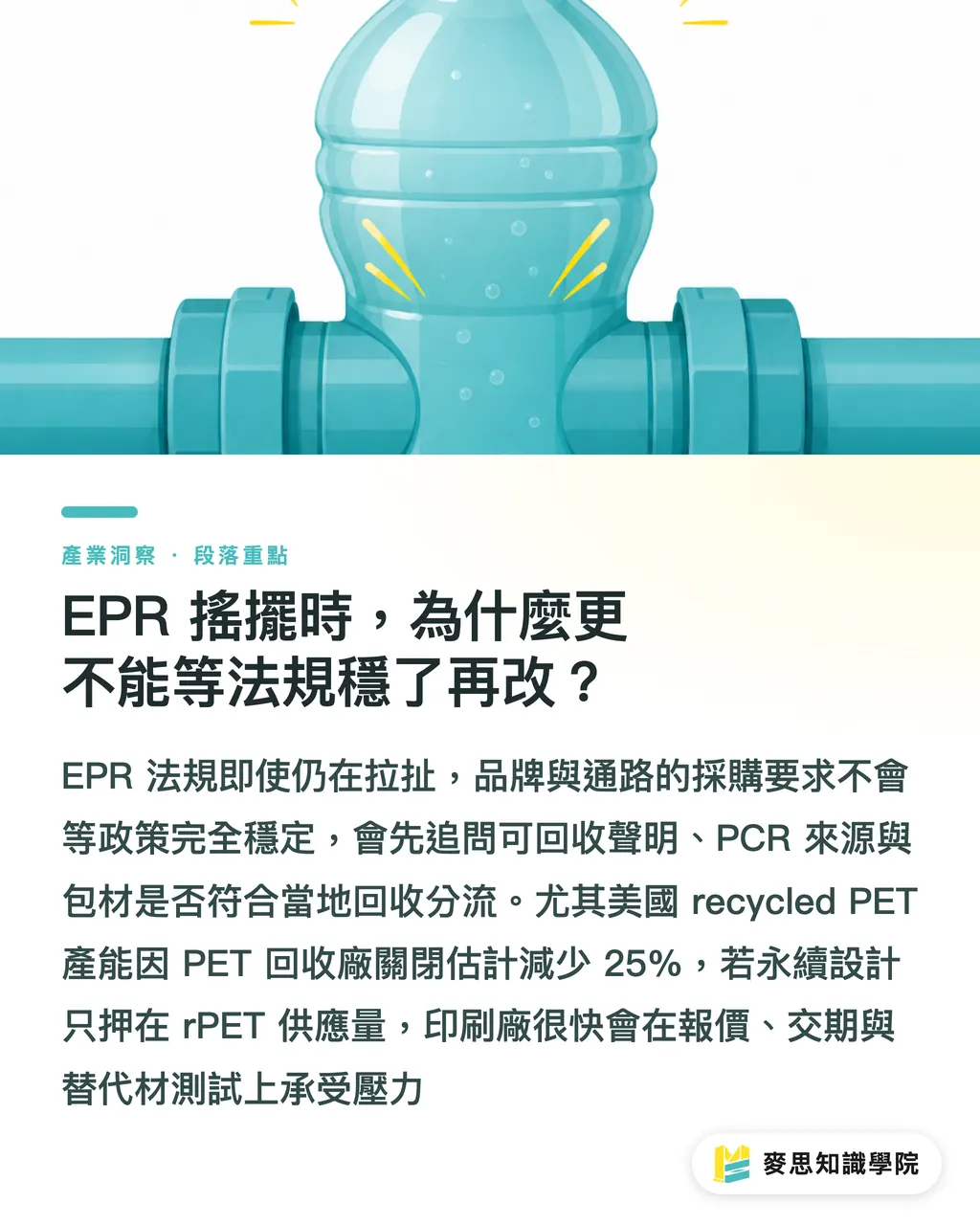
APR also flagged: 2024 data doesn't yet show the impact from 2025 and 2026 PET recycling plant shutdowns, which could cut US domestic recycled PET capacity by 25%. Treat that as a buy signal: if a brand is betting everything on rPET availability, the printer will eventually sweat pricing, turnaround, and finding stand-in materials
Key Takeaways
・ rPET helps, but if the recycling system can't absorb it, the promise becomes a buy-side risk
・ Recyclable depends on your target market's sorting, not just material name
・ Bottle, label, ink, glue, each gets decided alone; the recycling end usually picks up the tab
・ EPR waffling doesn't mean you sit still. Late spec changes drag sampling, lead time, and cost
Extended Thinking
Print manufacturing, design, AI tools, and SaaS could all tap the same SKU material passport: every revision logs primary material, inks, labels, glue, PCR source, and the target market declaration basis. Once this lives in quotes, pre-flight checks, and customer sign-off, design can pivot before production, SaaS knows which fields to flag, and printers can explain recycling risk in cost language buyers understand
Further Reading
FAQ
- Why does the 2024 US bottle recycling decline make Taiwan printers nervous?
- Because PET and HDPE bottle recovery dropped 89.3 million pounds from 2022, meaning even mature materials can get hit by demand, contamination, and recycling capacity limits. Taiwan export packaging can't just slide past on an rPET label
- How is Design for Recycling different from regular eco-friendly packaging?
- Design for Recycling checks whether a package actually enters a real recovery sorting stream, looking at material, ink, label, glue, and declaration source as one system. Regular eco-packaging often stops at material name or recycled-content percentage
- Can a brand just print recyclable on the package?
- A brand needs to first confirm the target market collects, sorts, and reprocesses that package. A recyclable claim can't rest only on whether the material theoretically melts, it has to match the local recycling system
- What's the first thing a printer should ask when landing a PCR packaging job?
- Ask about PCR source, percentage proof, processing limits, color tolerance, and which market the brand is claiming. These drive quote, sampling, and batch consistency
- EPR rules are still in flux, isn't it too early to change specs now?
- No. Seven US states already have packaging EPR laws moving toward stricter data reporting and shared responsibility. California's SB 54 might face political pushback, but brand buying still pressures suppliers to lock in recyclability claims and PCR proof early
Related articles
The Print × AI weekly
The print and AI know-how designers, brands and enterprises can use before they commit — one email, every week
MINDS Free Tools
AI background removal, a LINE sticker maker, spine & imposition calculators — all free, right in your browser, no upload.
MINDS Group
Need actual printing or gifting services?
From premium printing to online ordering and festive gifts — the MINDS Group sister brands take it from here.