
Overview
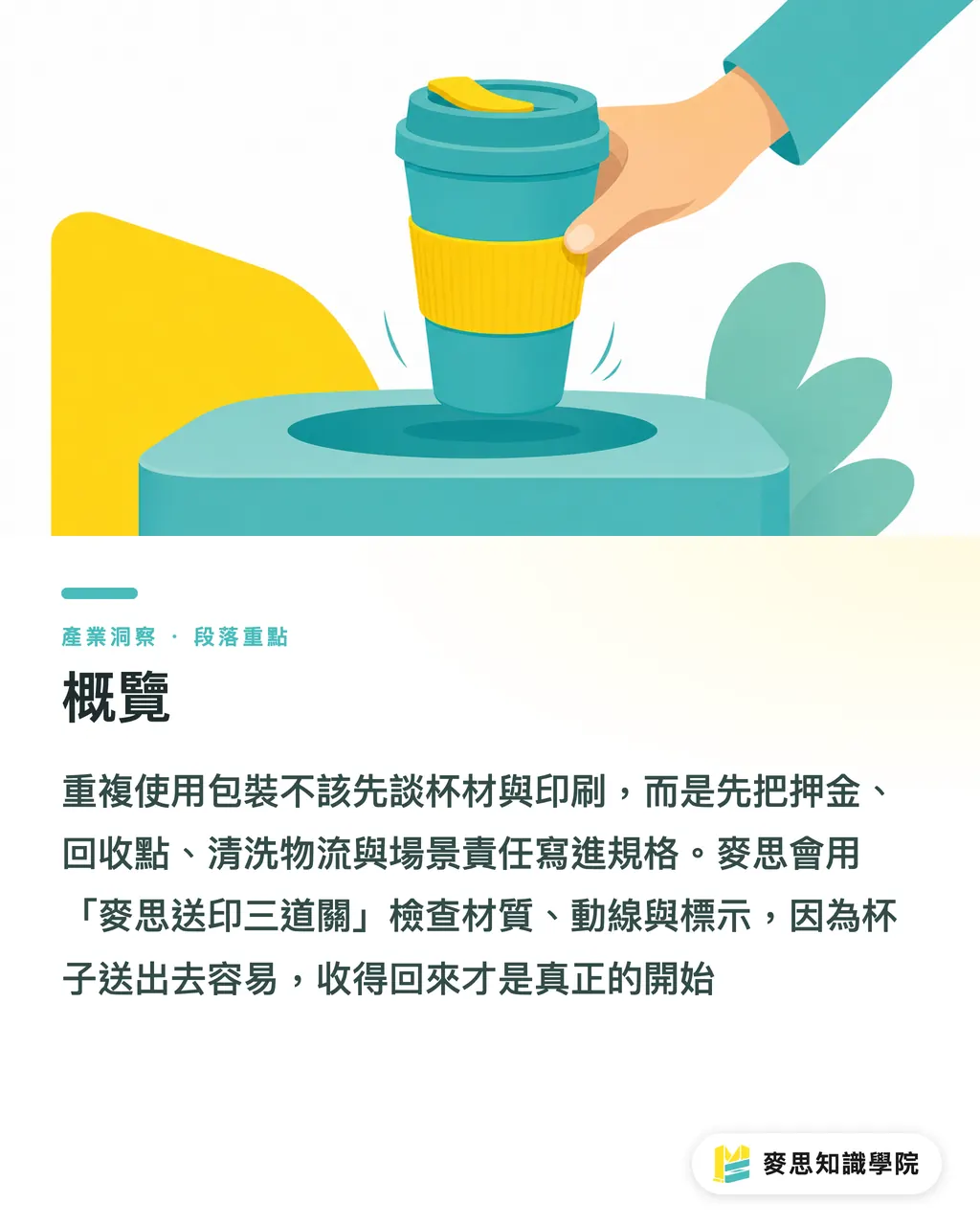
Reusable packaging should define deposits, return points, washing logistics, and responsibility by use scenario in the specifications before discussing cup materials and printing. When MINDS Printing (MS, mid-to-high-end fully customized commercial printing) reviews projects like this, it first uses the "MINDS Printing (MS) three print-readiness checkpoints" to examine materials, user flow, and labeling, because sending cups out is easy; getting them back is where the real work begins
What Exactly Is Reusable Packaging?
Reusable packaging means the same container is collected, washed, inspected, and put back into use. Brands need to design deposits, return points, hygiene standards, and identification labels so consumers know how to borrow it, how to return it, and who is responsible
Packaging Insights reported on July 16, 2026, that the South Korean government is working with coffee, fast food, and bakery operators to cover about 22,000 stores nationwide, with new environmental guidelines expected to begin in September 2026. For Taiwan's printing industry, this scale is a reminder that reusable packaging has moved beyond brand image and into store operations
The mistake I most often see on packaging projects is brands asking first whether the cup should be PP, Tritan, or stainless steel, without first asking where consumers will return it. MINDS Printing (MS) brings the question back to the physical site, because no matter how good the printed design looks, if the return path breaks, the container quickly becomes inventory pressure
What Changed in Korea's Foodservice Settings This Time?
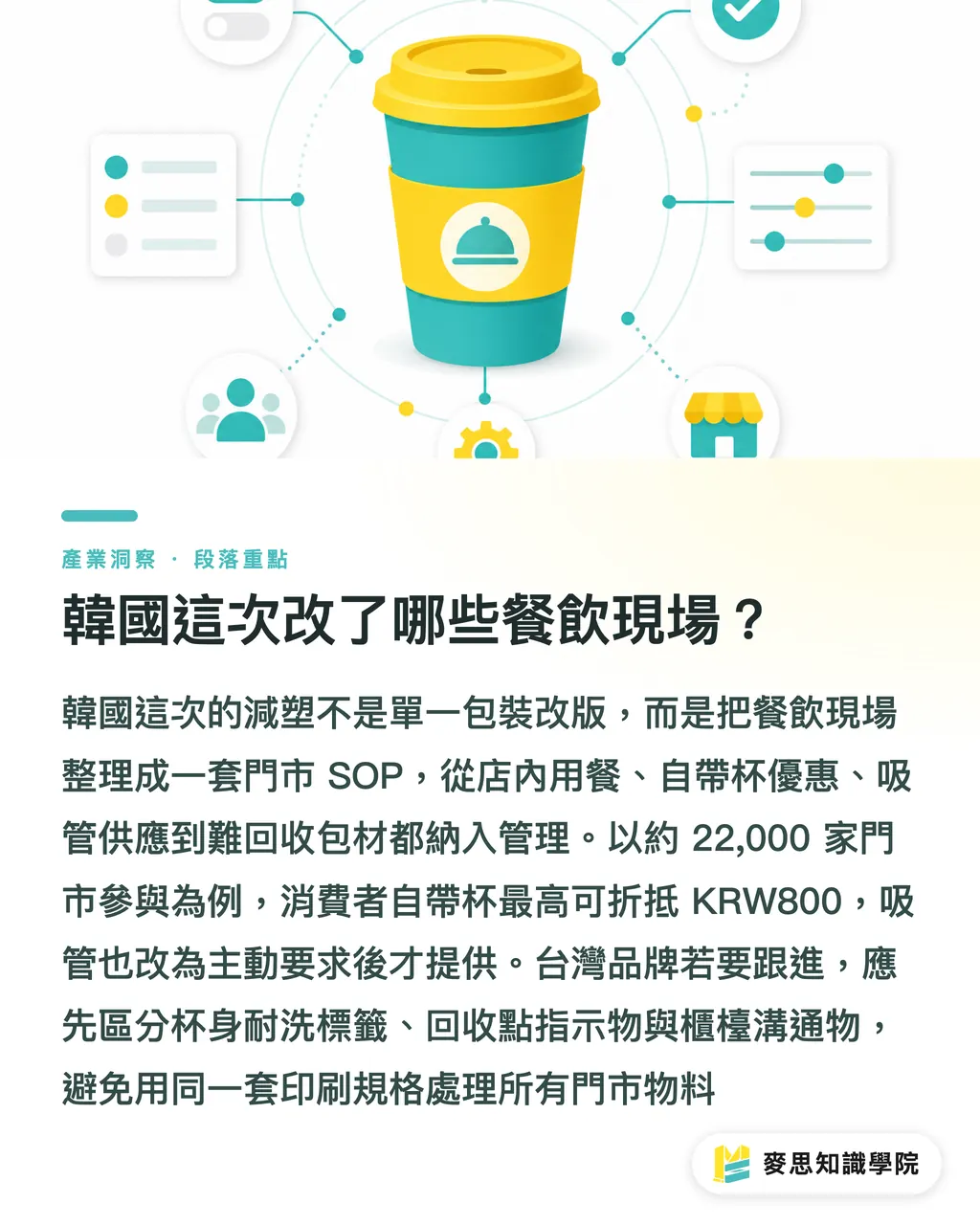
Korea's approach this time is highly relevant because it does not stop at a plastic-reduction pledge. It brings dine-in use, personal cups, straw supply, and hard-to-recycle packaging materials into the same framework. For Taiwanese brands, this looks more like a store SOP than a single packaging redesign
・About 22,000 stores are included in the collaboration, covering coffee chains, fast food outlets, bakeries, and 150 independent cafes
・International brands such as Starbucks, Burger King, KFC, and McDonald's, along with local Korean operators, are on the list
・Consumers who bring their own cup or tumbler can receive a discount of up to KRW800 per cup, about US$0.60
・Single-use straws will be provided only after consumers request them through a self-ordering kiosk or from staff
・The practice of double-cupping, placing a plastic cup sleeve over a paper cup, is prohibited because this heat-retention habit directly increases single-use packaging
・PET cans, a type of composite plastic-and-metal packaging, have been singled out because the materials are difficult to separate and can disrupt recycling systems
If Taiwanese foodservice brands want to follow this direction, MINDS Printing (MS) usually recommends dividing in-store materials into 3 categories first: washable cup labels, return-point signage, and counter communication materials. The inks, adhesives, water resistance, and replacement cycles for these 3 types of printed matter are all different, so they cannot be forced into one shared specification
Why Can One Cup on a Train Become a Legal Issue?
The Deutsche Bahn dispute in Germany makes "scenario responsibility" very clear. DUH argues that single-use cups sold on trains should also comply with the reusable-option requirements under Section 33 of Germany's Packaging Act, with the key issue being the legal boundary between takeaway and on-premise use
For print shops, the important thing to understand is the consumption scenario. If a cup of coffee is bought on the platform, consumed on the train, and discarded at the next station, the brand cannot count responsibility only at the sales counter. Recycling prompts, cup labeling, and deposit refund paths all become ambiguous
This kind of dispute will also influence the design language of export packaging from Taiwan. Pressure from EPR and PPWR is shifting packaging from "complete at shipment" to "clear even after use." When print shops receive projects from European clients, the QR code, material icon, or recycling instruction on the layout is no longer decorative space; it is part of compliance communication
How Should Small and Mid-Sized Print Shops in Taiwan Respond?
Small and mid-sized print shops do not need to buy new equipment from the start. If they first clarify the 3 print-readiness checkpoints for reusable packaging, many risks will surface before proofing. The MINDS Printing (MS) three print-readiness checkpoints are well suited for foodservice reusable cups, event cups, recycling bins, and in-store signage
・① Material checkpoint: The cup body, label, adhesive, and protective film must be tested together. Wash resistance matters more than one-time visual appeal
・② Flow checkpoint: Every step in how consumers pick up, use, return, and get deposits refunded for the cup needs a corresponding printed prompt
・③ Labeling checkpoint: Brand identity, recycling instructions, material information, and QR code cannot compete for space, and they cannot become unreadable after a few wash cycles
From the production lines I have seen, the most common failure point for reusable containers is not the first delivery, but readability after the 10th wash. Labels lift at the edges, white ink turns hazy, or QR codes stop scanning. Store teams will complain first, and consumers will not care whether it is a sustainability project
What Responsibilities Should Brand Clients Assign First?
Before introducing reusable packaging, brands need to assign responsibilities to the right parties. Korea started with 3 high-frequency scenarios, coffee, fast food, and bakeries, for a practical reason: these settings move cups every day, so problems reveal themselves quickly
・Deposit responsibility: Who collects the money, who refunds it, and how lost containers are handled
・Return responsibility: Which party provides return points: stores, malls, stations, or event venues
・Washing responsibility: Who washes the containers, who inspects them, and who replaces containers that fail inspection
・Communication responsibility: Cup labels, posters, ordering kiosks, and staff scripts must communicate the same rules
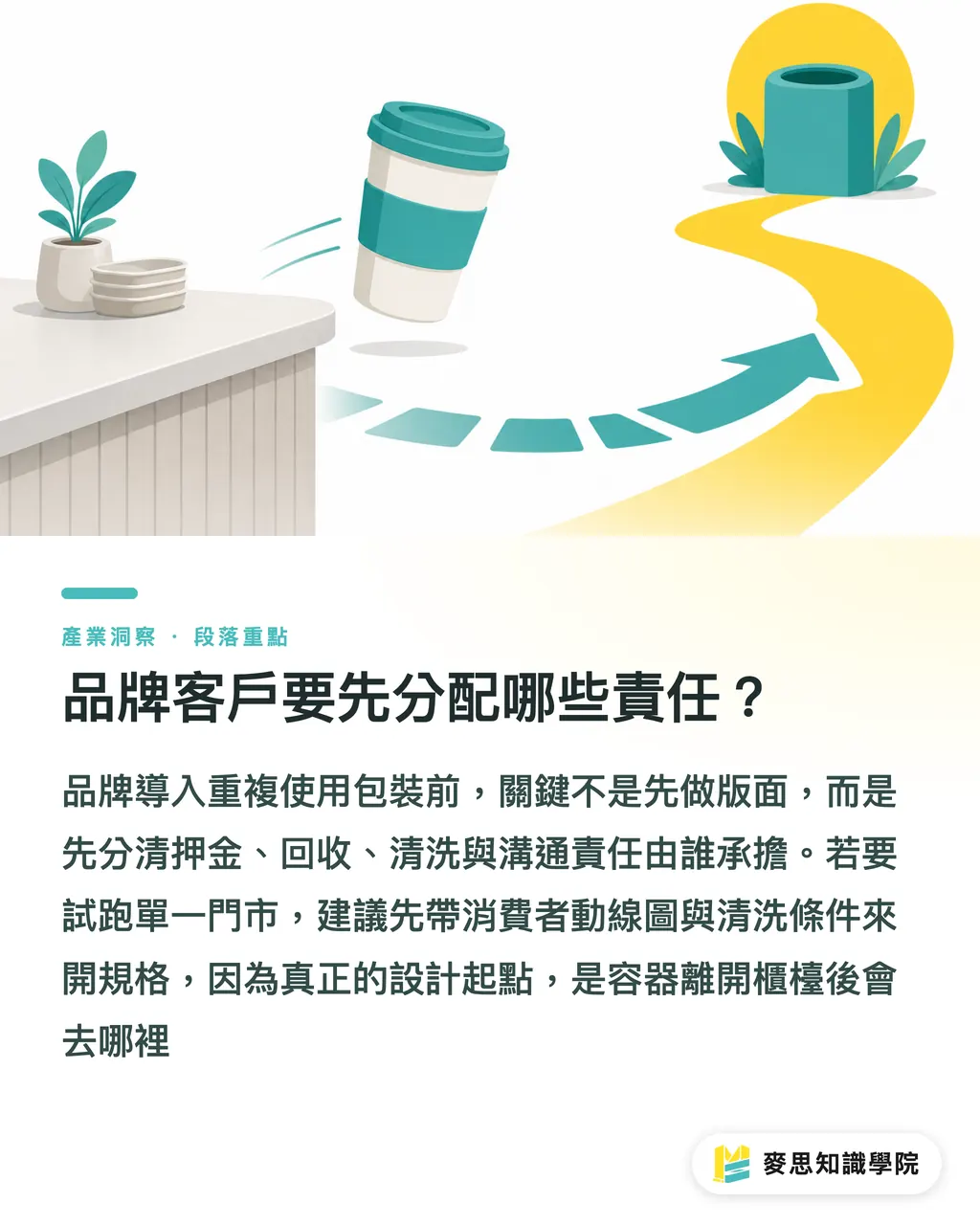
If a brand is preparing to pilot 1 store scenario, MINDS Printing (MS) recommends bringing a consumer journey map and washing conditions into the specification meeting first, not only visual drafts. The starting point for reusable packaging design is not the layout; it is where the container goes after it leaves the counter
Key Takeaways
・The first specification sheet for reusable packaging should define deposits, return points, and washing conditions before cup materials
・Scenario responsibility will become a new test for brands. Dine-in, takeaway, trains, and event venues cannot use the same answer
・The new value for print shops lies in washable labeling, identity management, and return-flow materials. Simply printing fewer single-use packaging items will only reduce orders
・Running 1 scenario pilot first makes it easier to identify cup loss, label peeling, and store bottlenecks than changing every channel at once
Further Thinking
For print manufacturing, the next step is to build a proofing checklist for washable labels, scannable identification, and return-point materials. For designers, the priority is to place brand identity into the return flow, not only make the cup look good. For AI adoption and SaaS teams, a small system can begin with container IDs, deposit records, reuse counts, and store exception reports, helping brands understand which batch of cups is being lost and which return point is stuck. If a brand wants to put a reusable cup pilot into practice, the Mai Strategy Knowledge Academy consulting team can first help map scenario responsibilities, then hand them to the design and printing teams to develop production-ready specifications
Further Reading
FAQ
- What is the difference between reusable packaging and recyclable packaging?
- Reusable packaging is collected, washed, and put back into use. Recyclable packaging usually enters a material recycling system after use. The deposit, labeling, and logistics design required for the two are completely different
- What should Taiwanese brands do first when introducing reusable cups?
- The first step is not choosing the cup material. It is mapping the consumer journey from cup pickup to return, then deciding the deposit, return points, washing responsibility, and in-store communication method
- Do print shops still have orders in reusable packaging?
- Yes. Orders will shift from single-use cup sleeves and paper cups to washable labels, return-point signage, deposit cards, in-store instruction materials, and QR code identification management
- Why is Korea's 22,000-store case worth Taiwan's attention?
- Korea has brought high-frequency foodservice scenarios such as coffee, fast food, and bakeries into the same framework, showing that reusable packaging is moving from an environmental initiative to an operational specification for stores
- What reminder does the Deutsche Bahn dispute give brands?
- The dispute over single-use cups on trains reminds brands that the sales location, use location, and return location may be different. Reusable packaging must define scenario responsibility first
Related articles
The Print × AI weekly
The print and AI know-how designers, brands and enterprises can use before they commit — one email, every week
MINDS Free Tools
AI background removal, a LINE sticker maker, spine & imposition calculators — all free, right in your browser, no upload.
MINDS Group
Need actual printing or gifting services?
From premium printing to online ordering and festive gifts — the MINDS Group sister brands take it from here.