
Will Digital Printing Completely Replace Traditional Screen Printing?
Many people assume screen printing will disappear as digital printing expands, but that is a complete misconception. Hybrid printing brings together the thick ink and tactile feel of traditional screen printing with the plate-free speed and variable data flexibility of digital print in a single workflow. Watching the press floor and client projects for years, I have seen digital tech amplify the tactile value of traditional craft rather than kill it, as shown in real cases at MINDS
Over the past three decades, graphics like posters and cartons did shift heavily toward digital printing, mainly because digital cuts out platemaking time and uses a single ink set across substrates. But digital inks often compromise quality on specialty substrates, whereas screen printing inks and pre-treatment chemicals are custom-tailored for specific materials. Having entered Europe in the early 20th century and expanded rapidly in Germany during the 1960s and 1970s, screen printing still holds a vital place in Europe today. Established German chemical and equipment leaders like EMM, Thieme, Marabu, and Kiwo continue to push screen ink and precision machinery forward
Not so fast
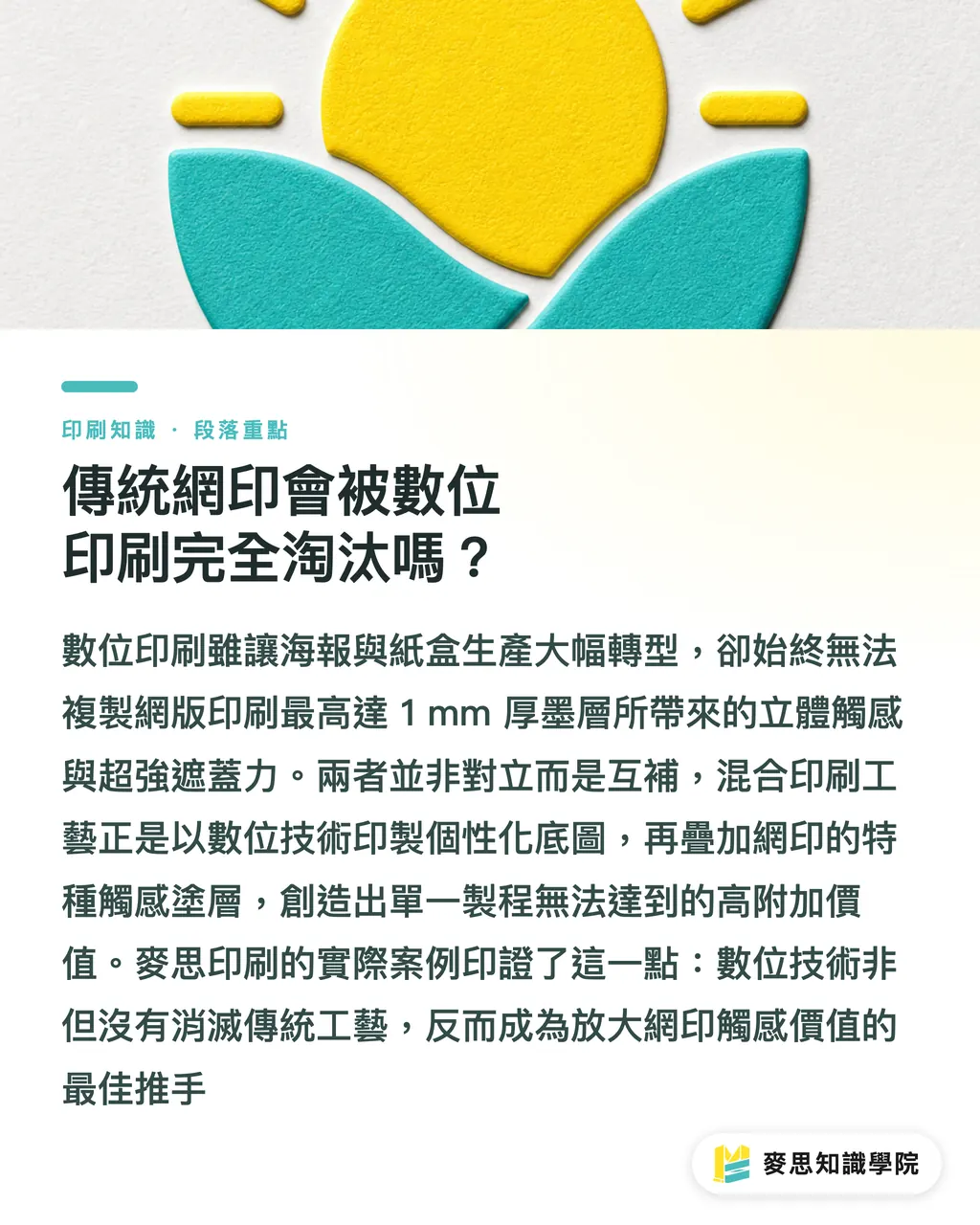
The hardest core advantage of screen printing to replace is its high ink deposit. Screen ink layers can reach up to 1 mm (equivalent to 1000 microns), delivering vivid saturation and opaque coverage. That is why when luxury wallpaper or high-end packaging demands texture, digital print can never match the 3D embossed feel of screen printing
・Digital printing advantages: No plates required, fast turnaround, variable data printing, ideal for short-run diversity
・Traditional screen printing advantages: Extremely thick ink layer (up to 1 mm), excellent color saturation and opacity, customizable tactile and functional inks
・Hybrid printing benefits: Digital handles complex backgrounds and personalized graphics, while screen printing overlays spot UV, metallic sheen, or custom tactile coatings
How Does Hybrid Printing Create High Value for Packaging?
In an era where physical marketing materials focus heavily on touchpoint experience, the feel of packaging in the first second shapes a brand's pricing power. Demand for tactile features in luxury packaging has surged over the past two years. Adjusting screen printed Plastisol formulas, for example, allows traditional ink layers to feel like soft leather or fine velvet. This double impact of sight and touch delivers value that online algorithms or screen pixels simply cannot match
I often remind designers and brand buyers that combining techniques is not about piling every effect together, but about teamwork. Digital handles intricate color gradients and personalized text, while screen printing lays down thick ink or specialty finishes at key focal points. European luxury wallpaper is a prime example: digital prints the rich patterned base, and traditional surface screen printing presses textured thick ink and gloss over top, keeping the warmth of craftsmanship while gaining flexible production
It is simple
If your products need an upgrade for small-to-medium batch trade shows, luxury gift boxes, or fully custom packaging, turning directly to MINDS for mid-to-high-end custom commercial printing can help evaluate hybrid processes and save you from trial-and-error with file prep and material compatibility
・Tactile conversion: Use 3D spot UV and flocking ink from screen printing to build memorable packaging touchpoints
・Color accuracy: Digital prints full-color detail, while screen printing supplies special spot colors and metallic sheen
・Flexible production: Digital handles variable graphics, while screen printing applies uniform high-value finishing
How Is Screen Printing Transforming in Industrial and Electronics Sectors?
Professor Nicole Lindenmann from Stuttgart Media University in Germany points out that screen printing advantages have moved past traditional graphics into high-spec industrial manufacturing. Screen printing is no longer just a decorative tool, but a precision functional production process
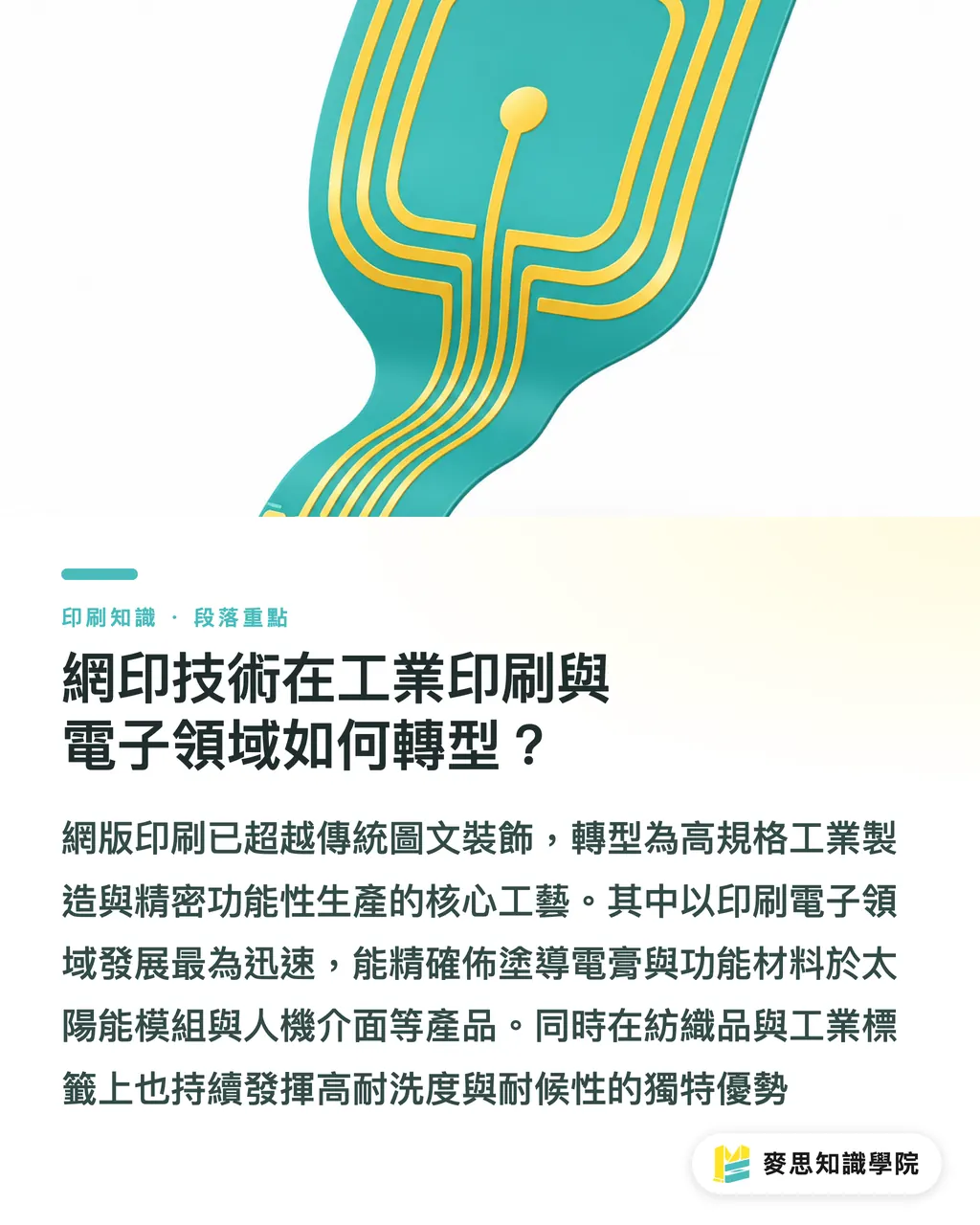
One of the fastest-growing fields right now is Printed Electronics. Screen printers can lay down conductive paste and functional materials with accuracy, serving human-machine interfaces (HMI), functional labels, RFID tags, antennas, and solar modules. In textile printing, despite rapid growth in DTF digital transfer film, traditional screen printing maintains a strong edge in wash durability and fabric adhesion, keeping garments intact after repeated washing
・Human-Machine Interface (HMI): Membrane switches and dashboard touch circuit printing
・Printed Electronics: RFID tags, high-frequency antennas, and conductive layers for solar panels
・Functional labels: Weather-resistant and chemical-resistant industrial warning and identification stickers
・Textile printing: High wash durability and stretchable garment pattern printing
How Can Print Shops and Designers Implement Hybrid Printing?
Making hybrid printing work on the production line requires more than random trial and error. I recommend adopting the three-stage prepress check system from MINDS (MS) to standardize control from materials to file structure. For tight budgets or standard specs, you can also use the online print retail platform MINDS Print for quick base-color printing before moving on to specialized finishing
・① Align coating and substrate fit: Verify chemical compatibility between digital ink primer and subsequent screen inks to prevent peeling during finishing
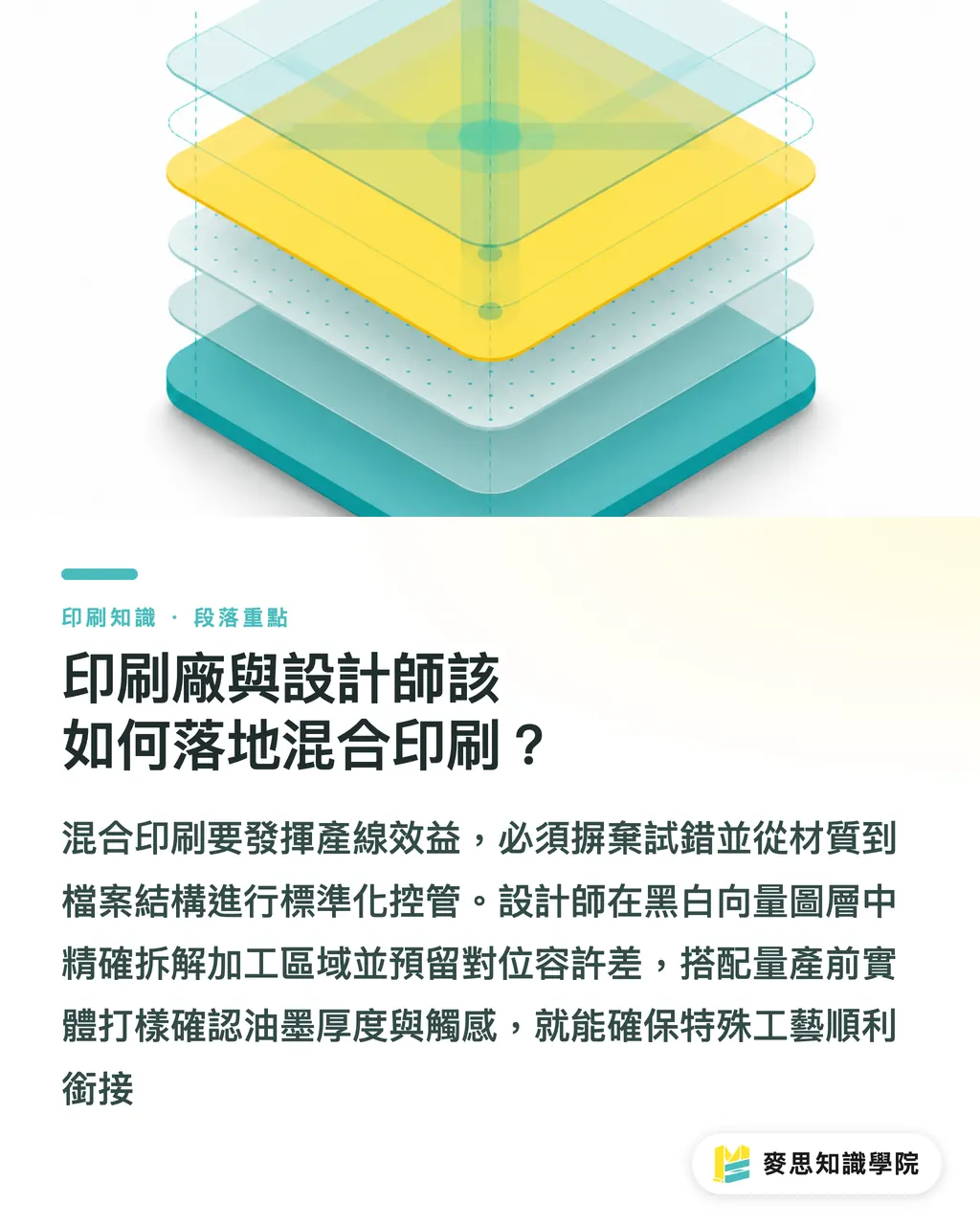
・② Separate digital base artwork and screen print layers: Designers mark spot screen zones clearly in monochrome vector layers while allowing proper registration tolerance for screen printing
・③ Sample and test feel before mass production: Run physical proofing to check colors and feel ink thickness and gloss firsthand to match target texture
Key Takeaways
・Digital printing offers speed and variable data, while traditional screen printing delivers ink layers up to 1 mm thick and an irreplaceable tactile feel
・Industrial screen printing is transforming into a functional manufacturing tool, with high-tech sectors like printed electronics and RFID driving new growth
・Plastisol inks and microencapsulation tech give screen printing a soft, refined touch, unlocking premium pricing power for physical packaging
・Brands and print providers should use standardized layer separation and proofing workflows to maximize the dual visual and tactile strengths of hybrid printing
Further Thinking
For small and mid-sized print shops and graphic designers in Taiwan, escaping price wars is never about discarding old technology, but re-combining existing assets. Traditional screen printers bring decades of experience in ink mixing and custom coatings. By combining that with the flexibility of digital printing to expand into luxury packaging, fine labels, or industrial tags, they can create high added value. For AI application and SaaS teams, helping print shops integrate automated file separation for registration and material compatibility databases will be the next entry point for digital transformation
Further Reading
FAQ
- What is the biggest difference between hybrid printing and pure digital printing?
- Pure digital printing requires no plates and handles variable data well, but has limits in specialty coatings and thick ink layers. Hybrid printing combines full-color digital flexibility with screen printing's ink thickness up to 1 mm, creating high-value effects like metallic sheen, 3D embossing, and unique tactile finishes
- Will traditional screen printing really not be fully replaced by digital tech?
- No. Research from Stuttgart Media University shows screen printing has evolved into a high-value industrial production tool. Beyond beating DTF in garment washability, screen printing's heavy ink laydown and functional inks hold irreplaceable advantages in printed electronics, RFID antennas, and human-machine interfaces
- What should designers keep in mind when preparing hybrid print files?
- Designers need to separate full-color digital artwork and screen-printed specialty zones into different layers. Screen printing areas must use solid monochrome vector artwork, leaving proper bleed and registration tolerances so screen coatings align accurately over digital prints without shifting
Related articles


The Print × AI weekly
The print and AI know-how designers, brands and enterprises can use before they commit — one email, every week
MINDS Free Tools
Spine width and imposition calculators — skip the manual math, free in your browser.
MINDS Group
Need actual printing or gifting services?
From premium printing to online ordering and festive gifts — the MINDS Group sister brands take it from here.