

How AI-Sensing Packaging Reduces Food Waste
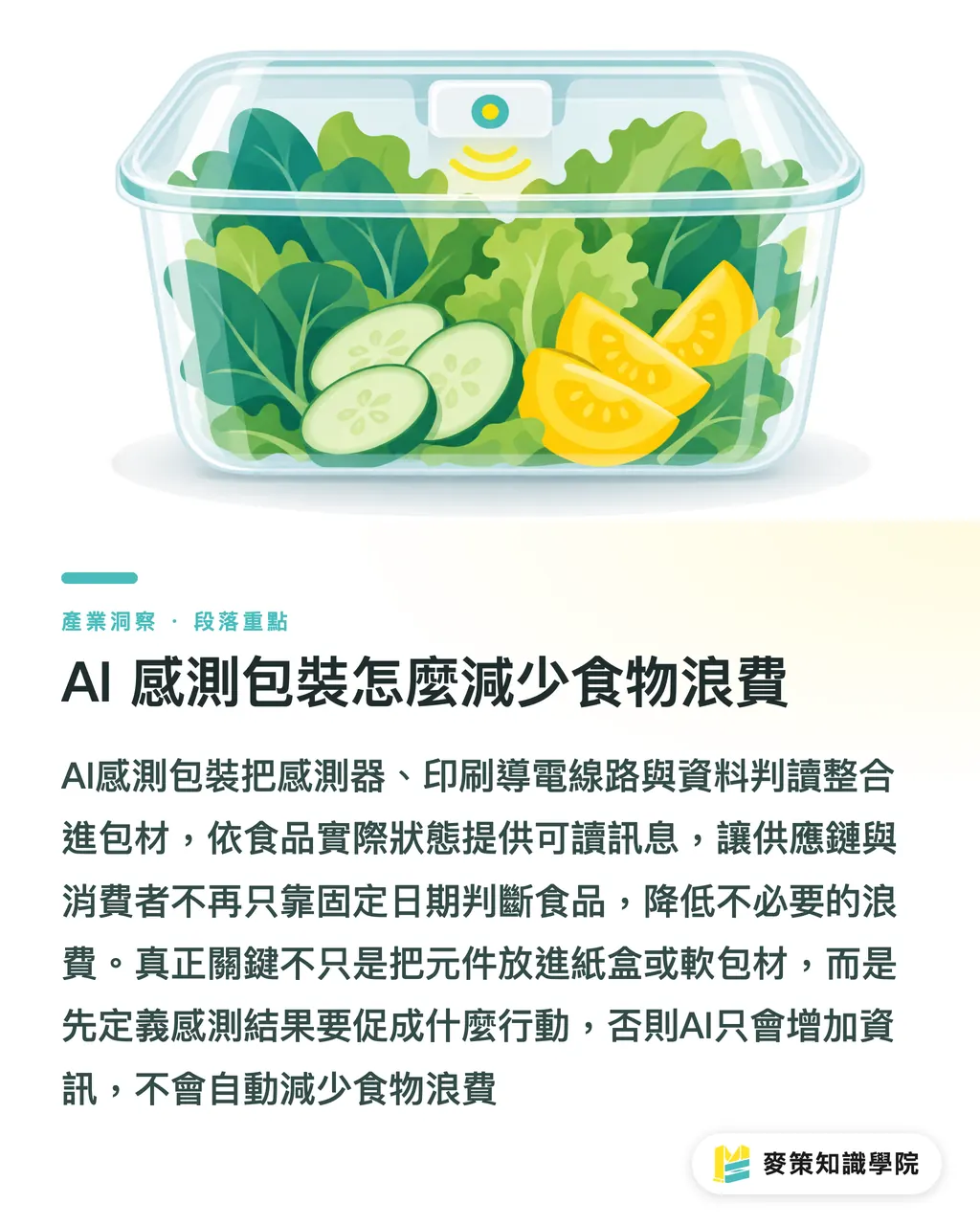
AI-sensing packaging monitors food conditions through sensors, allowing the supply chain and consumers to handle food based on what is actually happening, reducing waste caused by relying only on fixed dates
AI-sensing packaging puts sensors, printed conductive circuits, and data interpretation into cartons or flexible packaging, providing readable information based on the food's condition and helping the supply chain and consumers handle the product
Sensors capture the condition, AI organizes and interprets it, and the printed conductive layer allows the circuits to be integrated into the packaging. Packaging Insights' How AI-Driven Packaging Innovation Can Reduce Food Waste puts the three areas of responsibility in practical terms: the printing side handles sensing circuits and conductive layers, the brand handles data collection and communication with consumers, and the design side handles the effect of components on structure and visuals
From the packaging projects I've seen, the part most likely to go wrong isn't putting a component into a box. It's failing to decide first who should take what action based on the sensing result. Without a follow-up action, AI only adds another layer of information. It does not automatically prevent a package of food from being wasted
Which Three Checkpoints Should a Print Shop Clear First
A print shop should first confirm that the circuit can be printed consistently, that it still works after the package is formed, and that the data can be handed over to the brand before discussing equipment and pricing
I break the early assessment into 'Mai Strategy's three sensing checkpoints.' Each one should leave a record on a carton or flexible-packaging sample
・1. Conductive-layer checkpoint: Confirm printing accuracy and adhesion, and verify that the circuit can still be read after lamination and die-cutting. Success on a flat sheet does not mean success after forming
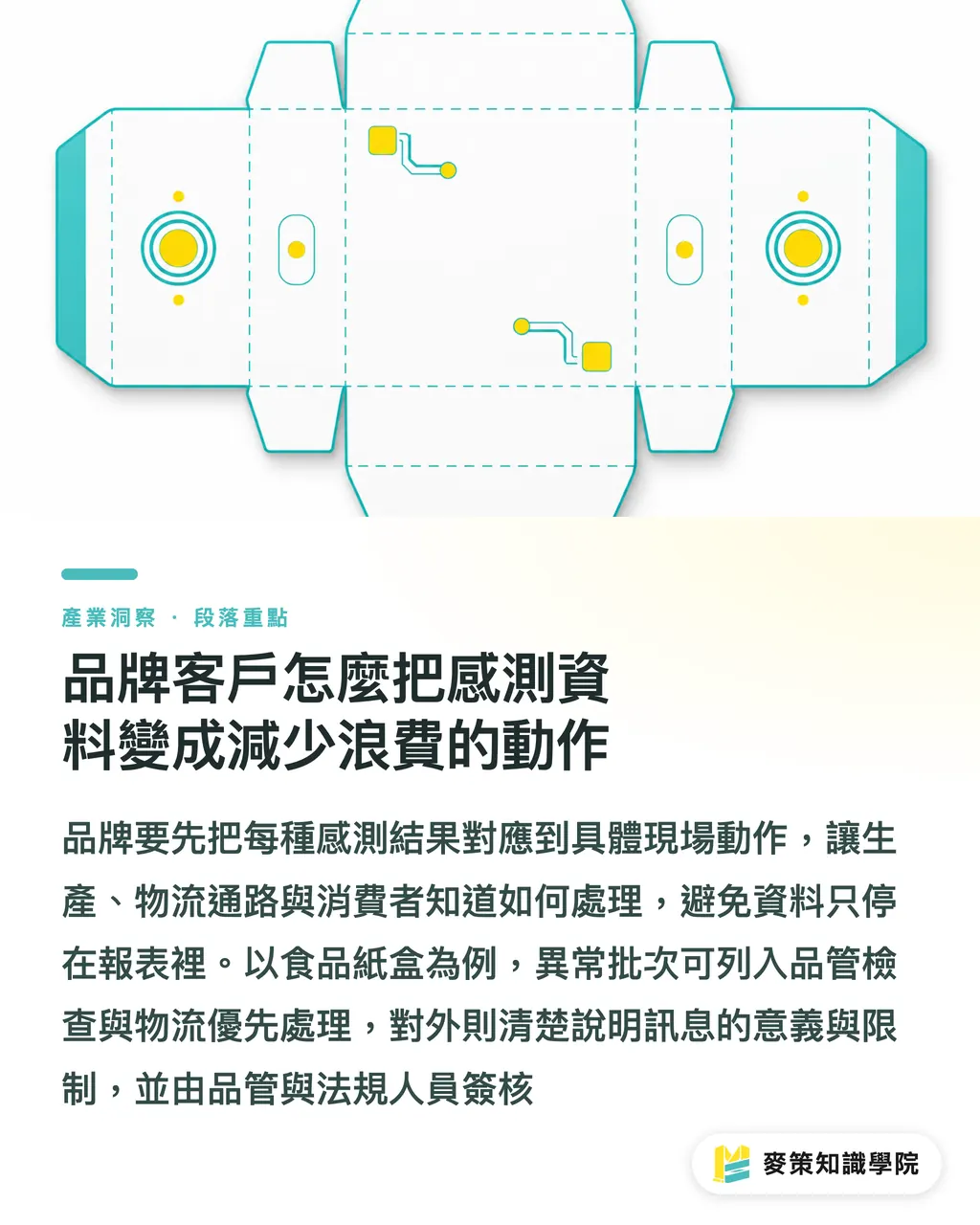
・2. Structural checkpoint: Put the sensing components, traces, fold lines, and seals on the same dieline, so you do not discover after artwork approval that a component sits on a fold corner or in a sealing area
・3. Handoff checkpoint: Spell out whether the print shop is delivering samples, batch records, or data that the brand's system can read. Testing responsibilities also belong in the quote and delivery schedule
Cartons and flexible packaging should be validated separately at a minimum because carton folding, sealing, and flexible deformation change the conditions around the sensing circuit. If a print shop quotes only the unit price for conductive printing, the labor for prototyping, testing, and cross-team communication is easy to leave out
How Brand Clients Turn Sensing Data into Actions That Reduce Waste
Brand clients should assign an on-site action to each sensing result first. Otherwise, the data will stop at the report
Using a food carton as an example, sensing results should be assigned to at least three use cases
・1. Production: Link the batch to its sensing status so quality control knows which batch needs checking
・2. Logistics or channel: Put batches that need attention on the priority list for inspection, allocation, or communication
・3. Consumers: Use plain language to explain what the current signal means, and make clear what it does not mean
If a brand collects sensing or user-interaction data, it should first explain the purpose of collection, who can read it, how it is stored, and what notice consumers will see. A sensing result is information about a food's condition. It should not be written as an unconditional food-safety guarantee. Someone still needs to sign off on quality-control and regulatory responsibilities
At the project kickoff, the print shop should bring the brand, quality control, logistics, and customer service teams together to review the same sample. Otherwise, when an issue appears at delivery after the design is finished, nobody may know who should be notified
How Sensing Packaging Moves from Artwork to Mass Production
The safest route from artwork to mass production is to start with a small pilot run, validating the layout, conductive layer, finishing, and data messaging in the same round
・1. The brand first writes down the food condition to monitor, the users who will make the judgment, and the action to take when something is abnormal
・2. The designer marks the sensing components, traces, fold lines, seals, and visual exclusion zones on the same dieline
・3. The print shop runs the actual process once, from conductive printing, lamination, and die-cutting to forming, and keeps testing records throughout
・4. The brand uses the test results from the same batch to check the packaging copy, customer-service responses, and internal exception handling
・5. The quote lists sensing components, conductive printing, extra finishing, testing, and data handoff separately
Do not wait until artwork approval to add the sensing components. By then, the dieline, layout, and delivery schedule are usually locked, and any change will ripple back through printing, finishing, and brand approval
Should Small and Midsize Print Shops Take These Projects Now?
Small and midsize print shops can take them on, but they should start with the printing, finishing, and testing they can control. They should not promise a full AI system, data platform, and food-related responsibility at the quoting stage
From what I've observed over years on production lines and with clients, once sensing components enter mass production, they become tied to automated inspection, machine takt time, and quality records. If a print shop treats them as just a special printing material, delivery schedules and responsibility splits are easy to miss later
Pros:
・Conductive layers and packaging structures can build on existing printing, die-cutting, and forming capabilities
・Writing the constraints into the dieline and quote early can reduce post-artwork revisions and delivery disputes
Cons:
・If no one is designated for sensor supply, data platforms, and food-related responsibilities, the print shop can easily become the party left holding the responsibility at the end
・Each brand may have different data formats and communication needs, so prototyping and testing hours cannot be estimated like a standard carton project
While the requirements are still vague, you can first ask the Mai Strategy Knowledge Academy advisory team to break the sensing requirements into printing specifications, a prototyping checklist, and responsibility boundaries. Brands that already have mid- to high-end fully customized commercial printing specifications can cross-check process conditions with MINDS

Key Takeaways
・The value of sensing packaging is not an extra electronic component on the box. It is whether the sensing result can trigger inspection, allocation, or communication
・Cartons and flexible packaging should be validated separately. Conductive layers, die-cutting, forming, and sealing all affect mass production
・Print-shop quotes should separate sensing components, conductive printing, testing, and data handoff
・Brands should define data responsibility and consumer messaging first, then ask the print shop to support mass production
Further Thoughts
The next step for a print shop is not to buy an AI system. Add four columns to the quote first: sensing components, conductive printing, finishing and testing, and data handoff. Have the designer mark circuit and sealing constraints at the dieline stage, and have the brand run a small pilot around one food-packaging use case. SaaS (Software as a Service) teams need to connect condition data back to batches and exception handling, rather than build only a polished dashboard. That is how implementation reaches the real work of taking orders, meeting delivery dates, and managing quality
Further Reading
FAQ
- Can AI-sensing packaging really reduce food waste
- AI-sensing packaging monitors food conditions through sensors, giving the supply chain and consumers information closer to the actual condition than a fixed date. Whether it reduces waste depends on whether the brand connects the result to inspection, allocation, and communication workflows
- Do print shops need to buy AI equipment first
- They do not need to buy a full AI setup first. They should first confirm that the sensing circuits, conductive layer, finishing, and testing for cartons or flexible packaging can be integrated consistently, then decide how much to invest in the data platform and equipment
- Will sensing circuits damage the packaging design
- Sensing circuits can affect the layout, fold lines, seals, and visual hierarchy. Mark the sensing components and no-go zones at the dieline and proofing stages. Do not add them after artwork approval
- What data responsibilities should brands pay attention to
- Brands should first explain the purpose of data collection, who uses it, how it is stored, and what they will tell consumers. They should position sensing results as an indication of food condition, not write them as an unconditional safety guarantee
Related articles





The Print × AI weekly
The print and AI know-how designers, brands and enterprises can use before they commit — one email, every week
MINDS Free Tools
AI background removal, brand stamping, and a LINE sticker maker — free design tools, right in your browser, no upload.
MINDS Group
Need actual printing or gifting services?
From premium printing to online ordering and festive gifts — the MINDS Group sister brands take it from here.