

Overview
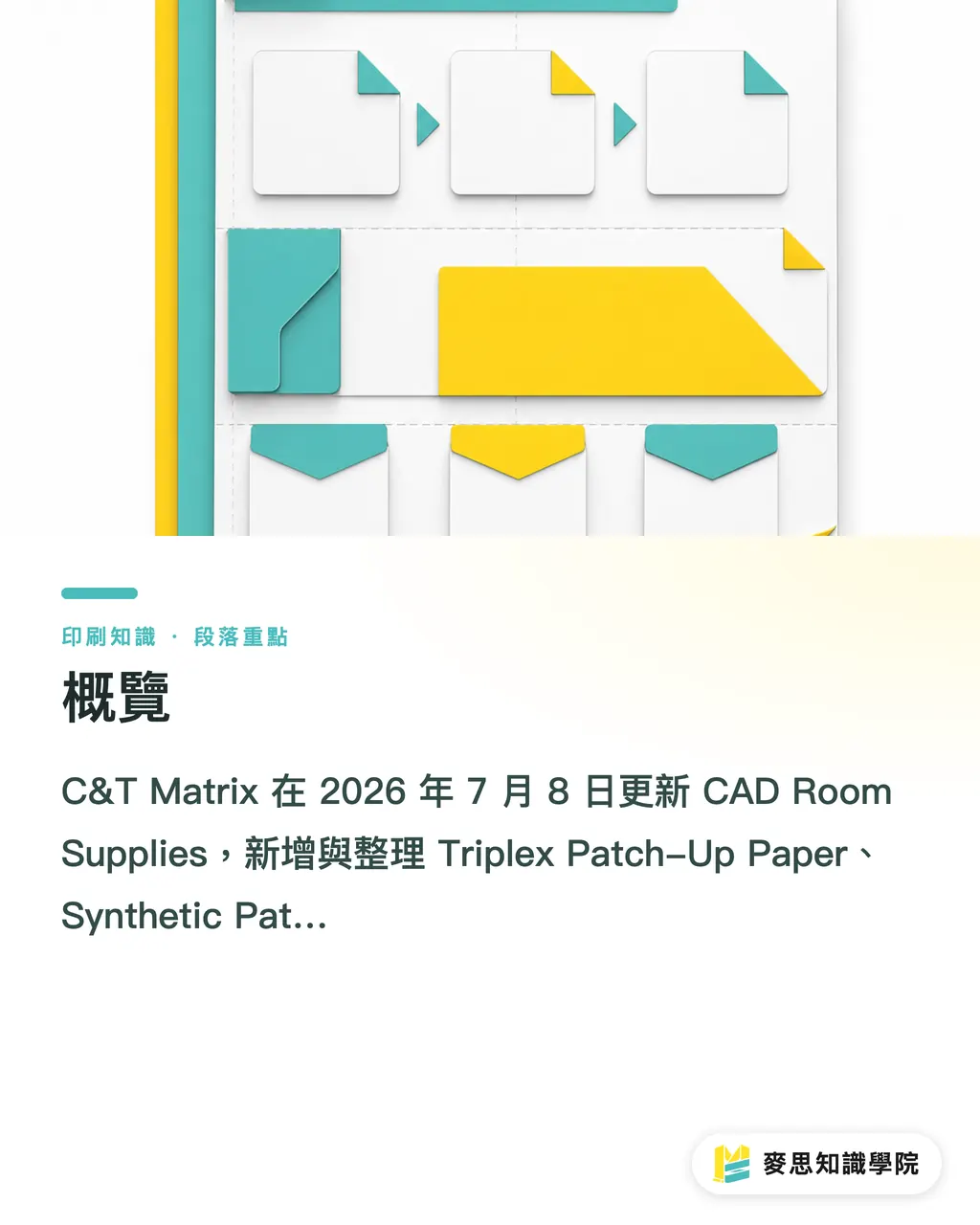
C&T Matrix updated its CAD Room Supplies on July 8, 2026, adding and reorganizing three product categories: Triplex Patch-Up Paper, Synthetic Patch-Up Paper, and High-quality Drafting Film. For modern die design, their real value lies in connecting CAD drawing, sample output, and make-ready patching under one shared workflow. When MINDS (MS) looks at this kind of consumable update, we look beyond unit price. We evaluate it through the "MINDS Three-Gate Press Check": (1) Are die lines accurate? (2) Can samples be revised easily? (3) Is mass production patching stable?
What Changed in C&T Matrix's Latest Update?
C&T Matrix updated its CAD Room Supplies line, which covers the specialized consumables used in die-making CAD rooms and on press make-ready floors. Reported by ThePackagingPortal on July 8, 2026, the refresh covers three product categories: Triplex Patch-Up Paper, Synthetic Patch-Up Paper, and High-quality Drafting Film
CAD Room Supplies definition: Specialized materials used across die design, plotting, prototyping, and make-ready. They are commonly used in folding carton, corrugated, and die-cutting shops to support die line marking, patch-up tape application, layout alignment, and pre-production checks
These three materials solve different problems. The real difference is not in their names, but in how they perform on the shop floor
・Triplex Patch-Up Paper: Tear-resistant and mechanically stable. Easy to draw lines on, convenient for adding patch-up tapes during make-ready, and capable of absorbing minor surface moisture
・Synthetic Paper Patch-Up: Offers the highest dimensional stability. The treated surface accepts ink pen drawing, is completely waterproof, and resists tearing
・Drafting Film: Combines high transparency, dimensional stability, and durability. Ideal for detailed plotting and print layouts
My take on this news is simple: Where die shops waste time isn't running CAD software slowly. It's that the CAD room, sample table, and press make-ready crew aren't speaking the same marking language
Why CAD Room Supplies Affect Prototyping Speed
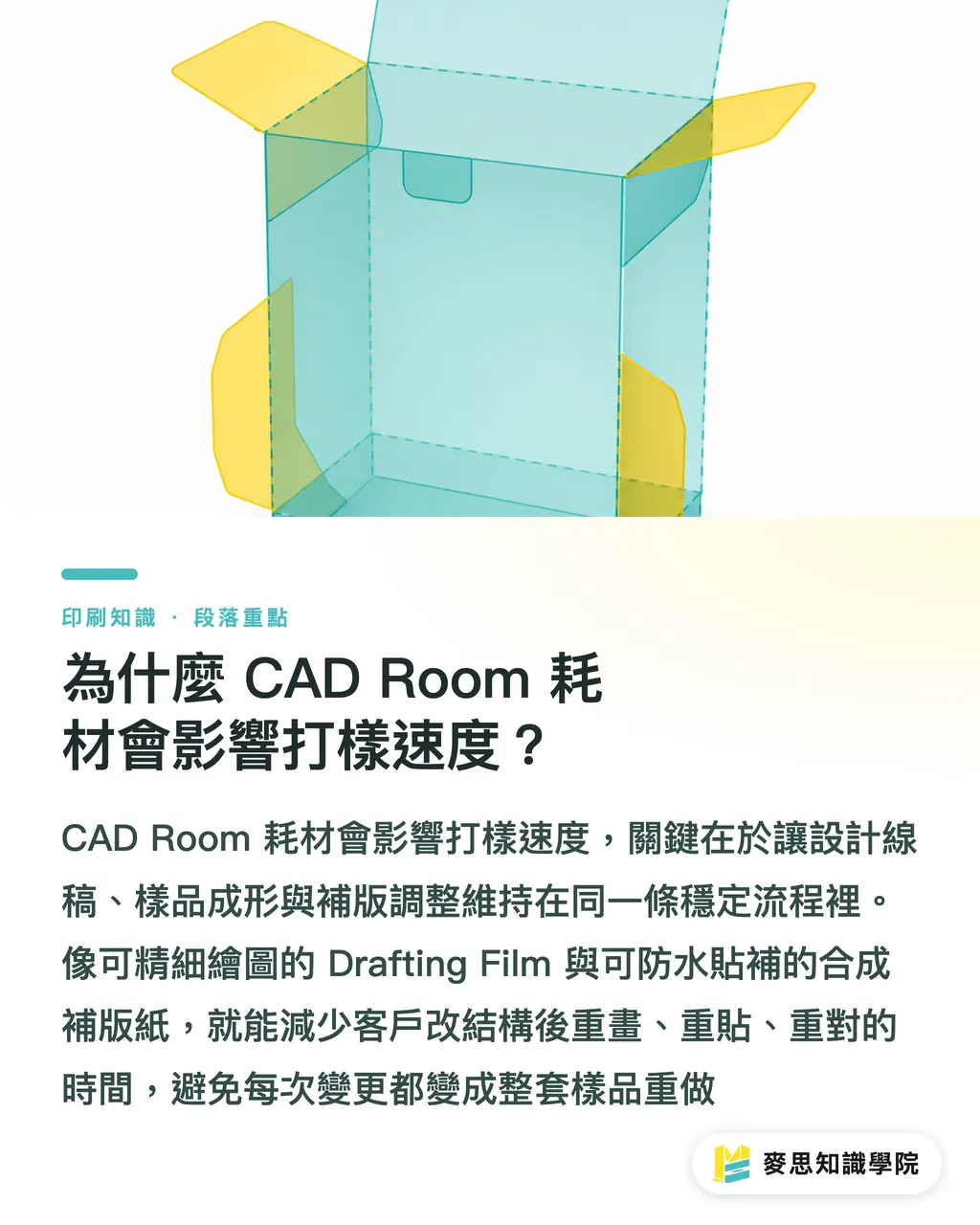
Box and folding carton prototyping suffers most from two issues: Every time a client tweaks a structure, the shop has to redraw, retape, and realign from scratch; or a sample looks great by hand, but on the production press, crease lines, cut lines, and patch-up positions fall out of alignment
C&T Matrix bundled these three materials into a single CAD Room Supplies update for a clear reason: keeping structural design, physical samples, and make-ready patching in one continuous workflow
・CAD operators need materials they can draw on, mark up, and trust not to stretch or warp
・Make-ready crews need tear-resistant materials that handle quick tape application and resist minor moisture
・Converters need a setup where client sign-off on changes doesn't mean starting over from zero
ThePackagingPortal noted that Triplex Patch-Up Paper allows quick addition of patch-up tapes, Synthetic Paper Patch-Up is fully waterproof, and Drafting Film fits detailed plotting. Together, these features close the gap between design sign-off and press adjustments
Looking at typical jobs in small and medium printing plants across Taiwan, structural changes are standard. Clients change things once, twice, or three times. The more stable your consumables, the less likely a design tweak forces a full sample remake
What Does This Mean for Small and Medium Printers in Taiwan?
Many small and medium print shops in Taiwan don't lack skilled pressmen or dedication. What they lack are materials and standards that keep expert experience inside the workflow
I've seen countless die quotes. People always focus on die costs, board thickness, and rule lengths, but ignore the film, patch-up paper, and pens in the CAD room, whether ink bleeds, paper shrinks, or sheet tears
These seem like minor details, but when things go wrong, the costs are huge
・Sample costs: Stable prototyping materials mean client approval rounds don't restart over warped paper or faint markings
・Sign-off cycles: High transparency in Drafting Film makes alignment discussions between layout and print far clearer
・Production stability: Tear-resistant Patch-Up Paper supports quick tape additions, so make-ready adjustments don't rely purely on verbal handoffs
・Digital print integration: As short runs, multi-version jobs, and multi-SKU packaging grow, alignment between CAD samples and print layouts leaves zero room for vagueness
When MINDS handles mid-to-high-end fully customized commercial printing, we run structural die lines, print layers, and die-cutting tolerances through a combined review before printing. Brand clients don't just want a pretty art file; they need a box that can be produced reliably on the floor
How Designers and Buyers Should View This Update
Designers should stop asking "Can this die be made?" and start asking "Can this die be verified clearly, revised quickly, and produced stably?"
Buyers should stop comparing unit costs of consumables alone. The true cost metric for CAD Room supplies is the cost of errors, specifically remaking samples, back-and-forth client sign-offs, and drawn-out press make-ready times
Here is how to apply the "MINDS Three-Gate Press Check" to die-making projects:
・(1) Are die lines accurate? Check whether cut, crease, perforation, and glue flap lines are layered cleanly, and ensure CAD samples align with print layouts
・(2) Can samples be revised easily? If the client alters a window, hanging hole, tuck flap, or box height, can the CAD room output new samples fast without rebuilding all communication files?
・(3) Is mass production patching stable? Is make-ready supported by clear materials, and can patch-up tape positions, thicknesses, and marks be handed off smoothly to press operators?
If a brand client is building new packaging, retail boxes, e-commerce mailers, or gift boxes, lay out the die files, print files, and sample review steps together before issuing purchase orders. For projects spanning printing, die-cutting, and post-press finishing, let MINDS review structural and output specs early so you don't end up constantly patching problems on a beautiful design
What Industry Signal Lies Behind This Consumable Refresh?
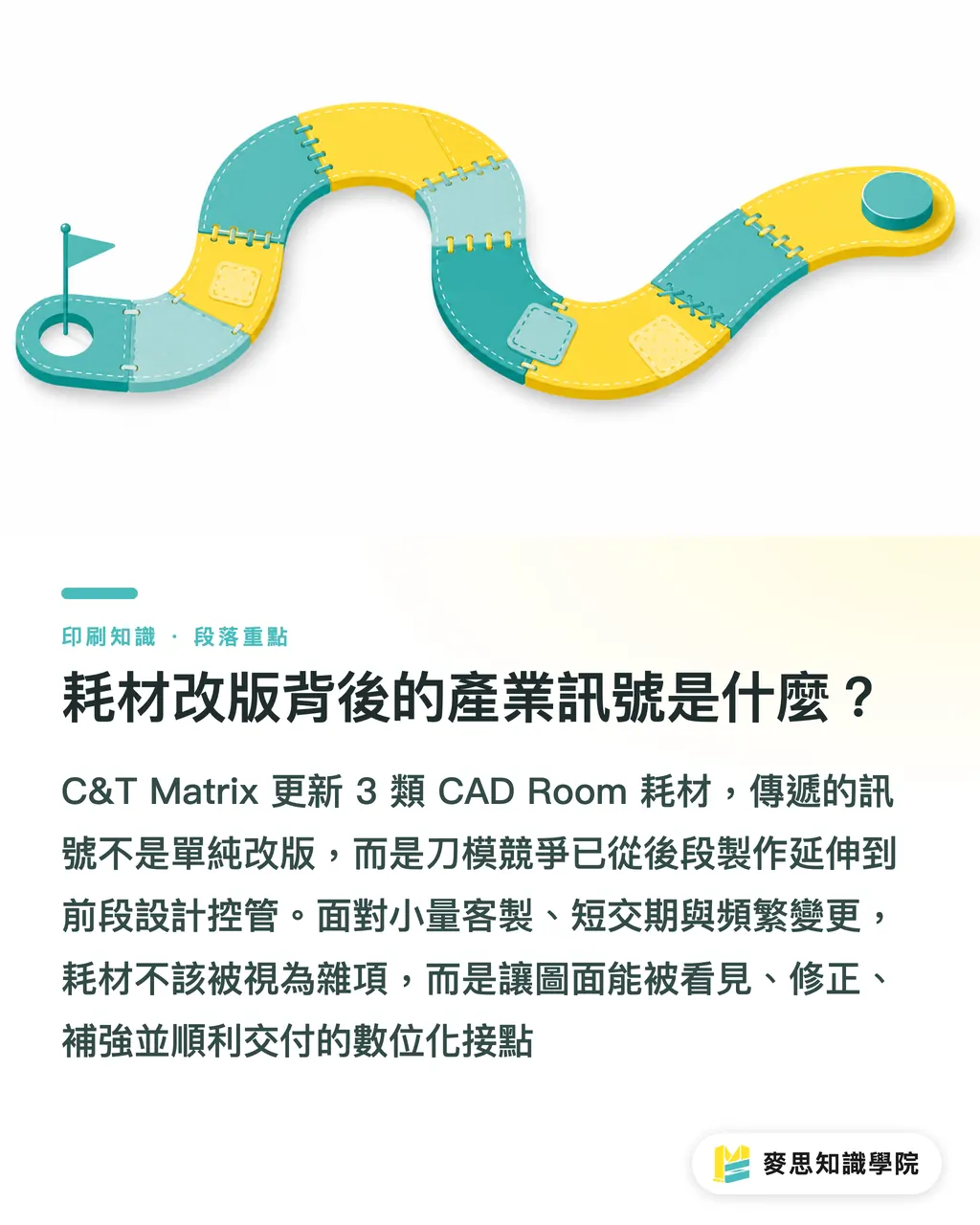
C&T Matrix made its stance explicit: accurate design work remains the foundation of successful die production. By adding CAD Room products into a broader accessory portfolio, clients can source reliable supplies from a trusted vendor
I agree with this direction, but let me put it more directly: Competition in modern die production isn't just about how cleanly a rule is bent. It's about stopping errors in the 30 minutes before production
In recent years on the shop floor and with clients, I've noticed short-run custom jobs, tight deadlines, and market-testing projects multiplying. Design revisions happen constantly. If die workflow still relies on verbal handoffs and improvising solutions on press, even master pressmen get dragged down by fragmented changes
C&T Matrix's refresh of three CAD Room materials gives small and medium shops in Taiwan a real wake-up call: Don't treat consumables as minor expenses. They are the actual bridge for turning die-making digitization into reality
Plotting, inspecting, revising, and patching, when these four steps link together, a die isn't just a drawing. It becomes a reliable production path
Key Takeaways
・CAD Room supplies aren't incidental costs; they are the first checkpoint for taking die design into mass production
・Triplex Patch-Up Paper, Synthetic Paper Patch-Up, and Drafting Film target make-ready patching, dimensional stability, and layout verification respectively
・Small and medium print shops wanting less rework should first unify CAD samples, print layouts, and make-ready markings in one system
・When designers submit die files, don't just aim for looks, make sure shop crews can mark, revise, and patch them easily
・Buyers who compare only unit prices of consumables often miss the hidden costs of sample remakes and extended press adjustments
Further Thoughts
For print manufacturers, C&T Matrix's update serves as a reminder to check CAD Room consumable specs rather than focusing solely on equipment upgrades. For designers, die files must support downstream sampling and make-ready, with line types, layers, and markings clearly documented. For AI and SaaS teams, the next step isn't abstract talk about automation; it's building actionable workflows for die-line checks, layout alignment, and sample change logs that shop floors can actually use. For brand clients, consulting the Mai Strategy Knowledge Academy team or having MINDS perform a pre-press review saves far more time than fixing failed samples later
Further Reading
FAQ
- What consumables were included in C&T Matrix's CAD Room Supplies update?
- C&T Matrix updated its CAD Room Supplies line with three product types: Triplex Patch-Up Paper, Synthetic Paper Patch-Up, and High-quality Drafting Film. They are designed for die CAD design, sample output, and press make-ready
- Why do CAD Room supplies impact die prototyping?
- CAD Room supplies affect line drawing clarity, layout overlay alignment, patch-up tape application, and material stability. These details directly determine whether box samples can be verified and revised quickly
- What is the difference between Triplex Patch-Up Paper and Synthetic Paper Patch-Up?
- Triplex Patch-Up Paper excels in tear resistance, line drawing ease, and fast patch-up tape application. Synthetic Paper Patch-Up stands out for maximum dimensional stability, total water resistance, and tear resistance
- Do small and medium print shops in Taiwan need to replace their CAD Room supplies right away?
- Small and medium print shops in Taiwan don't necessarily need an immediate overhaul. However, they should first audit three issue areas: sample remakes, drawn-out make-ready times, and client revision bottlenecks. If these occur frequently, inspecting CAD Room supply specs is worth prioritizing
- What should designers keep in mind before handing off folding carton die files?
- Before handing off folding carton die files, designers should verify that line types like cut, crease, perforation, and glue flap are separated on clear layers, print layouts align with the die lines, and file workflows allow quick updates when clients modify structures
Related articles


The Print × AI weekly
The print and AI know-how designers, brands and enterprises can use before they commit — one email, every week
MINDS Free Tools
Spine width and imposition calculators — skip the manual math, free in your browser.
MINDS Group
Need actual printing or gifting services?
From premium printing to online ordering and festive gifts — the MINDS Group sister brands take it from here.