

Why do on-screen trends so often fall apart on the production line?
For packaging design to be production-ready, designers have to clear MINDS Printing's three pre-press checkpoints before locking in the aesthetics, turning trend-driven style into files the print shop can actually run
MINDS Printing (MS, mid-to-high-end fully custom commercial printing) three pre-press checkpoints are a preflight review that asks designers to verify physical structure and production-line limits, separate black plates for finishing into their own layers, and confirm paper-and-ink compatibility before committing to the look, so the design language ends up as a standardized file the shop can put straight into production
Plenty of designers chase maximalism or 3D textures in their software and forget that what you send the factory isn't a JPG, it's a string of production conditions
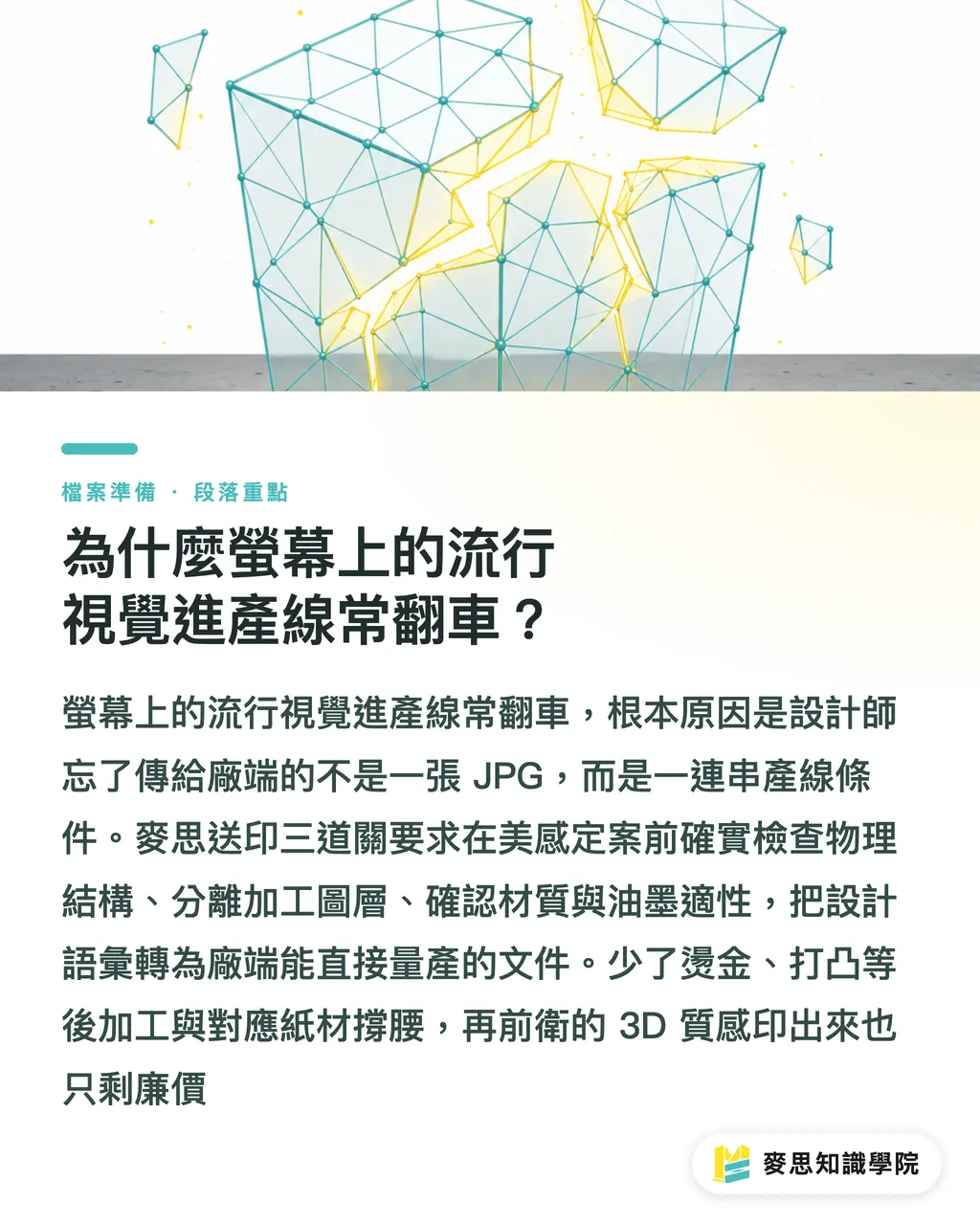
When an edgy design doesn't have the foil stamping, embossing, and substrate to back it up, the printed result usually comes off looking cheap
On a tight budget, how do you pull a premium feel out of low-cost finishing?
When your product can't command a good price, the packaging often isn't doing the convincing
If you want a high-end feel on a low budget, start by pulling budget out of the places the consumer doesn't read
I've seen a few jobs land well lately, and the trick each time was tight control over where the finishing goes
・Audit the physical structure and dieline: confirm dimensions fit logistics standards and the paper's sheet size, so you waste less stock
・Separate dedicated black plates for finishing: put foil stamping and spot UV on their own layers, because that's what determines whether the zinc plates get made cleanly downstream
・Set up paper-and-ink compatibility: lean into the rough texture of uncoated paper and reserve a small, precise stamp on the logo for accent foil
What's changing in packaging systems under the automation wave?
Packaging systems are being redefined, and design has to weigh in earlier on materials, logistics, and recyclability
The signals out of Automate 2026 are clear: Physical AI and robotics are pushing deeper into packaging production lines
If your design doesn't fit how a machine folds, picks, and seals, you don't get into the supply chain of any mid-to-large brand
・Work with the automated line: die-cut lines need to respect robotic-arm limits, so over-complicated hand folds are out
・Plan for alternative materials: modified plastics and recycled stocks render color differently, so you need to pin down the durability floor before going to plate
When a job hits this level of high-end custom specs, going straight to the Mai Strategy Knowledge Academy consultant team is way faster than guessing at your desk

Key Takeaways
・For trend visuals to actually land, they have to be translated into physical finishing language like foil stamping and embossing
・The secret to high-margin packaging is low-cost finishing paired with the right substrate
・Design can't stop at the artwork; it has to account for automated-line pick-and-place limits from the start
Further Thinking
The next competitive bar is how well you know the physical production line
If you can turn pixels into a package with weight and texture in the buyer's hand, you've got a real foothold in the market
Further Reading
FAQ
- What are MINDS Printing (MS) three pre-press checkpoints?
- It's a preflight that requires designers, before finalizing artwork, to lock in the physical structure, separate finishing layers, and confirm paper-and-ink compatibility
- How do you get a premium feel on a low packaging budget?
- Pull spend out of the hidden costs the consumer never notices, then pick a substrate texture that works and pair it with a small area of foil stamping or embossing to anchor the eye
- How do the latest packaging automation trends affect design?
- As Physical AI moves onto the line, package dielines and folds have to follow robotic-arm pick-and-place logic. Overly intricate hand-built structures will get phased out
Related articles



The Print × AI weekly
The print and AI know-how designers, brands and enterprises can use before they commit — one email, every week
MINDS Free Tools
AI background removal, brand stamping, and a LINE sticker maker — free design tools, right in your browser, no upload.
MINDS Group
Need actual printing or gifting services?
From premium printing to online ordering and festive gifts — the MINDS Group sister brands take it from here.