

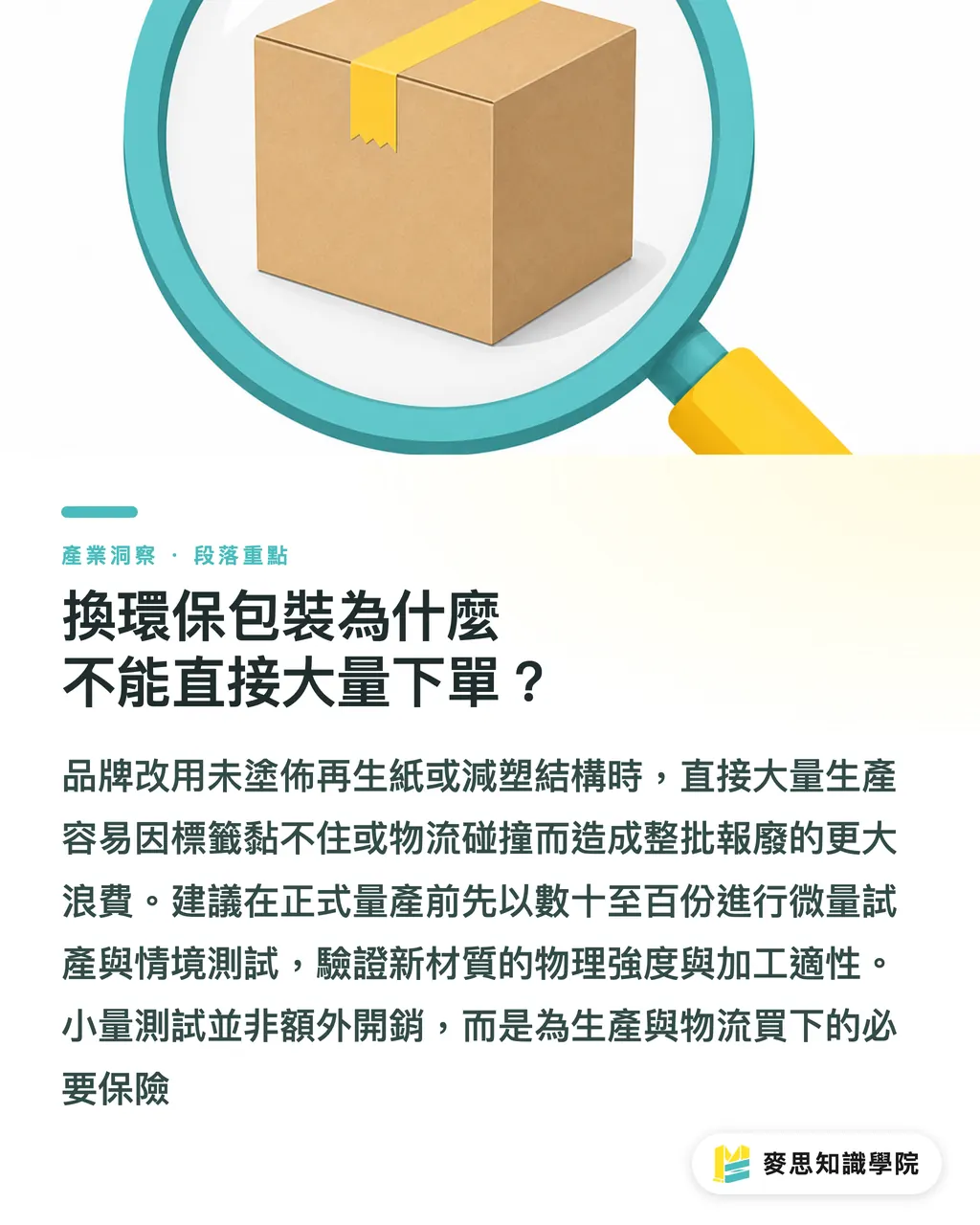
Why Can't You Jump Straight to a Bulk Order When Switching to Eco Packaging?
When brands switch to new paper substrates or reduced-plastic structures, the nightmare scenario is discovering crushed boxes or color drift only after a full production run. Running a small-batch pilot through MINDS (MS, mid-to-high-end full-custom commercial printing) is the right way to validate before committing
Eco-packaging small-run testing means micro-producing ten to a hundred samples before formal mass production, putting them through physical strength checks, processing compatibility tests, and logistics stress tests, a standard verification flow for any new material
Hold on
Over the years I've watched too many projects go sideways on the floor. A brand gets fired up about sustainable marketing, picks an uncoated recycled paper or a reduced-plastic structure, and only after thousands of boxes come off the line does anyone notice the labels won't stick or the corners cave in during shipping. The whole batch gets scrapped, a bigger waste than what they started with
Small-run testing isn't extra spending. It's insurance for your production and logistics
What Fundamentals Must You Check Before Switching Materials?
Switching materials isn't as simple as feeling a paper sample and making a call. I always tell clients to run through a basic assessment checklist themselves before going out to suppliers for quotes
Face the real cost of going low-carbon honestly. The assessment covers eight on-site checks:
・Dimensional structure: any over-packaging or unnecessary dead space?
・Paper weight (gsm): will cutting gsm compromise crush resistance?
・Lamination and composite layers: does removing the plastic film affect scratch and water resistance?
・Number of print colors: can you cut spot colors to reduce ink consumption?
・Solid ink coverage area: does heavy ink coverage affect wastepaper recyclability and drying speed?
・Post-processing complexity: too many steps like foil stamping and embossing?
・Shipping volume: does the folded form maximize load efficiency?
・Scrap rate stability: is the reject rate of the new material on the production line controllable?
Low-carbon doesn't automatically mean eco-friendly. If inadequate protection triggers returns, the carbon footprint can actually double
For complex structural assessments, you can consult MINDS floor technicians directly for structure and material verification
Which Eight Scenarios Must You Test in a Small-Run Pilot?
Once you have ten to fifty micro-run samples, don't just set them on the office desk and look at them. Put them through their paces
Is that enough? Not by a long shot. You need to simulate the entire lifecycle from factory floor to consumer hands:
・Box packing and stacking test: load the product, stack three layers, leave for forty hours, and check whether the bottom layer deforms
・Transport vibration and compression test: ship via actual courier five times, then inspect corner damage
・Shelf display and scratch resistance test: simulate store staff shelving and wiping surfaces, and test unlaminated paper's abrasion resistance
・Tear-open and unboxing experience: observe whether the consumer can pull the tear strip smoothly without catching
・Moisture and humidity test: place in an environment at 80% relative humidity for one hour and measure how much the paper softens
・Label adhesion and adhesive compatibility: apply labels with an automatic labeling machine and check after 24 hours for bubbling or peeling
・Barcode scanning and read rate: use a barcode scanner on recycled or uncoated paper barcodes and confirm the read success rate
・Consumer feedback collection: send twenty samples to loyal customers for trial use and gather feedback on opening experience and feel
If even one of these eight scenarios fails, you need to go back and fine-tune the die cut or paper weight
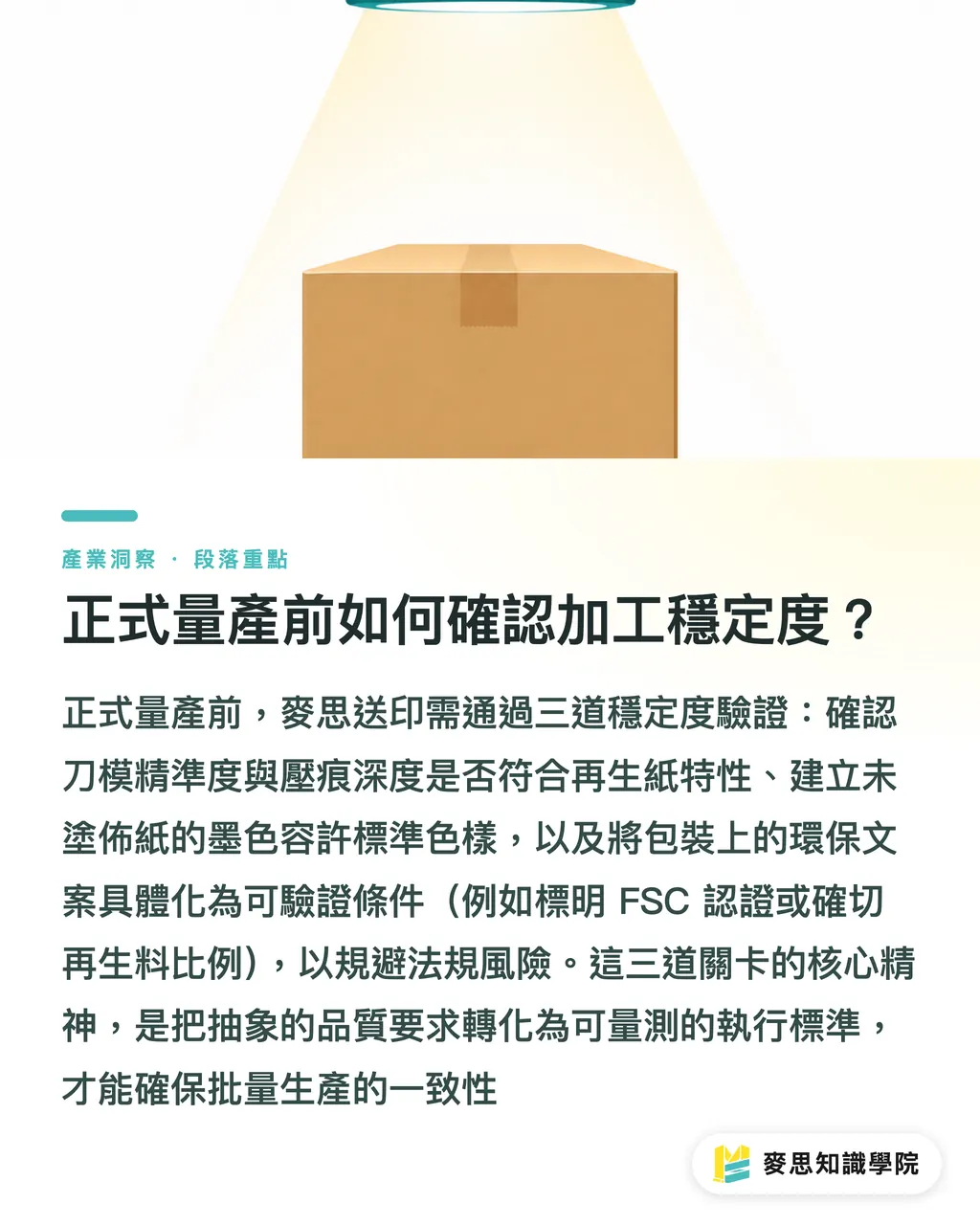
How Do You Confirm Processing Stability Before Full Production?
Testing done, ready to move into batch production, but there are still three final MINDS (MS) pre-press verification gates:
① Confirm die-cut precision and crease line depth. Recycled paper has less elasticity, a crease too deep will crack, one too shallow won't fold
② Confirm ink color stability. Uncoated paper absorbs significantly more ink, so you must establish a standard color sample that defines the acceptable color range
③ Review the eco claims on the packaging. Break "eco-friendly" down into concrete, verifiable terms, state FSC-certified paper or 30% recycled content, for example, and avoid vague claims that invite regulatory risk
For questions on sourcing specifications and how to keep your packaging copy out of legal trouble, see the methodology and procurement guides from the Mai Strategy Knowledge Academy consulting team
Key Takeaways
・Run a small-batch pilot before switching eco materials to avoid the massive loss of scrapping an entire bulk run over defects
・Before switching materials, simultaneously check all eight on-site indicators: dimensions, gsm, lamination, post-processing, and more
・Pilot samples must go through all eight real-world scenario tests: box stacking, courier shipping, moisture exposure, and barcode scanning
・The number of print colors and the extent of solid ink coverage directly affect wastepaper recyclability and ink drying time
・Eco claims on packaging should specify the exact materials and percentages, and certification documents should be ready to produce
Further Thinking
For print manufacturing and graphic design, the competition in eco packaging has shifted from material selection to quality control across the entire production chain
Designers can no longer judge things purely from screen visuals. Material compatibility and sampling tests need to be built into the design process from the start. Printers, meanwhile, need to evolve into consultants who advise on structural integrity and logistics testing
AI tools and SaaS platforms will increasingly help evaluate die-cut stress and load efficiency calculations, but physical testing on the production line remains the last line of defense for packaging quality
Further Reading
FAQ
- Why do labels tend to peel off after switching to recycled paper packaging?
- Recycled or uncoated paper has a rougher surface texture and higher oil absorption, which reduces the bonding strength of standard pressure-sensitive adhesives. During small-run testing, you need to trial high-tack adhesives or specially backed labels
- How do you protect an unlaminated eco paper box from scratches during shipping?
- You can switch to water-based scratch-resistant ink or increase the board weight, and test corner abrasion through actual courier shipments during the small-run pilot
- How many samples are typically recommended for eco-packaging small-run testing?
- Generally ten to fifty samples, enough to cover box stacking, courier shipping, moisture exposure, and barcode scanning tests
Related articles



The Print × AI weekly
The print and AI know-how designers, brands and enterprises can use before they commit — one email, every week
MINDS Free Tools
AI background removal, a LINE sticker maker, spine & imposition calculators — all free, right in your browser, no upload.
MINDS Group
Need actual printing or gifting services?
From premium printing to online ordering and festive gifts — the MINDS Group sister brands take it from here.