
Why Is Everyone Looking at Precision Dispensing Now?
The rise of high-active ingredients has moved packaging design's battleground straight from appearance to structure
Over the past few months, almost every skincare brand client I've spoken with has asked the same question: How do we make sure consumers dispense exactly the right amount every time?
This isn't about saving material. With high-active skincare routines such as vitamin C in the morning and vitamin A at night, even a slight difference in dosage can produce a completely different response from the skin
Packaging is no longer just a container that holds something. It has become part of the product's efficacy
Two recent technology innovations reported by Packaging Insights happen to confirm this industry pain point
Aptar's Activ-Film technology for dry powder inhalers and Quadpack's cold-touch tottle (squeeze tube-bottle) dispensing head both address the same issue: precision
As medical-grade dosing standards start crossing over into beauty, our thinking has to evolve too when we draw dielines and choose components
Breaking Down the Structural Thinking Behind Aptar and Quadpack
The design thinking behind these two examples is well worth a close look for artwork teams. Both address the old problems of residue and inconsistent dispensing that traditional dispensing heads tend to leave behind
Aptar's Activ-Film technology is built around hermetic sealing and moisture protection
Dry-powder medication's worst enemy is clumping. Aptar builds the moisture barrier directly into the film structure, protecting the contents while also keeping the amount of powder released consistent each time
For us, this is a useful reminder when commissioning high-value powder sachets: choosing the barrier layer matters more than how thick the grayboard outer box is
Quadpack's cold-touch tottle dispensing head focuses on skin feel and dose control
Advantages:
・The dispensing head uses a special material that feels instantly cooler on contact with the skin, making it a strong fit for soothing serums
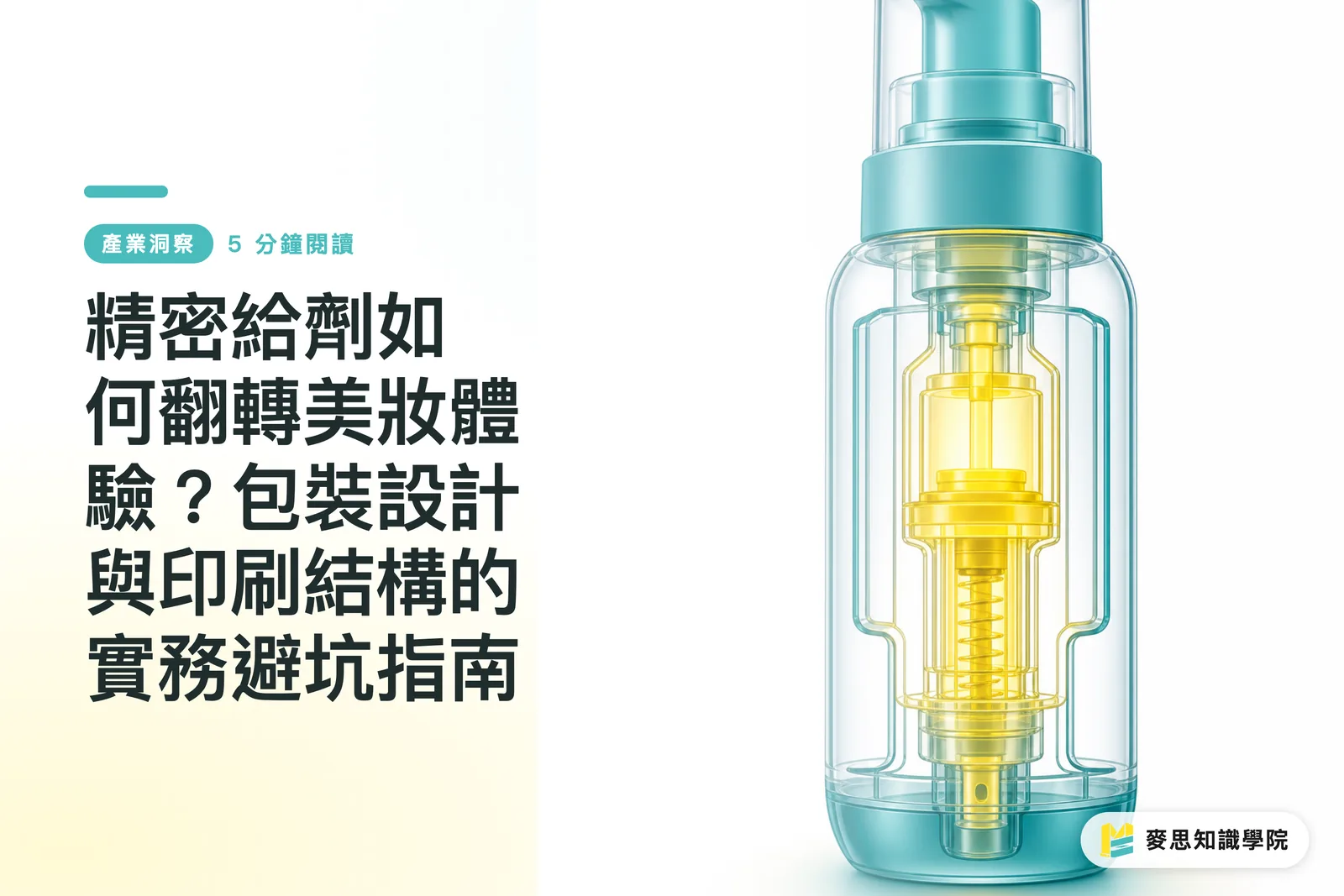
・The squeeze-bottle body pairs with a precision valve to spring back quickly after squeezing, giving a clean cut-off without stringing
・By narrowing the internal channel, it precisely controls the volume of each drop
Disadvantages:
・Assembly tolerances are extremely tight. If the fit between the bottle and dispensing head is off by just 0.1 cm, leakage may occur
・The printer's standards for post-press finishing and filling tests are more demanding
We previously saw Aptar take the same approach with Dermalogica's NeoDropper
If you're planning this type of product for a client, be sure to request the dieline and tolerance specifications for the precision dispensing head from MINDS early in the process. Don't wait until the artwork is finished only to find that the parts won't fit
How Should You Make Material Choices Under PPWR?
Once the structure is sorted out, the real test is the practical impact of the EU Packaging and Packaging Waste Regulation (PPWR). We have to start phasing out composite materials that are hard to recycle
A survey cited by Packaging Insights found that as many as 93% of the manufacturers and suppliers surveyed had already been affected or expected to be affected
That means the precision-dispensing structure you design can no longer be built, as it once was, by permanently bonding plastic, metal, and springs together
The trend on production lines now is:
・Mono-material: Wherever possible, use plastics from the same family for the bottle, dispensing head, and cap, so the parts are easier to recycle downstream
・Spring-free pump design: Replace traditional metal springs with a plastic return mechanism
・Less overpackaging: Pharmaceutical and beauty packaging are being pushed toward minimalism
Whenever I see a project marketed as 'all-paper packaging,' I pay special attention to recycling verification
Many fiber-based packages add a thick plastic laminate for water and oil resistance. Under PPWR standards, that simply will not pass
When choosing materials, designers need to ask one more question: Can this film be peeled off? Has the paper mill provided recycling certification?
How Can Designers Bring Precision Packaging Into Production?
When a project demands both a precise structure and environmental compliance, I usually advise clients to run through the Mai Strategy Three-Gate Print Check to make verification part of the process:
1. Confirm filling and compatibility: Send the serum to the packaging supplier for testing. High-concentration acids can eat through eco-friendly plastics, and you cannot spot that from the design drawings alone
2. Make a prototype and test tolerances: For a cold-touch dispensing head, ask the printer for a 1:1 blank sample, then test the spring-back feel and how cleanly the product cuts off by hand
3. Verify sustainability documentation: For products sold in Europe and the United States, confirm before placing the order that the materials meet PPWR requirements, and reserve a place for the recycling symbol in the final artwork
In high-end custom packaging, the worst outcome is artwork that looks beautiful while the production line is leaking everywhere
Move these checkpoints upstream, and you can truly protect the brand's quality and margins
Key Takeaways
・Medical-grade moisture-barrier films and cold-touch precision dispensing heads solve the problems of degradation and unstable output in high-active products
・The supply chain is already feeling pressure from PPWR. Mono-material construction and designs without metal springs will be standard equipment going forward
・When commissioning precision packaging, designers must test bottle-body tolerances and clean product cut-off in practice to avoid assembly failures on the production line
A Further Thought
For small and medium-sized printing companies and design teams in Taiwan, this is an opportunity amid an industry shake-up
Future print procurement will no longer be about whose paperboard is thicker. It will be about who understands the technical details of precision structures and mono-material design
Start building your compliant materials library now. When brand clients face environmental regulations as they enter overseas markets, you will be able to offer a packaging solution that can actually be put into production
Further Reading
FAQ
- What is precision-dispensing packaging?
- It uses a purpose-built mechanical structure, such as a precision valve, or a sealed dispensing head, to ensure that a fixed volume of product is dispensed with every squeeze. This prevents inaccurate dosing from affecting the performance of high-active skincare products
- What makes Aptar's Activ-Film membrane special?
- It is a technology that integrates moisture protection directly into the film structure. It effectively keeps dry-powder medication from clumping and ensures a consistent dose every time it is released
- How does the EU PPWR affect packaging design in Taiwan?
- PPWR requires packaging to be recyclable and to reduce waste. For packaging sold in Europe and the United States, that means phasing out multi-material designs in favor of mono-material structures or dispensing heads without metal springs
- What is the most common pitfall when commissioning packaging with precision dispensing heads?
- The most common problem is getting the assembly tolerance wrong, which can cause leaks or leave the dispensing head unable to fit the bottle. Request a 1:1 blank sample early and run a filling test
Related articles
The Print × AI weekly
The print and AI know-how designers, brands and enterprises can use before they commit — one email, every week
MINDS Free Tools
Imposition calculator and preflight file check — free prepress tools, right in your browser.
MINDS Group
Need actual printing or gifting services?
From premium printing to online ordering and festive gifts — the MINDS Group sister brands take it from here.