
Sustainability & ESG
FSC, eco paper, low-carbon print and ESG storytelling — make sustainability a brand asset
- Audience
- Brand Owners・Corporate Buyers・Designers・Marketers
- FSC
- Sustainable Paper
- Eco-Friendly Packaging
- Green Printing
- Carbon Footprint
- Carbon Reduction
- ESG
- Regulations & Certification
- Brand Communication

3 Thresholds for rPET Packaging
Go-Pak's 100% rPET to-go cups and Kanebo's recycled PET bottle caps are making brands rethink how premium recycled resin can look and feel. I break it down through materials, regulations, print validation, and brand communication to give Taiwanese brand buyers a practical decision sequence they can actually use

Sonoco Consolidates Global Consumer Packaging: 3 Signals Shifting the Rules of Procurement
Sonoco announced the consolidation of its $5.2 billion+ consumer packaging business under a single leadership structure, spanning 25 countries, 98 plants, and 11,250 employees. The market logic behind this restructuring is clear: brand expectations for packaging suppliers are undergoing a systemic upgrade. Integration capabilities and cross-regional consistency are replacing lowest bidding as the supply chain's new table stakes
Flexible Packaging Sustainability: A 4-Path Material Selection Guide
Sustainability in flexible packaging has moved from "materials that look greener" to "what can be verified after use." Compostable film, chemical recycling, intelligent sorting, and mono-material refill pouches all need to be compared with the same yardstick, so brands do not spend ESG budgets on slogans
Laser Marking Replaces Ink: Two Mondi Cases Show the Carbon-Reduction Path for Flexible Packaging
Ink is the stickiest pollution source in recycling flexible packaging. Starting from two award-winning Mondi cases, we examine how laser marking lets flexible packaging achieve carbon reduction, brand communication, and end-of-life recycling in one move, with a practical decision checklist for Taiwan's printers and brand clients

Stepping Onto the Global Print Stage: A Breakdown of the 2027 FESPA Awards and How to Compete
The 32nd FESPA International Print Awards is officially open for entries, with submissions closing in December 2026. This piece, put together by a veteran consultant, unpacks the judging criteria and four key competition categories to help Taiwanese print and packaging brands turn technical capability into a ticket for high-value export orders
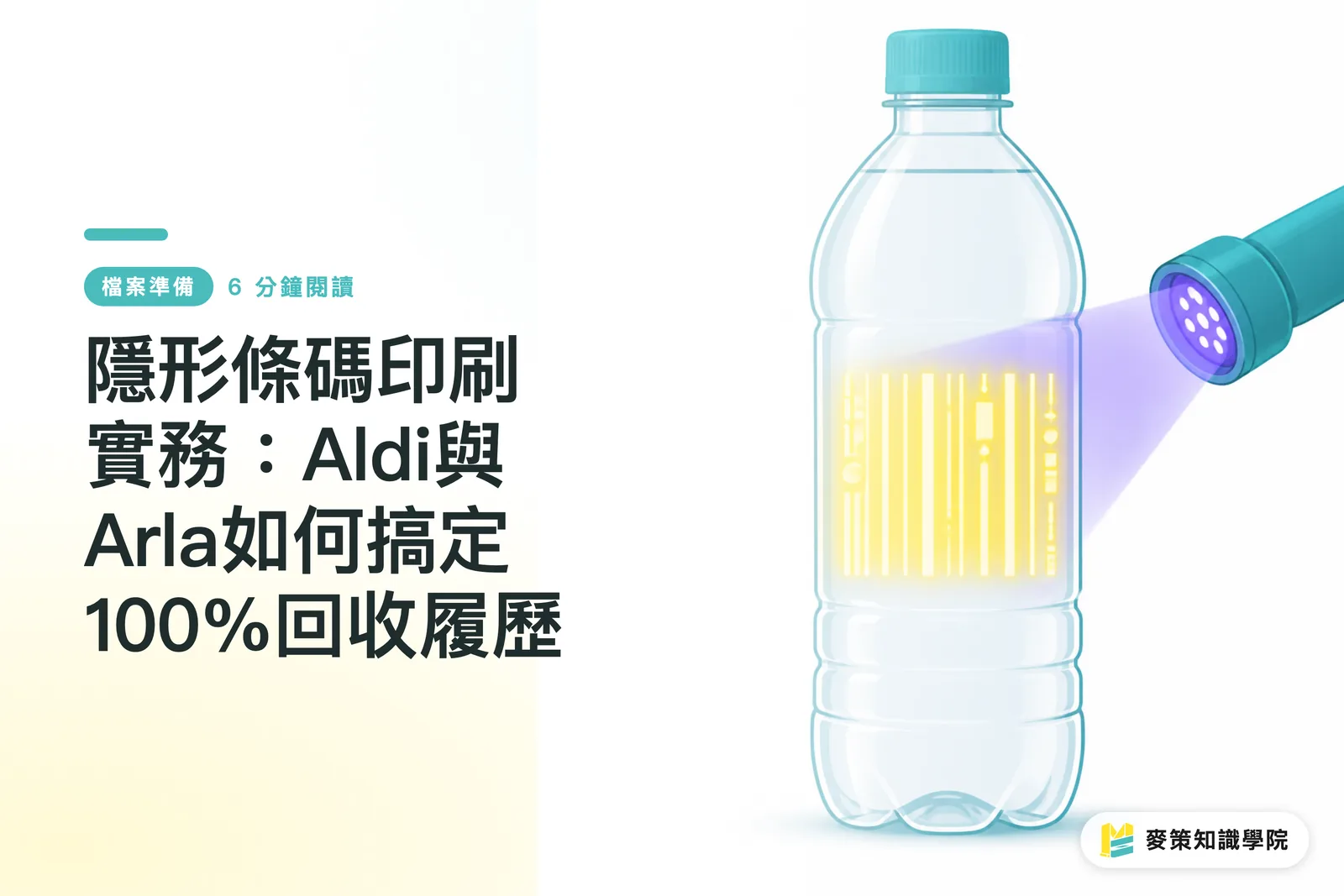
Invisible Barcode Printing in Practice: How Aldi and Arla Solved 100% Recycling Traceability
Under pressure from the EU PPWR and national EPR rules, Aldi and Arla adopted Polytag's UV fluorescent tagging technology, printing invisible barcodes on fresh milk bottles to achieve 100% precise tracking across production lines and recycling facilities This article breaks down prepress color separation, spot color plate setup, and UV ink printing specs from the perspective of a senior print consultant, helping designers and prepress teams deliver sustainable packaging artwork without compromising the visual design

Mixed Plastics to Green Hydrogen? A Packaging Pitfall and ESG Compliance Guide
A new technology that turns mixed plastic packaging into green hydrogen gives composite packaging that cannot be mechanically recycled a possible end-of-life route, but global rules on source reduction have not been relaxed In this guide, a senior print consultant analyzes how the latest end-of-life recycling technologies affect packaging life cycle assessment, helping brand decision-makers get a clearer grip on material choices and export compliance strategy

Is Print Really Dead? Understanding Physical Conversion Rates in an Age of Digital Fatigue
Many brands assume digital ads can completely replace print, overlooking the reality of severe screen fatigue. Drawing on international research and years of press floor experience, this article breaks down why physical packaging and print collateral drive high conversion rates, helping you rethink the real value of print marketing

How Do You Build a Replaceable-Refill Sunscreen Stick Case? A Guide to Plastic-Reduction Packaging Design and Tolerance Control
As plastic-reduction trends and beauty regulations in Europe and the U.S. tighten, refillable sunscreen stick cases are becoming a top choice for biomedical cosmetics brands. This article breaks down two-layer separated mechanisms, snap-fit tolerances, and print finishing techniques to help brands bring high-quality packaging into production

Coca-Cola Glass Bottle Tracking in Practice: A Digital Management Guide for Reusable Packaging
With global circular economy policies and decarbonization pressures mounting, reusable packaging has become a major focus for brand transformation. This article breaks down how Coca-Cola bottlers and Vetropack built a full-lifecycle tracking system using unique on-bottle identifiers, helping companies manage packaging assets and ESG metrics
What Coveris and Sealed Air's Low-Carbon Flexible Packaging Teaches Brands About Plastic Reduction
With Western regulation deadlines closing in, global flexible packaging leaders are pivoting to lightweight structures and recycled plastics. This article breaks down international carbon reduction cases and assessment frameworks to help brand owners stay ahead of compliance timelines and procurement strategies

Is Paper Printing Really Bad for the Environment? Debunking the Deforestation Myth and Digital's Hidden Carbon Footprint
Many brands fall into the all-paperless myth when pursuing ESG, while overlooking the energy use behind digital communication and the reality of sustainable management in the paper industry. This article, written by a senior print consultant, breaks down the real carbon footprint of paper and helps companies build a more rational media strategy

Pet Food Bag Surge: UFlex Mexico Plant Highlights Heavy-Duty Woven Bag Trend
Indian packaging giant UFlex is opening a factory in Mexico to target the Americas pet food market. This move signals a key convergence of heavy-duty strength and high-end printing tech. Here's a breakdown of woven bag structural requirements and strategies for small-to-midsize printers

Three Keys to Dunav Press's Transformation: From Low-Cost Work to Premium Packaging
Faced with declining commercial print and global supply chain shake-ups, Bulgaria's oldest printer Dunav Press (founded 1864) shows what real resilience looks like for a traditional print shop. From a senior industry consultant's front-line perspective, here's how this 160-year-old house moved into pharmaceutical packaging, bet on green energy, and built deep brand trust, a practical guide for Taiwanese businesses on procurement and operations
Nestlé Malaysia Pushes Circular Packaging: 3 Order Signals Printing Plants Need to Read
Nestlé Malaysia is moving circular packaging from pilot projects to scale, which means brand-side carbon reduction requirements will start showing up directly in print procurement orders. This article breaks down three order-shift signals and gives Taiwan printing plants and brand customers a practical framework for judgment and action
Carbon Offsets Cooling Off, Carbon Removal Rising: How Print Procurement Can Adapt to the New Rules
Corporate ESG reporting is tightening, and buying carbon offsets is becoming a dead end. Based on my recent client projects, brand requirements for print carbon claims are reshaping RFQ formats. Drawing on over a decade of production line and procurement experience, this article breaks down the core of these new rules and provides an actionable checklist for supplier evaluation

EU DPP Launches: The "Data Tax" on Print & Packaging Begins with This Label
The EU is expanding its Digital Product Passport registration system in 2026, forcing print shops to step up from order takers to data reporters. This article breaks down how the DPP works, where bottlenecks happen, and what small-to-medium printers and designers in Taiwan should do right now to prepare

Thailand's New Food-Contact Paper Standard Is Pushed Back a Year, Should Print Shops Race to Use That Window?
Thailand has delayed its new food-contact paper standard to June 22, 2027. On paper, that gives Taiwan packaging printers shipping into Southeast Asia more breathing room, but really it's a critical 12 months to get raw materials, processes, and client comms locked in early. Here's a breakdown of why it was delayed, what compliance actually requires, and three things export-focused packaging printers can start on right now

Plastic into Organic Acids, 40% Less Energy: The New Playbook for Chemical Recycling of Print Substrates
A catalyst-free hydrothermal depolymerization process from European and U.S. teams is rewriting the recycling path for PET and polyolefins. For brands and the print supply chain, this isn't just another green buzzword; it's a real variable in substrate sourcing, compliance language, and product storytelling over the next three to five years

How to convince clients that paper is sustainable? The full playbook for evidence-backed talking points
Faced with the "printing isn't green" challenge, the industry needs verifiable tools to persuade This piece breaks down recovery rates, forest management, and circular workflows, giving brands a ready-to-use conversation framework
3 Design Checkpoints for Recyclable Packaging
Recyclable packaging is usually won or lost on the first round of design files; brands that wait until after sampling to talk recyclability end up paying for it in cost, timeline, and ESG claims that have to be patched up
EU PPWR Countdown: A Practical Guide to Recyclable Inks and Compliance for Export Packaging
With the EU PPWR taking effect, an FSC label alone won't cut it for Taiwan-based brands exporting to Europe. This piece from a senior print consultant breaks down the latest material restrictions and recyclable-design rules, showing you how to bake DfR requirements into your purchasing specs so you avoid customs holds and keep those European orders flowing
California SB 54 EPR Battle: Mono-Material Packaging Compliance Guide for Export Brands
California's SB 54 EPR law has triggered legal battles, but enforcement regulators remain steadfast, demanding 100% recyclable or compostable plastic packaging by 2032. Facing green trade barriers, export brands and packaging printers must upgrade packaging structures early, shifting from traditional multi-layer composite films to recyclable mono-materials to secure supply chain compliance and competitive advantage

Glue-Free Interlocking and De-inking Artwork Guide: 4 Keys to Easily Recyclable Color Box Design
Realizing true green circularity in packaging isn't about switching to expensive paper stock. It starts with structural engineering and artwork prep. In this article, a senior consultant breaks down glue-free lock die-line setups and water-based de-inking techniques to help designers balance aesthetic appeal with easy recyclability